
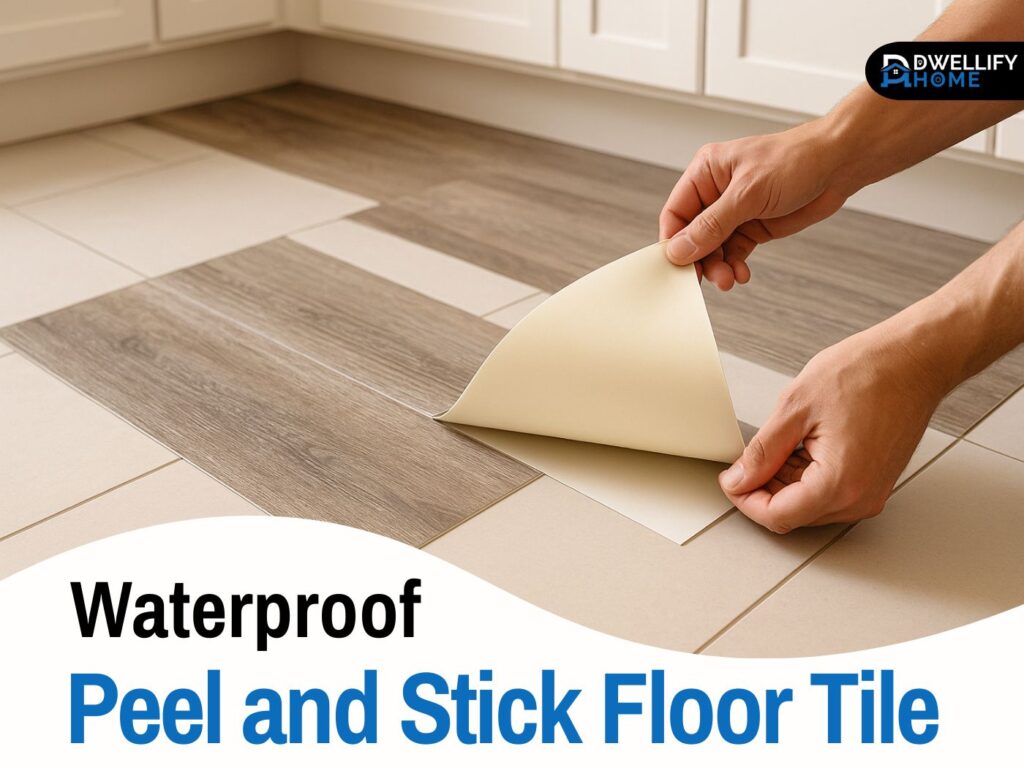
If you want a simple way to update your floors without hiring a contractor or spending thousands, waterproof peel and stick floor tile is one of the easiest flooring upgrades you can try. It gives you a fresh, modern look without the mess of mortar or grout, and most people can install it with basic tools and a free weekend.
I’ve installed this flooring in kitchens, bathrooms, laundry rooms and even basements for homeowners who wanted a quick transformation without making a permanent commitment. The best part is that it works well in moisture-prone areas, as long as you understand its limits and install it properly.
Before you start shopping, let’s walk through what it is, where it works best and how to install it in a way that actually holds up to everyday life.
Snippet-Ready Definition:
Waterproof peel and stick floor tile is a DIY vinyl flooring with a strong adhesive backing that sticks directly to your floor, offering quick installation, water resistance and modern style for kitchens, bathrooms and laundry rooms.
Mission Statement:
Our goal is to help homeowners create beautiful practical spaces with simple DIY flooring solutions that save time money and stress. We focus on clear advice realistic expectations and results that look great in everyday life.
What Is Waterproof Peel and Stick Floor Tile
Waterproof peel and stick floor tile is usually made from vinyl or PVC with a pressure-sensitive backing that adheres directly to the floor. You just remove the paper, stick the tile down and press it into place. No mixing grout or waiting for anything to cure.
These tiles come in a wide range of looks including wood, stone, slate, marble and geometric patterns. Homeowners often choose wood-look planks for kitchens and hallways, while white or stone-look tiles are popular in bathrooms because they brighten up small spaces.
Waterproof vs Water Resistant
Here’s the thing. Most products are waterproof to spills, splashes and everyday moisture, but no tile is completely waterproof if water gets underneath it. Standing water is the real enemy. If water seeps under the tile through gaps or edges, it can weaken the adhesive and cause lifting.
So yes, waterproof peel and stick floor tile handles daily water exposure well, but proper sealing around edges and fixtures is a big part of keeping it that way.
Quick Comparison Table
| Feature | Waterproof Peel and Stick | Ceramic Tile | Laminate |
| Water Resistance | Good with edge sealing | Excellent | Poor |
| DIY Friendly | Very easy | Hard | Moderate |
| Cost | Low | High | Medium |
| Durability | Moderate | High | Moderate |
| Best For | Kitchens bathrooms laundry rooms | Long term installs | Dry areas |
| Install Time | Fast | Slow | Medium |
Quick Buying Checklist
Before buying waterproof peel and stick floor tile check:
- Thickness and wear layer for durability
- Slip resistance for bathrooms
- Size preference 12×12 or planks
- Color maintenance white tiles show dirt faster
- Warranty and water resistance wording
- Real customer reviews
Simple Step-by-Step Guide
- Clean floor well remove grease and dust
- Fill grout lines or low spots
- Plan layout to avoid tiny edge pieces
- Peel stick and press firmly
- Roll tiles for strong adhesion
- Seal edges with silicone for waterproofing
Key Features and Benefits
The biggest reason people love this flooring is how easy it is. You can completely change the look of a kitchen or bathroom in a single day without power tools or special skills. It’s also one of the most budget-friendly flooring solutions out there.
On top of that, vinyl tiles are durable enough to handle busy households. Good quality tiles resist scratches, dents and stains better than many people expect. The surface is easy to mop and handle everyday messes from pets, kids and cooking.
For renters or people testing a new design direction, peel and stick tiles are appealing because they can be removed later without destroying the subfloor. It’s not perfect, but it’s much more forgiving than traditional tile.
Best Places to Use
The most common installs I do are in kitchens and bathrooms. Waterproof peel and stick floor tile kitchen upgrades are great because food spills and splashes happen daily. The vinyl surface wipes clean easily and doesn’t stain like porous materials.
Peel and stick floor tile bathroom installs work beautifully as long as you keep tiles out of the active shower floor area. Laundry rooms, mudrooms, entryways and hallways are good candidates too because these spaces need flooring that can handle dirt and occasional wet shoes.
I’ve installed these tiles in finished basements as well but only when the concrete subfloor was dry and mostly level. If a basement has moisture problems, skip peel and stick flooring until those issues are resolved.
Where Not to Use
Here’s the simple rule. If the floor has constant direct water exposure, don’t use peel and stick. That means inside a shower is off limits. I’ve seen people try it and it always fails. Water finds the seams, weakens the adhesive and lifts the tile.
Also avoid surfaces that are weak, extremely uneven or flaking. Soft subfloors or crumbling tile are bad bases because the new flooring will mirror every flaw underneath.
Buying Guide How to Choose the Best Tile
Shopping for waterproof peel and stick tile can be overwhelming because there are so many options. Keep it simple by checking for the basics.
Size and Format
The classic waterproof peel and stick floor tile 12×12 size is common and affordable. It works well in bathrooms, entryways and laundry rooms. Plank shapes work great in kitchens and hallways because they create a more realistic wood look.
Thickness and Wear Layer
Thicker tiles with a strong wear layer hold up better in high-traffic spaces. Thin tiles can feel flimsy and may dent more easily. If you have dogs or kids, spend a little more on durability.
Color also matters. Waterproof peel and stick floor tile white looks beautiful in bathrooms but may show dirt faster than darker designs. If you clean regularly, it will stay bright.
Best Options by Use Case
Instead of chasing brand names, think about which product fits your needs.
- Best for kitchens: wood plank style with a durable wear layer
- Best for bathrooms: light tile look with slip-resistant texture
- Best budget pick: basic 12×12 squares with a smooth finish
- Best premium look: stone-look options with a realistic texture
These choices help you match the tile to performance instead of just price.
Where to Buy
Home improvement stores and online retailers usually have the best selection. Waterproof peel and stick floor tile Home Depot options are popular because you can see them in person before buying. Online shops often carry more designs but quality varies, so always read reviews.
Before buying, check how the manufacturer describes water resistance. Some tiles are technically water resistant, not fully waterproof, which affects performance in bathrooms and kitchens.
Surface Prep The Real Secret to Success
If you want your floor to last, surface prep matters more than anything else. I’ve fixed more homeowner projects because of poor prep than bad tiles.
The floor should be flat, dry, clean and dust free. Grease is your enemy because it stops adhesion. I usually wash floors with a strong degreaser and rinse thoroughly before installing.
If you’re installing over old tile, fill grout lines to create a smooth surface. If you don’t, the new tiles will eventually sink into those channels and telegraph the pattern.
Installation Overview
Installing waterproof peel and stick tile is pretty straightforward.
Plan your layout so you don’t end up with small slivers along one edge. Dry fit a few tiles before you commit. When cutting, use a sharp utility knife and take your time. Cutting too fast can cause jagged edges that look sloppy.
After installing each tile, apply firm pressure or use a floor roller. This helps activate the adhesive and keeps corners from lifting later.
How to Enhance Waterproofing
Most peel and stick tiles can handle daily moisture, but if you want real waterproof performance, seal the edges with silicone caulk. Pay attention to areas around toilets, tubs, vanities and exterior doors.
One time I installed tile in a bathroom where the customer refused edge sealing because they didn’t like the look. Within six months, corners started lifting and water damage appeared on the subfloor. A simple bead of silicone would have prevented it.
Common Problems and Quick Fixes
If tiles lift at the corners, clean the area, apply adhesive and weigh it down until dry. Bubbles usually come from air pockets, so press firmly with a roller to push them out.
Seams opening or pattern misalignment often happen because the subfloor wasn’t level. Fixing the base before installation saves a lot of frustration later.
Cleaning and Maintenance
Day-to-day cleaning is easy. Use mild cleaners and avoid harsh chemicals. Water spills are fine, just don’t let puddles sit for hours. If you notice water creeping toward edges, wipe it up quickly.
In bathrooms where water hits the floor daily, check the caulk lines occasionally and refresh them when needed.
Longevity and Expectations
With proper prep and installation, waterproof peel and stick tile can last several years or more. Kitchens and hallways take the most abuse, so expect more wear in those areas. Bathrooms often age better because they have softer foot traffic.
Cost and Value
This flooring is one of the most budget friendly materials you can install. Most homeowners spend a fraction of what ceramic tile or hardwood would cost. For rentals, vacation homes or starter upgrades, peel and stick can be a smart compromise.
If you want a long term investment, click lock vinyl or ceramic tile might make more sense. But if you want a fast makeover that looks great, peel and stick is tough to beat.
Peel and Stick vs Other Budget Floors
Compared to laminate, peel and stick is better in moisture because it doesn’t swell. Compared to sheet vinyl, it’s much easier to install. Compared to click lock vinyl, it’s cheaper but not as premium in durability.
FAQs
Is it safe for bathrooms
Yes, as long as you seal edges and avoid active shower zones.
Is it ok for kitchens
Very much. It handles spills and messes well.
Is 12×12 better than planks
Tiles look traditional. Planks look modern. Performance depends on thickness.
Are white tiles hard to maintain
They look great but show dirt faster. Not a deal breaker.
Is there waterproof peel and stick tile
Yes many vinyl options are designed to handle moisture in kitchens and bathrooms. They resist spills but need edge sealing to block water from getting underneath.
What are the disadvantages of peel and stick vinyl flooring
It can lift if the floor isnt prepped well and may dent or scratch in heavy use areas. Heat moisture or poor subfloors can reduce lifespan.
How to waterproof peel and stick floor tiles
Seal edges and corners with silicone caulk clean up standing water quickly and use tiles rated for wet areas. A good subfloor and layout make the biggest difference.
What flooring is pee proof
Ceramic tile and waterproof vinyl plank are the best long term options. Peel and stick can handle accidents if you clean them quickly and seal edges to stop moisture getting underneath.
Conclusion
Waterproof peel and stick floor tile is an easy way to refresh a room without hiring pros or tearing up your home. It’s budget friendly, DIY friendly and available in styles that genuinely look high end. Just remember that surface prep and edge sealing make the biggest difference in how long it lasts.
If you take your time, plan your layout and avoid skipping the boring steps, you’ll end up with a floor that looks fantastic and handles daily life without frustration.
Let me know if you want a shorter version, more examples, images, or a detailed installation checklist.
Disclaimer
This article offers general flooring guidance based on experience and research. Product performance can vary by brand installation method and home conditions. Always follow manufacturer instructions and consult a professional if you are unsure.

I’m Bilal, the founder of Dwellify Home. With 6 years of practical experience in home remodeling, interior design, and décor consulting, I help people transform their spaces with simple, effective, and affordable ideas. I specialize in offering real-world tips, step-by-step guides, and product recommendations that make home improvement easier and more enjoyable. My mission is to empower homeowners and renters to create functional, beautiful spaces—one thoughtful update at a time.