If you’ve ever walked past a shrub in spring and thought, “What’s that sweet smell?” there’s a good chance it was a fothergilla. And when people ask me which one gives the most reliable four-season interest in an average home landscape, I often bring up Fothergilla ‘Mt. Airy’.
Here’s the thing: this plant doesn’t try too hard, yet it still delivers. You get soft, bottlebrush-style blooms in spring, handsome blue-green leaves in summer, and fall color that can stop you in your tracks. In this Dwellify Home guide, I’ll walk you through what I’ve learned from growing it in real yards, not just reading tags at the nursery.
Snippet-Ready Definition:
Fothergilla Mt Airy is a medium-sized flowering shrub known for fragrant spring blooms, clean summer foliage, and rich fall color. It grows best in acidic soil with sun to part shade.
Mission Statement:
At Dwellify Home, our mission is to share practical, experience-based gardening advice that helps homeowners choose, grow, and enjoy plants with confidence, using clear guidance rooted in real-world knowledge.
Fothergilla ‘Mt. Airy’ at a Glance
Before we go deep, here’s a quick snapshot. I use these points when I’m helping homeowners decide if it fits their space.
- Mature size: typically a medium shrub, usually around 5 to 6 feet tall and wide in many gardens
- Growth rate: slow to moderate, especially the first couple of years
- Light: full sun to part shade
- Soil: prefers acidic, organic-rich soil that drains well but stays evenly moist
- Maintenance: generally low, with minimal pruning needed
- Standout features: fragrant spring blooms and strong fall color
The best part is you don’t need a perfect “show garden” to enjoy it. But you do need to match it to the right soil and spot, and I’ll help you do that.
Quick Guide Table: Fothergilla Mt Airy at a Glance
| Feature | Details |
| Mature Size | About 5–6 feet tall and wide |
| Growth Rate | Slow to moderate |
| Sun Exposure | Full sun to part shade |
| Soil Type | Acidic, organic-rich, well-drained |
| Water Needs | Moderate, consistent moisture |
| Bloom Time | Early to mid spring |
| Fall Color | Yellow, orange, red, and purple tones |
| Deer Resistance | Generally deer resistant |
Simple Care Checklist (Easy Reference)
- Plant in acidic, well-drained soil
- Water deeply during the first growing season
- Mulch to retain moisture and protect roots
- Prune lightly right after flowering
- Avoid heavy fertilizing
What Is Fothergilla ‘Mt. Airy’?
Fothergilla ‘Mt. Airy’ is a selected fothergilla known for its scent, tidy shape, and fall color. Most gardeners grow it like a compact, multi-stem shrub that looks good even when it’s not blooming.
Guess what makes it special? Consistency. Some shrubs look amazing in one season and kind of disappear the rest of the year. This one stays attractive through spring, summer, and fall, and it has a clean winter silhouette too.
Naming and “Previously Known As”
You’ll see it written as Mt. Airy or Mount Airy, and sometimes labels can be confusing. I’ve even seen it mixed up with “dwarf fothergilla” in big-box stores, even when the plant clearly wasn’t dwarf.
If you’re shopping, don’t obsess over the exact punctuation on the tag. Instead, focus on the plant’s habit and the grower’s listed mature size. That helps you avoid the classic mistake of buying something that outgrows your space.
‘Mt. Airy’ Size, Height, and Growth Rate
Let’s talk about the big question people search: fothergilla mt airy size and fothergilla mt airy height. In many residential gardens, I see it settle in around 5 to 6 feet tall, with a similar spread. In better soils with steady moisture, it can lean a bit bigger.
But here’s the thing most labels don’t tell you: it grows like a thoughtful guest, not a loud one. The first year after planting, it often focuses on roots. Year two and three, you’ll see more top growth. By year five, it starts to look like a real shrub with presence.
If you want a real-world expectation, I tell homeowners this:
- Year 1: establishment, not a lot of visible growth
- Years 2 to 3: steady fill-in, better flowering
- Years 4 to 6: shape becomes full, fall color gets stronger
Native Range and Background (And What That Means for Your Yard)
People also ask about the Mount Airy fothergilla native range. ‘Mt. Airy’ is generally treated as a hybrid selection, but its parent background comes from fothergilla species native to the eastern U.S.
On top of that, its natural “preferences” make more sense when you picture where fothergillas like to live: woodland edges, moist areas, and soils with more organic matter. That doesn’t mean your yard needs to be a forest. It just means this shrub usually does best when the soil is not dry, not chalky, and not constantly baking.
If your yard naturally has acidic soil and you mulch regularly, you’re already halfway there.
Flowers, Fragrance, and Bloom Time
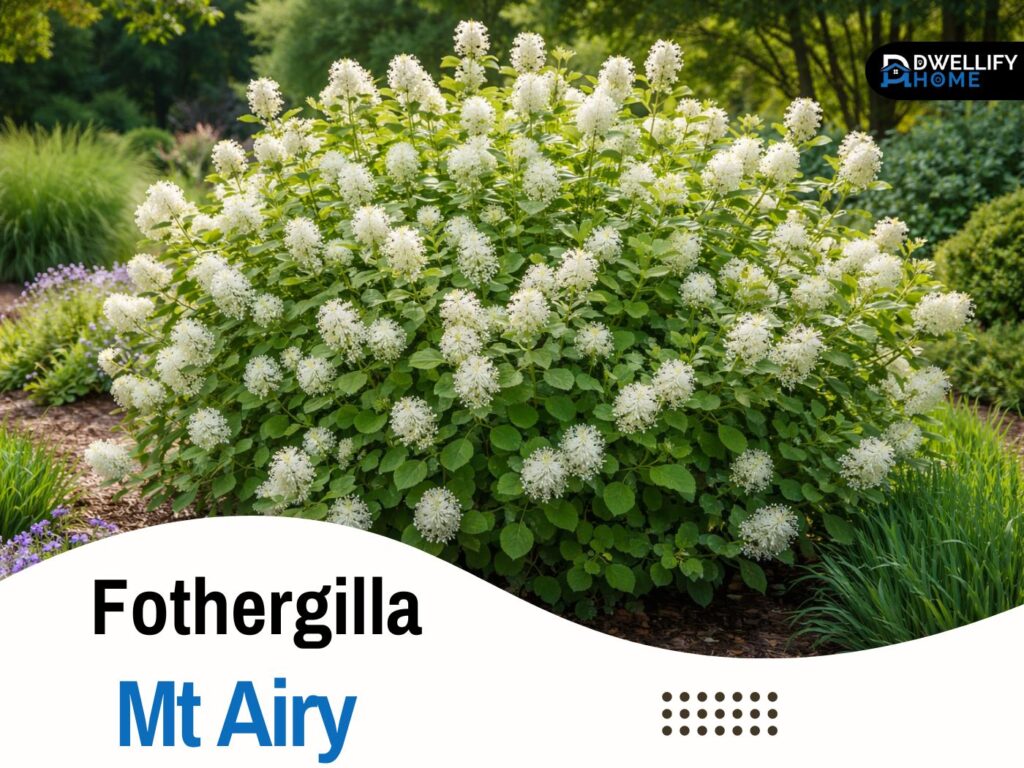
In spring, the blooms look like soft white bottlebrushes held above the foliage. And yes, the fragrance is real. It’s not overpowering like some lilies, but when you catch it on a warm day, it’s lovely.
Bloom time varies by climate, but it’s usually early to mid-spring. In my experience, it’s the kind of bloom that feels “clean” and elegant, not messy. That’s why I like it near a walkway or patio where you’ll actually notice it.
A practical tip: if you plant it where you only see it from a distance, you may miss the scent. If you can, place it within a few steps of where you already walk.
Foliage and Fall Color (Why ‘Mt. Airy’ Is Famous)
Summer leaves tend to be a calm blue-green. Nothing flashy, but they look healthy and refined, which is exactly what you want in a shrub that’s part of a larger landscape.
Then fall hits, and this is where the magic happens. Depending on sun and soil, you can see a blend of yellow, orange, red, and even purplish tones. I’ve had years where it looked like a small bonfire in the border.
How to Get the Best Fall Color (Expert-style tips)
Here are the three things that most affect fall color in real gardens:
- More sun usually means stronger color, especially in cooler climates
- Even moisture through summer reduces stress, which helps the plant color up better
- Acidic soil tends to support healthier foliage, which often leads to better seasonal performance
If you plant it in deep shade, it will live, but the fall show may be quieter. If fall color is your main goal, give it more light.
Where to Plant It for Best Flowers and Best Fall Color
Fothergilla ‘Mt. Airy’ handles full sun to part shade. In hotter areas, part shade can protect it from scorching afternoons. In cooler areas, more sun usually means better flowering and color.
Landscape-wise, this shrub is very flexible. I’ve used it successfully:
- As a foundation shrub where you want a soft, natural shape
- In mixed borders with perennials and grasses
- As a woodland-edge transition plant
- In small groupings for a “drift” of fall color
Here’s the thing: it looks best when it has a darker backdrop. A fence, evergreen shrubs, or even the shadow of taller trees can make the fall color pop.
Soil and Water Needs (The Secret to a Happy ‘Mt. Airy’)
This is the make-or-break part of fothergilla mt airy care. The plant prefers soil that’s slightly acidic, rich in organic matter, and evenly moist. It does not love dry, sandy soil that drains too fast, and it struggles in alkaline, chalky ground.
When I plant it, I aim for a soil that feels like a wrung-out sponge, not mud and not dust. Mulch helps a lot because it keeps roots cooler and moisture steadier.
Watering tip from the field: during the first growing season, deep watering once or twice a week is usually better than daily sprinkles. Sprinkles train shallow roots, and that’s when shrubs struggle later.
If your soil is alkaline (simple fix + what symptoms look like)
If the soil is alkaline, you may see yellowing leaves, especially between the veins. People often panic and pour fertilizer on it. That usually doesn’t fix the root problem.
Instead, do this:
- Add organic matter like composted pine bark or leaf mold
- Use mulch that gently supports acidity, like pine fines
- Avoid over-liming nearby beds
- If needed, use an acid-loving plant fertilizer sparingly and only as support, not as a cure
If the soil stays alkaline year after year, the plant may survive, but it won’t thrive. In that case, I’d rather help you pick a better shrub than fight your soil forever.
Fothergilla ‘Mt. Airy’ Care (Simple Checklist)
Once established, care is refreshingly straightforward. I like shrubs that don’t demand constant attention, and this one usually behaves.
Here’s a simple checklist you can actually follow:
- Water: keep steady moisture the first year, then water during drought spells
- Mulch: 2 to 3 inches, pulled back slightly from the stems
- Feeding: only if growth is weak or leaves look pale, and keep it light
- Weeding: keep competition down near the base, especially early on
The best part is that “doing less” often works better than doing too much. Over-fertilizing is a common mistake that can push soft growth and reduce resilience.
Pruning ‘Mt. Airy’ the Right Way (So You Don’t Cut Off Blooms)
Let’s hit the pruning question clearly: fothergilla mt airy pruning should be minimal. This shrub naturally forms a pleasing shape, so heavy pruning usually makes it look awkward.
If you do need to prune, timing matters. It blooms on older wood, so pruning at the wrong time can remove next year’s flowers. My rule is simple: prune right after it finishes flowering, if pruning is needed at all.
Good reasons to prune:
- Remove a damaged or crossing branch
- Lightly thin to improve airflow
- Keep it slightly off a path or window
Controlling suckers (when to remove, how aggressive to be)
This shrub can sucker, meaning it may send up shoots from the base. Some gardeners love that because it creates a fuller, natural look. Others want a neat, contained shape.
If you want it tidy, cut suckers at the base with clean pruners. Don’t just shear the top, because that encourages more branching and can create a messy “broom” look.
Deer Resistance (And What “Deer Resistant” Really Means)
People often search fothergilla mt airy deer resistant because nobody wants a plant buffet. In my experience, deer usually don’t target fothergilla as a first choice.
But here’s the honest truth: no shrub is fully deer-proof. In heavy deer pressure or during harsh winters, deer will sample almost anything.
If deer are common in your area, I suggest:
- Use repellents during the first couple of seasons
- Avoid planting it right along a deer trail
- Surround it with other less-tasty plants as a buffer
Problems to Watch For (Rare, But Worth Knowing)
Most issues I see are not “disease problems.” They’re site problems.
Common frustrations include:
- Yellowing from alkaline soil
- Poor flowering from too much shade
- Weak growth from dry soil or shallow watering habits
Leaf spot can happen, especially in humid summers, but it’s usually cosmetic. If airflow is decent and you avoid overhead watering late in the day, it rarely becomes serious.
Dwarf vs ‘Mt. Airy’ vs Other Fothergillas (Quick Comparison)
This is where confusion happens, especially online. People search dwarf fothergilla mt airy, but ‘Mt. Airy’ is typically not truly dwarf in the way small-species fothergilla can be.
A simple way to think about it:
- Dwarf fothergilla types stay smaller and are easier for tight spaces
- ‘Mt. Airy’ often lands in the medium range, with strong seasonal interest
- Larger fothergillas can become big shrubs, better for wider landscapes
If your space is very small, look for a true dwarf option. If you want a “main character” shrub without going huge, ‘Mt. Airy’ is often a sweet spot.
Landscaping Ideas and Companion Plants That Match Its Needs
If you want this shrub to look intentional, pair it with plants that like similar soil and moisture. Acid-loving companions are your friend here.
Good companion ideas:
- Azaleas or rhododendrons in similar soil
- Hydrangeas that enjoy consistent moisture
- Ferns and shade perennials in part-shade settings
- Ornamental grasses for contrast and winter interest
I also like placing it where it can be backlit in fall. Morning or late afternoon sun hitting the foliage can make it glow.
Fothergilla ‘Mt. Airy’ for Sale — Buying Tips That Save You Money
When people search fothergilla mt airy for sale, they’re usually deciding between local nurseries and online sellers. Both can work, but you should know what to check.
Here’s what I look for before buying:
- Healthy roots, not circling hard around the pot
- Multiple sturdy stems, not one weak whip
- No obvious yellowing or stressed leaves
- A tag that lists mature height and width clearly
Spacing matters too. If the plant is expected to reach about 5 to 6 feet wide, don’t squeeze it into a 3-foot gap and hope for the best. Give it room so you don’t feel forced to over-prune later.
FAQ
How big does fothergilla Mt Airy get?
Fothergilla Mt Airy typically grows about 5 to 6 feet tall and wide, depending on soil quality, moisture, and sunlight.
Does fothergilla like sun or shade?
It prefers full sun to part shade. More sun usually improves flowering and fall color, while part shade helps in hotter climates.
How far apart do you plant Mount Airy fothergilla?
Space plants about 5 to 6 feet apart to allow full growth and good airflow without overcrowding.
How do you care for Mount Airy fothergilla?
Plant it in acidic soil, keep moisture consistent, mulch regularly, and prune only after flowering if needed.
Is Fothergilla Mt Airy deer resistant?
It is generally considered deer resistant, but hungry deer may still browse it in high-pressure areas.
Conclusion
If you want one shrub that feels “finished” in a landscape without constant babysitting, Fothergilla ‘Mt. Airy’ is worth serious consideration. You get spring fragrance, clean summer foliage, and fall color that can compete with the best deciduous shrubs out there.
Here’s the thing I tell homeowners during a nursery walk: this plant rewards good basics. Give it the right soil, keep moisture steady while it establishes, and don’t over-prune. Do that, and you’ll have a shrub that quietly earns its place every single season, which is exactly what most real gardens need.
Disclaimer:
This article is for informational purposes only. Plant performance may vary based on climate, soil conditions, and care practices. Always consult local gardening experts or extension services for advice specific to your area.

I’m Bilal, the founder of Dwellify Home. With 6 years of practical experience in home remodeling, interior design, and décor consulting, I help people transform their spaces with simple, effective, and affordable ideas. I specialize in offering real-world tips, step-by-step guides, and product recommendations that make home improvement easier and more enjoyable. My mission is to empower homeowners and renters to create functional, beautiful spaces—one thoughtful update at a time.