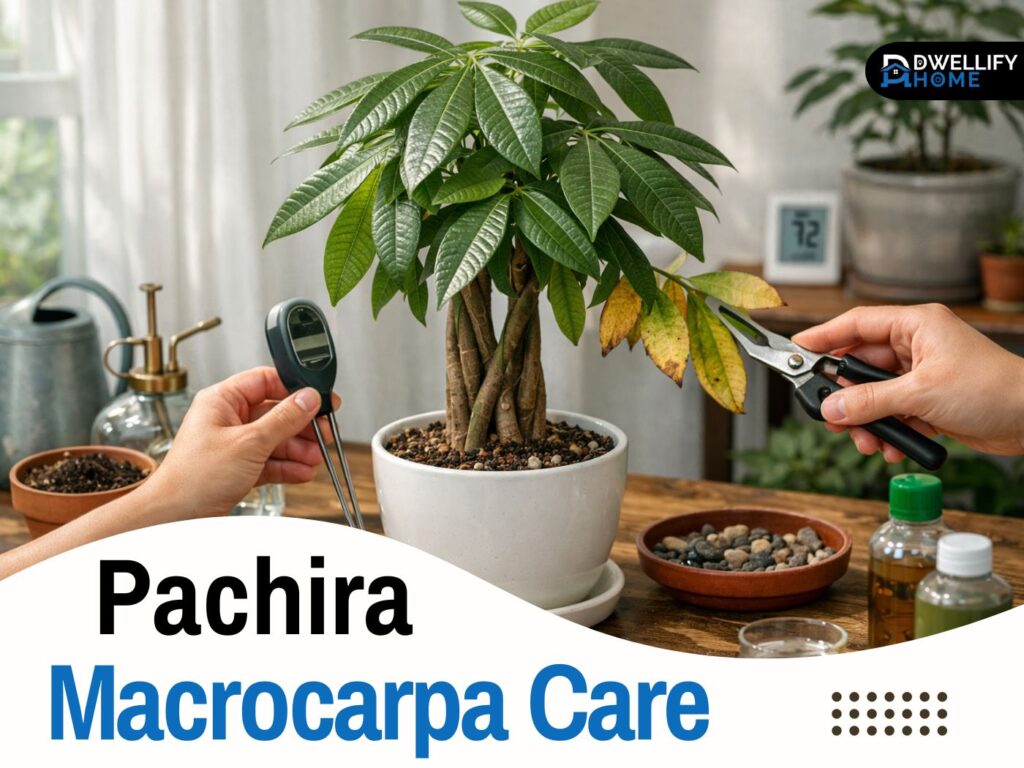
If you’ve brought home a Pachira macrocarpa, you probably want one thing: a plant that stays lush and steady, not a drama queen that drops leaves every time you blink. The good news is, this plant really can be easy. The tricky part is that it looks “tough” on the outside, so people accidentally treat it like it enjoys heavy watering or harsh sun. It doesn’t.
Here’s the thing: most Money Tree problems come from a few repeat mistakes. The biggest one is watering too often, especially in a pot that drains poorly. The second is placing it where sun hits the leaves directly for hours. The third is moving it around the house every week. If you fix those, you’ll already be ahead.
I’ve kept Money Trees in bright living rooms, in offices with blasting air conditioning, and in corners that were honestly too dim. They’ll tolerate a lot, but they respond best when you give them a stable routine. Let’s walk through what actually works in real homes.
Snippet-ready definition:
Pachira macrocarpa care means giving your Money Tree bright indirect light, watering only after the top soil dries, using fast-draining soil, and keeping it warm and stable to prevent leaf drop and root rot.
Mission Statement:
Dwellify Home helps you care for houseplants with calm, practical guidance you can use immediately, so your home stays greener and your plants stay healthier.
Pachira macrocarpa vs Pachira aquatica: Are they the same Money Tree?
You’ll see a lot of confusion around the name. Some labels say Pachira macrocarpa, while most care guides talk about Pachira aquatica. In the houseplant world, the “Money Tree” is commonly sold under Pachira aquatica, and many sellers treat these names as the same plant or very close relatives.
What matters for you is this: the care is essentially the same in indoor conditions. The plant wants bright, indirect light, a well-draining potting mix, and watering only after part of the soil dries out. So even if the tag doesn’t match what you see online, you’re not stuck. The care rules below still apply.
Another thing you’ll hear is “Pachira money tree” as a casual name. You may also see Guiana chestnut or Malabar chestnut. Don’t let the naming overwhelm you. Focus on the environment you can provide, because that’s what determines health.
Quick Care Summary (60-second checklist)
If you want the quick version you can remember, this is it:
- Light: Bright, indirect light is the sweet spot
- Water: Deep water, then let the top soil dry before watering again
- Soil: Airy, fast-draining mix and a pot with drainage holes
- Humidity: Average home humidity is usually fine, but drier rooms may need help
- Temperature: Warm and steady, away from hot or cold drafts
- Fertilizer: Light feeding in spring and summer, pause in winter
- Pruning: A little trim can make it bushier and stronger
- Repotting: Every couple of years or when it’s clearly root-bound
The best part is, you don’t need to do everything perfectly. You just need consistency. A steady routine beats a complicated routine every time.
Quick Guide Table (Indoor vs Outdoor)
| Care factor | Indoors | Outdoors |
| Light | Bright, indirect light near a window | Filtered light or gentle morning sun |
| Watering | Water when top soil dries, then drain fully | Similar, but dries faster in heat and wind |
| Temperature | Keep warm and away from drafts | Bring in when nights get cool |
| Humidity | Normal home humidity is ok, boost in winter | Usually fine outdoors unless very dry |
| Soil and pot | Fast-draining mix, drainage holes | Fast-draining mix, drainage holes |
Step-by-step watering routine (simple and safe)
- Check dryness first: feel the top 1 to 2 inches of soil. If it’s still damp, wait.
- Water deeply: water until it runs out the drainage holes.
- Empty the saucer: never let the pot sit in water.
- Adjust by season: in winter, water less often because soil stays wet longer.
- Use a rhythm, not a strict calendar: your light, pot size, and indoor air decide the timing.
Light Requirements (Indoors + Outdoors)
Pachira macrocarpa care indoors: best placement
Indoors, your Money Tree wants bright light without harsh rays hitting its leaves. A spot near an east-facing window is usually ideal. West-facing can work too, but you may need a bit of distance from the glass or a sheer curtain so it doesn’t get scorched in the afternoon.
In real life, I like the “read a book comfortably” rule. If the room is bright enough that you could read without straining your eyes during the day, your Money Tree is usually happy there. If the plant is far from windows and you notice long gaps between leaves, it’s likely reaching for light. That’s when it gets leggy.
One small habit that makes a big difference is rotating the pot every couple of weeks. Money Trees lean toward the light. A gentle rotation keeps growth balanced and prevents that awkward one-sided shape.
Pachira macrocarpa care outdoor: safe sun exposure
Outdoors, Money Trees can do well in filtered light or gentle morning sun. The key is acclimation. If a plant has lived indoors and you suddenly put it outside in full sun, it’s going to react fast. Leaves can bleach, crisp, or drop.
If you want to keep it outdoors seasonally, start it in shade for a week, then gradually move it into brighter shade or a spot with a little morning sun. Think under a covered porch or beneath a tree canopy. If you see pale patches or crispy edges, it’s telling you the light is too intense.
Temperature matters outdoors too. Once nights get cool, bring it back in. Money Trees don’t enjoy cold drafts, and they definitely don’t enjoy chilly nights.
Pachira macrocarpa care watering (The no-root-rot method)
This is where most people accidentally mess up, so let’s make it simple. With pachira macrocarpa care watering, you’re aiming for a rhythm: soak, then dry slightly, then soak again. Not sips every other day.
I water deeply until water runs out of the drainage holes, then I let the top inch or two of soil dry out before watering again. In a warm bright room, that might be about once a week. In winter, it might be every 10 to 14 days. Your schedule will depend on light, pot size, and how fast your soil drains.
A practical trick I use is the pot-weight test. After you water, lift the pot and notice how heavy it feels. A few days later, lift again. When it feels much lighter and the top soil is dry, that’s usually your moment.
Here are quick signs you’ll notice in real homes:
- Overwatering signs: yellowing leaves, soft trunk base, soil staying wet, musty smell
- Underwatering signs: drooping leaves that perk up after watering, dry soil pulling away from the pot edge
- Inconsistent watering: leaf drop and brown tips, especially in dry indoor air
If you’re unsure, wait one more day. Money Trees handle slight dryness better than soggy roots.
Soil & pot setup (Drainage-first approach)
A Money Tree doesn’t need fancy soil, but it does need air around the roots. The quickest way to cause trouble is using dense soil that holds water like a sponge, especially in a pot without drainage holes.
I prefer a mix that drains fast. You can start with a quality indoor potting mix and lighten it with perlite or orchid bark. The goal is a soil that feels fluffy and doesn’t stay wet for long.
Pot choice matters more than people think. A pot with drainage holes is non-negotiable. If you love decorative cache pots, that’s fine, but keep the plant in a nursery pot inside it so you can drain properly.
Also, don’t let it sit in a saucer of water. Empty the saucer after watering. That one habit alone prevents a lot of pachira aquatica problems in day-to-day homes.
Humidity & temperature (Tropical comfort zone)
Money Trees are tropical by nature, so they like warmth and steady conditions. Indoors, they usually do well in normal home temperatures, but they can get stressed near AC vents, heaters, or drafty doors.
In offices, I’ve seen them drop leaves simply because cold air blew on them all day. The plant wasn’t “dying,” it was just stressed. Moving it a few feet away from the vent fixed the issue within weeks.
Humidity is similar. If your home is reasonably comfortable for you, it’s often acceptable for the plant. But in winter, when heaters dry the air, you might notice brown tips or crispy edges.
If your space is dry, try one of these:
- Group plants together
- Use a small humidifier nearby
- Place the pot on a pebble tray with water below the pot base
- Wipe leaves with a damp cloth to keep them clean and breathing
Misting can help briefly, but it’s not a long-term humidity solution. A consistent humidity source works better.
Fertilizer & feeding schedule (How to feed without burning)
Money Trees don’t need heavy feeding. In fact, overfeeding is a common hidden problem, especially when people try to “fix” slow growth quickly.
I feed lightly during spring and summer using a balanced fertilizer at half strength. Once a month is usually enough. If the plant is in lower light, I feed even less because it’s not using that extra energy.
In fall and winter, I pause feeding. Growth slows, and fertilizer salts can build up in the soil, which leads to crispy tips and tired-looking leaves.
If you ever suspect fertilizer buildup, flush the pot with plenty of water and let it drain completely. It’s a simple reset.
Pachira aquatica pruning (Money Tree pruning for shape + health)
Pruning is one of the best tools you have, especially if your Money Tree is getting tall and sparse. Pachira aquatica pruning is not complicated. You’re basically guiding the plant to branch.
The best time to prune is during active growth, usually spring into early summer. I like to trim just above a leaf node, because that’s where new growth will push out. If you cut too low or remove too much at once, the plant can stall for a bit, so stay gentle.
If you want a bushier look, pinch back the growing tips and trim long stems. If you prefer a taller tree form, you can prune lightly and focus on removing weak or inward-growing branches.
Braided money tree care (ties, rubbing, hidden bands)
Many Money Trees are sold with braided trunks. Here’s a real-world issue I see: sometimes there’s a tight tie or band hidden near the base or higher up under the foliage. Over time it can dig into the stem and restrict water flow.
Every few months, I inspect the trunk area and gently remove or loosen any tight ties. If the braid is rubbing or pressing hard, give it breathing room. The plant doesn’t need to be forced into a perfect braid to stay healthy.
Repotting pachira (When, why, and how to avoid shock)
A Money Tree doesn’t need frequent repotting. In most homes, every 2 to 3 years is fine. But there are clear signs you shouldn’t ignore.
If the plant dries out too fast, roots circle the bottom, or water runs straight through without soaking the soil, it might be root-bound. Also, if it’s top-heavy and unstable, a slightly larger pot helps.
When you repot, only go up one pot size. Bigger is not always better, because extra soil stays wet longer and increases root rot risk. That’s a classic mistake.
After repotting, I keep it in bright indirect light, water once, and then wait longer than usual before the next watering. I also avoid fertilizer for a few weeks. Think of it like recovery time.
Pachira aquatica propagation (Simple methods that actually work)
Pachira aquatica propagation is possible at home, and stem cuttings are usually the easiest route. The best success comes from taking a healthy cutting during the growing season when the plant is actively pushing new leaves.
You can root cuttings in water or soil. Water is fun because you can watch roots form, but soil often creates sturdier roots from the start. If you choose water, change it regularly and keep the cutting in bright, indirect light.
Once roots are a couple of inches long, pot it into a well-draining mix and keep the soil lightly moist for a short period, not soaked. A little humidity helps too. A clear bag over the pot with some airflow can boost success.
Propagation isn’t instant. Expect weeks, not days. Patience is part of the process.
Pachira aquatica problems (Troubleshooting by symptom)
Let’s keep this practical: symptom, cause, fix. This section is the one I wish everyone read before they panic.
Yellow leaves
Yellow leaves are often linked to overwatering, especially if the soil stays wet for long periods. It can also happen when the plant gets too much direct sun, or when it’s adjusting to a new environment.
What I do first is check soil moisture and smell. If it smells sour or musty, I treat it as a root stress issue. I let it dry out more, improve drainage, and make sure it’s not sitting in water.
If only a few older leaves yellow and drop, and the new growth looks good, it may just be normal adjustment. Don’t over-correct.
Brown tips or crispy edges
Brown tips usually point to dry air, inconsistent watering, or mineral buildup from hard water or too much fertilizer. In winter, it’s extremely common.
My fix is boring but effective: water consistently, boost humidity slightly, and flush the soil once in a while. If your tap water is very hard, try using filtered water sometimes. It’s a small change that can improve leaf edges over time.
Drooping, leaf drop, soft trunk
Drooping can mean thirst, but it can also mean roots are struggling. If the soil is dry and the plant perks up after watering, that’s straightforward. If the soil is wet and the trunk base feels soft, that’s a red flag for root rot.
In that case, stop watering, move it to brighter indirect light, and check the roots. Trim mushy roots, repot into fresh airy mix, and water lightly afterward. It’s not always pleasant, but early action can save the plant.
Slow growth or pale leaves
Slow growth is often a light issue. Money Trees can survive in lower light, but they won’t thrive. If you want a fuller plant, move it closer to a bright window or add a grow light.
Pale leaves can also mean it needs gentle feeding during the growing season. Just don’t overdo it. Light plus a light fertilizer schedule beats heavy feeding in dim light.
Pests & disease prevention (Gentle, safe treatment plan)
Most Money Tree pest issues start quietly. The plant looks “fine” until it suddenly doesn’t. A quick weekly check helps a lot.
Look under leaves and around stems. Spider mites often show fine webbing and speckled leaves. Mealybugs look like tiny white cotton bits. Scale can look like small brown bumps on stems.
I like a step-by-step approach:
- Rinse the plant in the shower or wipe leaves with a damp cloth
- Isolate the plant so pests don’t spread
- Use insecticidal soap if needed, repeating weekly for a few rounds
- Improve airflow and avoid overwatering, because stressed plants attract pests
On top of that, keeping leaves clean is prevention. Dusty leaves don’t photosynthesize as well, and stressed plants are easier targets.
Pachira aquatica benefits (What people mean by Money Tree benefits)
People love Money Trees for a mix of symbolism and simplicity. The “money” name is tied to cultural beliefs and feng shui traditions, and many owners enjoy the idea of having a plant associated with good fortune.
But there’s also a practical side. It’s a good-looking indoor tree that fits modern decor, it’s forgiving when cared for properly, and it adds that calm green presence to rooms where you spend time.
I always tell plant owners this: the real benefit is consistency. A Money Tree rewards steady habits. When you keep it stable, it becomes one of those plants you barely worry about.
Expert tips and personal habits (Small actions, big results)
Here are the habits I’ve seen make the biggest difference in real homes and offices:
- Don’t move it often. Find a good spot and let it settle
- Rotate the pot. A small turn every couple of weeks prevents leaning
- Check drainage after every watering. If water doesn’t exit, something’s wrong
- Use the pot-weight test. It’s more reliable than guessing
- Clean the leaves monthly. A damp cloth is enough
- Watch the trunk ties on braided plants. Hidden tight bands cause long-term stress
Guess what, you don’t need a strict schedule. You need a simple routine and a quick weekly check.
FAQs
How do you care for a pachira plant indoors?
Keep it in bright, indirect light, water only when the top soil dries, and use a pot with drainage. Rotate the pot sometimes for even growth.
What are the common problems with money trees?
Yellow leaves from overwatering, leaf drop from stress or low light, brown tips from dry air or salts, and pests like spider mites or scale.
Does Pachira need a lot of sunlight?
It needs bright light, but not harsh direct sun. Direct sun can scorch leaves, while low light can cause slow, leggy growth.
Do money trees like deep or shallow pots?
Neither extreme. Use a stable pot with drainage that fits the root ball well. Oversized pots stay wet longer and raise root-rot risk.
How often should I water a Money Tree?
Water when a good portion of the soil has dried. Many homes land around every 1 to 2 weeks, less in winter.
Conclusion: Keeping your Money Tree healthy long-term
If you remember just three things, remember these: bright indirect light, proper drainage, and a soak-then-dry watering rhythm. That’s the foundation that prevents most problems and keeps the plant calm and steady.
Pachira macrocarpa care doesn’t need to be complicated. When you stop overwatering, keep it out of harsh sun, and avoid moving it around too much, it becomes a reliable, beautiful indoor tree that quietly thrives.
And if your plant hits a rough patch, don’t panic. Check the soil first, then light, then airflow, then pests. Fix one thing at a time, give it a couple of weeks, and you’ll usually see it bounce back in a very satisfying way.
Disclaimer:
This guide shares general, experience-based plant care advice. Conditions vary by home and climate, so adjust based on your plant’s signals. For serious issues like severe root rot or allergies, consult a local plant professional.

I’m Bilal, the founder of Dwellify Home. With 6 years of practical experience in home remodeling, interior design, and décor consulting, I help people transform their spaces with simple, effective, and affordable ideas. I specialize in offering real-world tips, step-by-step guides, and product recommendations that make home improvement easier and more enjoyable. My mission is to empower homeowners and renters to create functional, beautiful spaces—one thoughtful update at a time.