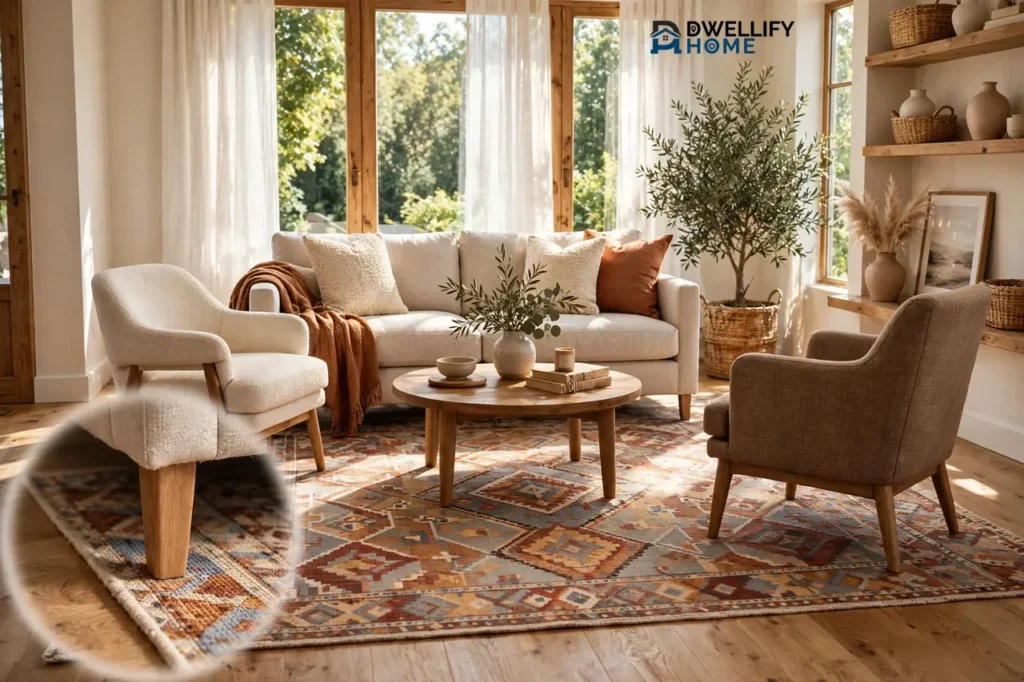
Choosing floor tiles for a living room feels simple until you’re standing in front of 40 boxes that all look “nice.” Here’s the thing, the tile that looks perfect under showroom lights can feel cold, show every speck of dust, or start looking tired after one busy year.
I’ve helped homeowners pick tiles for everything from tiny apartment lounges to big open-plan family rooms. The best part is, once you know what to check, the choice becomes a lot less stressful. Let’s make sure you end up with a floor you love living on, not just looking at.
Snippet-ready definition:
Floor tiles for a living room are durable, easy-clean flooring options, usually porcelain, ceramic, stone-effect, or vinyl. The best choice depends on traffic, comfort, finish, tile size, and how much maintenance you want.
Mission Statement:
At Dwellify Home, our mission is to make home decisions feel simple and confident, with practical design guidance and real-life material advice that helps you create spaces that look good and work even better.
How to Choose Floor Tiles for Living Room (Quick Decision Guide)
Before you fall for a pattern or a glossy finish, start with your lifestyle. A living room with kids, pets, and daily traffic needs different flooring than a formal sitting room that’s mostly for guests.
A quick way I guide clients is: think of your living room like a “pathway.” Where do people walk most, where do they drop shoes, where does sunlight hit the floor, and where do spills happen. That map tells you whether you need high durability, extra grip, or something easier to clean.
If you want a simple checklist, here’s what matters most:
- Traffic level: everyday family use needs tougher surfaces
- Comfort: tiles can feel hard and cool, so size and finish matter
- Cleaning tolerance: some looks hide dust, others show everything
- Sunlight: strong light can highlight grout lines and surface marks
- Budget: include both tile cost and installation prep
Once those are clear, style becomes the fun part instead of a gamble.
Quick Guide Table: Pick the Right Tile Fast
| Your Living Room Situation | Best Pick | Why It Works | Watch-outs |
| Busy family room (kids/pets) | Porcelain | Tough, low maintenance, handles traffic | Don’t go too glossy |
| Want warm, cozy look | Wood-look porcelain | Warm style, tile durability | Choose a natural grout color |
| Small living room | Large-format light tile | Fewer grout lines, looks bigger | Needs a flatter subfloor |
| Open-plan living + kitchen | Kitchen-rated porcelain | Spill-friendly, durable, consistent look | Avoid overly busy patterns |
| Comfort + quiet matters | Vinyl floor tiles (LVT) | Softer, warmer, quieter | Can dent under heavy furniture |
| Tight budget | Mid-range porcelain + simple layout | Best value long-term | Don’t cheap out on installation prep |
Step-by-step buying checklist (simple and practical)
- Decide the “job” first: traffic level, pets, sunlight, cleaning habits.
- Choose material: porcelain for most homes, vinyl for comfort, stone-effect for luxe looks.
- Pick finish: matte or satin is usually easiest to live with.
- Pick size: larger tiles feel calmer; small tiles mean more grout lines.
- Choose grout color: matching grout looks seamless; contrast makes a grid.
- Order samples: view them morning and night in your room.
- Budget for prep: leveling and old-floor removal can change the total cost.
Best Floor Tiles for Living Room by Material
Material choice is where smart decisions happen. In real homes, the “best floor tiles for living room” are usually the ones that handle daily life quietly, without demanding constant attention.
Some materials look gorgeous but need gentle care. Others are almost worry-free. Let’s break it down in a way that actually helps you decide.
Porcelain vs Ceramic (Which one is better for living rooms?)
If you’re choosing between porcelain and ceramic, porcelain is usually the safer bet for busy living rooms. It’s typically denser and more resistant to moisture and wear. Ceramic can still work well, especially in low to moderate traffic homes, but it may chip a bit easier if something heavy drops.
One real example: I worked on a family living room where kids loved building blocks on the floor. Ceramic looked great at first, but after a year there were a few edge chips near the sofa area. In a similar home, porcelain held up better with the same daily use.
If you’re torn, a simple rule helps:
- Choose porcelain for higher traffic, open-plan spaces, or homes with pets
- Choose ceramic for calmer living rooms where the floor won’t take a beating
Stone vs Stone-Effect Porcelain (Luxury look without the headache)
Natural stone looks stunning, no doubt. The problem is, it often needs sealing and regular care. Some stones can stain, and many are sensitive to acidic cleaners. In a living room, that means a coffee spill or a plant pot leak can become a long-term mark if you’re not careful.
Stone-effect porcelain gives you the same visual style with easier maintenance. Marble-look tiles, slate looks, and warm limestone tones are all available now, and many of them look surprisingly realistic.
If you love the idea of a luxe floor but want something practical, stone-effect porcelain is usually the sweet spot. You get the style, and you don’t have to worry as much when life happens.
Vinyl Floor Tiles for Living Room (LVT) — When it’s the smarter choice
Let’s talk about vinyl floor tiles for living room spaces, especially luxury vinyl tile. Guess what, it’s often the better choice when comfort and noise matter more than “stone authenticity.”
Vinyl can feel warmer and softer underfoot than tile. It also tends to be quieter, which is a big deal in apartments or homes with upstairs rooms. I’ve used it in living rooms where clients wanted a wood look but didn’t want cold flooring or loud footstep sounds.
That said, vinyl has a few weak spots. Heavy furniture can dent it, sharp objects can scratch it, and direct sunlight through large windows can cause fading in some cases. If your living room has huge glass doors or heavy cabinets, you’ll want to choose carefully, or stick with porcelain.
Floor Tiles for Living Room Ideas (Styles That Look Expensive)
The look of your floor sets the whole mood of the room. When people ask me for floor tiles for living room ideas, I usually start with one question: do you want the floor to be the star, or the calm background?
A feature floor can be beautiful, but it needs balance. A simple, quiet tile can also look high-end when the size, grout, and finish are chosen well.
Here are ideas that work in real homes, not just photos.
Marble-look tiles can make a living room feel brighter and more elegant. If you love the look but don’t want constant shine maintenance, go for a satin or matte finish.
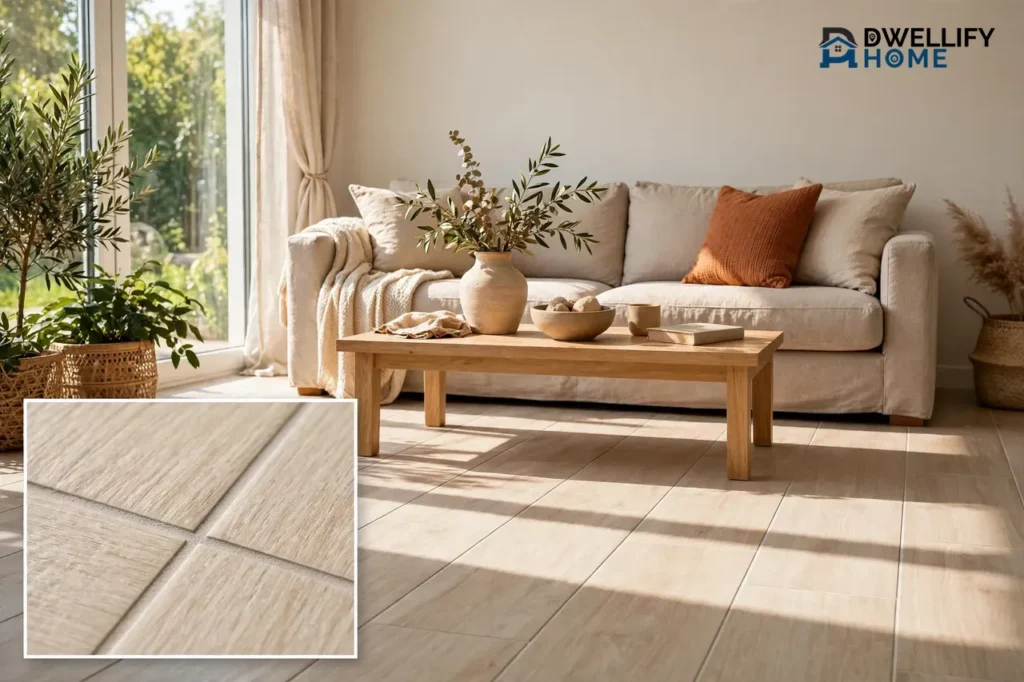
Wood-look tile is one of my favorites for family rooms. It gives warmth and a relaxed feel, and it works with almost any style, modern, rustic, coastal, or classic. It’s also great for open-plan spaces where you want continuity.
Concrete-look tiles are perfect for modern interiors. They hide dust well, they don’t feel too busy, and they pair beautifully with textured rugs and warm lighting.
Terrazzo-look tiles are back in style, but the trick is choosing a pattern that isn’t too loud. In smaller living rooms, go with a lighter base and smaller chips so it doesn’t overwhelm the space.
Geometric or patterned tiles can look amazing, especially in a small sitting area. The key is restraint. If the floor has movement, keep the walls, curtains, and furniture shapes simpler.
One practical tip I always share: take a photo of your living room in daylight, then view tile samples on that photo. Some patterns that look exciting in-store can feel chaotic at home.
Tile Size, Finish, and Layout (Small Choices That Change Everything)
This is the section that separates “nice tile” from “wow, the room looks bigger.” People often focus on color and forget that size, grout, and layout do most of the visual work.
Even if you choose a basic tile, these details can make it look custom.
Large-Format Tiles (Do they make a room look bigger?)
Large format tiles often make a living room look more open because there are fewer grout lines breaking up the floor. In open-plan homes, they also help the living area flow into the dining and kitchen spaces.
On top of that, large tiles can feel more modern. A popular choice is 12×24, but bigger formats can look incredible in larger rooms.
One caution from experience: large tiles need a flatter subfloor. If the floor underneath is uneven, you can get lippage, those little edges you feel underfoot. A good installer can solve this, but it’s worth budgeting for prep.
Rectified vs Non-Rectified Tiles (Tighter grout vs easier install)
Rectified tiles are cut very precisely, so the edges are sharper and more uniform. That means you can use narrower grout lines and get a cleaner, more seamless look.
The flip side is that rectified tiles demand better installation. If the subfloor isn’t level or the installer rushes alignment, tiny imperfections become very visible.
If you want a crisp, modern finish, rectified tiles are great. If you want a slightly more forgiving install, non-rectified tiles can be less stressful, especially in older homes.
Beyond that, finish matters a lot:
- Matte and satin finishes hide smudges and feel calmer
- High-gloss finishes reflect light but can show footprints and dust faster
- Textured finishes add grip but can be harder to mop
And don’t underestimate grout. Grout color ideas matter because grout can either blend quietly or draw a grid across your floor. Matching grout gives a softer look. Contrasting grout makes the tile pattern stand out.
Safety + Durability Checks (Expert-Backed Buying Tips)
A living room isn’t a wet bathroom, but slip and wear still matter. In real homes, most falls happen during ordinary moments, carrying laundry, running to answer the door, kids in socks, or stepping in from outside.
So yes, it’s worth checking basic safety and durability details without getting overly technical.
Look for tiles that have a reasonable slip resistance rating for indoor floors. Many spec sheets mention a DCOF rating, and while you don’t need to memorize numbers, you do want to avoid overly glossy surfaces if your home has kids, older family members, or a lot of foot traffic.
Wear resistance matters too. For living rooms, you want tiles that handle regular walking, chair movement, and occasional dragged furniture. Some tile lines mention a PEI rating, which relates to surface wear. If the living room is your main gathering spot, choosing a stronger wear grade is a smart move.
A few real-world tips I’ve seen save floors:
- Use felt pads under sofa legs and chairs
- Avoid metal chair feet directly on tile
- Place a mat near entry points to reduce grit that scratches surfaces
- If sunlight pours in, test samples in that exact spot because light changes everything
This is the kind of practical stuff that keeps the floor looking good year after year.
Can I Use Bathroom Floor Tiles for Living Room?
Yes, bathroom floor tiles for living room use can work, but only if you’re choosing wisely. The tile itself isn’t “bathroom-only,” it’s the surface finish and performance that decide if it belongs in a living space.
Bathroom floor tiles are often designed for grip. That can be great if your living room connects to a patio or a main entrance where shoes bring in moisture. A slightly textured surface gives you peace of mind.
But some bathroom tiles have heavy texture that traps dirt and makes daily cleaning harder. I’ve seen homeowners regret this because the floor looks dusty even after mopping. In a living room, you usually want a surface that cleans easily while still being safe.
A practical way to decide is simple:
- If it’s comfortable to walk on barefoot and easy to wipe clean, it can work
- If it feels rough and grabs lint, it may become annoying in daily life
Can I Use Kitchen Floor Tiles for Living Room?
Kitchen floor tiles for living room spaces are often a great match, especially in open-plan homes. Kitchens need spill resistance and durability, so many kitchen tiles are built for real-world use.
If your living room connects to the kitchen and you want one continuous floor, kitchen-rated porcelain is usually a solid option. It handles traffic, it cleans easily, and it won’t feel fragile.
The only downside I see sometimes is visual. Some kitchen tiles have busy patterns designed to hide crumbs and splashes. In a living room, those same patterns can make the space feel noisy.
If you want the best of both worlds, choose a calm tile design and let the warmth come from rugs, lighting, cushions, and wood accents. That way the floor supports the room instead of competing with it.
Floor Tiles for Living Room Cost (Material + Installation + Hidden Extras)
Budgeting is where people get surprised. Floor tiles for living room cost isn’t just the price tag on the box. It’s tile, underlayment, adhesive, grout, trim pieces, and labor. And in older homes, prep work can be a big part of the bill.
A simple example: two clients picked similarly priced tiles, but one had a perfectly level concrete base and the other had an uneven subfloor that needed leveling. The second project cost noticeably more, even though the tiles were nearly the same.
What Changes the Total Cost?
These are the biggest cost drivers:
- Tile material and thickness
- Tile size, large formats can cost more to install
- Subfloor leveling and prep
- Removing old flooring
- Pattern complexity, like herringbone or diagonal layouts
- Labor rates in your area
If you want an accurate estimate, ask an installer to check the subfloor before you commit. That five-minute look can prevent budget shock later.
Cheap Floor Tiles for Living Room (Save money without regrets)
Cheap floor tiles for living room projects are possible, but smart savings matter. The best part is, you can often cut costs without sacrificing quality if you focus on the right areas.
Good ways to save:
- Choose a standard size and simple layout
- Pick a mid-tone tile that hides dust and daily marks
- Use matching grout for a clean look that doesn’t show uneven lines
- Spend on prep work, then save on tile design
Where not to cut costs: installation quality. A cheaper tile installed well looks better than an expensive tile installed poorly. That’s a hard truth, but it’s one I’ve seen many times.
Where to Buy (Including Home Depot) + How to Shop Smart
Buying tiles is easier than ever, but that doesn’t mean it’s foolproof. Floor tiles for living room Home Depot shopping can be convenient because you can grab samples and compare styles quickly.
Still, don’t just look at the display tile. Check the boxes and product details. In stores, I always advise people to look for:
- Whether the tile is rated for floors and suitable for your traffic level
- Whether it’s porcelain or ceramic if that matters to you
- Shade variation notes, so you know if it will look uniform or varied
- Return policy, because extra boxes are common
- Matching trim pieces if you need transitions
If you’re buying online, order samples and view them in your room at different times of day. Morning light and evening light can make the same tile look completely different.
One more tip: buy all your tiles from the same batch or lot when possible. It helps avoid slight shade differences that can show up once installed.
Installation Tips That Prevent Cracks, Hollow Sounds, and Ugly Grout Lines
A beautiful tile can look disappointing if installation is rushed. I’ve walked into homes where the tile was “fine,” but the floor sounded hollow, grout cracked early, or edges didn’t line up.
The biggest reason is usually prep. The subfloor needs to be flat and stable. Large tiles especially need a smooth base so they don’t rock or sit unevenly.
A few practical installation points worth remembering:
- Level the subfloor properly before tile goes down
- Use the right adhesive for the tile type and tile size
- Leave expansion gaps where needed, especially in larger rooms
- Don’t rush curing time, it matters more than people think
- Keep grout lines consistent, especially with rectified tiles
If you’re hiring an installer, ask how they handle leveling and how they check coverage under tiles. A confident professional will answer clearly.
Cleaning and Maintenance (Tile vs Vinyl)
The goal is a floor that stays good-looking with normal cleaning, not a floor that demands special treatment every week.
For tile, daily care is simple: sweep or vacuum grit, then mop with a gentle cleaner. Avoid harsh acids or heavy wax products unless the tile brand specifically recommends them. Grout is usually the first thing to look dirty, so if you choose a grout color that suits your lifestyle, maintenance becomes much easier.
For vinyl floor tiles for living room spaces, stick with soft cleaning routines. Avoid steam mops unless the manufacturer says it’s safe. Use felt pads under furniture, and keep direct sunlight in mind if your room gets strong afternoon light.
If you want the easiest day-to-day upkeep, here’s what works in most homes:
- Choose a mid-tone tile
- Avoid super glossy finishes if you hate wiping footprints
- Keep a doormat near entry points to reduce grit
- Use a rug in main seating areas to reduce wear and add comfort
FAQs
1) What is the 1/3 rule for tiles?
It’s a layout rule for rectangular tiles: offset each row by no more than one-third of the tile length. It helps reduce uneven edges (lippage), especially on long planks and 12×24 tiles.
2) Are floor tiles good for a living room?
Yes, especially porcelain. Tiles are durable, easy to clean, and great for high-traffic homes. To make them feel warmer and quieter, use rugs, underlays where appropriate, and a matte or satin finish.
3) What flooring is trending right now?
In many homes, popular looks include wood-look tile, stone-effect (marble/limestone), concrete-look, and large-format tiles for fewer grout lines and a clean modern feel.
4) Which size of tiles is best for a living room?
Most living rooms look best with medium to large formats because there are fewer grout lines. Common “sweet spot” sizes include 12×24 and 24×24, depending on room scale and your layout.
5) Can I use bathroom or kitchen floor tiles in the living room?
Often yes. Many bathroom and kitchen floor tiles are porcelain or ceramic and work fine in living spaces. Just avoid overly rough textures (hard to clean) and overly glossy finishes (can show marks and feel slippery).
Conclusion
By now, you’ve probably noticed there isn’t one perfect tile for every home. The right choice depends on how you live, how much you want to clean, and what look makes you feel good walking into the room.
If you want a safe, practical starting point, porcelain in a matte or satin finish is hard to beat for most living rooms. If comfort and quiet matter most, vinyl can be a smart option. And if you’re chasing style, stone-effect and wood-look tiles can give you that high-end vibe without turning maintenance into a weekly project.
Most importantly, don’t choose from the showroom alone. Take samples home, see them in your light, and think about your real daily routine. That’s how you end up with floor tiles for living room spaces that still feel like the right decision years from now.
Disclaimer:
This guide shares general design and material advice based on real-world flooring practices. Tile specs, ratings, and installation needs vary by product and home conditions, so confirm details with the manufacturer and a qualified installer before purchase.