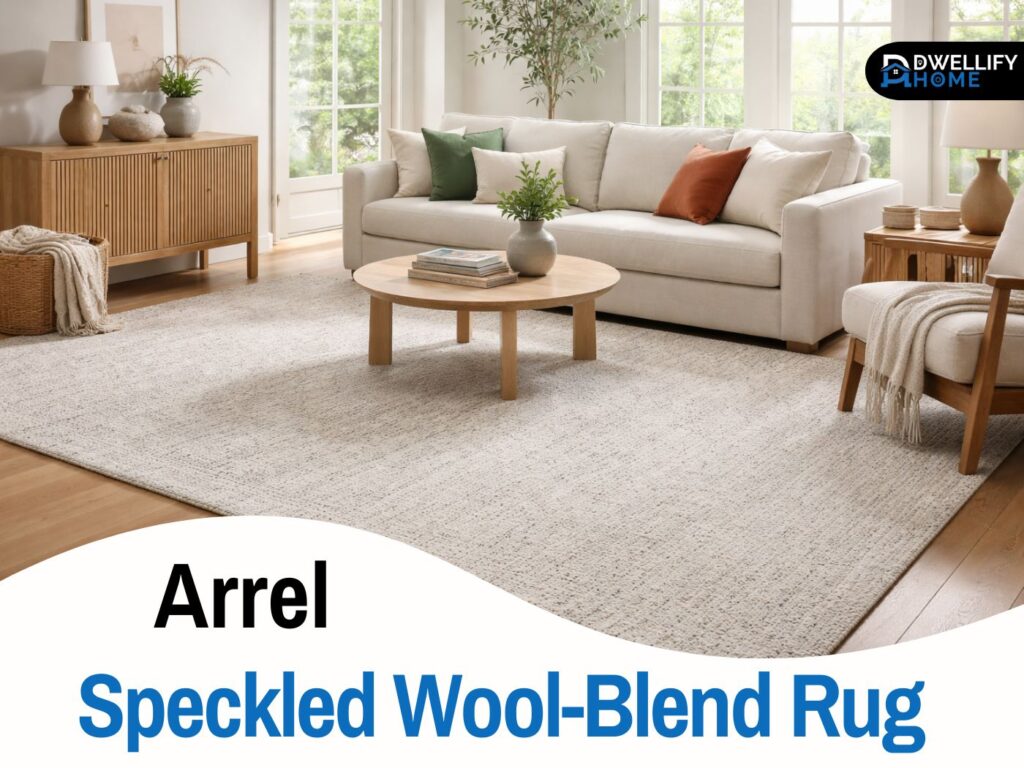
If you’ve been eyeing the arrel speckled wool-blend rug, you’re probably drawn to the calm, textured look that works with almost any room. I get it. Speckled wool-blend rugs are popular because they hide daily life better than solid flats, but they still feel simple and modern.
In this guide, I’ll walk you through what this rug is like in real homes—how it feels underfoot, what maintenance actually looks like, and which colors and sizes make sense. Think of this like chatting with a rug person who’s helped a lot of homeowners avoid the usual mistakes.
Snippet-ready definition:
The Arrel speckled wool-blend rug is a low-pile, hand-loomed style rug made from wool with a touch of viscose. Its subtle speckling softens a room and helps hide everyday lint better than a solid rug.
Mission Statement:
At Dwellify Home, our mission is to help you choose home pieces that look good and work in real life—through clear guidance, honest expectations, and practical care tips you can actually follow.
What the Arrel Speckled Wool-Blend Rug Is
This rug is best described as a “quiet texture” piece. The speckling isn’t loud or patterned in a traditional way. Instead, it adds a soft visual break that keeps the rug from looking flat, especially in rooms with plain walls or simple furniture.
In most homes, this kind of rug works like a bridge. It connects different tones—wood floors, sofas, side tables—without pulling too much attention. It’s the type of rug people buy when they want the room to feel finished, but not styled to death.
If you like a clean look but you’re nervous about solid light rugs showing every crumb, the speckled effect usually feels like a safer middle ground.
Quick Guide Table: Pick the right color + size fast
(Made to match real-home decision points: lighting, traffic, pets, and room scale.)
| What you’re deciding | Best choice | Why it usually works |
| You want a cooler, modern look | Arrel speckled wool-blend rug denim | Reads calm and slightly crisp; pairs well with white/black/light wood. |
| You want a warm neutral that feels cozy | Arrel speckled wool-blend rug fawn | Warmer undertone; forgiving in warm indoor lighting. |
| You want an earthy accent without loud patterns | Arrel speckled wool blend rug green | Feels organic; blends well with plants, walnut wood, warm whites. |
| You want the brightest, airiest neutral | Arrel speckled wool-blend rug sand | Opens up small rooms; can show lint/crumb contrast more easily. |
| You want warm “golden neutral” | Arrel speckled wool-blend rug wheat | Adds warmth to rooms with medium wood and beige textiles. |
| Small living room / apartment seating zone | 6×9 | Anchors coffee-table area without swallowing the room. |
| Full living room seating group / open concept | 9×12 | Helps furniture sit “on” the rug so the layout looks finished. |
| You want easier daily upkeep (pets/kids) | Denim or Fawn | Mid-tones tend to hide lint and small marks better than very light shades. |
Material reality check: the Arrel is commonly described as wool with a hint of viscose for subtle sheen, and as a low-pile/flatweave-feel rug—so lighting can change how it looks during the day.
Quick “Before You Buy” Checklist (simple + practical)
- Tape the size on the floor (6×9 vs 9×12) and live with it for a day.
- Check your lighting: bright daylight vs warm bulbs can shift how speckling reads.
- Plan a rug pad for grip + comfort (especially on hard floors).
- Expect a break-in period: wool-blend rugs can shed early on; routine vacuuming helps.
- Choose mid-tones if you hate seeing lint: denim/fawn usually feel easier than sand.
Material & Construction Quality
Wool + viscose blend (what it means for softness, warmth, and sheen)
A wool + viscose blend is a common combo in modern rugs. Wool brings warmth, spring, and that “cozy but structured” feel. Viscose adds a slight smoothness and a bit of soft shine, especially when light hits it from a window.
Here’s the real-world part: that gentle sheen can make the rug look a little different throughout the day. Morning light might make it look brighter; evening light might pull out deeper tones. That’s normal with blends like this, and it’s one reason people sometimes say, “It didn’t look like the photos.”
In terms of build, this rug style usually reads as lower pile and more tailored, not fluffy. That’s good for chairs that slide, doors that swing over it, and busy rooms where you don’t want to baby your rug.
Also, because wool-blend rugs are often handmade or handcrafted, small variation happens. I always tell people to expect tiny differences in weave tightness, speckle density, or edge straightness. That isn’t a defect—it’s part of what you get when it isn’t mass-printed.
Color Options and How They Look in Real Homes
Color choice matters more than people think with speckled rugs. The speckles can either soften a room or make it feel slightly “dusty” depending on your lighting and furniture tones. Here’s how the popular shades usually read in normal, lived-in spaces:
- Arrel speckled wool-blend rug denim: This one leans cooler and looks best with bright whites, black accents, or light oak. In a sunny room, it can feel airy and calm. In a dim room, it can read more muted and gray-blue.
- Arrel speckled wool-blend rug fawn: A warm neutral that plays well with beige, cream, and walnut wood. If your home has warm lighting (yellow bulbs), fawn tends to look inviting instead of flat.
- Arrel speckled wool blend rug green: This usually works like a natural accent without shouting. It’s great if you have plants, warm white walls, or olive/brown tones in the room. In cool daylight, the green can look fresher; in warm light it can look earthier.
- Arrel speckled wool-blend rug sand: A bright, light neutral that makes small spaces feel bigger. The trade-off is it can show contrast faster—dark socks, pet hair, or crumbs can stand out more.
- Arrel speckled wool-blend rug wheat: Wheat often feels like a warmer “golden neutral.” It’s nice if your floors are medium wood or your room has warm textiles like linen, jute, or tan leather.
One tip I’ve learned the hard way: don’t judge these shades only by a product photo. If you can, compare them against your wall color and your floor tone. Even holding up a pillow or throw in the same color family can help you predict whether the rug will feel cool, warm, or “in-between.”
Sizes, Layout Tips, and What to Buy for Each Room
The two most searched sizes: 6×9 vs 9×12
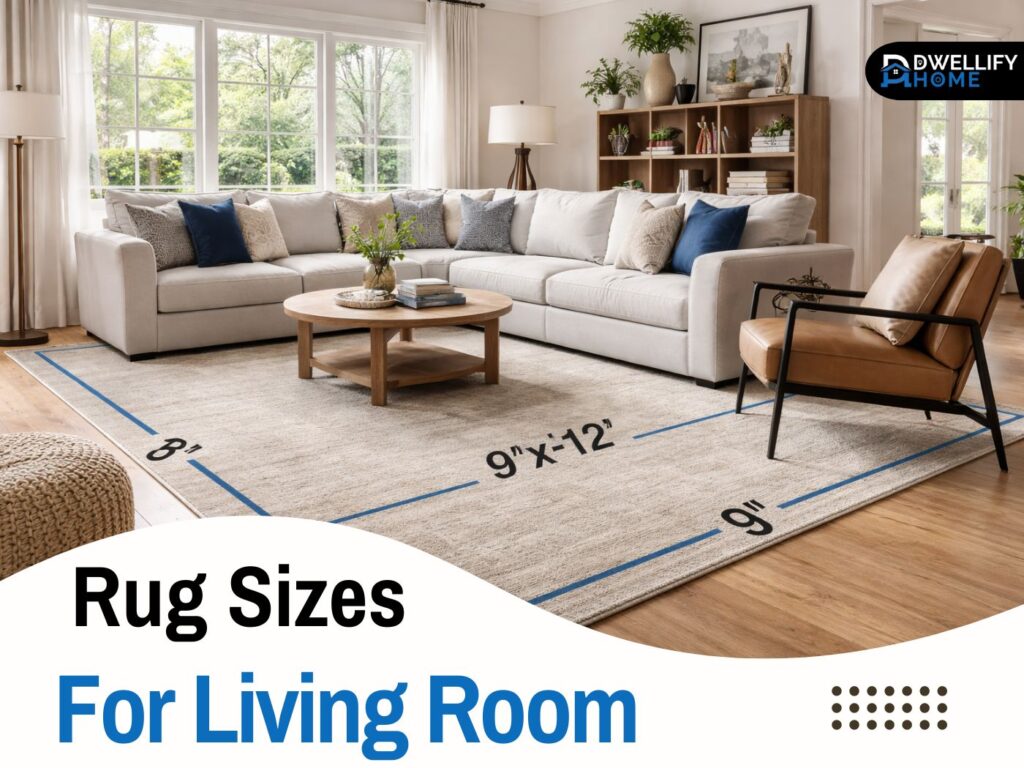
Most buyers end up choosing between arrel speckled wool-blend rug 6×9 and arrel speckled wool-blend rug 9×12 because those sizes fit common layouts without needing custom sizing.
A 6×9 works well when:
- You have a smaller living room and want the rug to anchor the coffee table area
- You’re placing it under a queen bed and want coverage under the lower two-thirds
- You’re styling a home office or reading corner and want a clean footprint
A 9×12 makes sense when:
- You want all front legs of the sofa and chairs on the rug (or even all legs)
- You have an open-concept space and need the rug to visually define the seating zone
- You’re placing it under a king bed and want generous side coverage
A quick practical trick: tape the rug size on your floor using painter’s tape. Walk around it for a day. You’ll notice right away if it feels too tight or too oversized.
For dining spaces, the low-pile style is often a win because chairs move easily. Just make sure the rug extends far enough so chair legs stay on the rug even when pulled out.
Feel Underfoot and Everyday Comfort
This rug style usually feels more “neat and supportive” than plush. You won’t sink into it like a thick shag or deep-pile wool rug. Instead, it tends to feel firm with a light cushion depending on your pad.
That’s not a bad thing. In busy homes, I actually prefer this feel for living rooms and dining areas because it stays flatter and doesn’t get that crushed, matted look as quickly.
If you want it to feel softer, don’t rely on the rug alone—use a quality rug pad. A good pad can change the comfort level more than people expect, especially on hard floors.
Shedding, Lint, and Real Maintenance Expectations
Does it shed? What’s normal and how to reduce it
Most wool rugs shed at the start. With wool blends, shedding can show up as little fuzz balls or fibers that collect around the edges or under furniture. In my experience, the first few weeks are the “messiest,” then it settles down as the loose fibers work their way out.
To reduce shedding without damaging the rug:
- Vacuum regularly, especially in the first month
- If your vacuum has a very aggressive beater bar, use a gentler setting
- Don’t overdo it in one session—steady weekly cleaning works better than heavy daily vacuuming
Lint visibility is also a real thing. Lighter shades like sand or wheat can show dark hair or little crumbs faster, even if the rug is clean. If you have pets, choosing a mid-tone like denim or fawn often feels easier day to day.
How to Clean the Rug Without Ruining It
For most spills, speed matters more than product choice. Blot first, don’t rub. If you rub a wool-blend rug, you can push the spill deeper and rough up the fibers in that spot.
A simple approach that works well for everyday mess:
- Blot with a clean towel (press, lift, repeat)
- Use a small amount of mild soap diluted in water
- Dab the area gently, then dab again with clean water
- Blot dry and let it air dry fully
For deeper cleaning, I’m cautious about soaking wool-blend rugs. Too much water can cause texture changes or lingering odor. If the rug gets heavily soiled (pet accidents, repeated spills), professional cleaning is usually safer than trying to “wash” it at home.
One small habit that helps: rotate the rug every few months. It evens out traffic paths and keeps one side from aging faster than the other.
Rug Pad, Backing, and Floor Safety
A rug pad isn’t optional in most real homes—it’s part of making the rug feel and behave the way you want. Without one, rugs can slide, corners can curl more easily, and the whole rug can feel thinner than expected.
For choosing a pad:
- On hardwood or tile: go for a grippy pad that won’t stain finishes
- For more comfort: choose a slightly thicker pad (but still low enough to avoid tripping)
- On carpet: use a pad designed for carpet-on-carpet so it doesn’t shift
If you’re buying this for a high-traffic space, a pad also protects the rug fibers by absorbing some of the impact from footsteps.
Durability and “Is It Kid & Pet Friendly?”
Wool is naturally resilient, and that’s a plus. It tends to bounce back better than many synthetic rugs. But here’s the honest part: light and neutral colors don’t hide everything, even with speckling.
In a family home, this rug can work well if you set realistic expectations:
- In living rooms: great, especially with a pad
- In bedrooms: very easy to live with
- In entryways: I’d be more selective, because sand and wheat can show grime faster
If you’ve got pets, the speckled look helps disguise small bits of lint better than a flat solid. Still, if you hate seeing hair at all, aim for a mid-tone. Denim and fawn often feel more forgiving than very pale shades.
A simple routine keeps it looking good:
- Shoes-off habit when possible
- Quick vacuum once or twice a week
- Spot-clean spills the same day
Arrel Speckled Wool Blend Rug Review Summary
If you read any arrel speckled wool blend rug review, you’ll usually see a few repeating themes. People like the calm, modern texture and how easily it fits into different rooms without clashing. Many also mention that it looks more “designer” than a basic printed rug because the texture feels natural.
The most common complaints are also predictable for wool-blends:
- Shedding early on
- Color looking different depending on lighting
- Some people expecting a plush feel and getting a more structured feel instead
When I translate that into advice: this rug is a strong pick if you want a clean, textured neutral and you don’t mind a short break-in period. It’s not the best fit if you want thick softness or you want a rug that hides every bit of lint without any maintenance.
Certifications, Materials Safety, and Trust Signals
If you see certifications like OEKO-TEX mentioned on a listing, it’s usually a sign that materials have been tested against certain harmful substances standards. It doesn’t mean “perfect for everyone,” but it’s one of the signals that helps buyers feel more confident about what’s going into their home.
Other trust checks I recommend before buying:
- Confirm the exact material blend
- Look for notes about handmade variation
- Check return rules, especially for large sizes like 9×12
- Read buyer photos when available (they’re often more honest than studio shots)
Buying Guide: How to Choose the Right One for Your Home
Here’s the quick decision checklist I use with homeowners:
- Measure first: tape out the size on the floor
- Choose color by undertone: warm (fawn/wheat) vs cool (denim/greens)
- Match the size to furniture: don’t buy too small just to save money
- Budget for the pad: it changes comfort and stability
- Check returns: especially if you’re unsure about color in your lighting
One of the biggest mistakes I see is people choosing the lightest shade because it looks bright online, then regretting it when real life shows dust, crumbs, and shadows. If you’re unsure, a mid-tone is often the safer everyday choice.
Conclusion
If you want a modern, calm rug with real texture—and you’re okay with normal wool-blend realities like some early shedding—this style can be a smart buy. The color and size you pick will matter more than anything, so focus there first.
Before you order, tape the size on the floor, think about your room’s lighting, and plan on using a rug pad. Do that, and the arrel speckled wool-blend rug is much more likely to feel like it belongs in your home instead of feeling like a risky online guess.
Disclaimer:
This article is for informational purposes only and reflects general rug-care best practices. Rug materials, color tones, and texture can vary by batch, lighting, and retailer photos. Always follow the care label for your specific rug and test any cleaner on a hidden area first.

I’m Bilal, the founder of Dwellify Home. With 6 years of practical experience in home remodeling, interior design, and décor consulting, I help people transform their spaces with simple, effective, and affordable ideas. I specialize in offering real-world tips, step-by-step guides, and product recommendations that make home improvement easier and more enjoyable. My mission is to empower homeowners and renters to create functional, beautiful spaces—one thoughtful update at a time.