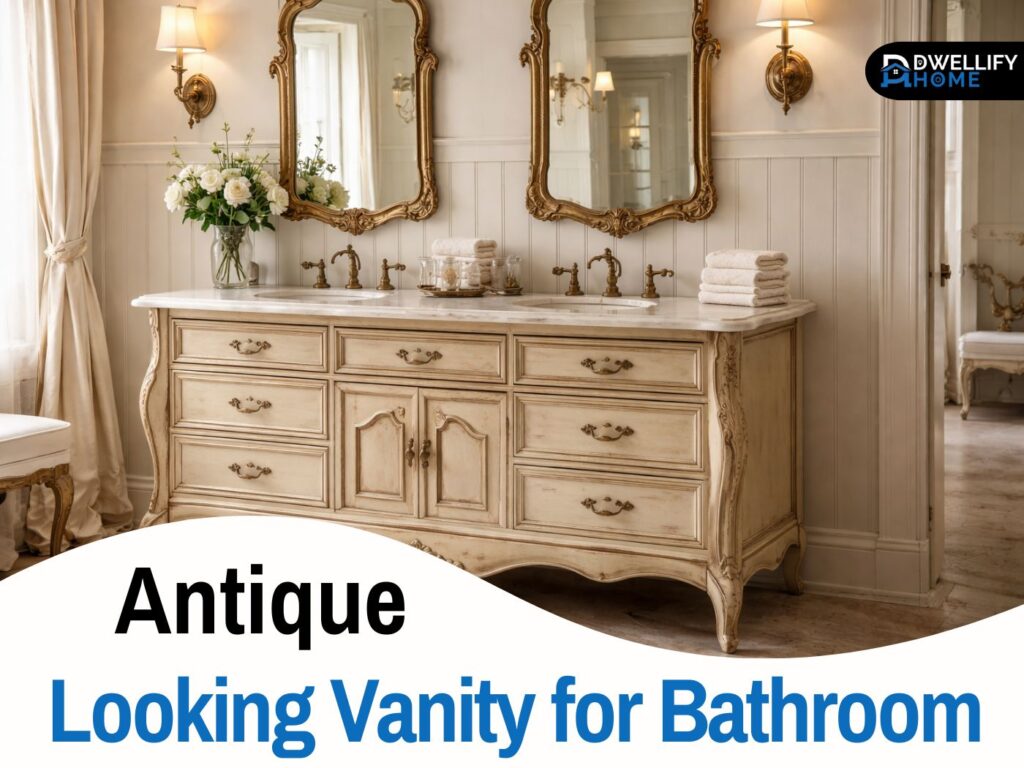
An antique looking vanity for bathroom spaces can be one of those choices you never get tired of. It adds warmth and character in a room that often feels cold and practical. And when it’s chosen well, it doesn’t just look good on day one, it keeps looking better as the years go by.
I’ve spent the last 12 years helping homeowners pick, restore, and install vintage-style vanities, including true antiques, high-quality reproductions, and dresser conversions. Here’s the thing: the prettiest vanity in a photo can be the worst one to live with if the size is off, the finish isn’t protected, or the storage doesn’t work with real plumbing. This guide will walk you through it calmly, like we’re standing in your bathroom measuring tape in hand.
Snippet-ready definition:
An antique looking vanity for bathroom use is a furniture-style cabinet designed to feel old-world, with vintage details like aged finishes and classic hardware, while still working with modern sinks, plumbing, and daily routines.
Mission Statement:
At Dwellify Home, our mission is to help homeowners choose timeless bathroom pieces with confidence, blending vintage character with modern comfort through practical guidance, honest comparisons, and craftsmanship-first advice.
What “Antique-Looking” Really Means (So You Buy the Right Thing)
People use “antique,” “vintage,” and “antique finish” like they all mean the same thing. They don’t. An antique is typically an older piece that was made decades ago and has true age-related wear. Vintage is newer than antique, but still from a past era. A reproduction is made today but styled to look old.
The best part is, you can get the antique look in a few ways, and each one can be a smart choice depending on your bathroom. A true antique can be incredible, but it needs careful moisture protection. A well-made reproduction can give you the look with fewer headaches. And a vintage dresser conversion can be magic if the furniture is solid and the plumbing layout cooperates.
What makes a vanity feel authentically “old” comes down to three things:
- Shape and proportions: curved legs, inset panels, furniture-like profiles
- Finish and patina: depth, variation, and natural-looking wear that isn’t “painted-on”
- Hardware: weighty pulls, old-world knobs, and finishes like aged brass or iron
Quick Guide Table: Pick the Right Size Fast
| Vanity size | Best for | What it feels like in real life | My quick tip |
| Vintage bathroom vanity 24 inch | Powder rooms, very tight layouts | Minimal counter space, storage is limited | Choose smart drawers or shelves and keep countertop clutter low |
| Vintage bathroom vanity 30 inch | Small full bathrooms | Balanced and comfortable for daily use | Great “safe choice” if you’re unsure |
| Antique bathroom vanity 36 inch | Most standard bathrooms | Noticeably roomier storage and counter space | The best long-term pick when space allows |
| Vintage bathroom vanity 48 inch | Bigger single-sink setups | Shared counter space without two sinks | Pair with a wide mirror to make it feel custom |
| Double antique looking vanity for bathroom | Shared bathrooms, larger walls | Two stations, more plumbing complexity | Only do it if drawers and doors still open freely |
Step-by-step buying checklist (simple but complete)
- Pick the style lane first (Victorian, French country, farmhouse, Art Deco) so everything matches.
- Measure width, depth, and door swings with painter’s tape on the floor.
- Decide single vs double based on real daily routine, not just looks.
- Choose sink type that fits your habits: undermount (easy wipe), drop-in (simple install), vessel (bold look, can splash).
- Confirm what’s included: cabinet only, or vintage bathroom vanity with sink and countertop included.
- Check durability: sealed edges, sturdy joinery, solid hardware, smooth drawers.
- Plan moisture protection: fan ventilation, sealed cutouts, backsplash or sealed wall joint.
Why an Antique-Looking Vanity Works So Well in Bathrooms
A bathroom is full of hard surfaces, tile, glass, chrome, bright lights. A vintage-style vanity breaks that up with warmth. It’s the difference between a room that feels like a hotel and one that feels like home.
On top of that, these vanities tend to hide mess better. Lightly distressed paint, wood grain, and antique glazes are forgiving. I’ve had clients with kids who swear their distressed vanity looks cleaner than their old glossy white cabinet ever did, simply because tiny scuffs don’t scream for attention.
One more practical reason: furniture-style vanities often offer better everyday ergonomics. You get drawers where you want them, doors that open wide, and counter space that feels like a real surface instead of a skinny ledge.
Choose Your Style Direction First (Matching Matters More Than People Think)
Before you talk sizes and sinks, pick a style lane. It keeps you from buying something beautiful that feels “dropped in” instead of intentional.
Victorian-inspired vanities lean ornate. Think deeper woods, carved edges, more decorative hardware. They pair well with classic tile and traditional lighting.
French country or European antique styles are softer. Curves, lighter finishes, and a slightly relaxed feel. These look great with warm neutrals, brass fixtures, and framed mirrors.
Farmhouse or rustic vintage is simpler and more casual. Distressed paint, beadboard panels, straightforward hardware. It’s especially forgiving in family bathrooms.
Vintage glam or Art Deco is cleaner and more geometric. You’ll see sharper lines, bold handles, and high-contrast finishes. This style loves black-and-white tile and statement sconces.
Old-world or Mediterranean styles usually bring warmth through color and texture. Darker stains, antique bronze, and details that feel handcrafted.
Guess what, once your style is set, every other decision gets easier. Hardware, mirror shape, faucet finish, even paint color starts to fall into place.
Size and Layout Guide (24″, 30″, 36″, 48″ + Double Options)
This is where I see the most expensive mistakes. People fall in love with a vanity and then realize the door hits the toilet, or the depth blocks the walkway. We can avoid that with a little planning.
A vintage bathroom vanity 24 inch is a lifesaver in powder rooms and tight layouts. It’s compact, and when paired with a smart mirror and good lighting, it doesn’t feel small. If you go 24 inches, prioritize storage efficiency and keep countertop clutter minimal.
A vintage bathroom vanity 30 inch is the workhorse size for small full baths. You usually get enough counter space for daily use, and it fits most layouts without drama. In my experience, 30 inches is where people feel like they upgraded, even if the bathroom is still modest in size.
An antique bathroom vanity 36 inch is what I call the “sweet spot.” It gives you breathing room around the sink, better drawers, and more comfortable storage. If your bathroom can handle it, 36 inches often feels like the best long-term decision.
A vintage bathroom vanity 48 inch is great for a single sink setup that still feels generous. You get real counter space for styling, storage, and shared routines without committing to two sinks.
And then there’s the double antique looking vanity for bathroom option. This makes sense when the room is wide enough and the daily routine truly needs two stations. In shared bathrooms, double vanities reduce friction, but only if you have the clearance to open drawers and still move comfortably.
Single vs Double: What’s Best for Your Household?
A single antique looking vanity for bathroom setups fits most homes better than people expect. It keeps the room open, reduces plumbing complexity, and often gives you more usable counter space than a cramped double.
Double vanities shine in a true shared-bath scenario, especially if two people get ready at the same time daily. But here’s the thing: two sinks also mean twice the cleaning, twice the drain maintenance, and sometimes less drawer space because the plumbing eats it.
If you’re on the fence, I usually recommend this rule of thumb. If your mornings feel crowded enough that you’re bumping elbows, go double if the room supports it. If it’s more of an occasional overlap, a larger single like 48 inches often feels better and stays cleaner.
Sink and Countertop Choices That Keep the Vintage Look (But Perform Like Modern)
A vintage bathroom vanity with sink can mean different things depending on the product. Sometimes it includes the basin and the top. Sometimes it includes only the cabinet, and you’re expected to choose a sink and countertop separately. Always confirm what’s actually included before you buy.
For a single vintage bathroom vanity with sink, the sink style matters a lot for both function and vibe. Undermount sinks are easy to wipe clean and feel modern. Drop-in sinks are simpler to install and can still look classic. Vessel sinks can look beautiful, but they raise the faucet height needs and can splash if paired poorly.
Countertops are where you can quietly add authenticity. Marble and marble-look stone feel classic, but they need respectful care. Porcelain tops can look period-correct and are usually low-maintenance. Sealed wood can be stunning in the right bathroom, but it must be protected well and paired with good ventilation.
A practical tip from the field: if the vanity finish is already visually busy, keep the countertop calmer. If the vanity is simple and quiet, a more dramatic top can elevate it.
Materials and Finishes That Hold Up in Humidity
Bathrooms are tough environments. Steam, splashes, and cleaning products will expose weak materials fast. If you want the antique look to last, you have to think like a restorer, not just a decorator.
Solid wood is sturdy and ages beautifully, but it needs sealing and sensible care. Engineered wood can be stable and cost-effective, but quality varies wildly. I’ve seen cheap particleboard swell from one slow leak and never recover. If you’re going engineered, look for sealed edges and sturdy construction.
Distressed paint finishes are popular because they hide small scuffs. Stains and antique glazes can look richer and more “furniture-like.” The key is protection. Any finish that isn’t properly sealed will absorb moisture around the sink area, especially at corners and cutouts.
Moisture-proofing basics that make a real difference:
- Seal the sink cutout edges and any exposed wood
- Use a backsplash or at least seal the wall joint properly
- Make sure your fan actually vents well, not just makes noise
I’ve walked into bathrooms where the vanity looked “aged” after six months, and not in a charming way. Almost always, it was poor sealing and weak ventilation.
Storage and Features People Forget Until After Installation
It’s easy to focus on looks and forget the daily routine. Then you move in your hair dryer, skincare, towels, and suddenly nothing fits.
Pay attention to drawer layout. Many vanities have a top drawer that’s split or notched for plumbing. That’s normal, but the usable space varies. Open the drawer design in your mind and ask, where will the toothbrushes go, where will the backup soap live, where do the cords hide?
Door and drawer clearance matters too. In tight bathrooms, a door that swings into a toilet or a drawer that hits the shower trim becomes annoying fast.
Modern upgrades can exist without killing the vintage feel. Hidden outlets, drawer organizers, and under-sink pullouts can be installed discreetly. The best part is, these features don’t change the look, they change the experience.
Measuring Checklist Before You Buy (Quick but Complete)
I’m going to keep this simple, because overcomplicating measurements is how people avoid doing them.
Start with width, depth, and height. Then check clearance in front of the vanity. You want enough space to stand comfortably and open doors and drawers without doing a sideways shuffle.
Also check door swings and walkway flow. I’ve seen gorgeous vanities that forced the bathroom door to hit the corner every time. That gets old quickly.
A quick checklist that prevents most regrets:
- Measure wall-to-wall width where the vanity will sit
- Confirm depth won’t block the main walkway
- Check toilet and shower clearances
- Mark the footprint with painter’s tape and walk around it
This little tape trick is shockingly effective. It turns guesswork into reality in five minutes.
Installation Reality Check (Plumbing + Wall Types + Common Surprises)
Freestanding vanities feel most “antique furniture-like.” They’re also forgiving because they sit on the floor and don’t demand heavy wall support. Wall-mounted or floating vanities can look sleek, but they require solid backing and careful anchoring.
Plumbing placement is the big surprise for most homeowners. If your drain comes out of the wall, you’ll want a vanity that hides it cleanly. If your drain comes out of the floor, you may need a deeper cabinet or a different trap setup to keep things tidy.
When to call a pro? If you’re moving plumbing lines, reinforcing walls, or dealing with older shutoff valves that look questionable, it’s worth it. A slow leak under a vintage-style vanity can ruin finishes and flooring quietly.
How to Spot Quality (And Avoid Fake “Antique” Disappointment)
This is the part I wish more people knew before they bought online. A vanity can look antique and still be built like disposable furniture.
Craftsmanship signs you can trust include solid joinery, sturdy drawer boxes, and hardware that feels weighty. Dovetail joints are a classic signal, but they’re not the only one. You’re looking for tight fits, straight lines, and smooth movement.
Patina should look natural, not like someone painted random scratches. Realistic aging usually shows wear where hands touch: around pulls, edges, and corners. If the “distress” is evenly scattered across flat panels, it often looks fake in person.
If you can inspect in person, check:
- Drawer glide smoothness
- Doors that close evenly
- Any swelling, softness, or warping near the sink area
- Musty odors that suggest past moisture problems
I’ve seen homeowners save hundreds by walking away from a “deal” that had a faint mildew smell. That smell rarely disappears completely.
Where to Buy an Antique-Looking Bathroom Vanity (Safely)
Antique stores, salvage yards, and reclaimed furniture shops are goldmines when you know what to look for. You can find solid wood pieces with real character, and you can inspect them before buying.
Online shopping can work well too, but you have to be picky. Ask for clear photos of the back, inside drawers, and any joints. Get exact measurements, not “approximate.” And read the return policy like your money depends on it, because it does.
Custom and semi-custom makers are the best option when you need an unusual size or want specific finishes. This is also the best route if you want a truly durable cabinet with a vintage look and modern performance.
A personal tip: if you love an online vanity but can’t find photos of the interior construction, treat that as a red flag, not a mystery.
Care and Cleaning (Keep the Antique Look for Years)
Daily care is surprisingly simple. Wipe splashes quickly, especially around the faucet and sink edge. Keep the fan running during and after hot showers. Small habits prevent the big problems.
Avoid harsh cleaners. Anything too abrasive can dull finishes and strip protective coatings over time. Use gentle soap and water for the cabinet, and a stone-safe cleaner if you have real marble or natural stone.
Resealing schedules depend on materials, but here’s a practical homeowner rule. If water stops beading on the surface and starts darkening the stone or soaking in near seams, it’s time to reseal. For many tops, that’s once a year or every couple of years, depending on use.
Styling Tips: Make It Look Collected, Not Themed
A vanity looks most authentic when it feels like it belongs. That usually means pairing it with the right faucet, mirror, and lighting, not stacking on random “vintage” items.
Faucets and hardware do a lot of heavy lifting. Antique brass tones, oil-rubbed bronze, and classic handle shapes can make a modern sink setup feel vintage instantly. If your vanity has a lot of detail, keep the faucet shape simple. If the vanity is simpler, a more decorative faucet can add charm.
Mirrors and lighting matter more than people think. A framed mirror usually looks more period-correct than a frameless one. Wall sconces on either side feel classic and make the light more flattering than a single overhead fixture.
Color is your quiet secret weapon. Soft whites, warm neutrals, deep greens, and moody blues tend to complement vintage finishes without making the bathroom feel heavy.
Bonus Option: Turn a Vintage Dresser Into a Bathroom Vanity
This is one of my favorite projects when the piece is right. A solid dresser conversion can look like it was always meant for the bathroom, and it often has better wood quality than mass-produced cabinets.
It works best when the dresser is solid wood, structurally strong, and deep enough to house plumbing comfortably. It also helps if the drawer layout allows you to sacrifice a drawer or notch it cleanly without destroying the function.
Skip it if the furniture is weak, made of cheap particleboard, or has a fragile veneer that will lift in humidity. Also skip it if the plumbing layout would require aggressive cutting that compromises the frame.
The basic steps are straightforward: reinforce where needed, cut for plumbing, seal every exposed edge, choose a sink and top that fit the proportions, and protect the surface properly. Done well, it looks collected, not DIY.
Quick FAQs
What size vanity is best for a small bathroom?
In most cases, 24 to 30 inches works best. If you can fit 30 inches without crowding the room, it usually feels more comfortable day to day.
Is a 24-inch vanity too small for daily use?
It can work, especially in a powder room or minimalist setup. Just prioritize storage-smart features and keep countertop items under control.
What’s a comfortable vanity height?
Many modern vanities sit around comfort height, which feels easier on the back. The exact best height depends on who uses the bathroom most, but slightly taller is often preferred today.
Is an antique-style vanity harder to maintain?
Not necessarily. The key is sealing and ventilation. A well-finished cabinet with good protection is easy to live with.
Conclusion
Choosing an antique looking vanity for bathroom spaces is really about balancing charm with real life. When you get the size right, pick materials that tolerate humidity, and protect the finish properly, you end up with a piece that feels timeless instead of trendy.
If you remember one thing, make it this: measure carefully, prioritize construction quality, and treat moisture protection like part of the design. Do that, and the vanity won’t just look beautiful, it’ll stay that way for years. And honestly, that’s the kind of upgrade that keeps paying you back every single morning.
Disclaimer
This article is for general home improvement guidance. Bathroom plumbing, wall support, and waterproofing needs vary by home. For major plumbing changes, structural mounting, or leak concerns, consult a licensed professional and follow local building codes.

I’m Bilal, the founder of Dwellify Home. With 6 years of practical experience in home remodeling, interior design, and décor consulting, I help people transform their spaces with simple, effective, and affordable ideas. I specialize in offering real-world tips, step-by-step guides, and product recommendations that make home improvement easier and more enjoyable. My mission is to empower homeowners and renters to create functional, beautiful spaces—one thoughtful update at a time.