A narrow bathroom can feel like it’s always one step away from messy. There’s usually not much counter space, the floor area is limited, and every extra item seems to get in the way. The good news is you don’t need a bigger bathroom to get better storage. You just need storage that matches the shape of the room.
In my work, narrow layouts are some of the most common ones I redesign. The wins usually come from the same three ideas: go vertical, use hidden zones, and keep clear walking space. If you do those well, your bathroom can feel calmer and more open, even with more storage.
Snippet-ready definition:
Narrow bathroom storage means slim, space-saving shelves, cabinets, drawers, and carts designed for tight bathrooms. People use them to add storage without blocking walkways, reduce clutter, and keep daily essentials easy to reach.
Mission Statement:
At Dwellify Home, our mission is to help you create a calmer, more functional home with practical design ideas that fit real life. We share smart, modern solutions that make small spaces feel easier to live in, one upgrade at a time.
Measure First (So You Don’t Buy the Wrong Storage)
Before you buy anything, grab a tape measure. Most storage mistakes happen because people measure width but forget depth and clearance. In a narrow bathroom, a cabinet that sticks out even 2 inches too far can make the room feel awkward.
Start with three numbers:
- Width of the space where the item will live
- Depth you can spare without bumping hips or knees
- Clearance for door swing and walking path
A practical rule I use is to protect the main walkway. In many narrow bathrooms, keeping about 24 inches of clear walking space through the middle feels comfortable. If your bathroom is extremely tight, you may have less, but the key is consistency. A walkway that pinches down near the sink or toilet is what makes the room feel stressful.
Also measure the door swing. I’ve seen so many slim cabinets returned because the door hits it by half an inch. Open your bathroom door fully, mark the arc with painter’s tape, and keep storage outside that zone.
Quick Guide Table (Fast Picks by Space)
| Your Space Problem | Best Storage Choice | Why It Works |
| Gap between sink and toilet | Narrow rolling cart or slim drawers | Uses tight gaps without blocking movement |
| No counter space | Mirror cabinet | Hides small items and keeps surfaces clear |
| Need towel and bulk storage | Tall narrow cabinet with drawers | Adds vertical storage in a small footprint |
| Cluttered shower ledge | Corner caddy or recessed niche (if renovating) | Keeps bottles contained and easy to clean |
| Can’t drill (rental) | Over-door organizer, adhesive hooks, tension pole | Adds storage without wall damage |
| Under-sink chaos | Stackable shelves + bins | Works around pipes and keeps backups sorted |
Simple Step-by-Step Plan (Clean and Realistic)
- Measure width, depth, and door swing before buying anything.
- Choose one main piece: tall slim cabinet or narrow storage cart.
- Add one wall solution: over-toilet shelf or mirror cabinet.
- Fix one hidden zone: under-sink bins or drawer dividers.
- Keep the vanity top mostly clear so the room feels bigger.
Understand Your Bathroom’s Hidden Storage Zones
Narrow bathrooms don’t give you wide storage, so you collect small zones and stack them smartly. Think of your bathroom like a grid of usable and wasted space.
Here are the hidden zones that usually give the biggest results:
- Above the toilet (often empty, but perfect for vertical storage)
- Behind the door (prime area for hooks and over-door organizers)
- Under the sink (usually wasted because of pipes, but easy to tame)
- Between fixtures (that annoying 6 to 10-inch gap can become useful)
- Above the mirror or beside it (narrow shelving works well here)
When a bathroom feels crowded, it’s rarely because you own too much. It’s usually because everything is stored at eye level or on the counter. Once you move items into these zones, the whole room settles down.
Best Narrow Bathroom Storage Ideas (By Location)
If you only change a few things, change where items live. This section is the same approach I use with homeowners: start with the easiest zones first, then add one bigger piece if needed.
Between sink and toilet:
A small gap can be gold. This is where a narrow bathroom storage cart or slim drawer unit works best. I’ve used carts that are 5 to 8 inches wide in bathrooms that had no other storage at all. They hold daily items like extra hand soap, skincare, and hair tools without taking over the room.
Over the toilet:
This is one of the best vertical zones in any tight layout. An over-toilet shelf unit or two slim floating shelves can hold towels, toilet paper, and baskets for smaller items. Keep the bottom shelf high enough that you won’t bump your head when you lean forward.
Under the sink:
A simple two-level setup works. Add a small riser shelf for everyday items and a bin below for backups. If the plumbing blocks the center, use bins on both sides, like two small zones instead of one big mess.
Behind the door:
Over-door hooks plus a slim hanging organizer can store towels, robes, hair tools, or extra toilet paper. This is also a great spot for a small lidded bin for cleaning wipes, so they stay out of sight.
Empty wall strips:
Even a narrow strip of wall next to a mirror can hold a slim shelf or a peg rail. Peg rails are underrated. They store more than hooks because you can hang baskets, not just towels.
Shower or tub zone:
A corner shelf or tension pole organizer can keep bottles off the tub edge. If you’re remodeling, a recessed niche is ideal because it adds storage without taking space.
Tall and Slim Cabinets (For Real Storage Without Taking Space)
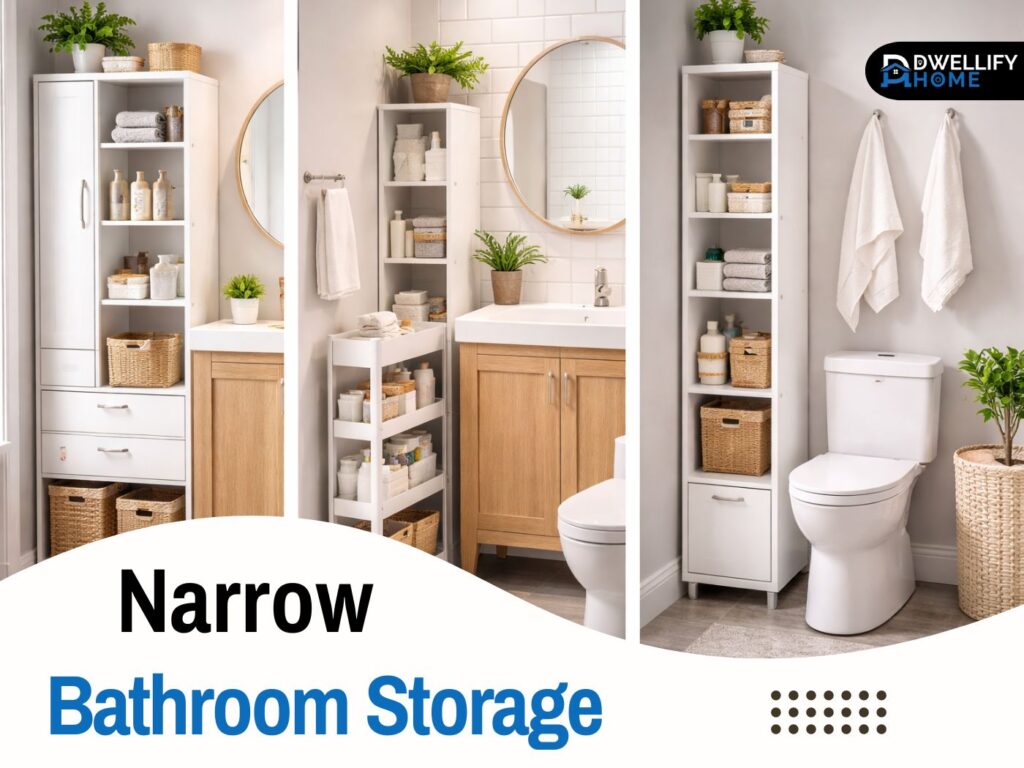
When homeowners tell me, “I need real storage, not little baskets,” I usually recommend tall narrow bathroom storage. A slim tower gives you a lot of capacity in a small footprint, especially if it’s tucked beside the vanity or in a corner.
Look for a slim bathroom storage cabinet with drawers if you can. Drawers are more useful than deep shelves because you can actually see what’s inside. I’ve had clients switch from shelves to drawers and suddenly they stop buying duplicates because they can find what they already own.
Here’s what a tall slim cabinet is best for:
- Towels and washcloths
- Backstock toiletries
- Toilet paper and tissues
- Hair tools and spare products
- A small lower bin for cleaning supplies
Choose a depth that feels safe in your room. In narrow bathrooms, shallower cabinets often feel better than “more storage” that crowds the walkway. A slimmer cabinet that you love living with beats a bulky one that makes the room feel tight.
Narrow Shelves That Add Storage Without Looking Messy
A narrow bathroom storage shelf can do a lot, but it needs the right placement. The goal is to add storage without creating visual clutter. In narrow rooms, open shelving gets messy fast if it’s overloaded.
My favorite shelf locations are:
- Above the toilet
- Beside the mirror, stacked vertically
- Above the door frame for towels or decor baskets
- Inside an alcove if your bathroom has one
Keep shelf depth modest. A slim shelf often looks more intentional and stays easier to maintain. Use matching baskets for small items like cotton pads, razors, and travel-size products. One basket per category keeps it tidy without lots of labels.
If you want open shelves but hate clutter, do this: keep only one “pretty” layer visible, and put the small stuff in lidded containers. That simple move makes shelving feel calm.
Drawers and Pull-Out Storage for Tight Gaps
If you have a narrow gap, narrow bathroom storage drawers are one of the cleanest ways to use it. Drawers beat deep shelves in tight layouts because they pull the contents toward you. That means less bending, less digging, and fewer piles on the counter.
I like narrow drawer units for:
- Makeup and daily grooming
- Hair accessories and brushes
- Skincare and small tubes
- First-aid items stored safely
- Extra hand towels folded flat
Inside the drawers, use dividers or small bins to create “zones.” It’s a simple system, but it works in real life because it reduces the daily mess. One drawer for everyday items, one for backups, and one for occasional items is usually enough.
The Slim Rolling Cart (Small Bathroom MVP)
A rolling cart is one of the most flexible tools for tight bathrooms. A slim bathroom storage cabinet space-saving organizer style cart can slide into gaps, move when you need to clean, and adapt when your routine changes.
I’ve used carts in rentals, guest bathrooms, and even long skinny bathrooms where nothing else fit. They’re especially helpful when you don’t have room for a tall cabinet.
What belongs on a cart vs what should stay hidden
Keep the cart for daily-use items, and store backups elsewhere.
Good cart items:
- Hand soap refills, tissues
- Daily skincare and hair products
- A small basket for wipes or extra rolls
- Hair dryer and brush, if it won’t look messy
Items that should be stored hidden:
- Bulk backups
- Cleaning chemicals
- Medical items you want out of sight
If you want a cleaner look, pick a cart with solid sides or add matching bins so the items aren’t visually loud.
Make Your Mirror Do More (Hidden Storage That Feels Built-In)
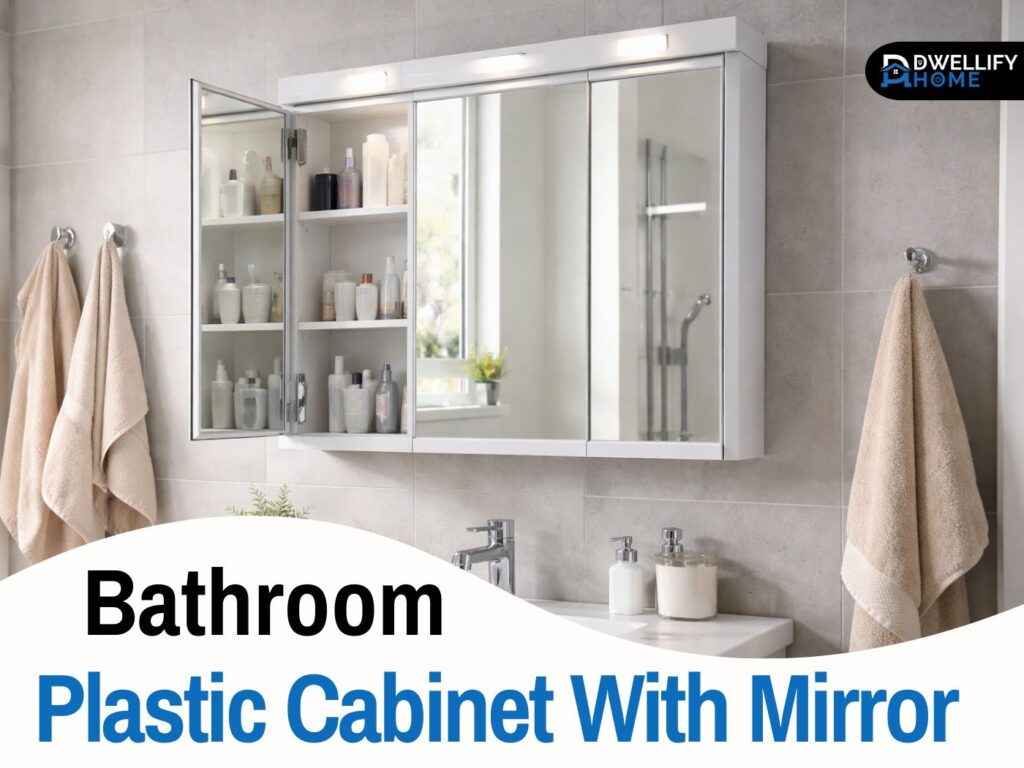
A mirror cabinet is one of the best “invisible” storage upgrades. It uses wall space you already have, and it keeps counters clear. This is especially helpful when your vanity is small or shallow.
Mirror cabinets work well for:
- Skincare and grooming
- Toothbrush backups and floss
- Razors and shaving supplies
- Small medicines stored safely
If kids visit your home, store medication higher up or use a cabinet with a child-safe latch. Also keep humidity in mind. Bathrooms trap moisture, so avoid storing anything that gets damaged by dampness unless the room is well ventilated.
Under-Sink Storage That Actually Works (No More Chaos)
Under-sink space can be frustrating because of pipes, but it’s still one of the biggest storage zones you have. The key is to treat it like two narrow areas, not one big open cave.
Here’s a simple setup I use often:
- A small riser shelf for daily items
- Two bins on either side of the plumbing for backups
- A narrow pull-out bin for small items if space allows
Don’t overload it. Heavy clutter under the sink makes it harder to clean leaks or check plumbing. Keep cleaning products in a bin so you can lift them out easily.
Also watch materials here. Under-sink storage gets splashes and humidity. Plastic bins, coated metal, or sealed wood perform better than untreated particleboard.
Shower Storage for Narrow Bathrooms (Functional and Clean-Looking)
Shower storage can become chaotic fast because bottles multiply. In narrow bathrooms, too many items in the shower area makes the whole space feel busy.
For a quick upgrade, use:
- A corner caddy or corner shelf
- A hanging shower caddy
- A tension pole organizer if you need more vertical storage
If you’re renovating, a recessed niche is the most elegant solution. It keeps bottles tucked into the wall so nothing sticks out into the shower space. That’s the kind of storage that feels built-in and stays easy to clean.
A practical routine tip: keep only what you use weekly in the shower. Store backups elsewhere. This reduces visual clutter and makes cleaning easier.
Renter-Friendly No-Drill Narrow Bathroom Storage
If you can’t drill, you still have options that look neat and hold up well. The trick is to choose items designed for humidity and weight limits.
Reliable no-drill options:
- Adhesive hooks for towels and robes
- Over-door organizers and hanging baskets
- Tension shelves for shower corners
- Stick-on corner shelves rated for wet areas
Before applying adhesive, clean the surface and let it dry completely. In bathrooms, poor adhesion usually comes from soap film or moisture left on the wall. Also avoid overloading. A few lighter items stored well looks better than a heavy setup that fails.
Styling Tricks That Make Narrow Storage Look Intentional
Storage should help the room feel larger, not busier. The easiest way to do that is to make storage match the bathroom, not fight it.
Here are a few design moves I rely on:
- Use light-colored storage pieces or match them to the wall
- Choose closed cabinets for the “messy” categories
- Use baskets or bins in the same color family
- Keep one clear surface, usually the vanity top
Mirrors also matter. A slightly larger mirror can bounce light and make the bathroom feel wider. Pair that with simple storage and the room immediately feels calmer.
Ventilation is part of this too. If your bathroom stays damp, storage will wear faster and products can get musty. Use the exhaust fan, crack the door open after showers, and choose moisture-resistant materials like powder-coated metal, sealed wood, or plastic where water is common.
Quick 15-Minute Plan (Do This Before You Buy Anything)
If you want a simple plan that works in most narrow bathrooms, start here.
- Pick one main storage piece: a slim cabinet or a narrow cart
- Add one wall solution: over-toilet shelves or a mirror cabinet
- Fix one hidden zone: under-sink bins or drawer dividers
- Clear the vanity top so the room feels open
This keeps you from buying five small items that don’t work together. Three smart changes usually beat ten random organizers.
FAQs
How do I add storage to a very narrow bathroom?
Go vertical first. Use over-toilet shelving, a mirror cabinet, and a slim tower. Then use narrow carts or drawers for gaps between fixtures.
What’s the best storage between a toilet and sink?
A slim rolling cart or narrow drawer unit works best because it fits tight widths and keeps daily items organized without blocking movement.
Are open shelves or closed cabinets better for narrow bathrooms?
Closed cabinets usually look calmer. Open shelves work well if you limit what you display and use matching bins to reduce visual clutter.
What’s the best renter-friendly bathroom storage?
Over-door organizers, adhesive hooks, and tension solutions are the most reliable. Choose bathroom-rated products and respect weight limits.
How do I organize a bathroom with no cabinets?
Use a mirror cabinet, over-toilet shelving, and a slim freestanding unit. Then keep everyday items in one small zone so counters stay clear.
Conclusion
If your bathroom is narrow, the goal isn’t to cram storage everywhere. It’s to place a few smart storage pieces where they won’t steal your walking space. Start by measuring width, depth, and clearance, then build around vertical zones like over the toilet, beside the vanity, and inside the sink area.
In most homes, the best setup is a slim tall cabinet for bulk items, a clean wall solution like shelving or a mirror cabinet, and a simple under-sink system that keeps backups contained. Once those are in place, your bathroom feels easier to use, easier to clean, and a lot less stressful day to day.
Disclaimer:
This article is for general home organization and design guidance. Measurements, materials, and installation needs can vary by bathroom layout and wall type. For heavy wall-mounted storage or renovations, consider getting advice from a qualified professional.

I’m Bilal, the founder of Dwellify Home. With 6 years of practical experience in home remodeling, interior design, and décor consulting, I help people transform their spaces with simple, effective, and affordable ideas. I specialize in offering real-world tips, step-by-step guides, and product recommendations that make home improvement easier and more enjoyable. My mission is to empower homeowners and renters to create functional, beautiful spaces—one thoughtful update at a time.