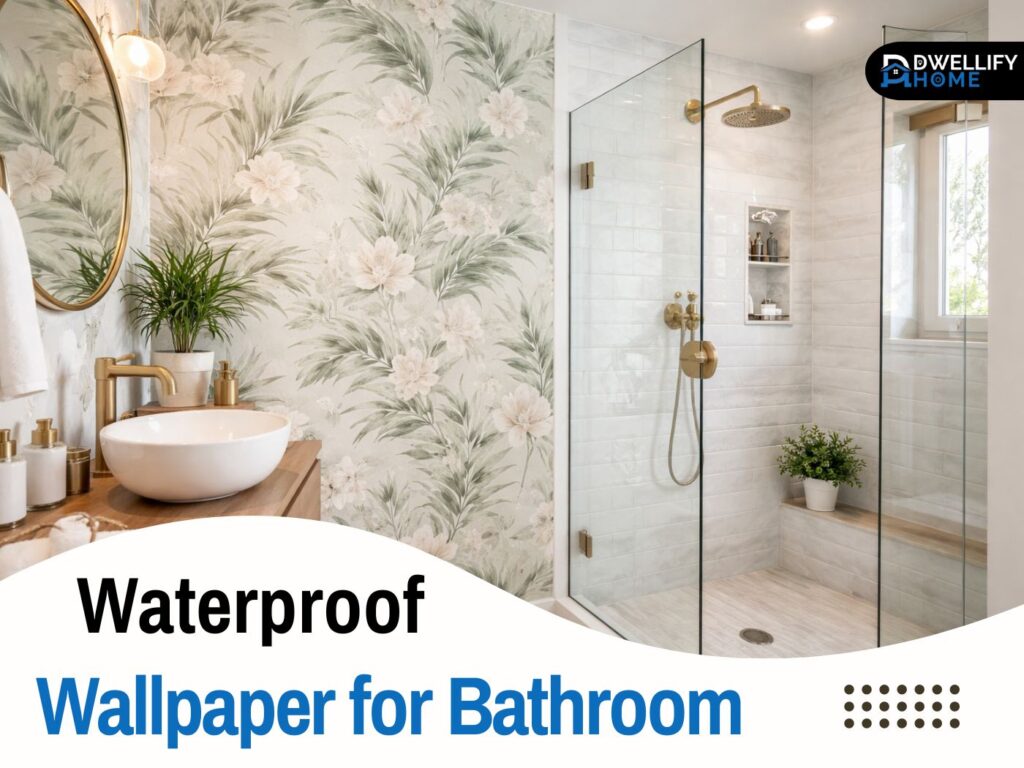
Let me tell you a quick truth from real bathrooms I’ve designed and worked in: wallpaper can look amazing in a bathroom, but bathrooms don’t forgive shortcuts. Steam, splashes, poor ventilation, and hidden damp spots will test every seam and corner.
So if you’re considering waterproof wallpaper for bathroom use, you’re already thinking in the right direction. The goal isn’t just a pretty wall, it’s a surface that stays put, stays clean, and doesn’t turn into a peeling, musty headache six months later.
In this guide, I’ll walk you through what actually works, where it works, how to install it properly, and the common mistakes I see homeowners make, even when they buy “bathroom-safe” products.
Snippet-ready definition:
Waterproof wallpaper for bathroom is a moisture-tough wallcovering, usually vinyl or a wet-area system, made to resist steam and splashes so it won’t peel, stain, or encourage mildew when installed and ventilated properly.
Mission Statement:
At Dwellify Home, our mission is to help you make confident, practical design choices that look great in real life, with guidance that’s clear, honest, and based on how homes are actually used every day.
Waterproof vs Water-Resistant vs Steam-Resistant: Don’t Get Fooled by Labels
Here’s the thing: the word “waterproof” gets used loosely in home decor. In material terms, many wallpapers are better described as water-resistant or moisture-resistant. That may sound like splitting hairs, but in a bathroom it’s the difference between a wall that stays neat and one that blisters around the edges.
Water-resistant wallpaper can handle humidity and the occasional splash if it’s installed well and the room is ventilated. Steam-resistant usually means it’s designed to cope with warm, damp air without softening the adhesive too quickly. Truly waterproof systems are built for consistent water exposure, the kind you’d get near shower spray or in areas that get wiped down often.
A practical way to think about it is this:
- Water-resistant: tolerates damp air and light splashes
- Steam-resistant: better in high humidity, still not meant for direct water
- Waterproof system: designed for wet zones, often installed as a system with specific adhesives and finishes
If you want wallpaper near a shower, it’s not just about the wallpaper itself. It’s about the whole setup: surface prep, adhesive, seam protection, and airflow.
Quick Comparison Table: Pick the Right Type Fast
| Type | Best for | Avoid if | Reality check |
| 100% vinyl wallpaper | Full bathrooms, vanity walls, most humid rooms | Walls with active moisture issues | Easiest to clean, most forgiving long-term |
| Waterproof vinyl peel-and-stick wallpaper for bathroom | Accent walls, rentals, low-splash zones | Poor ventilation, uneven walls, bargain-thin rolls | Great DIY option, but seams hate humidity when prep is weak |
| Wet-system wallcovering | Shower zones, high-splash areas, spa-style walls | DIY-first-timers | Works best when installed as a full system with correct layers |
| PVC or waterproof foil | Quick refresh, splash-prone walls, tile coverups | Very textured tile or rough walls | Seams and edges must be sealed and maintained |
| Coated paper plus sealer | Powder rooms, decorative low-risk walls | Daily-shower bathrooms | Sealing helps, but it’s still not a true wet-zone solution |
Step-by-step “Make It Last” Install Checklist
Use this whether you’re installing vinyl wallpaper for bathroom use or peel-and-stick.
- Fix moisture first: repair leaks, re-caulk gaps, and make sure the wall is fully dry.
- Deep clean: remove soap film and dust, not just surface dirt.
- Mildew treatment: treat any spots and let the wall dry completely.
- Smooth and prime: patch holes, sand, then use a wallpaper-friendly primer.
- Plan your layout: start from a straight vertical line so seams don’t drift.
- Press seams hard: use firm pressure or a seam roller, especially near corners.
- Ventilation routine: run the exhaust fan during showers and keep it on afterward.
Quick pro tip: if your bathroom stays foggy for a long time after a shower, that’s a ventilation problem first, not a wallpaper problem.
Best Waterproof Wallpaper for Bathroom: Top Options, Ranked
When a client asks me what to choose, I start with how the bathroom is used. A guest powder room and a busy family bathroom behave very differently. Once you match the material to the real conditions, wallpaper becomes a lot less risky.
100% Vinyl Wallpaper: Best All-Around for Full Bathrooms
If you want the safest, most forgiving option for a full bathroom, 100% vinyl is usually my first pick. Vinyl is naturally moisture-resistant, easy to wipe down, and less likely to absorb humidity compared to paper-based products.
In everyday use, vinyl also handles toothpaste splatters, water spots, and the occasional handprint without showing wear. In design terms, it has improved a lot too. You can get textures and patterns that look high-end without feeling plasticky.
My tip from installs: choose a vinyl with a smooth or lightly textured finish if your bathroom is small. Heavy texture can trap dust and moisture over time, especially near vents and corners.
Waterproof Vinyl Peel-and-Stick Wallpaper for Bathroom: DIY-Friendly
Peel-and-stick can be great, but it’s not a magic sticker. I’ve seen it look perfect for years in a well-ventilated bathroom and fail quickly in a damp room with poor airflow.
The best use case is an accent wall that stays out of direct splash zones, like behind a vanity or on a wall opposite the shower. It’s also a smart choice if you rent or if you like switching styles every couple of years.
A few real-world pointers:
- It hates dusty walls. Even a little residue can cause lifting at seams.
- It needs firm pressure during install. A smoothing tool is not optional.
- Avoid thin bargain rolls. Cheaper materials stretch and seams drift.
If you want waterproof wallpaper for bathroom peel and stick style, pick a thicker vinyl-based version, not a thin printed film.
Wet-System Waterproof Wallcoverings: Best for Shower Zones and High Water Exposure
If you want wallpaper in areas that get real water exposure, a wet-system wallcovering is the category that actually makes sense. These are often used in commercial spaces, spas, and premium shower designs, and they’re installed with specific primers, adhesives, and finishing layers.
This isn’t the typical weekend DIY. Done correctly, it creates a sealed surface designed to resist water intrusion. Done poorly, it can trap moisture behind the covering, which is worse than having no wallpaper at all.
If your goal is waterproof wallpaper for shower areas, this is the route I’d discuss with a professional installer, especially if the shower is used daily and the room stays warm and damp.
PVC and Waterproof Foil Options: Great for Splash Areas and Fast Updates
PVC or waterproof foil finishes are commonly used for quick upgrades, especially when someone wants to cover older tile or refresh a wall fast. They can be surprisingly durable, and they’re often easy to clean.
I like these for areas that get occasional splashes, like near sinks or around a toilet wall, but I still pay attention to edges and seams. In a bathroom, seams are always the first place problems show up.
Treated Paper plus Sealer: Only for Low-Splash Areas
You can use treated paper wallpaper in a bathroom, but I keep it away from heavy moisture. Think powder rooms or a decorative wall that never gets hit with water.
Some homeowners apply a protective clear coat or varnish on top for added moisture resistance. It can help, but it doesn’t turn paper into vinyl. If the wall behind it is damp or poorly prepped, sealing won’t save it.
Where Waterproof Bathroom Wallpaper Works and Where It Doesn’t
This part is what prevents regrets. Bathrooms have microclimates. One wall might stay dry and stable while another wall sweats every morning.
Best Placement Zones That Hold Up Well
In most homes, these areas are reliable:
- Powder rooms and half baths with good airflow
- Accent walls away from shower spray
- Vanity walls if the sink doesn’t splash heavily
- Upper wall areas above tile wainscoting
A practical rule I use: if you can wipe the wall often and it stays dry between uses, wallpaper is usually fine.
High-Risk Zones to Avoid Unless You Use Wet-System Products
Here’s where standard products struggle:
- Inside the shower stall or anywhere direct spray hits
- Around tub rims where water gets flung regularly
- Walls with frequent condensation and no exhaust fan
- Corners behind doors where air never circulates
If a bathroom stays foggy for 20 to 30 minutes after a shower, that’s a warning sign. Even the best waterproof vinyl wallpaper for bathroom use will struggle if moisture can’t leave the room.
Special Use Cases People Ask About
Waterproof Wallpaper for Bathroom Tiles: What Actually Sticks
Covering tile can work, but tile is tricky. The surface is glossy, grout lines are uneven, and some bathrooms have soap residue that never truly comes off without serious cleaning.
If you want waterproof wallpaper for bathroom tiles, the biggest deciding factor is texture. Smooth tile with shallow grout lines is far easier than heavily textured tile.
What I recommend in real jobs:
- Degrease first, not just wipe. Use a cleaner that removes soap film.
- Lightly scuff gloss if the product requires it, then remove dust.
- Consider a skim coat over grout lines if you want a smooth finish.
- Use a primer that’s compatible with the wallcovering system.
If the tile is uneven, wallpaper will telegraph the grout lines. Some people don’t mind that. If you want a sleek look, plan for surface leveling.
Waterproof Wallpaper for Shower: The Realistic Approach
If you want wallpaper in a shower, be careful. Standard peel-and-stick and most decorative wallpapers are not meant for direct water contact. You’ll see edges swell, seams open, or adhesive soften.
The realistic solution is a wet-system wallcovering designed for wet zones, installed with the correct adhesive and sealed edges. Even then, the best designs keep seams away from the most heavily sprayed areas.
If you love the idea but want less risk, consider wallpaper on the wall outside the shower glass, then use tile or a wet-rated panel inside the spray zone. It gives the same design impact without turning the shower wall into an experiment.
Waterproof Wallpaper for Bathroom Floor: A Quick Reality Check
Floors are a different world. They deal with abrasion, standing water, and constant cleaning. Wallpaper on a bathroom floor is not something I recommend for long-term use.
If you’re trying to refresh a floor cheaply, look at waterproof vinyl planks, peel-and-stick floor tiles, or a proper floor-rated vinyl sheet. They’re made for foot traffic and wet cleaning, and they won’t tear up like wallpaper can.
How to Choose the Best Waterproof Wallpaper for Bathroom: Quick Checklist
When you’re browsing options, don’t just choose the pattern. Choose the performance.
Here’s a simple checklist I use:
- Material: vinyl or PVC tends to be the most forgiving
- Washability: look for washable or scrubbable ratings
- Mold and mildew resistance: helpful, but ventilation still matters
- Thickness: thicker materials hide minor wall imperfections better
- Seam behavior: some patterns hide seams, others highlight them
- Adhesive requirements: match the right paste to the right material
Design tip from real bathrooms: in small rooms, large high-contrast patterns can feel busy. If you want bold, consider one accent wall and keep the rest calm. The best part is you still get the wow factor without visual clutter.
Before You Install: Prep Work That Prevents Peeling and Mold
This is the unglamorous part that makes everything succeed. Most wallpaper failures in bathrooms start behind the wallpaper.
Start by checking the wall condition. If you see peeling paint, soft drywall, or old mildew spots, fix that first. Wallpaper should never be installed over active moisture issues.
A solid prep routine looks like this:
- Wash the walls to remove soap film and dust
- Treat any mildew with the right cleaner, then let the wall dry fully
- Patch and sand rough spots and flaking paint
- Prime with a wallpaper-friendly primer so adhesive bonds evenly
If you rush drying time, you’ll pay for it later. I’ve seen new installs fail because a bathroom wall was still holding moisture from the previous week’s long showers.
Installation Guide: Simple, Practical Steps
Peel-and-Stick Installation: What Matters Most
Peel-and-stick isn’t hard, but it’s sensitive.
Here’s what I do on installs:
- Turn off fans while applying, so the sheet doesn’t flutter
- Start with a perfectly plumb first panel, because every panel follows it
- Work top to bottom, smoothing slowly to avoid bubbles
- Use a seam roller or firm pressure on edges
- Trim cleanly around outlets and fixtures, then press again
If you get a bubble, don’t panic. Lift gently and re-smooth. The key is not stretching the material. Stretching leads to seam gaps later.
Traditional Wallpaper Installation: When It’s Still Okay in Bathrooms
Traditional wallpaper can work in bathrooms when it’s placed in safer zones and paired with the right paste. The biggest advantage is finish quality. It often looks richer than peel-and-stick.
The tradeoff is timing and control. You need:
- The correct adhesive for the wallpaper type
- A dry wall surface and stable room temperature
- Good ventilation, but not strong airflow blowing directly on fresh seams
In busy bathrooms, I prefer vinyl over paper-based traditional wallpaper, simply because it’s easier to clean and more forgiving.
Wet-System Installation Overview: What’s Different
Wet-system wallcoverings aren’t just wallpaper. They’re installed as a protective assembly. Depending on the system, that can include primer, waterproof adhesive, reinforcement at seams, and a finishing seal layer.
If this is your direction, I’d strongly recommend using an installer who has done wet-area wallcoverings before. Bathrooms are not the place for a first attempt.
Sealing and Extra Protection: Pro-Level Longevity
If your wallpaper is in a splash-prone zone, sealing can add meaningful protection. But sealing isn’t universal. Some vinyl wallpapers don’t need top coating, and some coatings can change the look of the finish.
What I focus on instead is targeted protection:
- Seal vulnerable edges near trim and corners
- Keep seams tight and well-pressed
- Prevent water from creeping behind cut edges around fixtures
On top of that, don’t forget the caulk lines in the room. If water is already getting behind your vanity backsplash or trim, it will eventually reach the wallpaper edges too.
Ventilation Rules That Make Wallpaper Last
I’m going to say this plainly: ventilation is the hidden hero of every bathroom wallpaper install.
If you have an exhaust fan, run it during showers and keep it running for at least 20 minutes after. If you don’t have a fan, crack a window and leave the door open after bathing so moisture can escape.
A few practical habits that help:
- Wipe down shower glass and wet tile to reduce humidity load
- Avoid hanging dripping towels against wallpapered walls
- Use a small dehumidifier in bathrooms that stay damp
Even the best waterproof wallpaper for bathroom use can fail if the room stays wet all day.
Cleaning and Maintenance: Keep It Looking New
Maintenance is simple if you choose the right material.
For vinyl and waterproof foil surfaces, a soft cloth with mild soap and water usually does the job. Avoid harsh abrasives because they can dull finishes and catch at seams.
A small habit I teach homeowners: once a month, check the seams near sinks and corners. If you see a tiny lift, press it back and address it early. A small edge lift is a five-minute fix. A whole seam opening becomes a weekend repair.
Troubleshooting Common Problems: Fast Fixes
If something starts to go wrong, it often shows up in predictable ways.
Peeling corners usually mean one of three things: poor wall prep, too much humidity, or not enough pressure during installation. Clean the area, dry it fully, then re-adhere according to the product directions.
Bubbles can come from trapped air or from moisture trying to escape. If bubbles appear weeks after installation, check ventilation and wall moisture. It’s better to fix the cause than keep pressing bubbles down.
Seams lifting are often a sign of slight material stretch or a wall that wasn’t properly primed. If you catch it early, seam adhesive can help, but don’t ignore repeated lifting. It usually means the environment is too harsh for that specific product.
If you notice a mildew smell, don’t cover it up. Find the moisture source. Check caulk lines, plumbing leaks, and areas behind mirrors or cabinets.
Buying Tips: Smart Ways to Choose Locally Without Regret
If you’re shopping nearby, don’t just rely on the display board. Ask what the material is made of and how it’s rated for humidity. If the label is vague, request a sample and test it.
A simple at-home test I use:
- Put the sample in your bathroom for a few days
- Take hot showers like normal
- Check if it curls, softens, or changes texture
Also check return policies. Wallpaper is one of those purchases where you sometimes don’t know until you open the roll and see the color in your real lighting.
If you’re hiring an installer, ask one direct question: have you installed vinyl wallpaper for bathroom conditions before, and what adhesive do you use for it? A confident, specific answer is a good sign.
FAQs
Is peel-and-stick wallpaper good for bathrooms?
It can be, especially for accent walls and low-splash areas. Thicker vinyl-based peel-and-stick performs better than thin film types, and ventilation makes a big difference.
What’s the best type of wallpaper for a full bathroom?
In most homes, vinyl wallpaper for bathroom use is the safest choice because it handles humidity and cleaning better than paper-based options.
Can you put wallpaper inside a shower?
Only if it’s a wet-system wallcovering designed for direct water exposure and installed correctly. Standard decorative wallpaper is not suitable for direct spray.
How do you prevent mold behind bathroom wallpaper?
Start with a dry, clean, primed wall, fix any existing moisture problems, and keep ventilation consistent. Mold prevention is mostly about moisture control.
Can you apply wallpaper over bathroom tiles?
Yes, but success depends on the tile surface and prep. Smooth tile is easier than textured tile, and leveling grout lines may be needed for a clean finish.
Conclusion: A Practical Way to Decide If Wallpaper Is Right for Your Bathroom
If you want a bathroom that feels finished and personal, wallpaper can absolutely do that. I’ve seen it transform plain spaces into rooms that feel designed, not just functional. But it works best when you treat it like a surface material choice, not just decor.
Here’s the simple decision method I use with homeowners:
- If it’s a powder room or low-splash wall, peel-and-stick or vinyl can be a great choice.
- If it’s a full bathroom with daily showers, go with a high-quality vinyl, and don’t skip prep and ventilation.
- If you want it in a shower zone, choose a true wet-system solution and get it installed properly.
Do those three things, and you’ll get the best of both worlds: a bathroom that looks beautiful and holds up in everyday life.
If you want, share your bathroom type (powder room, guest bath, family bath) and where you plan to apply it, and I’ll tell you which material option fits best and what to avoid in that exact spot.
Disclaimer:
This guide shares general design and installation advice. Always follow the wallpaper manufacturer’s instructions and local building or waterproofing requirements. For shower interiors or high-water exposure areas, consult a qualified professional.

I’m Bilal, the founder of Dwellify Home. With 6 years of practical experience in home remodeling, interior design, and décor consulting, I help people transform their spaces with simple, effective, and affordable ideas. I specialize in offering real-world tips, step-by-step guides, and product recommendations that make home improvement easier and more enjoyable. My mission is to empower homeowners and renters to create functional, beautiful spaces—one thoughtful update at a time.