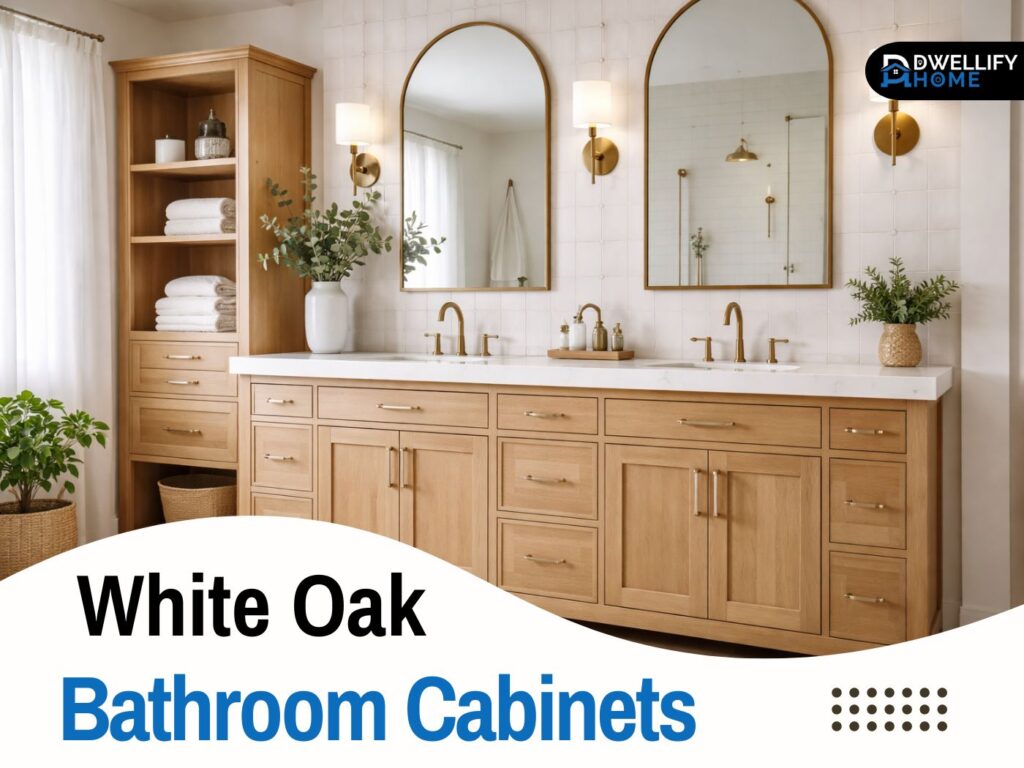
If you’re looking at white oak bathroom cabinets, you’re probably after that warm, clean “designer” look that doesn’t feel trendy or flashy. And honestly, I get it, white oak has a calm, high-end vibe that works in almost any bathroom.
Here’s the thing, bathrooms are tough on wood. Steam, splashes, wet towels, and temperature swings can expose weak finishes and poor construction fast. So this guide is going to keep it practical: how to choose the right cabinet type, size, storage layout, finish, and moisture strategy, so your oak setup looks great now and still looks great years from now.
Snippet-Ready Definition:
White oak bathroom cabinets are wood cabinets made from white oak, valued for their durability, moisture resistance, and clean grain. They’re popular for modern and timeless bathrooms because they balance warmth with long-term performance.
Mission Statement:
At Dwellify Home, our mission is to help homeowners make confident, long-term decisions by sharing clear, experience-based guidance on materials, design, and everyday living—without hype, confusion, or shortcuts.
Quick Decision Guide (Read This Before You Shop)
Choose your cabinet type (vanity base, wall cabinet, linen storage)
Start with how you actually use the bathroom. A vanity base gives you the core storage. A white oak bathroom wall cabinet helps when you need extra space but don’t want a bulky vanity. And linen storage is a lifesaver if your towels and backups keep overflowing.
If you’re working with a tight layout, adding wall storage can feel like gaining an extra drawer stack without changing your floor plan. On top of that, it keeps daily-use items within reach, which is what makes a bathroom feel “easy” to live in.
Choose your size (30, 36, 60, 72) based on bathroom layout
Size isn’t about what looks best online, it’s about what fits the room and how you move through it. If the door bumps the vanity, or you can’t open drawers comfortably, you’ll feel it every single day.
A simple rule: choose the smallest size that gives you the storage you truly need. You can always add smart wall storage later, but you can’t easily “shrink” a vanity once it’s installed.
Choose your look (modern vs shaker vs textured fronts)
Your style choice should match your home’s overall feel, not just your bathroom. Modern works best when everything else is clean and minimal. Shaker is the safe, timeless option. Textured fronts like fluted or reeded can look amazing, but they need the right lighting and the right hardware to feel intentional, not busy.
The best part is… you can make any of these styles feel more custom just by choosing the right drawer layout and finish tone.
Quick Guide Table: Choosing White Oak Bathroom Cabinets
| What to Decide | What to Look For | Real-World Tip |
| Cabinet Type | Vanity base, wall cabinet, linen storage | Wall cabinets add storage without crowding floors |
| Vanity Size | 30″, 36″, 60″, 72″ | Choose the smallest size that meets daily needs |
| Storage Layout | Drawers vs doors | Drawers are easier for everyday use |
| Wood Cut | Plain, quarter, or rift-sawn | Rift-sawn looks cleaner and more uniform |
| Finish | Natural, whitewashed, light stain | Bathroom-safe sealers matter more than color |
| Installation | Floating or freestanding | Floating needs strong wall support |
Step-by-Step Buying Guide (Simple & Practical)
- Measure your space carefully
Include door swing, walkways, and drawer clearance. - Choose size by function, not looks
A well-planned 36″ vanity often beats an awkward 60″. - Prioritize drawers for daily items
They’re easier to access and stay organized longer. - Pick a finish suited for humidity
Proper sealing matters more than the exact color. - Plan ventilation early
A good exhaust fan protects wood long term.
Why White Oak Works So Well in Bathrooms
Durability, daily wear, and humidity reality
White oak is popular for a reason: it’s a strong hardwood with a tight grain structure. That tight grain is helpful in bathrooms because it tends to handle humidity swings better than softer woods, especially when it’s properly sealed.
But let’s be real, wood isn’t magic. If water sits around hardware holes, if a finish is too thin, or if your fan barely works, even good wood will show wear. So white oak performs best when you pair it with smart finishing and decent bathroom habits.
White oak grain and stability (plain-sawn vs quarter-sawn vs rift-sawn)
Guess what, the “look” of white oak isn’t just the color, it’s the cut. Plain-sawn can have more cathedral-like grain patterns. Quarter-sawn often shows stronger ray flecks. Rift-sawn (often called rift cut) is the cleanest, most linear look, which is why it’s so common in modern design.
If you love that calm, uniform grain that doesn’t scream for attention, rift-sawn is usually the move. It can also help the cabinet faces look more consistent across multiple doors and drawer fronts.
White Oak Bathroom Cabinet Types (What People Mean When They Search This)
Vanity base cabinets (single vs double sink setups)
Most people start with the vanity base because it carries the sink and hides plumbing. Single sink is great for smaller bathrooms and gives you the chance to put a tall drawer stack on one side.
Double sink setups can be fantastic in shared bathrooms, but don’t assume “double sink” automatically means better storage. Many double vanities lose usable space in the middle because of plumbing and sink basins. A smart layout can make a 60-inch vanity feel more usable than a poorly designed 72.
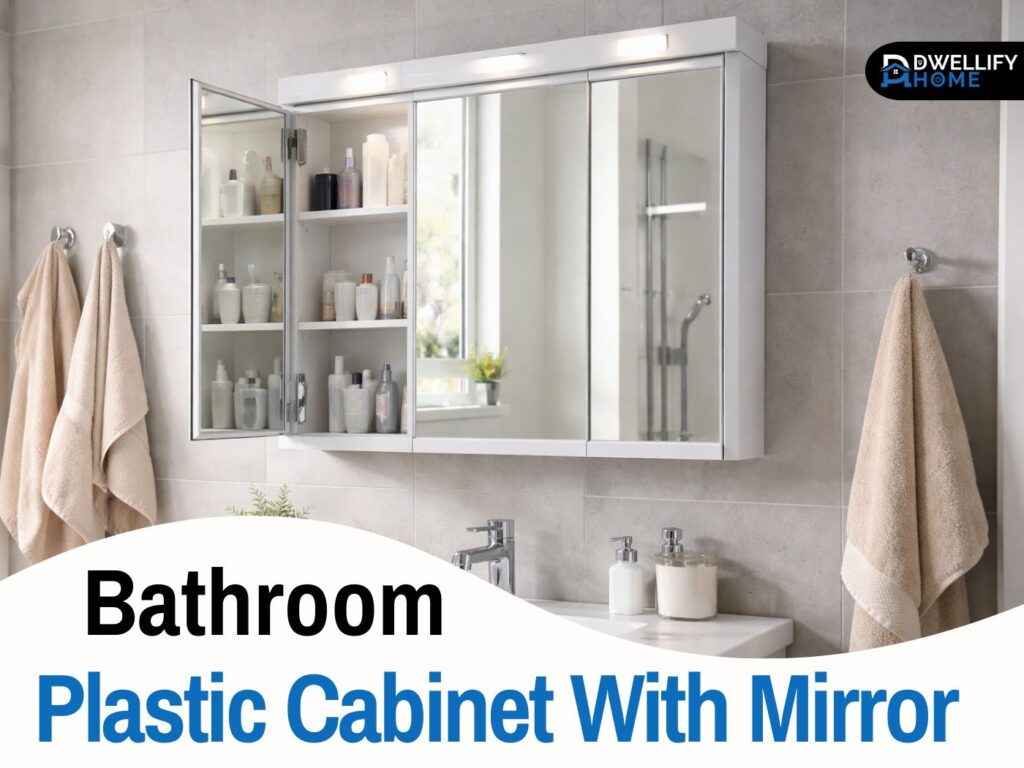
White oak bathroom wall cabinet (when upper storage makes more sense than bigger vanities)
A wall cabinet is a clean way to add storage without crowding the floor. It’s especially helpful when your vanity width is limited by a doorway, a toilet clearance, or a tight walkway.
Here’s a practical tip: mount wall storage where it won’t fight your mirror lighting. If your wall sconces are planned, you want the cabinet to complement them, not block them.
Add-on storage: linen cabinet/tower vs open shelving
A linen tower is for people who want hidden storage and a calmer look. Open shelving is great for a styled space, but it can get messy fast if you’re not the type to fold towels neatly every time.
If you like the “spa bathroom” look but live in the real world, do a mix: closed storage for backups and open shelves for a couple of baskets and your daily-use items.
Size Planning (The Most Searched White Oak Vanity Sizes)
White oak bathroom vanity 30 (powder rooms, tight layouts, minimal storage)
A white oak bathroom vanity 30 is perfect for guest baths and smaller rooms where you mainly need hand soap, a few toiletries, and a clean look. You’ll want to prioritize drawer space if possible because doors under a 30-inch vanity often turn into a dark cave of clutter.
If storage is tight, pair it with a wall cabinet or a slim shelf. That way you keep the vanity light and airy while still having a place for essentials.
White oak bathroom vanity 36 (best all-around choice for most bathrooms)
A white oak bathroom vanity 36 is a sweet spot. It usually gives you enough counter space for daily use, enough storage for a couple of people, and it doesn’t overwhelm the room.
If you’re choosing between 30 and 36 and you have the space, 36 often feels “right” long-term. It’s one of those sizes that works for resale too, because it fits a lot of bathroom layouts.
White oak bathroom vanity 60 (shared bathrooms, more counter space, bigger drawer banks)
A white oak bathroom vanity 60 is a strong choice for a shared bathroom, especially if you want two separate getting-ready zones. The key is layout: if you can get two drawer stacks, you’ll love it.
On top of that, a 60-inch setup gives you enough countertop space for daily routines without everything feeling piled up around the sink.
White oak bathroom vanity 72 (double sink comfort + maximum storage)
A white oak bathroom vanity 72 can feel luxurious, especially if you want a true double sink experience. But don’t buy 72 just because it sounds impressive. Buy it because your room can handle it and because the layout actually gives you more useful storage.
Real-world tip: check the center section. If it’s all doors with little usable space, you might be paying for width without gaining function.
Storage That Feels “Custom” (Even If Your Cabinets Aren’t)
White oak bathroom cabinets with drawers (why drawers usually win for daily use)
If you want the bathroom to stay organized, go drawers. White oak bathroom cabinets with drawers make daily routines smoother because you can see everything, reach everything, and avoid stacking stuff behind stuff.
Look for features that quietly matter:
- Soft-close drawers (no slamming, less stress on joints)
- Full-extension slides (you can reach items at the very back)
- A top drawer with built-in dividers (easy organization)
Door cabinets vs drawers (what to store where)
Doors are fine for bulky items like cleaning supplies, extra toilet paper, or taller bottles. Drawers are better for everyday items like skincare, hair tools, and medications.
A nice balance is a vanity with one door section and one drawer stack. That combo handles “big stuff” and “small stuff” without wasting space.
Smart upgrades: pull-out trays, built-in outlets, hair-tool bins, toe-kick step stool
The best part is these upgrades don’t always look fancy, but they feel amazing to live with. A hidden outlet inside a drawer keeps toothbrushes and razors off the counter. A hair-tool bin keeps cords from tangling. And a toe-kick step stool is a game-changer if kids use the bathroom.
These details are the difference between a bathroom that looks good in photos and one that’s actually easy every day.
White Oak Bathroom Cabinets Ideas That Look High-End
Modern white oak bathroom cabinets (flat fronts, minimal hardware, clean grain)
Modern white oak bathroom cabinets usually look best with clean grain, simple lines, and minimal hardware. This is where rift-sawn grain really shines because it keeps the fronts calm and consistent.
Pair modern oak with a simple countertop and one strong accent, like a statement mirror or sleek sconces. Too many “wow” items at once can make the room feel busy.
Shaker/transitional white oak (timeless + easier to match later)
Shaker and transitional styles are the safe bet if you want something you won’t get tired of. They also match more homes, so if you ever sell, it’s easier for new owners to love it.
Here’s a practical angle: shaker fronts hide small wear better than super-flat, glossy looks because the design has depth and shadows.
Trend-forward texture: fluted or reeded white oak fronts
Fluted and reeded fronts can look incredible, especially with warm lighting. But keep the rest of the room simpler so the texture feels intentional.
If you love texture but worry it might feel too trendy later, use it on a wall cabinet or a small vanity instead of a giant double setup. That way the room still feels timeless.
Finish and Color Choices (Natural, Whitewashed, and Everything Between)
Natural/clear finish vs stained white oak (what changes the look most)
Most people want that light, warm oak tone. A clear finish shows the natural character and makes the grain feel honest and rich.
Stain can help if you’re trying to match flooring or a nearby wood tone. Just remember: stain isn’t just color, it changes contrast. Some stains make the grain pop, others mute it.
Whitewashed oak look (how to get it without making oak look “chalky”)
A whitewashed look can be beautiful, especially in airy bathrooms. The key is balance. You want the wood to look lighter without looking painted.
If it ends up chalky, the oak loses its depth and can look flat. The trick is to keep some warmth in the tone so it still feels like real wood.
Bathroom-safe finishes and low-VOC sealants (why they matter indoors)
Bathrooms need a finish that can handle moisture, cleaning, and daily contact. Look for a quality sealer system that’s designed for interior cabinetry, and if indoor air quality matters to you, low-VOC options are worth considering.
The big mistake is assuming “any clear coat” is enough. In a bathroom, the finish is your shield. Thin or rushed finishing is often what fails first, not the wood itself.
Countertops, Sinks, and Hardware That Pair Best With White Oak
Top pairings (quartz, marble-look quartz, granite)
Quartz is the easiest for most households because it’s durable and low maintenance. Marble-look quartz gives you that classic look without the constant worry.
Granite can work beautifully too, especially if you want natural movement and a slightly warmer vibe. The main idea is to balance patterns: if your oak grain is strong, keep the countertop simpler.
Sink types (undermount vs vessel) and what’s easiest to clean
Undermount sinks are usually easier to wipe down because you can push water straight into the basin. Vessel sinks can look striking, but they need the right faucet height and splash control.
If you’re choosing based on daily life, undermount is the “easy button” for most bathrooms.
Hardware styles that change the whole vibe (black, brass, nickel)
Hardware is like jewelry for the vanity. Matte black feels modern and bold. Brass feels warm and upscale. Nickel and chrome feel clean and classic.
Here’s a simple tip: match hardware finish to at least one other element in the room, like your faucet or lighting. That one connection makes everything feel more intentional.
Quality Checklist
What to check in construction (solid wood vs veneer, plywood box, back panel)
Don’t get distracted by pretty doors. What matters is the box and how it’s built. Solid wood doors can be great, but a well-made veneer panel can also perform very well when it’s properly sealed.
Look for sturdy box construction, decent thickness, and clean joinery. A flimsy cabinet can look fine on day one and feel wobbly by year two.
Drawer quality signs (dovetail boxes, full-extension slides, soft-close)
If drawers matter to you (and they should), check the basics:
- Dovetail or strong joinery
- Smooth slide movement
- Full-extension slides
- Soft-close that doesn’t feel “springy” or weak
Drawers are the part you touch the most. When they’re good, the whole bathroom feels more premium.
What warranties and returns usually reveal about quality
A clear warranty and a fair return policy often show the brand stands behind their build. It’s not just paperwork, it’s a signal.
Also, check what’s covered: finish defects, hardware, drawer slides, and structural issues. Those are the parts that matter in real use.
Installation, Ventilation, and Moisture-Proofing (Bathroom Reality)
Floating vs freestanding installs (wall support, leveling, and clearance)
Floating vanities look modern and make floors easier to clean. But they need proper wall support and careful leveling, especially when stone tops are involved.
Freestanding vanities are simpler for many installs, but make sure the base is protected from standing water, especially near showers and tubs.
Vent fan habits that protect wood cabinets long-term
Here’s the thing most people ignore: the fan. If you run it only during showers and turn it off right after, moisture hangs around.
A simple habit helps a lot: run the fan during the shower and for a while after. It keeps humidity from soaking into finishes over time.
Common avoidable mistakes (plumbing misalignment, unsealed stone tops, splash zones)
Some mistakes show up fast:
- Plumbing that forces weird cutouts, reducing storage
- Stone tops that aren’t sealed properly at edges
- Splash zones near the sink that stay wet
You don’t need perfection. You just need smart planning so water isn’t constantly sitting where it shouldn’t.
Care and Maintenance (Keep White Oak Looking New)
Simple cleaning routine (what to avoid so you don’t strip the finish)
Keep it gentle. Mild soap, a soft cloth, and quick wipe-downs are usually enough. Avoid harsh abrasives and aggressive chemical cleaners unless the finish manufacturer specifically says it’s safe.
And don’t let water sit at the edge of the sink or around hardware. That’s where finish wear often starts.
Handling water marks, swelling edges, and small scratches
Small marks happen. If you catch them early, they’re easier to manage. Water marks often improve with gentle cleaning and drying habits.
If you ever notice swelling at an edge, that’s your signal to fix the moisture source fast, not just cover it up.
Long-term tip: touch-up kit + yearly hardware tightening
A tiny touch-up kit can save you from big refinishing work later. Also, hardware loosens over time, especially in humid rooms. A quick yearly tightening keeps everything feeling solid.
It’s a small maintenance habit that pays off.
FAQs
Is white oak good for bathroom cabinets?
Yes. White oak has a tight grain and strong structure, which helps it handle bathroom humidity better than many softer woods when it’s properly sealed and maintained.
Are white oak cabinets still in style?
Yes. White oak remains popular because it works with modern, transitional, and classic designs. Its natural tone ages well and doesn’t feel trend-driven.
What is the most popular color for bathroom cabinets?
Light natural wood tones, soft whites, and warm neutrals are currently the most popular. Natural white oak finishes are especially common in modern bathrooms.
Is white oak good for cabinets in general?
Absolutely. White oak is widely used for cabinetry because it’s durable, stable, and finishes beautifully. It performs well in kitchens and bathrooms when built correctly.
Do white oak cabinets need special maintenance?
Not special, just smart care. Wipe up water quickly, avoid harsh cleaners, and keep the bathroom ventilated to protect the finish over time.
Conclusion
If you want a bathroom that feels warm, calm, and built to last, white oak bathroom cabinets can be a fantastic choice, as long as you treat the bathroom like the demanding environment it is.
Remember the simple formula: pick the right cabinet type, choose a size that fits your layout, prioritize drawers for daily life, select a finish that makes sense for humidity, and don’t ignore ventilation. Do that, and your oak setup won’t just look good on day one, it’ll keep looking good when the “new” feeling fades and real life kicks in.
And if you’re still torn between sizes, start with function. A well-planned white oak bathroom vanity 36 with smart drawers can feel better than a larger vanity that’s awkward to use. That’s the kind of decision you’ll be happy with every morning.
Disclaimer:
This article is for informational purposes only. Design choices, materials, and installation methods may vary by home and environment. Always confirm product specifications and consult qualified professionals for installation and structural decisions.

I’m Bilal, the founder of Dwellify Home. With 6 years of practical experience in home remodeling, interior design, and décor consulting, I help people transform their spaces with simple, effective, and affordable ideas. I specialize in offering real-world tips, step-by-step guides, and product recommendations that make home improvement easier and more enjoyable. My mission is to empower homeowners and renters to create functional, beautiful spaces—one thoughtful update at a time.