If you’ve ever stood in a lumber yard staring at stacks of treated boards, you know how confusing it can get fast. Sizes look familiar, prices jump around, and every board claims to be “weather-ready.” Here’s the thing: a 2x8x12 pressure treated board is one of the most useful pieces you can buy for outdoor work, but only if you understand what you’re getting and how to use it right.
I’ve used these boards for decks, ramps, shed bases, and heavy framing that needed to last. In this guide, I’ll walk you through what the size really means, where it shines, what to watch out for, and how to make sure your project still looks solid years from now. Think of this like a face-to-face chat at the lumber aisle, not a sales pitch.
Short Intro About 2x8x12 Pressure Treated:
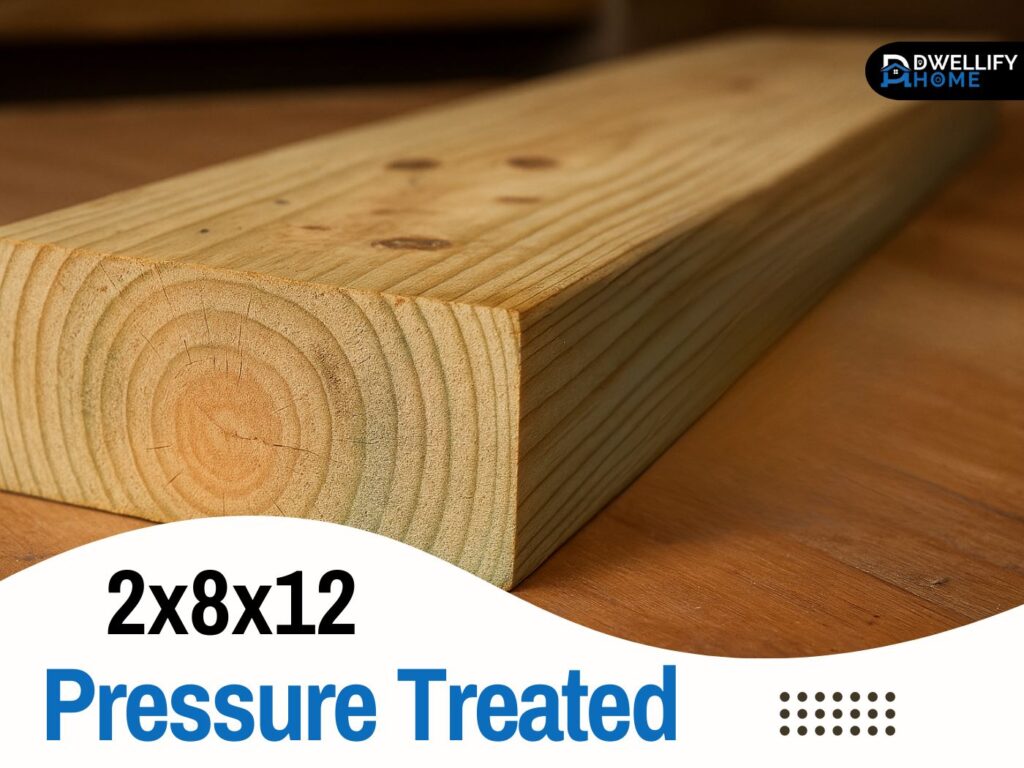
A 2x8x12 pressure treated board is a 12-foot outdoor lumber plank treated to resist rot and insects, commonly used for decks, framing, ramps, and heavy-duty outdoor construction.
Mission Statement:
Our mission is to help homeowners and DIY builders make confident, informed lumber choices by sharing practical, experience-based guidance that’s easy to understand and actually useful on real projects.
What “2x8x12 pressure treated” actually means
Let’s clear up the basics first, because this trips up a lot of people. The “2×8” part is a nominal size, not the real measurement. Once the board is milled and treated, it’s closer to 1-1/2 inches thick and about 7-1/4 inches wide. That difference matters when you’re laying out joists or cutting to fit.
The “12” means the board is 12 feet long. That extra length is a big deal. It lets you span longer distances with fewer seams, which usually means stronger framing and less waste. For deck work, fewer joints almost always equals fewer problems down the road.
Pressure treated means the wood has been infused with preservatives to resist rot, insects, and moisture. It’s designed for outdoor use where regular lumber would fail fast.
Quick Guide Table: 2x8x12 Pressure Treated (At a Glance)
| Feature | Details |
| Nominal Size | 2x8x12 |
| Actual Size | ~1.5 in × 7.25 in × 12 ft |
| Thickness | 1.5 inches |
| Common Wood Type | Southern Yellow Pine |
| Treatment Type | Pressure treated (above-ground or ground-contact) |
| Typical Uses | Deck framing, joists, ramps, outdoor structures |
| Average Weight | 65–75 lbs (depends on moisture level) |
| Outdoor Lifespan | 15–30+ years with proper care |
Quick Buying & Use Checklist (Simple & Helpful)
- Check the treatment label (ground-contact vs above-ground)
- Pick the straightest boards with minimal twisting
- Expect the wood to be heavy and slightly wet
- Use galvanized or stainless steel fasteners only
- Let it dry before staining or sealing
This section helps readers make fast decisions without confusion.
Pressure-treated types that matter most
Not all treated lumber is the same, and this is where many DIY projects go wrong. You’ll usually see labels for above-ground or ground-contact use.
Above-ground boards are made for areas that dry out quickly and don’t touch soil. Ground-contact boards are treated more heavily so they can survive constant moisture and soil exposure. If your project involves posts, lower framing, or anything near the ground, ground-contact treatment is the safer bet.
Guess what? When in doubt, choosing ground-contact lumber rarely hurts, except maybe the price a little. Replacing rotten framing later costs far more than paying a few extra dollars upfront.
Product details and specs you should check before paying
Before you load a board onto your cart, give it a quick inspection. I always do this, even in big-box stores.
Look down the length of the board for crowns or twists. A slight curve is normal, but avoid boards that look like a banana. Check the ends for deep cracks and the face for loose knots. Knots are fine, but clusters near the edge can weaken the board.
Also remember that treated lumber is usually wet when you buy it. That extra moisture adds weight and can cause some movement as it dries. Plan for that, especially if the board is going into precise framing.
Best uses for this board
This size really earns its keep in outdoor structural work. I’ve used it most often in deck framing, especially for rim joists and longer joist runs where strength matters. The width adds stiffness, and the length reduces splices.
It’s also great for shed bases, ramps, and walkways where load support matters. In landscaping, it works well for steps and raised features, as long as you’re using the right treatment level.
Where it doesn’t make sense is indoor framing or decorative work. It’s heavier, more expensive, and unnecessary when moisture isn’t a concern.
Choosing the right length and size
People often compare lengths before buying, and for good reason. A 2x8x8 pressure treated board is easier to transport but creates more seams. A 2x8x10 pressure treated board is a nice middle ground for smaller decks or platforms.
A 12-foot board reduces joints and looks cleaner in structural builds. On the other hand, a 2x8x16 pressure treated board can be perfect for long spans, but transport and handling get tricky fast.
My advice is simple. Choose the longest board you can safely transport and install without struggling. Less cutting and fewer joints almost always lead to better results.
Price and availability
Pricing varies more than people expect. The 2x8x12 pressure treated price depends on treatment rating, wood species, and local supply. Big-box stores like Home Depot usually have steady stock, which is why many people search for a 2x8x12 pressure treated Home Depot listing first.
Local lumber yards can cost a bit more, but you often get straighter boards and better help. Regional suppliers, like Kent in some areas, may stock similar boards under slightly different names or treatments, which explains searches like 2x8x12 pressure treated Kent.
If you’re comparing options near you, check the price per foot, not just the sticker price. That’s the easiest way to see real value, especially when comparing shorter lengths like 2x8x8 pressure treated price listings.
Fasteners and hardware that won’t fail early
Here’s the thing most guides gloss over. Pressure-treated wood can eat the wrong fasteners alive. The chemicals that protect the wood can corrode standard nails and screws.
Always use approved outdoor fasteners. Hot-dipped galvanized or stainless steel hardware is the safest choice. This includes joist hangers, bolts, and screws. I’ve seen decks fail early simply because the wrong screws were used.
If you’re framing a deck, match your hangers and fasteners to the lumber rating. It’s a small step that adds years to the structure.
Cutting, drilling, and sealing ends
Cutting treated lumber is straightforward, but take your time. Use a sharp blade and pre-drill near ends to avoid splitting. Any fresh cut exposes untreated wood inside the board.
That’s why end-cut sealing matters. Brushing on a preservative sealer at cut ends helps prevent moisture from soaking in where rot usually starts. It takes minutes and makes a real difference over time.
Also, wear basic protection when cutting. Gloves and a dust mask go a long way, especially when making multiple cuts.
Drying time, staining, and maintenance
Most treated boards are wet when purchased. If you stain or paint too soon, the finish won’t bond properly. Let the wood dry first. Depending on weather, that can take several weeks or longer.
Once dry, a quality exterior stain helps control moisture and cracking. Stain usually holds up better than paint outdoors and is easier to refresh later.
Maintenance doesn’t need to be complicated. A quick inspection once a year and re-staining when needed will keep the wood looking good and performing well.
Safety and smart handling
Treated lumber is meant for outdoor use, not indoor living spaces. Store it off the ground with airflow so it dries evenly. Keep it covered on top but open on the sides.
If your project is structural, check local building codes or span tables. Especially for decks, following load guidelines isn’t optional. It’s about safety, not just appearance.
Questions people always ask
How thick is a 2×8 pressure treated?
A 2×8 pressure treated board is 1.5 inches thick, not 2 inches. The name reflects its rough-cut size before milling.
What is the weight of a 2x8x12?
Most 2x8x12 pressure treated boards weigh between 65 and 75 pounds, depending on moisture content and wood species.
What is the actual size of a 2x8x12?
The actual size is approximately 1.5 inches thick, 7.25 inches wide, and 12 feet long.
What is 2x8x12 used for?
It’s commonly used for deck framing, rim joists, ramps, outdoor stairs, shed bases, and structural outdoor projects that need strength and moisture resistance.
How long does a 2x8x12 pressure treated board last?
With proper installation and maintenance, it can last 20–30 years or more outdoors, especially when used above ground.
Conclusion
A 2x8x12 pressure treated board is a workhorse when used correctly. It’s strong, versatile, and built for tough outdoor conditions. The key is choosing the right treatment level, inspecting boards carefully, using proper fasteners, and giving the wood time to dry and breathe.
I’ve seen projects succeed or fail based on these small decisions. Take your time at the lumber yard, plan your cuts, and don’t skip the basics. That approach is exactly what we encourage at Dwellify Home, where smart material choices always come first.
If you build it right the first time, you won’t be fixing it later. That’s the real goal.
Disclaimer
This article is for general informational purposes only. Lumber specifications, building codes, and treatment standards may vary by location. Always follow local regulations and manufacturer guidelines for structural projects.

I’m Bilal, the founder of Dwellify Home. With 6 years of practical experience in home remodeling, interior design, and décor consulting, I help people transform their spaces with simple, effective, and affordable ideas. I specialize in offering real-world tips, step-by-step guides, and product recommendations that make home improvement easier and more enjoyable. My mission is to empower homeowners and renters to create functional, beautiful spaces—one thoughtful update at a time.