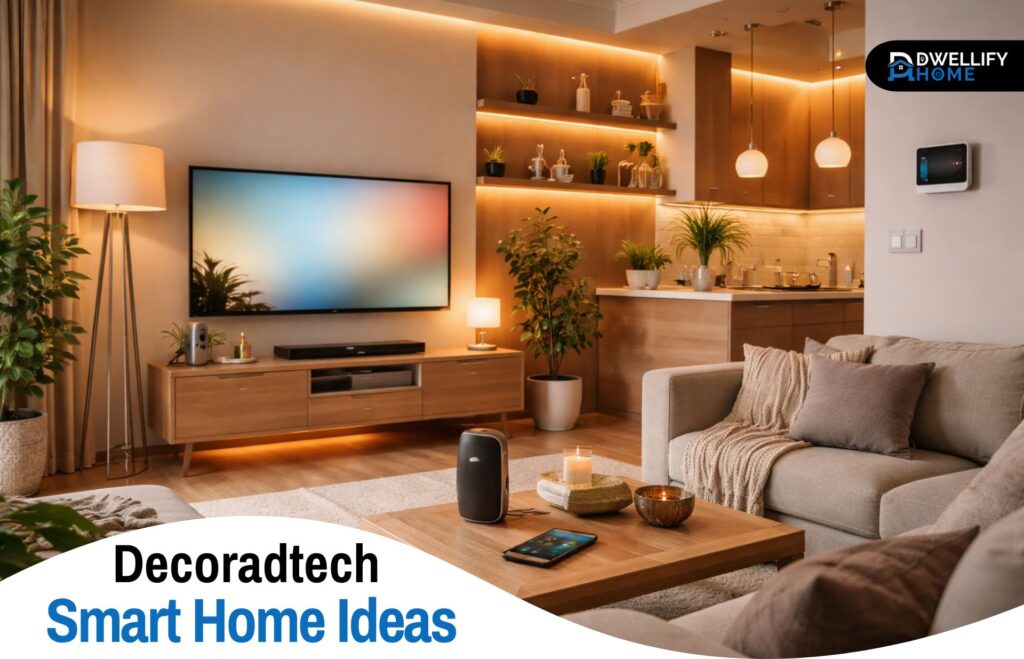
A well-designed smart home never feels like a pile of gadgets. It feels calm, useful, and easy to live in. The homes that work best are usually the ones where the technology fades into the background and the room still feels warm, finished, and personal.
That’s really the appeal behind decoradtech smart home ideas by decoratoradvice. The focus isn’t on filling every corner with devices. It’s about choosing upgrades that make daily life smoother without turning a comfortable home into something that looks overbuilt or busy.
Snippet-Ready Definition:
Decoradtech smart home ideas by DecoratorAdvice combine smart home technology with interior design, helping homeowners add convenience, comfort, and automation without making rooms feel cluttered or overly technical.Mission Statement:
Dwellify Home helps homeowners make practical, stylish, and informed décor decisions that improve how their homes look and work.
What DecoradTech Really Means in a Modern Home
At its core, DecoradTech is the meeting point between smart home function and thoughtful interior design. The goal is simple: make the home work better while keeping it visually clean.
A gadget-heavy setup often happens when people buy smart products one by one without thinking about how they’ll look together. That’s how you end up with mismatched switches, extra hubs on countertops, glowing bulbs in decorative fixtures, and cords running where they shouldn’t.
A design-first smart home takes the opposite approach. It starts with the room, the mood, and the way the space is used. Then it adds technology that supports that vision instead of competing with it.
Key Benefits:
- Keeps smart home upgrades visually clean and design-friendly
- Helps reduce cable clutter and device overload
- Supports better lighting, comfort, security, and daily routines
- Makes it easier to plan a smart home around real living habits
- Works for both full-home upgrades and smaller room-by-room changes
Before You Start: Plan a Smart Home That Still Looks Like Home
The best results usually come from slowing down before buying anything. Most mistakes happen at the planning stage, not during installation.
Start with the rooms that affect your routine the most. For most people, that’s the living room, bedroom, kitchen, and entryway. Ask yourself where small changes would actually help. Better lighting at night, easier climate control, or a cleaner media setup usually matter more than novelty features.
It also helps to protect what already works. A good lamp, a favorite pendant light, or a clean wall layout shouldn’t be sacrificed just to squeeze in a trendy device. In many homes, keeping existing fixtures and improving the controls gives a better result than replacing everything.
One more thing that gets overlooked: pick one ecosystem early. Whether you prefer Apple Home, Google Home, Alexa, or a mixed setup that supports Matter, the point is to avoid adding devices that force you into too many apps and too many workarounds.
10 DecoradTech Smart Home Ideas for a Stylish Modern Home
1. Use smart switches instead of visible smart bulbs where possible
This is one of the easiest ways to keep a room looking normal. Smart switches let you keep the fixtures you already like, which matters a lot in homes with decorative sconces, pendants, or chandeliers.
In practice, this usually looks cleaner than loading every lamp and ceiling light with separate smart bulbs. It also makes the house easier for guests and family to use because the wall switch still behaves the way people expect.
2. Add hidden smart lighting for softer ambiance
The most effective smart lighting often isn’t the lighting you can see directly. It’s the lighting that washes a wall, softens a headboard, or adds depth under cabinets and shelves.
This works especially well in bedrooms, kitchens, and media rooms. Instead of making the lighting the star of the room, it gives the room shape and mood. That’s a big difference. Good ambient lighting should support the space, not announce itself.
3. Use smart plugs to upgrade lamps and small appliances without visual clutter
Smart plugs are one of the most practical upgrades in any home because they improve what you already own. A table lamp, coffee station, wax warmer, or seasonal light setup can become part of a routine without adding much visual noise.
They’re also useful for people who don’t want to rewire or replace switches. In smaller spaces or rentals, smart plugs often do more good than expensive devices people barely use.
4. Create lighting scenes that match how each room is used
A smart home feels more natural when it responds to routines instead of forcing constant manual control. Lighting scenes help with that.
A morning scene in the kitchen might bring up softer under-cabinet lights and brighten the breakfast area. An evening scene in the living room might dim overhead lights and leave only side lamps and accent lighting on. That kind of setup feels thoughtful because it matches real life.
5. Build cable management into your design from the start
Cables are one of the fastest ways to ruin a clean setup. Even expensive smart devices can make a room feel messy when the wire situation is ignored.
The fix usually comes down to furniture choice and placement. Media consoles with rear cutouts, desks with cable channels, and nightstands that hide chargers make a bigger difference than people expect. It’s much easier to manage this before a room fills up than after everything is already plugged in.
6. Choose smart devices with finishes that blend into the room
Not every good device looks good in every room. That matters more than a lot of people admit.
Glossy plastic, oversized hubs, and bright indicator lights can feel out of place in a carefully finished room. Devices with matte finishes, neutral tones, fabric details, or low-profile shapes tend to disappear more easily. A smart speaker or thermostat doesn’t need to be invisible, but it should feel like it belongs there.
7. Upgrade comfort with smart thermostats, blinds, and subtle climate control
Comfort upgrades are usually the ones people appreciate long term. A smart thermostat that handles schedules properly or smart blinds that soften harsh afternoon light can change how a room feels every single day.
These upgrades work best when they solve a clear problem. Maybe a bedroom gets too warm at night, or a living room loses its mood when bright sun hits the TV wall in the afternoon. Good automation responds to those real habits and annoyances.
8. Add security features that feel discreet and design-friendly
Security matters, but it doesn’t have to make the front of the house feel harsh or overdone. A low-profile video doorbell, a well-matched smart lock, and carefully placed motion sensors can do the job without dominating the entryway.
Placement is everything here. Cameras shouldn’t look random, and locks should suit the style of the door hardware. The best security upgrades usually look intentional, not bolted on at the last minute.
9. Make the kitchen smarter without filling it with gadgets
The kitchen is where people often go too far. A few smart touches can help a lot, but too many countertop devices quickly create clutter.
Start with what improves the rhythm of the room: under-cabinet lighting, a smart plug for small appliances you use daily, or voice control for timers when your hands are full. Keep counters as clear as possible. In most kitchens, less looks better and works better.
10. Extend DecoradTech outdoors with smart lighting and comfort features
Outdoor upgrades are often overlooked, but they can make a home feel more polished and easier to enjoy. Path lights, porch lights, patio lighting, and weather-based controls for irrigation can all make a difference.
The best outdoor setups feel quiet and useful. Soft pathway lighting, for example, gives safety and atmosphere at the same time. It doesn’t need to be flashy to be effective.
How to Apply These DecoradTech Ideas Room by Room
The living room usually benefits most from hidden cable management, layered lighting, and a cleaner media wall. Bedrooms tend to improve with smart lamps, hidden charging, and gentle wake or wind-down scenes.
Kitchens need practical upgrades more than decorative ones. Entryways do best with subtle security and lighting that feels welcoming. Bathrooms usually only need simple additions like better lighting control or a discreet smart speaker. In small apartments, the priority is almost always space-saving function and fewer visible devices.
Smart Switches vs Smart Bulbs: Which One Works Better for a Stylish Home?
In most stylish homes, smart switches are the better starting point. They preserve the fixture, reduce maintenance, and keep the room looking more traditional.
Smart bulbs still have their place. They make sense in lamps, accent lighting, and areas where color tuning or dimming flexibility matters. The mistake is assuming bulbs should go everywhere. In reality, the cleanest setups often use both, each in the right place.
How to Hide the Tech Without Losing Functionality
Hiding tech works best when you do it thoughtfully. Routers and hubs can often be tucked into media furniture or cabinets with ventilation, but they shouldn’t be buried so deeply that the signal drops.
Charging stations are easier to manage when they live inside a drawer, on a shelf behind a cabinet door, or in a dedicated tray near an entry table. The goal is simple: keep everyday convenience while removing the visual mess that makes a room feel unfinished.
Choosing the Right Smart Home Setup for Long-Term Use
Compatibility matters more now than most beginners realize. Devices that work with Matter or Thread can make life easier later because they’re built around better cross-brand communication and more stable connections.
That doesn’t mean every product has to be the newest thing on the market. It means choosing fewer devices with better long-term support. A smaller setup that works reliably is always better than a crowded one that needs constant fixing.
DecoradTech Ideas on a Budget
A better smart home doesn’t need to start with expensive renovations. Lighting, smart plugs, and one or two control upgrades usually deliver the best return early on.
A sensible order looks like this: improve lighting first, fix visible clutter next, then add comfort or security upgrades based on the rooms you use most. Spending more only makes sense when it solves a real problem or noticeably improves the look of the space.
Common Mistakes That Make Smart Homes Look Messy
The most common mistake is buying devices before planning the room. After that, it’s usually exposed wires, too many apps, too many glowing gadgets, and lighting effects that feel distracting instead of comfortable.
Another mistake is forgetting that people actually have to live with the setup. The smartest home in theory can still be frustrating if basic controls feel confusing or the room no longer feels calm.
Expert Tips to Make Smart Home Upgrades Feel More Natural
Start with one room and get it right before moving to the next. That alone prevents a lot of wasted money and awkward choices.
Focus on routines, not features. A light that turns on gently in the morning is useful. A complicated automation you forget exists is not. Keep manual control easy, especially for shared spaces. And treat technology like part of the design plan, not something you deal with after the furniture is already in place.
Are DecoradTech Smart Home Ideas Worth It?
Yes, when the upgrades are chosen with purpose. Homeowners usually get the most flexibility, but renters can still do a lot with plugs, lamps, portable lighting, sensors, and removable solutions.
The real value is in making daily life simpler while keeping the space comfortable and visually settled. That balance is what makes these ideas worth doing in the first place.
FAQs
What are decoradtech smart home ideas by DecoratorAdvice?
They’re design-focused smart home ideas that blend automation with décor, so the home feels functional, comfortable, and visually calm instead of gadget-heavy.
Are these ideas good for small homes or apartments?
Yes. Many of the ranking pages highlight renter-friendly and small-space upgrades like smart plugs, lighting, and compact automation that don’t require major changes.
What should I start with first?
Lighting, smart plugs, and a simple control setup are the most practical starting points because they improve everyday comfort without making the home feel over-equipped.
Do I need to replace all my fixtures and devices?
No. The core idea behind this topic is usually to work with your existing home style and add smarter controls where they make sense, rather than replacing everything.
Why do people choose this approach instead of a standard smart home setup?
Because it solves a common frustration: people want automation and convenience, but they don’t want visible tech, messy cords, or devices that disrupt the look of the room.
Conclusion
The best decoradtech smart home ideas by decoratoradvice aren’t really about showing off technology. They’re about making a home easier to live in while keeping it clean, comfortable, and true to the style of the space.
Start with the parts of your home that frustrate you most. Fix the lighting, reduce the clutter, simplify the controls, and let the technology support the room instead of taking it over. That’s usually where a stylish smart home begins, and it’s also where it tends to age best.
Disclaimer:
This content is for general home inspiration and planning guidance only. Always check product compatibility, installation requirements, and safety needs for your space.

I’m Bilal Hassan, the founder of Dwellify Home. With 6 years of practical experience in home remodeling, interior design, and décor consulting, I help people transform their spaces with simple, effective, and affordable ideas. I specialize in offering real-world tips, step-by-step guides, and product recommendations that make home improvement easier and more enjoyable. My mission is to empower homeowners and renters to create functional, beautiful spaces—one thoughtful update at a time.