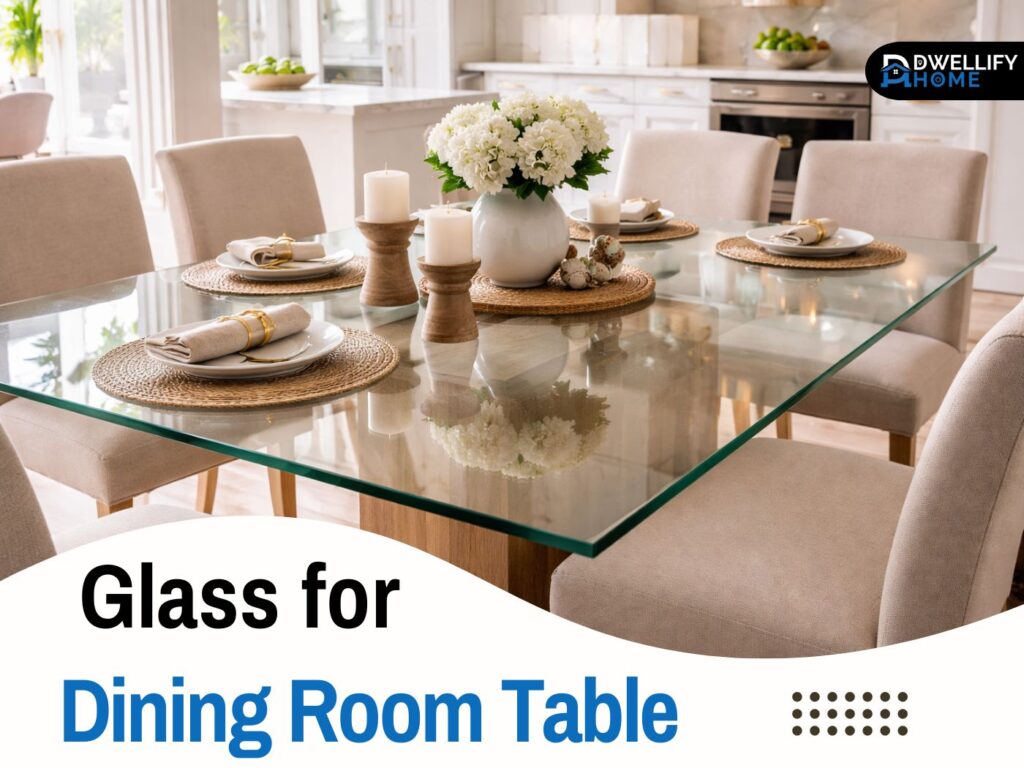
A glass top can make a dining table feel cleaner, brighter, and easier to live with day to day. I’ve helped homeowners add glass protectors to family tables, replace shattered tops after a move, and upgrade older sets so they feel modern again. The best results always come down to the same basics: choose a safe glass type, pick the right thickness, measure carefully, and finish the edges properly.
In this guide, I’ll walk you through what matters in real homes, including kids, pets, daily meals, and the occasional bump from a chair. You’ll get practical steps you can follow, plus a few “learned-the-hard-way” notes from installs I’ve done over the years.
Snippet-ready definition:
Glass for dining room table setups are custom or ready-made glass tops used to protect a table or replace a broken top. People choose them for easy cleaning, scratch protection, and a modern, light-looking finish.
Mission Statement:
At Dwellify Home, our mission is to help you make confident home decisions with clear, practical guidance that fits real life, real budgets, and real spaces.
What Type of Glass Table Top Do You Need?
Before you buy anything, decide what role the glass is playing. This is where most ordering mistakes start.
A glass cover, sometimes called a protector, sits on top of a wood or stone dining table. People use it to prevent scratches, protect a soft finish, or keep a painted table from chipping. You still have the original tabletop underneath, so the glass doesn’t carry the full structural load.
A standalone glass top is different. In that setup, the glass is the tabletop. It sits on a base or pedestal and must handle the daily weight of plates, elbows, and moving chairs. Thickness and support become much more important here.
Then there’s a third scenario: replacement glass for dining room table use, usually because the original broke or went missing. In that case, your goal is matching the old specs, but also fixing whatever caused the break in the first place, like wobble, uneven supports, or sharp metal contact points.
Quick Guide Table
| What you’re doing | Best glass type | Common thickness range | Key detail to get right |
| Protecting an existing tabletop (glass cover) | Tempered (preferred) | 6–10 mm | Overhang choice and edge finish |
| Replacing a broken glass top | Tempered (most common) or laminated | 8–12 mm | Match size, corner radius, and edge style |
| Standalone glass top on a base | Tempered or laminated | 10–12 mm (sometimes more for large spans) | Support points must be level and padded |
| Round dining table top | Tempered | 8–12 mm | Accurate diameter and true roundness |
| Family home with kids/pets | Tempered or laminated | 8–12 mm | Safer edge and rounded corners |
Easy step-by-step: Ordering cut-to-size glass (without mistakes)
- Confirm the setup: glass cover on a table, drop-in frame, or standalone top on a base.
- Measure twice: take length and width in two places (or diameter twice for round).
- Choose safety glass: ask for tempered (or laminated if you want hold-together behavior).
- Pick thickness: match it to table size and support style (thicker for larger spans).
- Select edge and corners: flat polished, pencil, or bevel, plus corner radius if needed.
- Add protection: plan for rubber bumpers or clear spacers so glass doesn’t sit directly on wood or metal.
- Ask the shop the right questions: tolerance, packaging, remake policy, and lead time.
Best Glass Type for Dining Tables (Safety First)
Tempered safety glass (best default for most homes)
For dining tables, tempered glass is the standard I recommend in most situations. It’s heat-treated so it’s stronger than regular glass, and if it ever breaks, it tends to crumble into small pieces instead of long sharp shards. That’s a big deal in a dining space where hands and knees are close to the edge.
In real installs, I’ve seen tempered tops survive bumps that would chip or crack standard glass. That doesn’t mean it’s unbreakable, but it’s more forgiving in everyday life, especially when chairs get pushed in quickly.
Laminated glass (when you want “hold-together” protection)
Laminated glass is made from two layers bonded with an inner film. If it cracks, it tends to stay together instead of falling apart. It’s a solid option when you want extra peace of mind, or when the table is in a high-traffic family space.
One common example is a dining area that doubles as a homework zone. Pencils, metal water bottles, and laptop corners can all be rough on surfaces. Laminated glass can help in those environments, though it’s typically heavier and may cost more.
Annealed glass is the basic, non-safety version. It can be fine for framed applications in some cases, but I generally avoid it for open dining tabletops because the break pattern is riskier.
How Thick Should Glass Be for a Dining Room Table?
Thickness is where the table either feels solid and quiet, or it feels a bit rattly and stressful. What you need depends on table size and how well the glass is supported.
If the glass is just a protector sitting on a sturdy tabletop, you can often use a moderate thickness because the wood or stone underneath is doing the heavy lifting. If the glass is the tabletop, thickness needs to increase because the glass is acting as the structure.
Here’s the simple way I explain it to homeowners: the larger the span and the fewer support points, the thicker the glass should be. A wide table with support only at the edges needs more thickness than a table sitting fully on a solid surface.
“Thick glass for dining room table” when thicker is worth it
Thicker glass is worth considering when:
- The table is large and the glass is spanning a wide area
- The top is standalone on a base, not fully supported underneath
- You want a more stable, premium feel with less vibration
- You have kids and want extra durability
You’ll often see 10 mm to 12 mm used for many dining applications, especially for glass table top replacement projects where the glass is acting as the main top. For smaller protectors, thinner may work, but I still like a thickness that doesn’t flex easily when someone leans in.
A quick real-world note: too thin can create a “drum effect.” Plates clink louder, chairs bump the edge and it rings, and the top feels more fragile. Slightly thicker glass usually makes the whole setup feel calmer.
Glass Shape and Sizing Choices (What Looks Right and Works Best)
Shape is partly style and partly function. If you’re trying to make a tight dining space easier to move through, shape matters more than people expect.
A round glass for dining room table setups can be great in smaller rooms because it softens traffic flow. No corners to catch your hip on, and chairs slide around more naturally. Rectangular and oval shapes are classic for longer rooms and larger families, and they line up neatly with rugs and lighting.
Sizing is also about overhang. For a glass protector, many homeowners prefer a slight overhang so the glass shields the table edge. If you have young kids, I usually suggest either flush sizing or a very modest overhang, paired with a safer edge finish, so sharp contact points are reduced.
Measuring Guide (So It Fits the First Time)
Measuring is where you earn or lose the whole project. I’ve fixed a lot of orders where the glass was perfect quality but wrong by a few millimeters.
Take measurements in at least two places. Tables are often a little out of square, especially older wood tables that have shifted with humidity.
Measure for a glass cover (protector) on top of a table
For rectangular and square tables:
- Measure length and width in two spots
- Decide if you want the glass flush or with a small overhang
- If corners are rounded, measure the corner radius if possible
For everyday use, I usually recommend keeping the glass slightly inside the outer edge if the table has very rounded corners. It tends to look cleaner and reduces chipping risk.
Measure for a glass top sitting inside a frame or lip (drop-in style)
If the glass sits inside a metal rim or wooden frame, measure the inside opening. Then allow a small clearance so the glass isn’t forced into place.
Tight fits crack glass. I’ve seen tops fail simply because the frame pinched during temperature changes. A little breathing room prevents stress.
Measuring a round table for replacement glass
For a round top, measure the diameter straight across the center. Then rotate and measure again, because not every “round” table is perfectly round.
If you’re replacing an old top and you still have it, measure that glass too. Old glass is often the best reference for edge style and fit, even if it’s chipped.
Edge Finish, Corner Safety, and Comfort
Edges are not just a detail. They affect safety, comfort, and how the glass feels every time you grab it to clean.
Flat polished edges are clean and modern, and they’re common for dining tops. Pencil edges have a slightly rounded feel that’s nice in family homes. Beveled edges add a decorative angle and can make thicker glass look lighter.
Corners matter just as much. On rectangular tops, a small corner radius reduces painful bumps and lowers the chance of chipping. If I’m working in a home with kids, I lean toward a gentle radius and a comfortable edge finish. It’s a small change that makes the table easier to live with.
Glass Options That Change the Look (And Fingerprints)
Most people default to clear glass, and that’s fine, but there are other options that solve real everyday annoyances.
Low-iron, sometimes called extra-clear, looks less green along the edge. If your dining table is a warm white or light oak, low-iron glass can look more true to color.
Frosted or etched finishes hide fingerprints better, but they also soften the look of the table beneath. Tinted glass can reduce glare and give a more dramatic style, especially on darker bases.
If you eat at your table daily and don’t want to wipe smudges constantly, a finish choice can make a noticeable difference.
Protecting the Table Under the Glass (Prevent Scratches and Sliding)
A glass top should never sit directly on wood or metal without something between. It can slide, scratch the surface, or create pressure points that lead to cracks.
Use clear rubber bumpers or spacers. Place them evenly, especially near corners and along long edges. On pedestal or base-supported setups, make sure the contact points are level and padded.
One of the most common break causes I’ve seen is a slightly uneven base. The glass ends up bearing weight on one point, and a small bump is enough to start a crack. If your table wobbles now, fix that before installing the new glass.
Cut to Size vs Ready Made: Which Should You Buy?
Ready-made tops can work if your table is a standard size and you’re okay with limited edge and corner options. For many dining tables, though, custom is the safer and better-looking route.
Cut to size glass for dining room table projects are especially helpful when:
- Your table is older or not perfectly square
- You need a specific corner radius
- You want a precise overhang or a flush fit
- You’re replacing a top that had a unique shape
What to provide when ordering custom cut glass
Whether you order online or from a local shop, give them:
- Exact length and width, or diameter for round tops
- Thickness preference
- Glass type: tempered or laminated
- Edge finish choice
- Corner style: sharp or rounded
- Any special requirements, like a center cutout
This is the key to getting the right glass for dining room table tops without costly reorders.
“Near Me” Buying Guide: Local Shop vs Online Ordering
Both routes can work. A local glass shop can be great if you want hands-on help with measuring, or if the table is tricky. Online ordering can offer more choices and sometimes better pricing.
If you prefer local, searching for table top glass cut to size near me usually brings up shops that can also help with edge finishing and safe handling. That’s useful if you don’t want to transport a large glass panel yourself.
Checklist for ordering locally
When you’re buying glass for dining room table near me, ask:
- Is it tempered safety glass?
- Are the edges polished, and what edge style do you recommend for dining use?
- Can you do rounded corners or a custom radius?
- How is it packaged for transport or delivery?
- What happens if my measurement is off by a few millimeters?
A good shop won’t rush you through these details. They’ll slow down the order to get it right.
Glass Table Top Replacement Guide (When the Old One Broke)
If your previous top broke, it helps to figure out why, so the new one doesn’t fail the same way.
Sometimes the cause is obvious, like a hard impact on the corner. Other times it’s structural: uneven supports, missing bumpers, or a base that twisted slightly over time.
If you’re doing a glass table top replacement, try to match:
- Thickness and tint, if you liked the previous look
- Edge finish and corner style
- Overall size, including any overhang
Replacing glass when the original is missing or shattered
If the old glass is gone, measure the base carefully. If there’s a frame, use inside dimensions and allow a little clearance. If it’s a top-perched style, decide on your overhang and measure the tabletop beneath.
If you have the old glass but it’s shattered, you can sometimes reconstruct the size by measuring the table instead. Just don’t guess corners. Corner radius is where replacements often look “off” if it’s not matched.
Special Use Cases People Miss
Some tables need extra thought.
Pedestal bases can concentrate weight on fewer points. That can be fine, but it usually calls for a thicker top and carefully placed bumpers. Large rectangular tables with long spans may need thicker glass or better support to avoid flex.
Homes with kids and pets benefit from safer edges and tempered glass. I also recommend keeping the glass flush or with a minimal overhang, so there’s less chance of a hard bump on a projecting edge.
If you’re moving soon, protect the edges. Most glass damage happens during carrying and loading, not during normal use. Use corner protectors, keep it vertical, and don’t let metal straps touch the glass directly.
Cost Factors (What Actually Raises the Price)
Glass pricing isn’t random. A few choices make the biggest difference:
- Larger size and thicker panels cost more
- Tempered and laminated upgrades add cost
- Polished edges and bevels increase labor
- Rounded corners and complex shapes take more time
- Low-iron, frosted, and tinted options raise material cost
- Cutouts and holes add precision work
If you’re budgeting, decide first on safety glass and correct thickness. Then choose edge style and visual upgrades.
Cleaning and Daily Care (Keep It Looking New)
For everyday cleaning, a microfiber cloth and a gentle glass cleaner usually do the job. The trick is removing grit first. Tiny particles dragged across the surface can create fine scratches over time.
A few habits that help:
- Use placemats or a runner when serving heavy dishes
- Don’t slide ceramic plates across the glass
- Wipe the underside occasionally if crumbs collect near bumpers
- Replace worn rubber pads before they harden and mark the surface
Quick FAQs
1) What kind of glass is used for dining tables?
Most dining tables use tempered safety glass because it’s stronger than regular glass and breaks into small pieces instead of sharp shards. Laminated glass is also used when extra hold-together safety is wanted.
2) How much does it cost to get a glass table top cut?
It depends on size, thickness, glass type (tempered or laminated), and edgework. A basic cut is cheaper, while polished edges, corner radius, low-iron glass, and tempering increase the price.
3) What thickness glass is good for a dining table?
For many dining tables, 8–12 mm is a practical range. Glass covers on solid tabletops can often be thinner, while standalone tops or larger spans usually need thicker glass for stability.
4) What is the best glass for a table top?
For most homes, tempered glass is the best all-around option due to safety and durability. If you want extra protection that stays together when cracked, laminated glass is a strong choice.
5) Is it better to order glass online or near me?
If your table is unusual, older, or needs a tricky corner radius, a local shop can be easier because they often help with measuring and handling. Online can work well when measurements are simple and you know the exact specs.
Conclusion
Choosing glass for dining room table use is mostly about making the table safer and easier to live with. When you pick tempered or laminated glass, match thickness to the table’s size and support, and measure carefully, the whole project becomes straightforward.
If you remember only a few things, make them these: don’t skimp on safety glass, don’t guess measurements, and don’t ignore edges and bumpers. Those details are what separate a top that feels stable for years from one that constantly makes you nervous.
If you’d like, share your table size and whether the glass is a protector or a full top, and I can suggest a practical thickness and edge setup that fits your space.
Disclaimer
This article is for general educational guidance. Glass sizing and safety depend on your table’s structure and support points, so confirm measurements and specifications with a qualified glass professional before ordering or installing.

I’m Bilal Hassan, the founder of Dwellify Home. With 6 years of practical experience in home remodeling, interior design, and décor consulting, I help people transform their spaces with simple, effective, and affordable ideas. I specialize in offering real-world tips, step-by-step guides, and product recommendations that make home improvement easier and more enjoyable. My mission is to empower homeowners and renters to create functional, beautiful spaces—one thoughtful update at a time.