Buying a home is one of the biggest financial decisions most people make — and yet, one of the most commonly underestimated line items in the process is the home inspection. Not because it’s expensive, but because buyers often don’t know what to expect until they’re already under contract and the clock is ticking.
Over the years, working through hundreds of home purchases, one thing that comes up almost every time is the same question: “How much is this going to cost me?” The answer isn’t a single number. It never is. But it’s also not as complicated as some make it sound.
Here’s a clear, honest breakdown of what you’ll actually pay — and how to estimate it for your specific home.
Snippet-Ready Definition
A home inspection cost calculator estimates what you’ll pay for a professional property inspection based on home size, age, and location — helping buyers budget accurately before closing and avoid unexpected out-of-pocket expenses.
Mission Statement
At Dwellify Home, we help homeowners make practical, well-informed decisions — whether they’re buying, renovating, or simply figuring out what something should cost. Our goal is to give you clear, honest information you can actually use.
What a Home Inspection Actually Covers
Before you start estimating cost, it helps to understand what you’re paying for. A standard home inspection is a visual assessment of the property’s major systems and structure. That includes the roof, foundation, electrical panel, plumbing, HVAC, insulation, windows, and doors.
What inspectors don’t cover: anything behind walls, underground pipes (unless you add a sewer scope), or cosmetic issues. They’re looking for functional and safety problems — not giving you a renovation punch list.
Knowing this scope matters because it directly affects how long the inspection takes, and time is a big part of how inspectors set their fees.
Quick Cost Reference by Home Size
| Home Size | Estimated Cost |
| Under 1,000 sq ft | ~$200 |
| 1,000 – 2,000 sq ft | $300 – $400 |
| 2,000 – 3,000 sq ft | $400 – $500 |
| 3,000+ sq ft | $500+ |
Costs vary by location, home age, and inspector certification.
What This Guide Helps You Do
- Estimate your inspection cost before calling a single inspector
- Understand which factors push your price up — and which don’t
- Know which add-on inspections are worth paying for
- Use your inspection report to negotiate repairs or price reductions
- Avoid overpaying by asking the right questions upfront
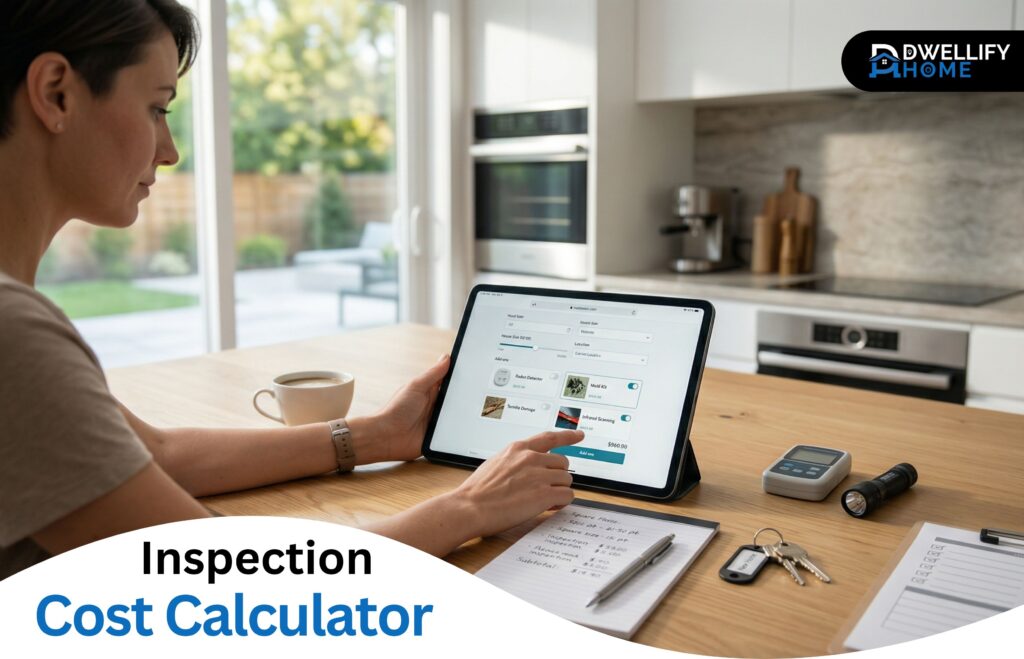
Home Inspection Cost Calculator: How to Estimate Your Number Before You Book
Most licensed inspectors price their work using a straightforward formula: square footage multiplied by a per-square-foot rate, adjusted for local market conditions.
In 2026, home inspection cost per square foot typically runs between $0.10 and $0.20, depending on your region and the inspector’s experience level. For a 2,000-square-foot home, that puts you somewhere between $200 and $400 before any add-ons.
To estimate your number, take your home’s square footage, apply the local rate range, and then add time for older homes (pre-1980 properties consistently take longer to inspect). That adjusted total gives you a working estimate before you pick up the phone.
Online calculators on real estate sites can give you a ballpark, but they’re built on regional averages. They won’t account for your specific home’s age, condition, or your inspector’s pricing structure. Use them as a starting point, not a final number.
Average Home Inspection Costs by Home Size
Here’s what most buyers pay based on home size alone, using 2026 national averages:
| Home Size | Estimated Cost Range |
| Under 1,000 sq ft | ~$200 |
| 1,000 – 2,000 sq ft | $300 – $400 |
| 2,000 – 3,000 sq ft | $400 – $500 |
| 3,000+ sq ft | $500 and up |
Size is the single biggest pricing variable because it directly determines how long the inspection takes. A thorough inspector isn’t going to rush a 3,500-square-foot home into a two-hour window — and you wouldn’t want them to.
What Affects Your Home Inspection Cost the Most
Square footage is the baseline, but several other factors push the final number up or down.
Age of the home is a significant one. Homes built before 1980 often have older electrical systems, outdated plumbing materials, or original HVAC equipment — all of which take more time to assess carefully. Inspectors factor that in.
Property type matters too. A condo inspection is typically faster and cheaper than a single-family home inspection because the inspector doesn’t cover the roof or exterior structure — the HOA owns those. Multi-unit properties, on the other hand, cost more because there’s simply more to inspect.
Inspector certification also plays a role. A certified member of InterNACHI or ASHI with ten-plus years of experience will usually charge more than someone just starting out. That’s generally worth it — an experienced inspector catches things a newer one might miss.
Finally, timing can affect pricing in some markets. During busy spring buying seasons, some inspectors in high-demand areas charge a slight premium. Booking mid-week or off-peak can sometimes save you $30 to $50.
Home Inspection Costs by Location: Why Your Zip Code Changes Everything
National averages are useful context, but they can be misleading. Where your home sits geographically has a real impact on what you’ll pay.
Near Washington, D.C.: Home inspection costs in the D.C. metro area typically run between $350 and $550 for a standard single-family home, with some inspectors charging higher for older row houses and historic properties that require extra time.
Near Virginia: Costs vary noticeably depending on whether you’re in Northern Virginia (closer to D.C. pricing), Central Virginia, or a more rural area. Northern Virginia buyers generally see quotes in the $350–$500 range, while buyers further west or south often find inspectors in the $275–$400 range for comparable homes.
High cost-of-living areas consistently produce higher inspection fees — not because the inspection is more thorough, but because operating costs for the inspector (insurance, licensing, tools) are higher. That’s why calling 2–3 local inspectors for quotes always beats relying on a national estimate.
Add-On Inspections: What They Cost and When They’re Worth It
A standard inspection covers a lot — but it doesn’t cover everything. Depending on the property, you may need one or more specialized inspections on top of the general one.
| Inspection Type | Typical Cost |
| Radon Testing | ~$250 |
| Termite / WDO Inspection | $75 – $325 |
| Sewer Scope | $270 – $1,734 |
| Mold Testing | $300 – $700+ |
| Pool & Spa Inspection | $200 – $500 |
| Four-Point Inspection | $100 – $200 |
Radon testing is worth adding for almost any home with a basement or crawl space — especially in regions where radon levels are known to run high. A termite inspection is a must if you’re buying in a wooded area or a state where wood-destroying organisms are common. A sewer scope is particularly valuable for homes built before 1970, where clay or cast iron pipes are more likely to have issues. And if the home has a pool, don’t skip that inspection — repairs there are never cheap.
Is a Home Inspection Worth the Cost?
Honestly, yes — and not just as a formality.
Buyers who skip inspections to strengthen their offer (which happened a lot during the competitive 2021–2022 market) sometimes end up with expensive surprises within the first year of ownership. A failing HVAC system, outdated electrical panel, or a slow roof leak can cost far more than the inspection itself.
Beyond protection, the inspection report gives you real negotiating leverage. If the inspector finds a cracked heat exchanger or evidence of water intrusion, you have documented grounds to request a price reduction, ask for repairs before closing, or negotiate seller credits. That $400 inspection can directly translate to thousands in savings — or help you walk away from a deal that looked good on paper but wouldn’t have been.
How to Get an Accurate Local Quote (and Avoid Overpaying)
When you call an inspector, have these details ready: the home’s square footage, year built, property type, and any known features like a pool, crawl space, or detached garage. The more specific you are, the more accurate the quote.
Call at least two or three inspectors. Pricing in most markets varies by $75 to $150 between inspectors for the same home — and the cheapest quote isn’t always the best value.
Watch out for these red flags: inspectors who won’t give a price until after the inspection, vague credentials, or anyone who can’t tell you how long the inspection will take. A thorough inspection of a 2,000-square-foot home should take roughly two to three hours. Significantly less than that is a concern.
Home Inspection Checklist: What to Ask Before, During, and After
Before booking, ask: Are you certified through InterNACHI or ASHI? What’s included in the standard inspection? Will I receive a written report with photos?
During the walkthrough, follow along if the inspector allows it. You’ll learn things about the home that don’t always make it into the written report — small observations about the condition of finishes, the quality of past repairs, or how well the home has been maintained overall.
When the report arrives, read through it in full before deciding which findings matter most. Not every item flagged is a dealbreaker. Inspectors note everything — including minor maintenance items — so prioritize safety concerns and major system issues first.
Turning Inspection Findings into a Home Repair Estimate
Once you have the report, the next step is translating findings into real costs. A home repair estimate calculator can help you ballpark repair costs based on the inspector’s flagged items — but for larger issues, getting actual contractor quotes is the more reliable approach.
A solid estimate for home repairs template should include: the item flagged, the severity (cosmetic vs. functional vs. safety), the estimated repair cost range, and whether it’s something to negotiate now or address after closing.
Use this breakdown to prioritize. Structural issues and safety concerns (faulty wiring, active leaks, foundation cracks) go to the top of the list. Cosmetic items go to the bottom. From there, you can approach the seller with a focused, documented repair request rather than a vague ask — which tends to land better in negotiations.
FAQs
What is the biggest red flag in a home inspection?
A compromised foundation, active roof leaks, or a faulty electrical panel are the most serious findings. These aren’t cosmetic — they affect safety and carry repair costs that can run into the tens of thousands. Any one of them warrants a follow-up from a licensed specialist before you move forward.
How much do house inspections typically cost?
For most homes in 2025, a standard inspection runs between $300 and $500. Smaller homes under 1,000 square feet can come in around $200, while larger or older homes in high-cost metro areas can exceed $600 once add-ons are included.
How do you calculate inspection cost?
Start with your home’s square footage and multiply by the local per-square-foot rate, which typically falls between $0.10 and $0.20. Adjust upward for older homes, specialized add-ons like radon testing or a sewer scope, and regional pricing differences. Then confirm with 2–3 local quotes.
Does the buyer or seller pay for the home inspection?
In most transactions, the buyer pays for the general home inspection as part of their due diligence. Sellers sometimes order a pre-listing inspection on their own to identify issues before putting the home on the market — but that’s a separate, optional cost they absorb themselves.
Are add-on inspections really necessary?
It depends on the property. A radon test makes sense for homes with basements, especially in high-radon regions. A sewer scope is worth it for any home built before 1970. A termite inspection is a standard requirement in many states. Don’t skip them as a cost-cutting move — a missed issue will cost far more after closing.
Conclusion
A home inspection cost calculator gives you a useful starting point, but the real number comes from knowing your home’s size, age, location, and which add-ons actually apply to your situation. For most buyers in 2026, expect to pay somewhere between $300 and $500 for a standard inspection — more in high-cost metros, less in smaller markets.
The cost is predictable. What’s less predictable is what the inspection reveals. That’s exactly why it’s worth doing carefully, with a qualified inspector and enough time in the process to act on what you find.
Get local quotes, ask the right questions, and don’t treat the inspection as a checkbox. Treat it as the due diligence it’s designed to be.
Disclaimer
The cost estimates provided in this article are based on national averages and regional data for 2025. Actual inspection costs vary by location, property type, inspector, and scope of services. Always consult licensed local professionals for accurate quotes specific to your home.

I’m Bilal Hassan, the founder of Dwellify Home. With 6 years of practical experience in home remodeling, interior design, and décor consulting, I help people transform their spaces with simple, effective, and affordable ideas. I specialize in offering real-world tips, step-by-step guides, and product recommendations that make home improvement easier and more enjoyable. My mission is to empower homeowners and renters to create functional, beautiful spaces—one thoughtful update at a time.