Smart home work looks simple from the outside. A new switch here, a thermostat there, maybe a camera over the garage. But once walls, wiring, panel capacity, and device compatibility enter the picture, small mistakes can turn into expensive ones.
The biggest issue I’ve seen is homeowners hiring the wrong kind of help for the job. A person can be a solid general electrician and still not be the best fit for automation work, mixed-device setups, or retrofits in older homes. Good smart home work isn’t just about getting power to a device. It’s about making sure everything works safely, reliably, and without headaches six months later.
Snippet-Ready Definition
A smart home electrician installs and upgrades wired smart devices such as lighting, thermostats, cameras, and panels, helping homeowners improve safety, compatibility, and long-term reliability.
What a Smart Home Electrician Does and Why It Matters for Your Home
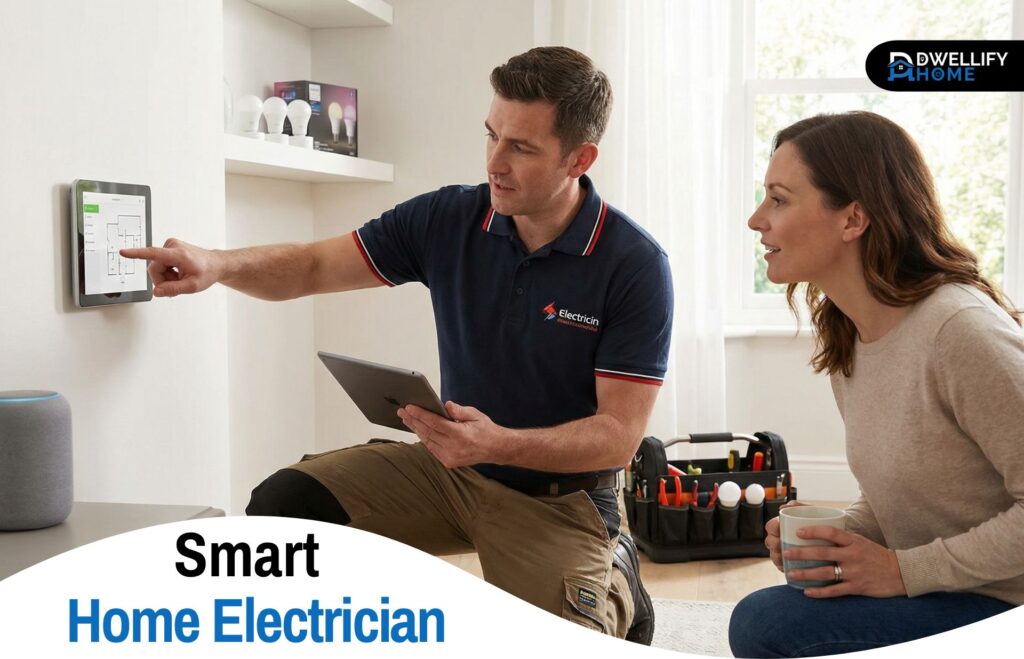
A smart home electrician handles the electrical side of connected devices and home automation. That includes installing smart switches, outlets, thermostats, lighting controls, cameras, doorbells, and sometimes larger upgrades like smart panels or EV-ready circuits.
The difference is in the details. A regular installation might stop at “it powers on.” A better installation checks whether the wiring supports the device, whether the load is safe, whether the signal path makes sense, and whether the system will still work well after more devices are added.
That matters more than people think. A smart switch that flickers, a thermostat that drops offline, or a doorbell that keeps resetting often points back to setup issues, not just a bad product.
Mini Guide: When to Hire a Smart Home Electrician
| Situation | DIY May Be Fine | Hire a Pro |
| Plug-in smart devices | Yes | No |
| Smart switches or outlets | Sometimes | Yes |
| Smart thermostat with wiring changes | No | Yes |
| Cameras, locks, and doorbells with hardwiring | No | Yes |
| Panel upgrades or multiple integrated devices | No | Yes |
Key Benefits
- Helps make sure wiring supports the devices you want
- Reduces compatibility and setup problems
- Improves safety and code compliance
- Supports cleaner installs for lighting, security, and energy upgrades
- Makes future smart home expansion easier
When You Need a Smart Home Electrician Instead of a General Electrician
Not every smart device needs specialized help. Plug-in lamps, speakers, and a few app-based gadgets are usually straightforward. The line changes when the project touches fixed wiring, circuit load, breaker capacity, or system integration.
You’ll usually want someone with smart-home experience when:
- you’re replacing standard switches with smart switches
- your home has older wiring
- you’re adding several devices at once
- you want different systems to work together
- you’re installing cameras, smart locks, thermostats, or a smart panel
- you’re doing a remodel and want future-ready wiring
A lot of homeowners run into trouble with older homes. They buy devices first, then find out the box has no neutral wire, the thermostat needs a C-wire, or the panel is already crowded. That’s where the right electrician saves time and frustration.
What a Smart Home Electrician Can Help With
Most projects fall into a few common categories.
Smart lighting is one of the most requested. That can mean app-controlled dimmers, occupancy sensors, scene lighting, outdoor controls, and schedule-based automation. A good smart lighting electrician won’t just swap switches. They’ll check fixture compatibility, switch box depth, load limits, and whether the setup makes sense for how the room is actually used.
Smart switches and outlets are another common upgrade. These look simple, but in older homes the wiring often tells a different story. Loose neutrals, crowded boxes, and inconsistent grounding show up all the time.
Thermostats are where many DIY plans fall apart. Some homes don’t have the wiring needed for a true smart thermostat install. Others have HVAC systems that technically work with the device but perform poorly because of incorrect setup.
Then there are security devices like video doorbells, cameras, smart locks, and motion lighting. These need more than a clean mount. Power stability, transformer sizing, placement, and reliable connection all matter.
Larger projects can include smart electrical panels, energy monitoring, dedicated circuits, whole-home surge protection, and prep for EV charging. These are the jobs where experience really shows.
How to Tell if Your Home Is Ready for Smart Technology
Before hiring anyone, it helps to know what your home may need.
Older wiring is the first checkpoint. Homes built decades ago can still support smart upgrades, but they often need a closer look. Missing neutral wires, shallow boxes, worn devices, and limited panel space are common.
Thermostats need special attention. A lot of homeowners hear about a smart thermostat, buy one online, and only later find out their current setup doesn’t support it. The same happens with some smart switches.
Panel capacity matters too. Once you start adding smart devices, outdoor equipment, cameras, and maybe future EV charging, load planning becomes more important. Even if your current panel works today, it may not leave much room for growth.
And then there’s connectivity. Smart devices don’t run on wiring alone. Weak Wi-Fi, poor hub placement, or interference can make a perfectly installed device feel broken.
How to Choose the Right Smart Home Electrician
Start with the basics: licensing, insurance, and local code knowledge. That part isn’t glamorous, but it matters. You want someone who treats permits, load calculations, and safety checks as normal parts of the job, not optional extras.
Then ask about hands-on experience with actual smart installations. Not just “yes, I do smart homes,” but what kinds of systems they’ve worked on. Can they install smart switches? Have they handled thermostat wiring problems? Do they understand smart lighting layouts, camera power needs, and mixed-brand systems?
Compatibility knowledge is another big one. Some homes run smoothly on one platform. Others have a mix of Google Home, Alexa, Apple HomeKit, Wi-Fi devices, hubs, and brand-specific apps. The right person doesn’t need to sell you one ecosystem, but they should understand where compatibility issues show up.
It also helps to hire someone who thinks beyond the install. Troubleshooting, app setup, future expansion, and clean handoff matter. A lot of service calls happen after installation because no one explained what was added, how it was configured, or where the limits are.
Questions to Ask Before Hiring
A short conversation can tell you a lot. Ask things like:
- What smart home systems have you installed recently?
- Have you worked with Google Home, Alexa, or Apple HomeKit?
- Will my current wiring support the devices I want?
- Do I need a panel or circuit upgrade first?
- What happens if a device keeps disconnecting after installation?
- Do you handle setup and testing, or only the wiring?
Good answers are usually clear and practical. Weak answers tend to stay vague or jump straight to product recommendations without understanding the house.
Signs You’re Hiring the Right Professional
One of the best signs is a proper assessment before quoting. That doesn’t always mean a long visit, but it does mean they’re asking the right questions.
A strong contractor will explain limitations in plain language. They won’t hide behind technical talk. They’ll tell you where your plan works, where it needs adjustment, and what’s worth doing now versus later.
They’ll also think long term. That might mean recommending better switch placement, surge protection, or planning a circuit with future devices in mind. Good advice usually sounds steady and practical, not sales-heavy.
Red Flags to Watch Out For
Be cautious when someone gives a fast quote without checking wiring, panel space, or device type. That usually means they’re pricing the obvious part of the job and skipping the parts that create delays.
Another red flag is vague talk around compatibility. Smart home work often fails at the handoff between electrical installation and system behavior. If they can’t discuss platforms, connectivity basics, or expansion plans, that matters.
Also be careful with quotes that leave out permit work, follow-up service, or troubleshooting. Cheap numbers can get expensive once the real problems show up.
Smart Home Electrician Price: What Affects the Cost?
There isn’t one standard price because the cost depends on what’s behind the walls as much as what’s going on them.
The biggest cost factors are project size, device count, and the condition of the existing electrical system. A simple two-switch upgrade is one thing. Reworking several boxes, adding neutral support, or upgrading parts of the panel is another.
Labor can also rise when the setup is more complex. Mixed platforms, older homes, limited access, outdoor runs, and system testing all add time. Permits, return visits, and troubleshooting can also affect the final number.
That’s why smart home electrician price varies so much from house to house. The useful comparison isn’t just the total. It’s what’s included.
How to Compare Quotes Without Choosing the Wrong Contractor
Read estimates carefully. A good quote should tell you whether it includes device installation, wiring corrections, panel work, testing, setup help, and cleanup.
The lowest quote can look attractive until you realize it doesn’t include follow-up visits, doesn’t account for hidden wiring issues, or assumes the devices will work with your current setup without checking.
Higher quotes aren’t always better either. The best value usually comes from someone who explains the scope clearly, identifies likely issues early, and doesn’t leave important steps undefined.
DIY vs Hiring a Professional
Some smart home jobs are reasonable for confident homeowners. Plug-in devices, app setup, sensors, and a few battery-powered products usually don’t need a licensed pro.
Fixed wiring is where caution matters. Smart switches, thermostats, new outlets, video doorbells with wiring changes, circuit additions, and anything involving the panel should be treated seriously.
The most common DIY mistake is assuming a device is universal. It rarely is. I’ve seen people buy good equipment, install it carefully, and still end up with unreliable results because the home wasn’t set up for it.
How to Match the Electrician to Your Type of Project
A single-room lighting upgrade needs a different level of planning than whole-home automation. That sounds obvious, but many hiring mistakes start here.
For a small project, you want someone efficient, detail-oriented, and comfortable with device compatibility. For a larger project, you want someone who can plan the sequence of work, think ahead about panel load, and leave room for future upgrades.
Retrofit jobs need patience and problem-solving. New builds and remodels need planning. The right fit depends on the type of house and the type of goal.
Choosing the Best Smart Home Setup for Your Home
A lot of problems start with overbuilding. Not every home needs full automation from day one.
Some households do better with a few well-chosen upgrades: smart lighting in common areas, a thermostat, a video doorbell, and a couple of exterior cameras. Others want deeper integration across lighting, security, energy monitoring, and voice control.
It usually helps to choose systems that can grow over time. Mixing too many brands too quickly often creates frustration. A simple, stable setup is better than a complicated one that no one in the house enjoys using.
Best Features to Prioritize First
For most homes, lighting is a strong starting point. It’s practical, visible, and used every day. Entry lighting, kitchen lighting, and outdoor lights often bring the most immediate value.
Security comes next for many homeowners. Cameras, smart locks, and video doorbells are useful when they’re installed in the right places and powered correctly.
Then there’s comfort and efficiency. Smart thermostats, timed exhaust fans, and energy monitoring can be worthwhile, especially in homes where utility costs are climbing or schedules are predictable.
How to Future-Proof Your Project
Think beyond the device you’re buying today. Ask whether the setup can expand, whether the platform will still make sense later, and whether the electrical side leaves room for more.
Future-proofing often means simple things: using quality devices, choosing systems with broad compatibility, leaving panel space where possible, and avoiding rushed installs that box you into one narrow path.
That doesn’t mean spending more than necessary. It means avoiding choices that create rework later.
What to Expect During Installation
A solid process usually starts with an assessment, then a plan, then the actual work. The electrician should identify wiring issues, confirm device requirements, and explain any upgrades before installation begins.
During the install, they may update wiring, replace devices, add protection, label controls, and test the system. At the end, there should be a proper walkthrough. You should know what was installed, how it works, and what to do if something goes offline.
That final step gets skipped more often than it should.
Why After-Installation Support Matters
The install day isn’t always the end of the project. Sometimes a setting needs adjustment. Sometimes a network change affects performance. Sometimes a homeowner decides to add more devices a month later.
That’s why post-install support matters. A contractor who disappears after the invoice is paid can leave you sorting out issues you didn’t create. The best ones make sure the system is stable and understandable before they call it finished.
How to Evaluate Local Providers
Names like Spark Electrician, Smart Home Electric LLC, or Sparkies Electrical may come up while comparing local options. Don’t focus too much on the brand name alone.
Look at actual experience, responsiveness, project fit, and how clearly they explain your specific job. The best local choice is usually the one that understands your house, your goals, and the limits of the existing system.
Conclusion
Choosing the right smart home electrician comes down to more than price or availability. You want someone who understands wiring, safety, device compatibility, and how real homes behave once the project moves from idea to installation.
A good hire makes the work feel straightforward. A bad one leaves you with glitchy devices, patchwork fixes, and more costs later. Take the time to ask better questions, compare quotes carefully, and match the person to the actual scope of the job. That’s what turns a smart home project into something that’s useful, reliable, and worth living with every day.

I’m Bilal Hassan, the founder of Dwellify Home. With 6 years of practical experience in home remodeling, interior design, and décor consulting, I help people transform their spaces with simple, effective, and affordable ideas. I specialize in offering real-world tips, step-by-step guides, and product recommendations that make home improvement easier and more enjoyable. My mission is to empower homeowners and renters to create functional, beautiful spaces—one thoughtful update at a time.