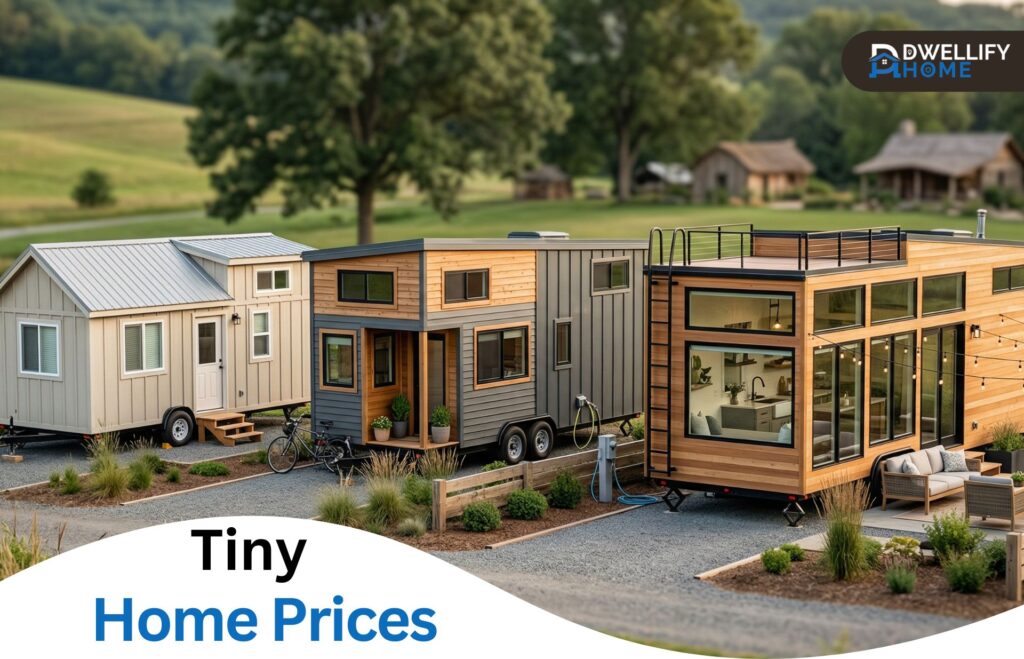
Tiny home prices are one of those topics where the number you see on a listing or a builder’s website rarely tells the full story. After working with dozens of buyers and builders in the small-home space, the single biggest mistake I see is people budgeting for the home itself and completely overlooking everything around it — land, permits, hookups, insurance. That gap between expectation and reality is where most of the frustration comes from.
This guide walks through the honest cost picture, from the cheapest entry points to full custom builds, so you can make a decision grounded in real numbers.
Snippet-Ready Definition
Tiny home prices typically range from $30,000 to $150,000 depending on size, build method, and finish level. They offer a lower-cost path to homeownership with reduced utility bills and maintenance — though land, permits, and hookup costs are separate.
Dwellify Home Mission
At Dwellify Home, we help homeowners make practical, well-informed decisions about their living spaces — from big investments to everyday design choices. Our goal is straightforward, honest guidance you can actually use.
The Average Cost of a Tiny Home — And Why the Range Is So Wide
Most sources quote tiny home prices somewhere between $30,000 and $60,000, with a national average hovering around $45,000 to $52,000. The cost per square foot typically runs $300 to $400, which sounds high until you remember that every tiny home still needs a full kitchen, bathroom, plumbing, electrical, and insulation — just compressed into a much smaller footprint.
The range is wide because “tiny home” covers a lot of ground. A basic DIY shell kit and a fully custom turnkey build on a permanent foundation are both technically tiny homes, but they’re entirely different financial commitments. That’s why a single average number doesn’t help much on its own.
Quick Price Reference Table
| Budget Range | What You Get |
| Under $10,000 | Shell kits, used trailers, unfinished units |
| $10,000 – $30,000 | Entry prefab kits, basic DIY builds |
| $30,000 – $60,000 | Move-in-ready prefabs, standard finishes |
| $60,000 – $100,000 | Mid-range builds, 2-bed options, foundations |
| $100,000 – $150,000+ | Full custom builds, premium finishes, solar |
Key Cost Factors to Know Before You Budget
- The home price rarely includes land, permits, or utility hookups
- Labor accounts for roughly 50% of total build cost when hiring a contractor
- A sturdy trailer for a mobile build adds $4,500 to $9,000 alone
- Tiny homes on wheels typically depreciate — foundation builds hold value better
- Most tiny homes don’t qualify for traditional mortgages — alternative financing is the norm
Tiny Home Prices by Budget Tier — What Each Range Gets You
Under $10,000 — What’s Realistically Available at This Price
Searches for cheap tiny homes under $10,000 are common, and yes, options exist — but expectations need to be honest. At this price point, you’re mostly looking at raw shell kits, used trailer conversions, or heavily discounted older units that need significant work. A basic shell kit might run $4,000 to $8,000, but it’s just the frame and exterior. You’ll still need to finish the interior, run wiring, install plumbing, and handle insulation — which adds cost fast.
Used tiny homes in rough condition occasionally sell in this range, but always have a structural inspection done before buying.
$10,000 to $30,000 — Entry-Level Builds and Prefab Kits
This is where DIY builds and entry-level prefab kits become viable. A decent prefab kit in this range gives you a livable shell with basic framing and exterior materials included. You’ll handle most of the interior finishing yourself.
If you have construction experience or a reliable contractor helping you part-time, a finished tiny home on wheels is achievable toward the top of this range. Without that experience, budget more time and more money than you think.
$30,000 to $60,000 — The Sweet Spot for Most Buyers
This is the most active price band in the tiny home market, and it’s where the best value generally lives. At $30,000 to $50,000, you can find a move-in-ready prefab with standard finishes — functional kitchen, full bathroom, sleeping loft, and basic appliances included. Many of the most popular tiny house for sale under $50,000 listings fall right here.
Around $50,000 to $60,000, you start getting better insulation, upgraded cabinetry, and more thoughtful layouts. For most solo buyers or couples with a reasonable budget, this range delivers a comfortable, practical home.
$60,000 to $100,000 — More Space, Better Finishes, Solid Construction
Mid-range builds in this bracket offer noticeably better quality — stronger framing, better windows, higher-grade plumbing fixtures, and in many cases a foundation option instead of a trailer. Two-bedroom configurations become realistic here, which makes this range appealing for small families or buyers who want a dedicated workspace.
Custom details, like built-in storage systems or upgraded kitchen setups, also become more accessible without blowing the budget.
$100,000 to $150,000 and Beyond — Custom Builds and Luxury Models
At this price point, you’re paying for full customization, premium finishes, and usually a professionally built home that meets local building codes and comes with warranties. Solar panel systems, large double-pane windows, spa-style bathrooms, and custom millwork are common in this range.
These builds often exceed what most people picture when they hear “tiny home,” but for buyers who want long-term comfort and higher resale prospects, the investment can make sense.
How Size Changes the Price — A Practical Breakdown
100 to 200 Sq Ft — The Smallest and Most Affordable Footprint
A 100 to 200 square foot tiny home typically costs between $19,000 and $50,000 depending on build method and finish level. The cost per square foot is actually higher on smaller builds because the fixed costs — bathroom, kitchen, structure, electrical — don’t shrink proportionally with the floor plan.
How Much Does a 400 Sq Ft Tiny Home Cost?
A 400 sq ft tiny home generally runs $70,000 to $170,000. At this size, you’re near the upper edge of what most definitions consider “tiny,” but the added square footage buys you real livability — full-size appliances, a proper bedroom, and actual storage. Prefab options in this size range start around $25,000 for a basic shell but climb quickly with features.
2-Bedroom Tiny Home Prices — What Couples and Small Families Pay
2 bedroom tiny house cost typically falls between $60,000 and $120,000. Fitting two bedrooms into a small footprint usually means creative use of lofts, Murphy beds, or sliding partitions. The layout design matters a lot here — a poorly designed two-bedroom feels cramped fast, while a well-planned one can be genuinely comfortable.
3-Bedroom Tiny Home Prices — Is It Still a Tiny Home?
3 bedroom tiny house cost starts around $80,000 and can easily exceed $150,000. At this configuration, you’re pushing the boundaries of the tiny home category. These are typically stationary builds on a foundation, and they function more like small traditional homes than compact mobile dwellings. They work well as family housing in high-cost areas, but the “tiny” savings shrink considerably.
The Factors That Push Tiny Home Prices Up or Down
A few things move the needle more than anything else. Labor is the biggest one — hiring a professional builder can account for roughly 50% of total project cost. Materials quality, especially for roofing, windows, and insulation, creates significant price swings. A custom trailer for a mobile build adds $4,500 to $9,000 before you’ve put a wall up. Location matters too — labor and permit costs in California or New York run significantly higher than in rural Midwest markets.
Finish level is often underestimated. Going from standard laminate to quartz countertops, or from vinyl plank to hardwood, adds cost quickly in a small space because every surface is visible and every detail is close-up.
Prefab, Custom, DIY, or Used — How Your Choice Affects the Total Cost
Buying a Prefab or Pre-Built Tiny Home
Prefab tiny homes range from $25,000 for basic finished units to $100,000+ for feature-rich models. The main advantages are speed — many buyers can move in within 30 days — and code compliance documentation. The tradeoff is limited customization.
Building a Custom Tiny Home from Scratch
Custom builds start around $50,000 and regularly exceed $150,000. You get full control over layout, materials, and systems, but the process takes four to six months minimum and requires coordinating multiple contractors. Budget for contingencies — custom builds rarely come in exactly on estimate.
Going the DIY Route — Where the Real Savings Are
A genuine DIY build using kit materials can come in at $20,000 to $50,000 in materials alone — roughly half the cost of hiring out. The savings are real, but so is the time investment. Plumbing and electrical should still be handled by licensed professionals in most states, both for safety and for permit compliance.
Buying a Used Tiny Home — The Most Overlooked Way to Save
The used tiny home market is genuinely underutilized. Secondhand units sell for 20% to 40% below comparable new builds, and many are in solid condition. Search local classifieds, tiny house marketplace sites, and Facebook groups for your region. Always inspect the trailer condition, roof seals, and any signs of water intrusion before committing.
The Costs Most People Forget to Budget For
Land — Buying, Leasing, or Parking Your Tiny Home
Land averages around $18,000 per acre nationally, but varies dramatically by region. Quarter-acre lots in suburban areas can run $10,000 to $30,000. RV parks and tiny home communities offer leasing options from $300 to $700 per month, which suits mobile buyers well. For “tiny home prices near me” searches, land availability and local zoning will shape your real total cost more than the home price itself.
Site Preparation, Foundation, and Utility Hookups
Running water, sewer, and electrical to an empty lot costs $10,000 to $25,000 on average. Foundation work for a stationary build adds $5,000 to $8,500. These numbers catch people off guard because they’re invisible in the listing price.
Permits, Zoning Fees, and Legal Compliance
Building permit costs average $1,380 nationally but reach several thousand dollars in stricter jurisdictions. Zoning laws vary widely — some counties embrace tiny homes, others still classify them as temporary structures. Research local Appendix Q adoption before purchasing land.
Insurance, Property Taxes, and Ongoing Maintenance
Annual insurance runs $500 to $2,000 depending on classification. Mobile tiny homes are often insured as RVs, while foundation-based homes fall under standard dwelling coverage. Maintenance budgets should account for roof inspections, plumbing checks, and appliance upkeep annually.
How to Finance a Tiny Home — Your Realistic Options
Why Traditional Mortgages Usually Don’t Apply
FHA loans require a minimum of 400 square feet and a permanent foundation with HUD certification. Most tiny homes don’t meet both criteria, which eliminates conventional mortgage routes for the majority of buyers.
Personal Loans, RV Loans, and Chattel Loans — What Each Costs You
Personal loans are the most common path, with rates ranging from 6% to 36% depending on credit score. A score of 700 or higher gets you competitive terms. RV loans apply to RVIA-certified mobile tiny homes and typically require a 660 to 700 credit score with 10% to 20% down. Chattel loans, designed for homes on leased land, offer another path with terms similar to auto financing.
HELOC, Builder Financing, and Cash — Other Paths Worth Knowing
Homeowners with existing equity can tap a HELOC to fund a tiny home build, often at lower rates than personal loans. Builder financing is convenient but frequently carries rates 2 to 4 points higher than independent lenders — always compare before signing. Cash purchases eliminate financing costs entirely and give you significant negotiating leverage with builders.
Where to Find Tiny Homes for Sale — and What to Watch Out For
Reputable platforms include Tiny House Marketplace, Tiny House Listings, and general real estate sites with small-home filters. National builders like Tumbleweed, Escape, and Cavco have online configurators that let you price builds before contacting a sales rep.
For “$2,000 tiny homes for sale” searches — those listings do appear occasionally, but they almost always involve distressed, unfinished, or uninhabitable units requiring thousands in repairs. Treat anything priced that far below market as a project, not a home.
When buying from any builder, verify their license, check for third-party reviews, and confirm whether the build includes a structural warranty.
Is the Price Worth It? The Long-Term Financial Reality
A tiny home priced at $50,000, fully paid in cash, can realistically result in monthly living costs of $400 to $700 — covering land lease, utilities, insurance, and maintenance. Compare that to a $2,000 monthly mortgage payment on a traditional home, and the savings are significant for the right buyer.
The honest tradeoff is depreciation. Most tiny homes, especially those on wheels, lose value over time like vehicles rather than appreciating like real estate. Foundation-based tiny homes on owned land fare better, but they still don’t typically match the appreciation of a traditional home.
Tiny home ownership makes the most financial sense for buyers who already own or have low-cost land access, plan to stay put for several years, and genuinely prefer a lower-maintenance, lower-overhead lifestyle. For those expecting it to function as an investment property, the numbers work better as a short-term rental than as a long-term equity builder.
FAQs
Is it cheaper to buy a tiny home or build one?
Building is generally cheaper if you have the time and some construction knowledge. A DIY build can cut costs by up to 50% compared to buying a finished unit. However, buying a pre-built home saves months of work and usually comes with code compliance documentation included. For most people without building experience, a mid-range pre-built is the more practical and cost-controlled choice.
How much do tiny houses usually cost?
Most tiny homes fall between $30,000 and $60,000 for a standard, move-in-ready unit. The national average sits around $45,000 to $52,000. High-end custom builds can reach $150,000 or more, while basic DIY kits start under $15,000. The final number depends heavily on size, build method, finish quality, and whether you own land already.
Can I buy a tiny home for $30,000?
Yes, and it’s one of the more realistic price points in the market. At $30,000, you can find decent pre-built tiny homes with a functional kitchen, bathroom, and sleeping area — particularly from prefab manufacturers. Quality and customization will be limited at this price, but for a solo buyer or someone on a tight budget, it’s a genuinely livable option.
Can you build a tiny house for $5,000?
Technically possible, but only with a very basic shell using salvaged or low-cost materials, significant DIY labor, and no professional contractors involved. A finished, code-compliant, livable tiny home for $5,000 is not realistic for most people. Costs for plumbing alone can run $2,000 to $6,000. Treat $5,000 as a starting point for materials on the simplest possible shell — not a finished home budget.
Finding the Tiny Home Price That Actually Fits Your Life
The honest answer to “how much does a tiny home cost” is: more than the sticker price, but often still far less than traditional homeownership when the full picture is managed well. The buyers who do best are the ones who go in with a complete budget — home, land, hookups, permits, and a buffer — rather than fixating on the unit price alone.
Tiny home prices range from genuinely affordable to surprisingly expensive depending on your choices. Know your budget tier, understand what drives costs up, and account for the expenses most listings don’t mention. That’s the foundation for a decision you won’t regret.
Disclaimer
The cost figures and estimates in this article are based on publicly available data and general market research. Prices vary by location, builder, materials, and market conditions. Always consult licensed contractors, local zoning authorities, and financial advisors before making any purchasing or building decisions.

I’m Bilal Hassan, the founder of Dwellify Home. With 6 years of practical experience in home remodeling, interior design, and décor consulting, I help people transform their spaces with simple, effective, and affordable ideas. I specialize in offering real-world tips, step-by-step guides, and product recommendations that make home improvement easier and more enjoyable. My mission is to empower homeowners and renters to create functional, beautiful spaces—one thoughtful update at a time.