Getting access right at home usually comes down to one simple question: what will work every day without turning into a headache later?
A wheelchair lift can solve a real access problem, but the wrong one can create a different set of issues. Too small for the chair, not suited for outdoor weather, awkward at the landing, expensive to maintain, or installed in a spot that makes entry harder instead of easier. That’s why the best choice is rarely about the brand first. It’s about the layout of the home, the type of wheelchair, how the lift will be used, and what kind of maintenance you’re realistically prepared for.
This guide walks through the decision the same way a careful installer or accessibility consultant would: start with the home, then the user, then the lift.
Snippet-Ready Definition
A wheelchair lift for home is a motorized platform that helps wheelchair or scooter users move safely between levels where stairs or entry steps create a barrier.Mission Statement
Dwellify Home helps homeowners make practical, stylish, and informed decisions for safer, more functional living spaces.
What a Wheelchair Lift for Home Use Actually Does
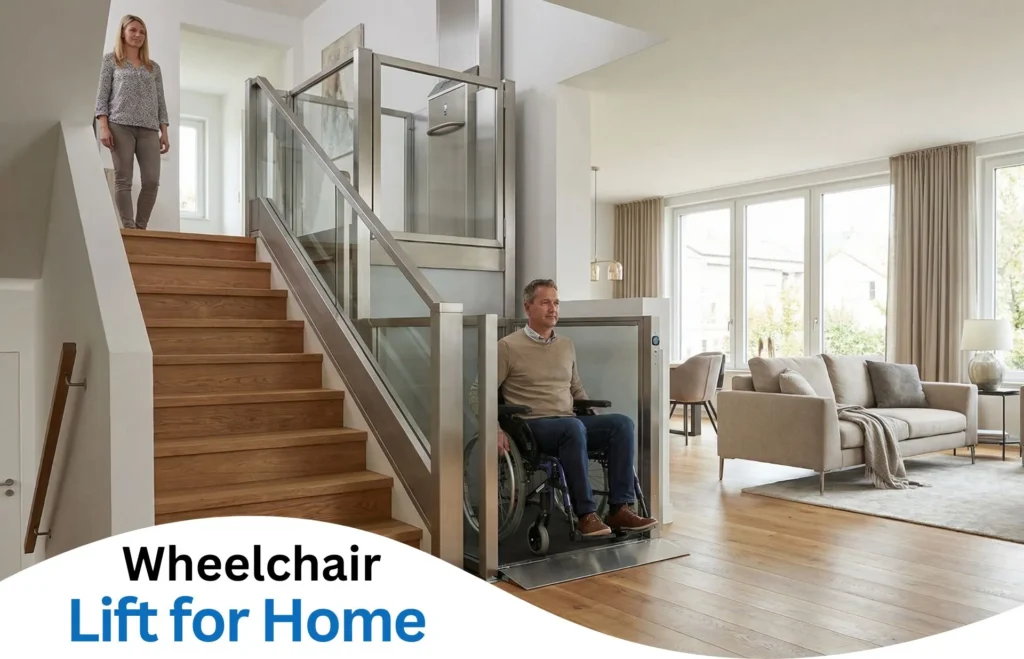
A home wheelchair lift moves a person and their mobility device between two levels safely, usually where stairs, a porch, a garage entry, or a short vertical rise creates a barrier.
In practical terms, it’s there to remove the daily strain of transfers, steep ramps, or relying on someone else for help. That matters most in homes where the user needs to stay in their chair from start to finish, especially with a heavier power wheelchair or scooter.
A detail many people overlook is that the lift has to work smoothly on both ends. The ride itself is only part of it. Safe approach space, level landings, and enough room to turn are just as important.
Quick Comparison Table
| Option | Best for | Main advantage | Main drawback |
| Vertical platform lift | Porches, decks, garage entry | Direct up-and-down access | Needs landing space |
| Inclined platform lift | Existing staircases | Uses the staircase path | Can affect stair use |
| Ramp | Low rises with room available | No motor or power needed | Takes a lot of space |
| Home elevator | Multi-level interior access | Better for frequent floor-to-floor travel | Higher project cost |
The current top-ranking results largely focus on vertical platform lifts, inclined platform lifts, porch and garage access, and cost factors, so a clear decision angle helps this page stand out without overpromising.
Key Benefits and Uses
- Makes porch, deck, and garage entry easier for wheelchair and scooter users.
- Works indoors or outdoors depending on the model and installation setup.
- Often takes less space than a long ramp for the same rise.
- Can support heavier mobility devices when platform size and weight capacity are chosen correctly.
The Main Types of Wheelchair Lifts for Home Use
Most residential lifts fall into a few main categories.
A vertical platform lift travels straight up and down. This is the type often used for porches, decks, garage entries, and small level changes outside or inside the home. It’s usually the most practical option when the user needs a clean, direct way up.
An inclined platform lift travels along a staircase. It can work well when keeping the stairs matters and there isn’t room for a ramp or vertical system nearby. These can be useful, but they need the staircase layout to cooperate.
An enclosed lift adds a more protected setup around the platform. In some homes, especially with frequent outdoor use or higher travel, that added protection makes sense.
Portable wheelchair lifts for home use exist too, but they’re not the right fit for every situation. They can help with temporary access or limited-rise needs, though they usually don’t replace a properly planned permanent installation.
Electric wheelchair lift for home systems are the norm today. What matters more than the word electric is how reliable the controls, safety features, and backup systems are.
Vertical Platform Lift vs Inclined Platform Lift
This is where a lot of decisions get clearer.
For porches, decks, and garage-to-entry access, a vertical platform lift is usually the easier answer. It handles straight rises well and doesn’t interfere with the staircase because it doesn’t use one.
For homes with an existing staircase and limited floor space, an inclined platform lift may be worth considering. Still, these systems can be harder to fit well in narrow stairways, and they may affect how the stairs are used by others in the home.
Power wheelchairs also change the conversation. Heavier chairs need the right platform size and weight capacity, and that often pushes the choice toward a vertical platform lift.
Is a Wheelchair Lift the Best Option for Your Home?
Not every access problem needs a lift.
A ramp can work well for a low rise with enough available space. The problem is that ramps get long quickly. For many porches and front entries, the space required just isn’t realistic.
A lift often makes more sense when space is tight, the rise is too high for a comfortable ramp, or the user needs a direct and less physically demanding solution.
A home elevator enters the discussion when there are multiple interior levels and daily travel between floors. For a single entry point or short vertical rise, though, an elevator is often more system than the home really needs.
How to Tell if Your Home Is a Good Fit for a Wheelchair Lift
Start with measurements, not product photos.
You need to know the vertical rise, the landing size at the top and bottom, the width of the approach path, and whether the user can enter and exit the platform comfortably. A lift may technically fit the height requirement but still fail in daily use if there isn’t room to turn or line up properly.
The best location is usually the one that creates the simplest path. Front porch, side entry, garage, or a rear deck all come up often. In real homes, the garage entry ends up being the better choice more often than people expect because it offers protection from weather and more room to maneuver.
It’s also smart to think one step ahead. A setup that works for a manual chair today may feel tight later with a larger power chair.
Indoor vs Outdoor Wheelchair Lift for Home Use
Indoor lifts are protected from weather and usually easier on components over time. They’re often cleaner from a maintenance standpoint and can be simpler to keep in good working shape.
A wheelchair lift for home outside is common for porches, decks, and exterior entries. Outdoor systems can work very well, but they need to be chosen with the environment in mind. Rain, heat, dust, and standing water all matter more than people think.
The detail that gets missed most often is drainage. A well-built outdoor lift still needs the area around it planned properly. Water pooling near the base or icy buildup at the landing can make a safe lift feel unsafe fast.
In some cases, adding a cover or enclosure is worth it, especially where weather exposure is constant.
Key Features to Look for Before You Buy
A lift should fit the person and the mobility device first.
Weight capacity matters, but platform size matters just as much. A chair may fall within the rated weight limit and still be awkward to load if the platform is too tight.
Travel height is another big factor. Short-rise porch lifts and longer-travel systems are not priced or built the same way. Controls should be simple, reachable, and easy to use without strain.
Battery backup or emergency lowering is worth paying attention to. A power outage is not the moment to discover the system has no practical backup plan.
Build quality also shows up in daily life. Gates that close well, smooth platform movement, solid finishes, and weather-resistant materials make a noticeable difference over time.
Safety Features That Matter Most
Safety features should never feel like extras.
Look for a non-slip platform, stable rails or gates, obstruction sensors, and a clear emergency stop. Those are basic expectations, not premium add-ons.
One small but important detail is how the lift behaves if something is in the way. Good systems are designed to stop rather than push through resistance. That matters for users, caregivers, pets, and nearby objects.
A safe setup also depends on the landing. Even the best lift won’t feel secure if the top or bottom entry area is cramped or uneven.
Wheelchair Lift for Home Cost: What Affects the Price?
Cost depends on more than the lift itself.
The type of system, how far it needs to travel, indoor or outdoor use, platform size, electrical work, and site preparation all affect the final number. A simple porch installation is a very different project from a higher-travel setup with concrete work and custom gates.
There’s also the long-term side of cost. Maintenance, service calls, part replacement, and weather-related wear all deserve a place in the budget. A cheaper unit can end up costing more if service support is poor or replacement parts are hard to get.
What Installation Usually Involves
Installation usually starts with a site assessment and measurements. That part matters because small miscalculations become big frustrations later.
Depending on the lift, the home may need electrical work, a mounting surface, concrete preparation, or adjustments to the landing area. Permits and inspections may also be part of the process.
This is one of those areas where shortcuts tend to show up later. A lift that looks fine on day one can become a recurring repair issue when the base, alignment, or drainage was handled poorly.
Can You Install a DIY Wheelchair Lift for Home?
Most homeowners should be very cautious with the idea of a DIY wheelchair lift for home use.
Planning the location, understanding measurements, and comparing models on your own is one thing. Installing a lift that carries a person and mobility device is another. Safety, liability, electrical requirements, and local code all come into play.
The smarter approach is usually to do the homework yourself and let a qualified installer handle the parts that affect safety and compliance.
Should You Buy a Used Wheelchair Lift for Home?
Used equipment can save money, but it needs careful scrutiny.
The first question is whether parts and service are still available. The second is whether the lift fits the home and the user. A used unit that almost fits usually becomes a bad bargain.
Ask about age, repair history, weight rating, weather exposure, and whether the model is still supported. A used wheelchair lift for home access can make sense in the right case, but only when it’s inspected properly and backed by realistic service options.
How to Choose the Right Wheelchair Lift for Your Situation
For a front porch, a vertical platform lift is often the cleanest choice.
For garage-to-main-floor access, the same is often true, especially when there’s room for a straightforward landing.
Split-level homes can be trickier. Sometimes a lift solves one access point well, but not the full circulation problem inside the home. That’s where it helps to step back and look at the whole path, not just one set of stairs.
Tight spaces need honest planning. A compact-looking system still needs enough room to approach, board, ride, and exit safely.
Questions to Ask a Wheelchair Lift Installer Before You Sign
Ask whether the lift is rated for indoor, outdoor, or both. Ask what maintenance it needs and how often service is typically required.
Ask what happens during a power outage. Ask what the warranty covers and, just as important, what it does not cover.
Also ask how quickly parts can be sourced locally. That question doesn’t sound urgent until the lift is down and the user relies on it every day.
Common Mistakes to Avoid When Choosing a Home Wheelchair Lift
The most common mistake is choosing based on price alone.
Right behind that is ignoring platform size, underestimating weather exposure, or failing to plan for future needs. Another frequent issue is focusing on the lift and forgetting the approach path.
A well-chosen lift should feel easy to use without workarounds. If the user has to line up at an awkward angle, back out carefully, or rely on someone else to operate it every time, the setup probably wasn’t thought through well enough.
A Simple Checklist to Help You Make the Right Choice
Before making a final decision, check these basics:
- The home layout and exact rise
- The size and weight of the wheelchair or scooter
- Indoor or outdoor exposure
- Landing space and turning room
- Safety features and backup operation
- Installation requirements and permits
- Warranty, maintenance, and local service support
That short list catches most of the problems before they become expensive ones.
FAQs
Will Medicare pay for a wheelchair lift?
Original Medicare usually does not pay for most home accessibility equipment installed in the house, including residential wheelchair lifts. Coverage can vary with Medicare Advantage plans, Medicaid waivers, or local assistance programs, so it’s worth checking your plan details directly.
How much does a residential wheelchair lift cost?
The cost depends on lift type, travel height, indoor or outdoor use, site prep, and installation. A basic porch-style setup costs far less than a taller or custom installation with concrete, electrical work, or enclosure needs. Current ranking pages consistently position cost as highly project-dependent.
Does Medicare pay for a home elevator?
In most cases, Medicare does not cover home elevators because they are considered home modifications rather than standard covered medical equipment. Some state or local programs may help, but that’s separate from standard Medicare coverage.
What is the alternative to a wheelchair lift?
The main alternatives are a ramp or, for some homes, a residential elevator. A ramp works best for low rises with enough space, while an elevator may make more sense for frequent travel between interior floors.
What type of wheelchair lift is best for a home?
For many homes, a vertical platform lift is the most practical choice for porch, deck, or garage access. An inclined platform lift may work better when the staircase must stay in place and the layout supports it.
Conclusion: Choosing the Right Wheelchair Lift for Home Use
The right wheelchair lift for home use is the one that fits the person, the chair, the entry point, and the day-to-day routine without creating new obstacles.
A good decision usually comes from slowing down long enough to measure properly, compare the real options, and think beyond the purchase price. Once the basics are handled well, the lift becomes what it should have been from the start: a safe, dependable way to move through the home with less strain and more independence.
Disclaimer
This content is for general educational purposes and should not replace advice from a qualified installer, contractor, or medical or accessibility professional.

I’m Bilal Hassan, the founder of Dwellify Home. With 6 years of practical experience in home remodeling, interior design, and décor consulting, I help people transform their spaces with simple, effective, and affordable ideas. I specialize in offering real-world tips, step-by-step guides, and product recommendations that make home improvement easier and more enjoyable. My mission is to empower homeowners and renters to create functional, beautiful spaces—one thoughtful update at a time.