A garden path doesn’t need to be expensive to look finished and work well. In a real yard, the best path is usually the one that fits the ground, handles foot traffic, and doesn’t become a chore a month later. I’ve seen people spend more fixing a bad path than they would’ve spent building a simple one properly the first time.
That’s why the smartest budget paths are usually built from straightforward materials like mulch, gravel, stepping stones, reclaimed brick, or decomposed granite. These are popular for a reason: they’re affordable, easy to source, and realistic for a weekend project. Loose materials do need edging and some basic prep, while surfaces like pea gravel and decomposed granite behave differently underfoot, which matters more than most beginners expect.
Snippet-Ready Definition
Cheap diy garden path ideas are low-cost ways to build a simple garden walkway using materials like gravel, mulch, brick, or pavers to improve access, drainage, and curb appeal.Mission Statement
Dwellify Home helps homeowners make practical, stylish, and informed home and garden decisions with clear, usable guidance.
Before You Start: How to Choose the Right Cheap Garden Path for Your Yard
Before picking a style, take a good look at the space. A path that works in a dry side yard may fail in a soggy backyard corner. Mud, slope, drainage, shade, and daily traffic all affect what will actually hold up.
It also helps to be honest about maintenance. Some of the cheapest options cost less upfront but need topping up or tidying more often. Others cost a little more at the start but stay neater for longer. That tradeoff matters just as much as the price tag.
The other thing people overlook is sourcing. Reclaimed brick, leftover pavers, broken concrete, scrap wood, and local gravel can make a path much cheaper than buying everything new. On a tight budget, what’s available nearby often decides the smartest option.
Key Benefits
- Keeps muddy or worn areas easier to walk through
- Adds structure to a backyard without a large budget
- Uses simple materials like gravel, mulch, brick, or reclaimed pieces
- Helps improve the look and flow of garden spaces
- Can often be built over a weekend with basic tools
1. Mulch or Wood Chip Path
A mulch path is usually the fastest and cheapest way to create a natural-looking walkway. It works especially well between raised beds, along informal borders, or in backyards with a softer, cottage-style look.
The reason it works so well on a budget is simple: mulch covers ground quickly and doesn’t need perfect prep. You can clear the route, level the worst spots, add edging, and spread the material in a few hours.
The catch is maintenance. Mulch breaks down and shifts, so it needs refreshing from time to time. Still, for low traffic areas, it’s one of the easiest cheap DIY garden path ideas to live with.
2. Pea Gravel Path
Pea gravel is one of the most common low-cost walkway materials because it’s easy to spread, drains well, and gives a clean finished look. It suits rustic yards, modern spaces, and everything in between depending on the edging you use.
Where people go wrong is skipping the border. Without edging, gravel slowly creeps into the lawn or beds, and the path starts looking messy. That’s not a gravel problem as much as a planning problem.
It’s also worth knowing that round pea gravel feels different from angular crushed stone. Pea gravel is softer and more casual underfoot, while crushed gravel tends to stay put better and feel firmer. Extension-style guidance often notes that angular material compacts more tightly, which is useful if stability matters more than appearance.
3. Stepping Stones Through Grass
This is one of the easiest ways to add structure without changing the whole yard. A few well-placed stones through grass can guide movement naturally and make the garden feel more intentional.
The spacing matters more than people think. Too close and it looks cramped. Too far apart and it feels awkward to walk. The easiest test is to lay the stones out first and walk the route a few times before setting anything permanently.
This option works best where the ground is fairly level and the path doesn’t need to handle constant traffic. It’s simple, affordable, and a good fit for garden path ideas through grass when you want the yard to stay soft and open.
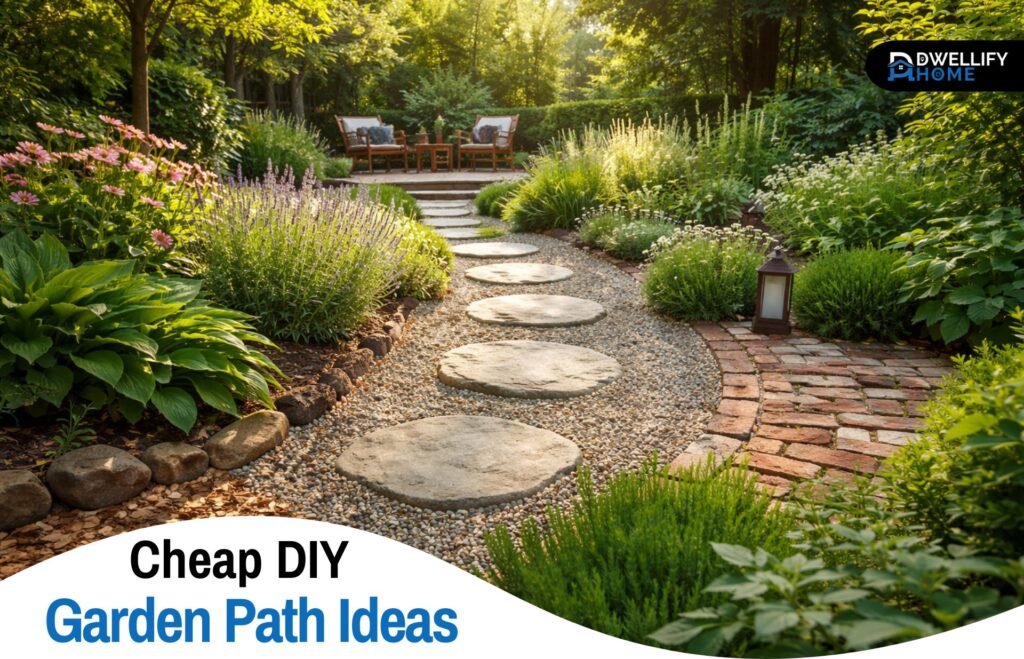
4. Stepping Stones with Gravel or Moss
Stepping stones look more finished when the gaps are filled thoughtfully. Gravel gives a cleaner, more structured look, while moss or a low ground cover softens the path and blends it into the garden.
Gravel is usually the practical choice in sunny spots or where drainage matters. Moss or planted joints can look beautiful, but they only work well when the conditions suit them. Forcing moss into a hot dry space usually ends in frustration.
This style is a good middle ground. It has more character than plain pavers, but it’s still manageable for a DIY build.
5. Reclaimed Brick Path
Old brick has a look that new materials often can’t match. Even a simple straight run feels settled and warm, and it works especially well near older homes, kitchen gardens, or patios.
The budget win comes from sourcing. Salvage yards, local listings, and leftover renovation stacks can be much cheaper than buying new brick. Just check that the bricks are sound and not crumbling badly from age or frost damage.
A reclaimed brick path also hides small imperfections well. That’s useful in real gardens, where nothing is ever perfectly square.
6. Broken Concrete or Urbanite Path
Broken concrete is one of the most overlooked budget materials. Used well, it creates a path with a relaxed, stone-like feel and can cost very little if the material is already available locally.
The key is arrangement. Random doesn’t mean careless. Lay the bigger pieces first, keep the walking line comfortable, and leave deliberate joints instead of awkward gaps. That’s what keeps it from looking like construction debris.
This option works best in informal backyards, side yards, or spaces where a more rustic path makes sense.
7. Pallet Wood or Simple Plank Walkway
A wood walkway can be useful in the right spot, especially over uneven ground or in a rustic backyard where you want a boardwalk feel. It’s often built from pallet wood or simple planks, which helps keep costs down.
Still, wood is not the best choice everywhere. In damp areas, untreated boards age quickly and can become slippery. I’d only use this style where the ground drains reasonably well and the look suits the space.
A little prep helps a lot here. Raised boards, decent spacing, and basic outdoor treatment make the path safer and longer lasting.
8. Decomposed Granite Path
Decomposed granite gives a path a cleaner, more polished feel than mulch and often a tidier look than loose gravel. It’s a strong choice for homeowners who want something simple without looking rough.
It’s also one of the better low-maintenance garden path ideas, especially when installed with edging and proper compaction. Guidance on water-wise landscaping often separates loose DG from binder-stabilized DG because the firmer versions work better for walkways.
For modern or semi-formal yards, this material usually looks more intentional than wood chips and requires less fuss over time.
9. Concrete Pavers with Grass or Ground Cover Between Them
This style has a clean layout that suits modern garden path ideas and front yard walkways. Pavers create strong lines, while the planting or grass between them keeps the path from feeling too hard or heavy.
It works best when the spacing is consistent and the rest of the yard has a similar feel. Repeating one paver shape makes the path look planned, even if the materials are inexpensive.
For front-of-house use, this is one of the better cheap walkway ideas because it reads as tidy and designed rather than temporary.
10. A Simple Mowed Grass Path
Sometimes the right answer is the simplest one. A mowed path through grass costs almost nothing and can look surprisingly good in a relaxed garden.
This works best in larger backyards or natural-style spaces where a formal hardscape would feel out of place. The trick is definition. A soft curve, a clear edge, or a few stones at the entrance can make it feel like a real path instead of an accident.
It won’t suit every yard, but for the right space, it’s a very practical starting point.
Best Cheap Garden Path Ideas for Different Needs
For the lowest upfront cost, mulch, mowed grass, and salvaged materials are hard to beat. For low maintenance, decomposed granite, pavers, and well-edged gravel usually hold up better with less regular attention.
For small backyards, stepping stones, brick, and pavers tend to feel more controlled and less cluttered. For the front of the house, a cleaner layout usually works better than very loose or rustic materials.
For muddy spots, loose mulch is rarely the best long-term answer. Gravel, pavers, or a firmer compacted surface usually makes more sense. That’s where drainage and base prep matter most.
Practical Tips That Make a Cheap Garden Path Look Better and Last Longer
Start by marking the route before buying anything. A hose, string line, or even a few boards on the ground can help you test the shape. That small step prevents a lot of waste.
On uneven or wet ground, add a simple base where needed. It doesn’t have to be elaborate, but even a modest foundation of gravel or compacted material improves stability. Guidance for residential walkways also emphasizes drainage and slight slope so water doesn’t sit on the path.
Edging is another detail worth the effort. It keeps gravel, mulch, and decomposed granite where they belong and instantly makes a budget path look more deliberate.
And don’t make the path too narrow. A walkway can be cheap and still feel comfortable. If it’s awkward to use, it won’t matter how little it cost.
Where to Find Cheap or Free Materials for Garden Path Ideas
Good budget paths often start with what’s already available. Leftover pavers, broken concrete, spare brick, offcuts of timber, and local stone can all be turned into a walkway with a bit of planning.
Check local salvage yards, neighborhood marketplaces, reuse centers, and renovation leftovers. Reclaimed brick and used pavers are especially common, and they often look better than brand-new budget materials.
Just inspect everything before bringing it home. Cracked is fine in some designs. Unsafe, crumbling, or slippery is not.
Common Mistakes to Avoid
The most common mistake is choosing a material because it looks good in a photo without asking whether it suits the ground. Wet areas, heavy traffic, and sloped routes need more thought than decorative corners.
Another mistake is skipping edging on loose materials. Gravel and mulch almost always spread unless something stops them.
People also make paths too narrow, mix too many materials, or choose a style they won’t maintain. A simple path done cleanly usually looks better than an ambitious one that starts falling apart after a season.
How to Make a Budget Garden Path Look More Finished
A cheap path looks better when the edges are clean. Even basic edging gives the route shape and makes the whole garden look more organized.
A little planting along the sides helps too. Low grasses, thyme, or simple border plants can soften the line without making the space feel busy.
Consistency matters more than fancy details. Repeating one material, one shape, or one layout pattern is often what makes a budget path feel settled and intentional.
FAQs
What is the cheapest material for a garden path?
Mulch or wood chips are usually the cheapest option. They cover a lot of ground for less, though they need topping up over time.
What is the cheapest way to build a garden path?
The cheapest way is usually to use what you already have, such as mulch, reclaimed brick, broken concrete, or a simple mowed grass path.
How to make a walkway cheap on a budget?
Keep the route simple, choose low-cost or salvaged materials, and use edging only where it helps hold the path together and look neat.
What are the easiest garden paths to DIY?
Mulch paths, pea gravel paths, and stepping stones through grass are usually the easiest for beginners because they need fewer tools and less cutting or fitting.
What is the lowest-maintenance budget garden path?
Decomposed granite, well-edged gravel, and simple pavers usually need less ongoing upkeep than mulch or loose wood chips.
Conclusion
The best cheap DIY garden path ideas are usually the ones that suit the yard you already have. A gravel path can be the right answer in one garden, while mulch, reclaimed brick, or stepping stones make more sense in another.
Keep it practical. Think about drainage, maintenance, and how the path will actually be used day to day. A simple path built with the right material almost always works better than a complicated one built for looks alone.
Disclaimer
Information is for general educational purposes and should be adapted to your yard conditions, materials, and local requirements.

I’m Bilal Hassan, the founder of Dwellify Home. With 6 years of practical experience in home remodeling, interior design, and décor consulting, I help people transform their spaces with simple, effective, and affordable ideas. I specialize in offering real-world tips, step-by-step guides, and product recommendations that make home improvement easier and more enjoyable. My mission is to empower homeowners and renters to create functional, beautiful spaces—one thoughtful update at a time.