If you’ve been shopping for an evergreen shrub that actually fills in, looks good year-round, and doesn’t turn into a maintenance nightmare, you’ve probably come across Chindo Viburnum. Here’s the thing. On paper, it sounds almost too good to be true. Fast growth, glossy leaves, flowers, berries, privacy, low care.
After planting and maintaining this shrub for more than 15 years across residential yards, commercial properties, and long hedge lines, I can tell you this. Chindo Viburnum is excellent, but only when you understand what it really does and what it doesn’t.
Let’s walk through it the same way I would if we were standing in your yard together.
Short Intro about Chindo Viburnum:
Chindo viburnum is a fast-growing evergreen shrub with glossy leaves, spring flowers, and dense growth, commonly used for privacy hedges and screens in warm climates due to its low maintenance and durability.
Mission Statement:
At Dwellify Home, our mission is to help homeowners make confident, informed decisions about plants, landscapes, and home choices through honest guidance, real-world experience, and practical advice that actually works.
What Is Chindo Viburnum?
Chindo Viburnum is an evergreen shrub known for its large, shiny green leaves and dense growth habit. It’s a selection of sweet viburnum that was developed to be more compact, fuller, and better suited for screening and hedging.
Most homeowners choose it for one main reason. They want privacy without waiting forever. On top of that, they want something that looks polished instead of wild or scraggly.
What surprises many people is how versatile it really is. I’ve planted it as a formal hedge, a loose natural screen, and even as a standalone specimen. When placed correctly, it delivers a clean, upscale look that works in both traditional and modern landscapes.
Quick Guide Table: Chindo Viburnum at a Glance
| Feature | Details |
| Plant Type | Evergreen shrub |
| Mature Size | 10–15 ft tall, 8–10 ft wide |
| Growth Rate | Moderate to fast once established |
| Sun Exposure | Full sun to partial shade |
| USDA Zones | Best in warm climates |
| Water Needs | Moderate first year, drought tolerant later |
| Best Use | Privacy hedge, screen, specimen planting |
| Deer Resistance | Generally deer resistant |
| Invasive | Not considered invasive |
Quick Care Checklist (Simple & Practical)
- Choose a spot with good drainage
- Space plants 5–6 feet apart for hedges
- Water deeply during the first year
- Prune lightly after flowering, not aggressively
- Mulch to protect roots and retain moisture
This is the same routine I give homeowners who want results without stress.
Quick Facts at a Glance
Before we go any deeper, here’s a simple snapshot of what you’re working with.
- Evergreen shrub with glossy, dark green leaves
- Mature height typically reaches 10 to 15 feet
- Width averages 8 to 10 feet
- Growth rate is moderate to fast once established
- Best suited for warm climates
- Prefers full sun to partial shade
- Produces fragrant white flowers in spring
- Red berries appear later and darken over time
- Drought tolerant once established
- Generally deer resistant
- Safe around pets in normal landscape use
This quick overview helps set realistic expectations right from the start.
Why Homeowners Love Chindo Viburnum
The best part about Chindo Viburnum is how finished it looks. Even young plants have a neat, structured appearance compared to many other screening shrubs.
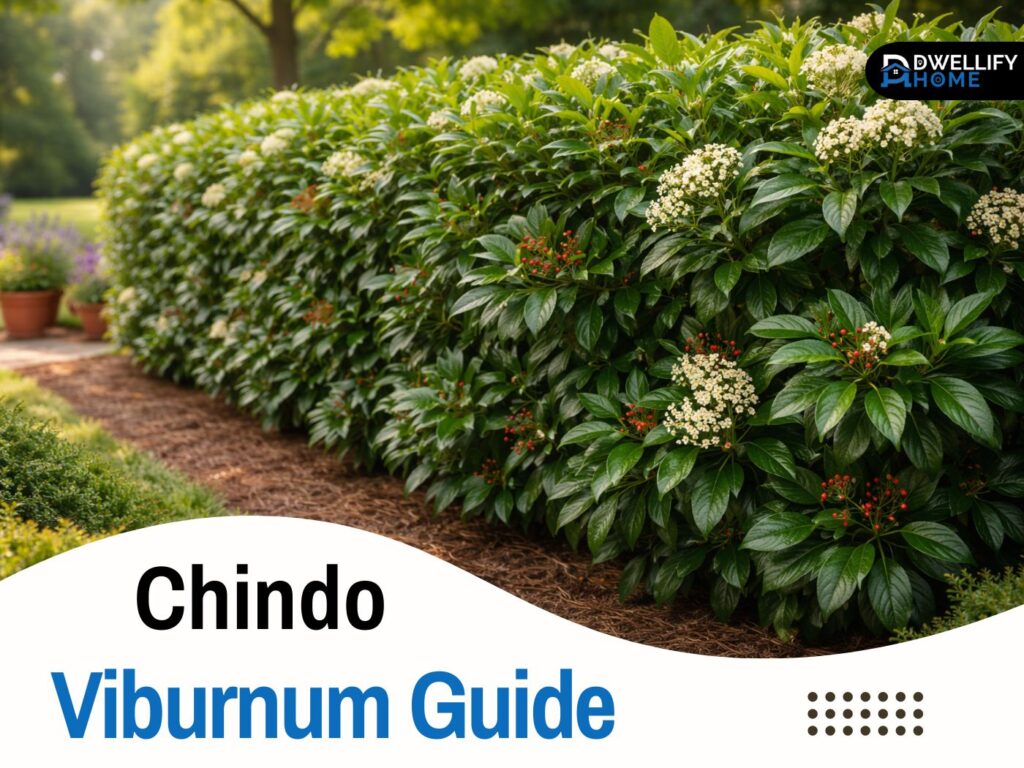
The leaves are large, glossy, and thick. That shine catches light in a way that makes hedges feel intentional rather than accidental. In spring, the shrub produces clusters of white flowers with a light fragrance that you notice when walking past, not something overpowering.
Later in the season, berries appear. Birds love them, which adds quiet movement to the yard without turning your landscape into a mess. From a designer’s point of view, it gives you interest without demanding attention.
Chindo Viburnum Mature Size: What to Really Expect
One of the most common questions I hear is about mature size. Many homeowners expect a perfectly narrow wall of green. That’s not how plants work.
Left alone, Chindo Viburnum naturally wants to grow wider than people expect. The average mature size lands around 10 to 15 feet tall and about 8 to 10 feet wide. In tighter spaces, regular pruning keeps it narrower, but spacing at planting matters a lot.
Here’s a tip from experience. If you crowd them early hoping they’ll stay skinny, they usually end up stressed, thin at the base, and harder to manage long term. Giving them breathing room early leads to a healthier hedge later.
Chindo Viburnum Growth Rate: How Fast It Really Screens
The growth rate is one of its biggest selling points, and it mostly lives up to the hype. Once established, you can expect noticeable growth each year, especially during warm seasons.
That said, first-year growth is often slower than people expect. This is normal. The plant is focusing on roots, not height. By year two and three, that’s when you see the real payoff.
In good conditions, it fills in quickly enough to create privacy without feeling rushed or flimsy. Fast growth doesn’t mean weak growth, which is a big advantage here.
Chindo Viburnum Zone Guide and Climate Performance
Chindo Viburnum performs best in warm regions. It thrives in areas with mild winters and long growing seasons.
Heat and humidity are not a problem. In fact, it handles Southern summers better than many popular evergreen options. In very hot areas, a little afternoon shade can help keep leaves looking their best, but full sun is still workable.
Cold tolerance is decent but not unlimited. After harsh freezes, you may see leaf burn. In most cases, the plant rebounds once temperatures stabilize. Proper placement out of harsh wind makes a big difference.
Where to Plant It: Sun, Shade, and Soil
Planting location can make or break your results. I’ve seen great plants fail simply because they were put in the wrong spot.
Full sun gives you the densest growth. Partial shade works too, especially in hotter climates, but too much shade leads to thin foliage and slower fill-in.
Soil matters more than most people realize. Chindo Viburnum likes moisture, but it hates soggy roots. Well-drained soil is essential. If water sits after rain, fix drainage before planting or choose another location.
How to Plant Chindo Viburnum the Right Way
Planting is simple, but small mistakes here show up years later.
Dig a hole twice as wide as the root ball but no deeper. Set the plant slightly higher than ground level to allow for settling. Backfill with native soil, not heavy amendments, and water deeply.
Finish with a mulch ring that stays a few inches away from the trunk. This helps with moisture control and root temperature without inviting rot.
Spacing Guide for a Chindo Viburnum Hedge
For most privacy hedges, spacing plants about 5 to 6 feet apart works well. This allows them to grow together without crowding.
If you want faster coverage and plan to prune regularly, slightly closer spacing can work. Just understand it increases maintenance later. Natural screens benefit from more room.
Chindo Viburnum Care: Simple and Manageable
Once established, care is refreshingly straightforward.
Water regularly during the first year. After that, the plant handles dry periods better than most people expect. Fertilizing once or twice a year is usually enough.
Mulch helps maintain consistent moisture and reduces stress during extreme heat.
Pruning for a Dense, Attractive Hedge
Here’s where experience really matters. Over-pruning is the number one mistake I see.
Light, regular shaping works better than heavy cuts. Prune after flowering if you want to preserve berries. Avoid cutting straight lines too early. Let the plant bulk up first.
If your hedge looks thin at the bottom, don’t panic. Reduce top growth slightly and let sunlight reach lower branches. It fills in over time.
Common Chindo Viburnum Problems and How to Fix Them
Most problems trace back to water and airflow.
Leaf spots usually come from overhead watering or poor circulation. Water at the base and thin slightly if needed.
Pests like scale or spider mites appear when plants are stressed. Healthy plants rarely struggle long-term.
Root issues come from poor drainage. If leaves yellow and drop while soil stays wet, address drainage immediately.
Quick Troubleshooting Guide
- Yellow leaves with wet soil usually mean too much water
- Browning edges can signal drought stress or heat reflection
- Sticky residue often points to scale insects
- Sparse growth often means too much shade
Pests and Diseases: Prevention First
Good spacing, proper watering, and clean pruning habits prevent most issues. Chemical treatments are rarely needed if plants are healthy.
When something looks off, address the cause before reaching for sprays. That approach saves time and keeps landscapes healthier long term.
Evergreen, Deer Resistance, and Pet Safety
Chindo Viburnum stays green year-round in suitable climates, though winter color may dull slightly.
Deer usually avoid it, but no plant is completely deer-proof. In high-pressure areas, protection may still be needed.
In normal landscape settings, it’s considered safe around pets. Like most ornamentals, ingestion should still be discouraged.
Is Chindo Viburnum Invasive?
This is a fair question and one that comes up often.
Chindo Viburnum is not considered invasive in typical residential landscapes. It does produce berries, but spread is limited and manageable.
Keeping hedges trimmed and monitoring seedlings is enough for most homeowners. Always check local extension guidance if you’re concerned.
Best Landscape Uses Beyond a Basic Hedge
While it’s famous for hedges, this plant does more than that.
It works well along property lines, around patios, and as a backdrop for flowering plants. As a specimen, it creates a strong visual anchor.
I often pair it with lighter-textured plants to balance its bold foliage. That contrast makes the whole landscape feel more intentional.
Buying Guide: Chindo Viburnum for Sale
When shopping, don’t just grab the biggest plant you can afford. Look for healthy roots, balanced shape, and clean foliage.
Smaller plants establish faster and often catch up quickly. Larger sizes give instant impact but need careful watering.
Plant during mild weather whenever possible for the best results.
Frequently Asked Questions
What are the disadvantages of Viburnum?
Some viburnums grow wider than expected and need occasional pruning. Poor drainage can also cause leaf issues, so soil preparation matters more than most people think.
Can chindo viburnum grow in shade?
Yes, it can handle partial shade, but growth will be thinner. For the best density and faster screening, full sun or light afternoon shade works best.
Are chindo viburnums invasive?
No. Chindo viburnum is not considered invasive in residential landscapes. While it produces berries, it does not aggressively spread or overtake nearby plants.
Will deer eat chindo viburnum?
Deer usually avoid it, especially once established. However, no plant is completely deer-proof, so pressure levels in your area still matter.
How long does chindo viburnum take to form privacy?
Most homeowners see meaningful privacy within two to three years when plants are spaced correctly and grown in good conditions.
Final Thoughts
Chindo Viburnum earns its popularity, but success comes from understanding its habits, not fighting them.
Give it space, good drainage, and light pruning. In return, it gives you a clean, reliable evergreen screen that looks better with time, not worse.
If you want privacy without constant babysitting, this is one shrub that consistently delivers when planted with realistic expectations.
Disclaimer:
The information in this article is based on hands-on landscaping experience and general horticultural practices. Growing conditions vary by location, so results may differ. Always consult local extension services for region-specific guidance.

I’m Bilal, the founder of Dwellify Home. With 6 years of practical experience in home remodeling, interior design, and décor consulting, I help people transform their spaces with simple, effective, and affordable ideas. I specialize in offering real-world tips, step-by-step guides, and product recommendations that make home improvement easier and more enjoyable. My mission is to empower homeowners and renters to create functional, beautiful spaces—one thoughtful update at a time.