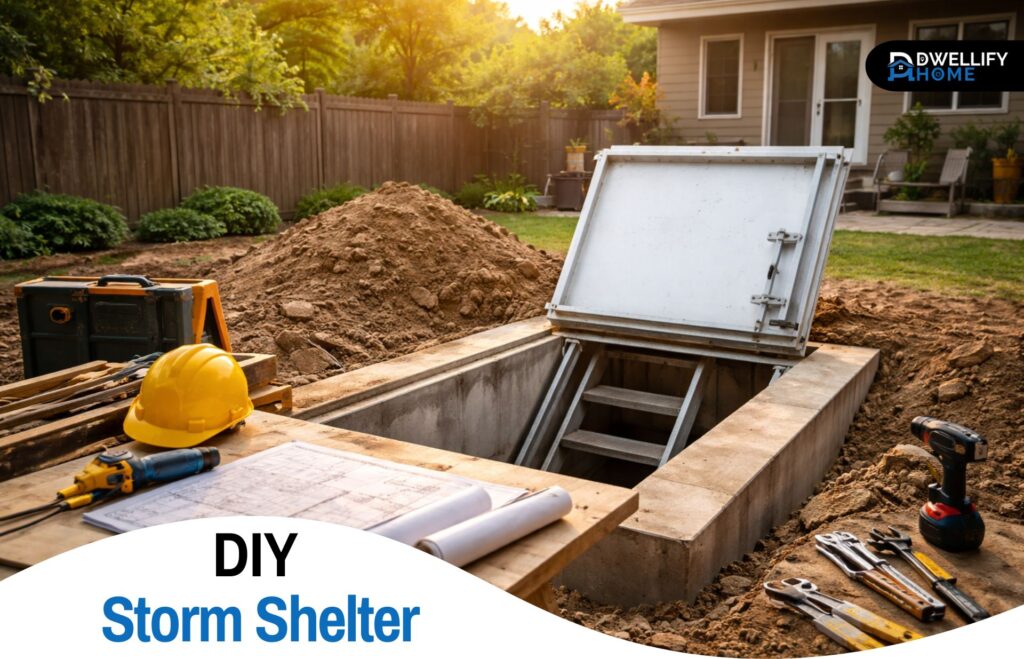
A storm shelter is one of those projects where the small details matter more than people expect. Wall thickness, door hardware, drainage, where the shelter sits on the property, and how fast you can reach it during a warning all have a direct effect on safety. That’s why this isn’t a project to approach the same way you’d approach a shed, a workshop, or a basement remodel.
A well-planned shelter can give your household real protection during tornadoes and severe wind events. A poorly planned one can create new risks, especially if water, debris, weak roof structure, or a bad entry design are overlooked. The safest approach is to start with the decision-making side first, then move into design, materials, and cost.
Snippet-Ready Definition
A DIY storm shelter is a home-built safe space designed to protect people during tornadoes and severe wind events by using strong materials, proper siting, and secure entry design.Mission Statement
Helping homeowners make practical, informed home decisions with clear guidance they can trust.
What Counts as a DIY Storm Shelter?
People use several terms interchangeably, but they do not always mean the same thing. A storm shelter is a protected space built to resist extreme wind and flying debris. A safe room is a more formal version designed to meet recognized safety standards. A storm cellar usually refers to an underground shelter, often detached from the house.
That difference matters because not every reinforced room is truly built to shelter standard. A concrete-walled space may look strong, but the roof system, anchoring, door assembly, ventilation, and placement are what determine whether it performs when it needs to.
Mini Guide
| Decision Area | Best Focus |
| Location | Fast access, low flood risk, stable site |
| Type | Above-ground for easier access, underground for some sites |
| Materials | Reinforced concrete or properly reinforced block systems |
| Budget | Prioritize structure, door assembly, drainage, and permits |
| DIY Level | Use pro help for structural design, unusual sites, or buried builds |
Key Benefits
- Creates a dedicated place to shelter during tornado warnings
- Helps you plan around site limits, budget, and family needs
- Reduces costly mistakes with location, drainage, and door design
- Makes it easier to compare above-ground and underground options
- Clarifies when DIY is realistic and when pro input is safer
Is a DIY Storm Shelter the Right Choice for You?
Some homeowners have the skills, site conditions, and budget discipline to manage part of this work themselves. Others are better off using a hybrid approach, where they handle site prep or finishing work while a licensed professional handles the structural design and critical installation points.
The biggest mistake is assuming that basic construction experience automatically translates into shelter construction. It doesn’t. A wall that feels solid in normal use may still fail under debris impact or uplift pressure. Once the project involves heavy concrete work, buried structures, or engineered doors, it stops being a casual weekend build.
Storm Shelter Rules, Permits, and Safety Standards
Before choosing materials or sketching a layout, check local code requirements and permit rules. This step gets skipped all the time, and it usually causes trouble later. In some areas, underground work triggers extra review because of drainage, soil conditions, utility conflicts, or setback rules.
This is also where FEMA guidance and ICC 500 standards come into the picture. Even if you are not building a fully certified safe room, those standards help you understand what real performance looks like. They shape decisions about impact resistance, anchoring, door systems, and occupant safety. “Looks strong” is not a standard.
Choosing the Best Location for a Storm Shelter
Location is usually the first major design decision, and it affects almost everything after that. A shelter inside the home is fast to reach, which matters during a short-warning storm. A detached backyard shelter may free up interior space, but it takes longer to access in heavy rain, hail, wind, or nighttime conditions.
Basements can work well, but only when water is not a recurring problem. Garages are convenient, though they need careful structural planning because large openings and slab conditions can complicate things. Detached and bermed shelters can be good options on the right property, but only when drainage, grading, and debris exposure are taken seriously.
One issue beginners often miss is flood behavior. An underground tornado shelter in the wrong spot can become dangerous fast. High water table, poor grading, and runoff paths should never be treated as minor details.
Above-Ground vs. Underground Tornado Shelter
Underground shelters appeal to many homeowners because they feel naturally protected. In some settings, that instinct is right. Buried shelters can provide strong protection when they’re designed properly and kept dry. The tradeoff is complexity. Excavation, waterproofing, drainage, entry design, and long-term maintenance all become more demanding.
Above-ground shelters are often easier to access, easier to inspect, and sometimes easier to build correctly. They can work especially well for households with children, older adults, or mobility concerns. The key is proper reinforcement and a tested shelter door system. The idea that above-ground automatically means less safe is too simplistic. The real answer depends on design quality, site conditions, and access.
How Big Should a Storm Shelter Be?
Size is not just about how many people can physically fit inside. You need room to sit safely, breathe comfortably, store basic emergency supplies, and account for children, pets, and anyone who may need mobility support. A cramped shelter may still count on paper, but in real life it can become stressful, hot, and hard to manage during an actual warning.
A common mistake is building to the absolute minimum. A little extra space makes a big difference in ventilation, comfort, and usability. It also helps when the shelter doubles as an interior safe room or needs to hold supplies for longer than expected.
Choosing the Right Storm Shelter Design
The right design depends on the property first, not on what looked good in someone else’s project photos. Basement shelters make sense where basements are already dry and structurally suitable. Garage safe rooms can be practical because access is easy and the space is often available. Detached backyard shelters work well when indoor options are limited.
Small lots may push the project toward compact layouts or integrated interior safe rooms. Larger rural properties may allow bermed or partially buried designs. This is where shelter plans are useful, but they should guide the build, not replace site-specific judgment.
The Best Materials for a Storm Shelter
Reinforced concrete remains one of the most dependable choices because it performs well under both load and impact when it is designed and placed correctly. Concrete block with rebar and grout can work too, but it needs more respect than people give it. Block alone is not enough. The reinforcement, connections, and roof system do the real work.
Steel components are often used for doors, frames, and reinforcement details. Wood-and-steel interior safe room designs can also work in certain setups, especially above ground. Material choice affects not only strength, but also cost, complexity, installation time, and the level of skilled labor required.
Building With Concrete Block: What to Know First
Cinder block or concrete block shelters are common in online discussions because the materials are familiar and fairly accessible. The risk is that familiarity can create false confidence. A block wall is only part of a shelter system. Without proper reinforcement, anchoring, roof design, and impact-resistant entry components, it may not perform the way people assume.
This is especially important for anyone researching how to build a tornado shelter out of cinder blocks. The wall layout is not the hard part. The hard part is building a system that works together under stress.
Storm Shelter Doors, Entry Design, and Hardware
The door is one of the most critical parts of the whole build. It is also one of the most misunderstood. A heavy door is not automatically a safe door. The frame, anchors, latch points, hinge strength, and installation method matter just as much.
Poor entry design causes problems even in shelters with strong walls. Doors can jam, leak, or become hard to open after movement or pressure. Entry placement matters too. A shelter that is technically strong but difficult to enter quickly under stress is not well planned.
Ventilation, Waterproofing, and Interior Safety
A shelter needs breathable air, manageable moisture, and basic livability. That sounds obvious, but it often gets reduced to an afterthought. Passive ventilation needs to be protected without compromising the shelter envelope. Waterproofing matters in both underground and above-ground designs because leaks, humidity, and mold can shorten the life of the space and make it unpleasant to use.
Interior safety also includes lighting, communication, and backup power for basics. A flashlight and weather radio sound simple, but in practice those details are the difference between feeling prepared and feeling trapped.
Storm Shelter Cost and Budget Planning
Cost varies more than most people expect. Excavation, concrete, steel, waterproofing, engineered doors, permits, and inspection fees can shift the budget quickly. The door assembly alone is often a larger share of the cost than homeowners anticipate.
Cheap DIY storm shelter ideas should be approached carefully. Saving money through good planning is smart. Saving money by reducing reinforcement, skipping drainage work, or improvising the door system is where problems start. Budget pressure is real, but life-safety projects are not the place for creative shortcuts.
DIY Storm Shelter Kits and Shipping Container Ideas
Kits can make sense for some homeowners because they simplify part of the process. The important question is what the kit actually includes. Some provide shell components, while others still require substantial site work, anchoring, door installation, and code review.
Shipping container shelters sound practical on the surface, but this is one of those ideas that gets oversimplified online. Containers were not designed to resist buried earth pressure without modification, and corrosion becomes a serious concern over time. Any buried container concept should be treated as an engineered project, not a budget shortcut.
Planning, Supplies, Maintenance, and Common Mistakes
A safe build follows a staged process: site review, layout, structural decisions, entry and ventilation details, then final checks. Once the shelter is built, keep it supplied with water, first aid items, lighting, helmets, batteries, medications, and a weather radio.
Maintenance matters more than people expect. Check for leaks, cracks, rust, sticking doors, blocked vents, and drainage problems before storm season. The most common mistakes are poor siting, weak roof planning, bad door choices, skipping permits, and underestimating water.
DIY vs. Professional Build and Funding Options
Some projects are reasonable for a skilled homeowner. Others clearly call for professional design or installation. A hybrid route is often the smartest middle ground. It gives you cost control without guessing on structural safety.
It is also worth checking whether local or state programs offer help with storm shelter funding. FEMA-related assistance usually runs through state or local channels rather than a direct homeowner application. That takes some digging, but it can make a meaningful difference.
Frequently Asked Questions About Storm Shelters
What is the cheapest way to build a storm shelter?
The lowest-cost option is usually a small, simple design in an existing basement or garage footprint, using a code-appropriate plan and spending carefully on the structure, door, and anchoring. DIY pages often present low-cost builds, but the consistent advice is not to cut corners on the door, reinforcement, or drainage.
Can a tornado rip a storm shelter out of the ground?
A properly designed and anchored shelter is built to resist uplift and debris, but poor anchoring or noncompliant construction can fail. That’s why FEMA-based guidance and code compliance matter more than just using heavy materials.
Can a tornado pick up a shipping container?
Yes, a shipping container can move or fail in extreme wind if it is not engineered, anchored, and modified for the loads involved. Containers are not automatically safe just because they are steel.
Can an above-ground shelter survive an F5 tornado?
An above-ground shelter can offer very high protection when it is designed and installed to recognized shelter standards with the right door, anchoring, and structural system. The key issue is compliance and installation quality, not just whether it is above or below ground.
Do DIY storm shelter kits meet FEMA standards?
Some kits may be designed around recognized standards, but the kit alone is not enough. Site prep, anchoring, door installation, and the full build still need to match the required criteria.
DIY Storm Shelter: Build Smarter, Safer, and With the Right Plan
A good shelter starts long before the first bag of concrete or the first excavation mark. It starts with honest planning, realistic budgeting, careful placement, and respect for the parts that cannot be improvised. The best outcome is not just getting the project finished. It is ending up with a space your household can reach quickly and trust when the weather turns bad.
That is the standard worth building to.
Disclaimer
This content is for general educational purposes and is not a substitute for local code review, engineering advice, or professional installation guidance

I’m Bilal Hassan, the founder of Dwellify Home. With 6 years of practical experience in home remodeling, interior design, and décor consulting, I help people transform their spaces with simple, effective, and affordable ideas. I specialize in offering real-world tips, step-by-step guides, and product recommendations that make home improvement easier and more enjoyable. My mission is to empower homeowners and renters to create functional, beautiful spaces—one thoughtful update at a time.