
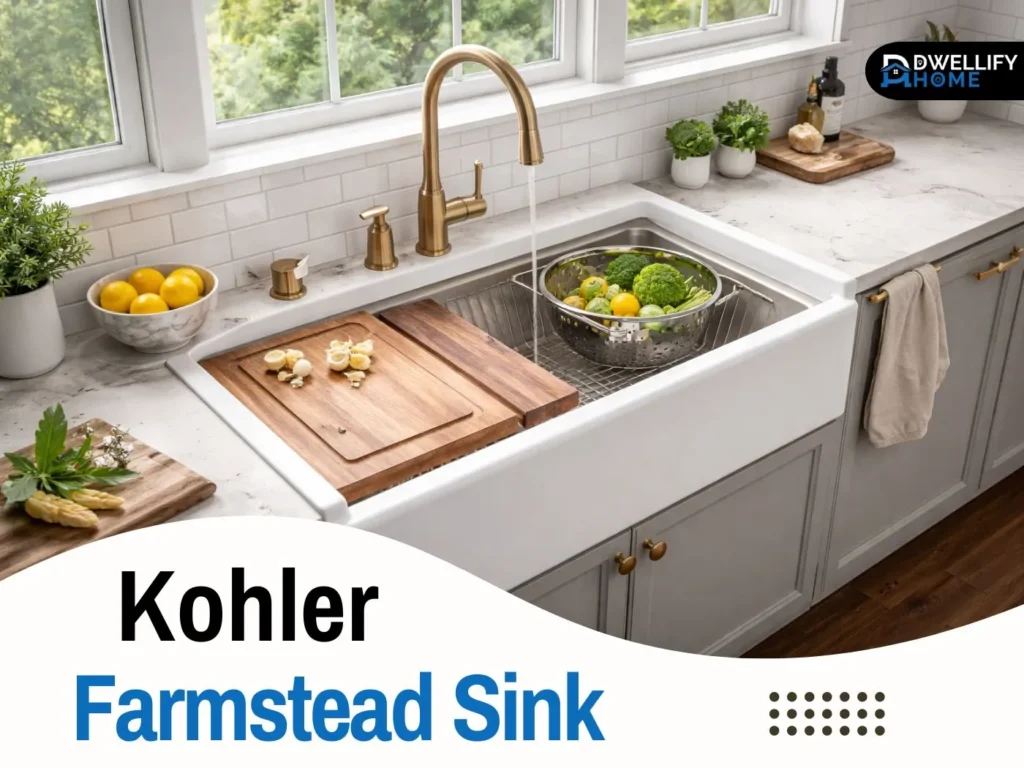
If you’ve ever remodeled a kitchen, you already know the sink isn’t a small decision. It’s the one spot you use all day, every day. And when homeowners ask me for a sink that feels premium, looks timeless, and genuinely makes prep easier, Kohler’s Farmstead line often comes up.
Here’s the thing. This sink isn’t just about the apron-front look. It’s built like a work tool, and it has a few design details that can make your kitchen feel more finished. I’ve installed Farmstead sinks in busy family kitchens, rental upgrades, and full custom remodels, so I’ll walk you through what it’s like in real life, what to watch out for, and how to choose the right setup.
By the end, you’ll know if this sink fits your space, your style, and your daily routine without wasting money on the wrong model or a painful installation.
Snippet-ready definition:
The Kohler Farmstead is a workstation-style farmhouse sink built for prep and cleanup. It’s known for its sturdy feel, accessory-friendly design, and flexible mounting options, including a classic legs setup in some layouts.
Mission Statement:
At Dwellify Home, our mission is to help homeowners make confident home decisions with clear, practical guidance, real-world tips, and design advice that actually works in everyday life.
What a Kohler Farmstead sink is (quick, simple definition)
A Kohler Farmstead sink is a farmhouse-style, apron-front kitchen sink with a clean, furniture-like look. The front apron is the part you see from across the kitchen, and it can instantly make the whole space look more custom.
The best part is how Kohler built it for real kitchen workflow. Farmstead models are designed to work with accessories like racks and cutting boards, so the sink becomes a prep station instead of just a basin. In many installs, it ends up replacing clutter on the counter because you can prep right over the bowl.
On top of that, there’s a “freestanding” style option with legs. That gives it a classic utility sink vibe, but upgraded. It looks amazing in cottage kitchens, laundry-style mudroom spaces, and even in a chef-style kitchen when the cabinetry design supports it.
Quick comparison table
| Option | Material feel | Best for | Trade-offs | Quick note |
| Kohler Farmstead | Heavy, premium, solid | Apron-front look plus workstation accessories | Needs solid support and careful planning | Great when you want a statement sink and real prep workflow |
| Kohler Vault farmhouse sink | Lighter, stainless vibe | Stainless farmhouse style and easier handling | Can be louder than cast iron style sinks | Strong pick if you want stainless steel specifically |
| Kohler Stages sink | Workstation focused | Modern workflow, accessories, cleaner lines | Not the same classic apron-front statement | Best when function is the main goal, style is modern |
Quick guide: pick the right Farmstead setup in 6 steps
- Measure the sink base cabinet width and interior clearance
- Decide your look: standard cabinet install or sink with legs
- Choose faucet-hole version that matches your faucet plan
- Confirm drain and disposal compatibility before ordering parts
- Plan accessory storage (boards, racks) inside the base cabinet
- Book install help for lifting and leveling so the apron lines up cleanly
Farmstead sink Kohler review (real-life pros, not hype)
Let’s keep this honest. In my experience, a Farmstead sink earns its price when the homeowner actually cooks, washes big cookware, and wants a sink that feels solid for years. The cast iron build gives it that heavy, planted feel. When you set a pot down, it doesn’t sound tinny. It feels like it belongs in a premium kitchen.
Another big win is the way it elevates the design without needing a million fancy upgrades. I’ve seen kitchens where we didn’t change the layout, just swapped the sink and faucet, and the room felt upgraded immediately. The apron-front detail and crisp lines do a lot of visual work.
Now the flip side. This sink is heavy and not forgiving if your cabinet planning is sloppy. I’ve seen installs go sideways when someone ordered the wrong faucet-hole version, ignored cabinet fit, or tried to DIY the lifting part. If you plan it right, it’s smooth. If you don’t, it turns into stress.
Key features you’ll notice every day
Workstation setup (why this sink feels more efficient)
This is where Farmstead shines. The workstation setup means you can slide accessories across the sink area, turning the bowl into a prep zone. In real kitchens, that usually means less mess on the counter and fewer trips back and forth.
For example, I’ve had homeowners who chop veggies over the sink using the cutting board accessory. Scraps go straight into a bin, rinsing happens right there, and the counter stays cleaner. If you’ve got a smaller kitchen, that workflow feels like gaining extra countertop space.
Practical tip from installs: plan storage for the accessories. A simple divider inside a base cabinet works great, so boards and racks don’t end up leaning awkwardly behind the toaster.
Apron-front + backsplash (small design detail, big impact)
A lot of people love apron-front sinks for comfort. You stand closer to the bowl, so you’re not leaning forward as much while washing. Over time, that can matter, especially if you cook daily.
The built-in backsplash feature on some Farmstead versions is also underrated. It helps manage water splash behind the sink, especially if you have a high-arc faucet and kids who wash hands like it’s a water park.
Design tip: if you’re using a bold faucet finish like brushed brass, keep the apron color classic. That balance keeps the kitchen looking expensive without feeling busy.
Material explained (enameled cast iron) + durability expectations
Kohler Farmstead sinks are often enameled cast iron, and that combo is why they feel so substantial. Cast iron gives the strength and weight, while the enamel surface gives the smooth, glossy finish.
Here’s what that means day-to-day. The sink feels sturdy, resists heat well, and handles heavy cookware without flexing. Most homeowners love how easy it is to wipe down after dinner because the surface doesn’t feel porous.
But let’s be real, enamel isn’t magic. It can chip if you drop something heavy at the wrong angle. I always tell homeowners to treat it like a premium countertop. Strong, yes. Indestructible, no. A simple habit like lowering cast iron pans instead of dropping them makes a difference.
Colors & finish options (including black Farmstead sink Kohler)
The classic choice is white because it fits almost any kitchen. It’s bright, it feels clean, and it works with everything from modern shaker cabinets to traditional wood finishes.
A black Farmstead sink Kohler setup looks stunning when it’s paired with light counters or natural wood cabinetry. It creates contrast and feels intentional. The only catch is maintenance. Black shows water spots faster, especially in hard-water areas. It’s not hard to manage, but you’ll wipe it more often.
My practical suggestion: if your water leaves spots on shower glass, expect the same on a dark sink. A quick daily wipe with a soft cloth solves it, but it’s worth knowing upfront.
Sizes, model choices, and faucet-hole options (avoid buying the wrong one)
This is where many people make expensive mistakes. Farmstead models come in different sizes and different faucet-hole configurations. Your countertop and faucet plan should drive the sink model, not the other way around.
If you’re designing a clean, modern look with a single-handle faucet and maybe a soap dispenser, a one-hole version can make life easier. If you’re keeping a more traditional setup with a bridge faucet or you want extra built-in accessories at the deck, a three-hole version may fit better.
One-hole vs three-hole versions (what to pick and why)
One-hole is typically cleaner visually and gives you flexibility with minimalist faucets. Three-hole can be helpful if you want a separate sprayer or you like the classic multi-piece layout.
Quick tip from real installs: don’t guess. Confirm your faucet spec sheet and your sink hole layout before you order. I’ve seen homeowners buy the perfect faucet, then realize the sink deck holes don’t match. That kind of mismatch causes delays and return headaches.
What’s included vs what you may need to buy separately
Farmstead is often treated like a workstation sink, so some configurations include accessories, while others may need add-ons depending on the model and retailer. The smart move is to treat accessories like part of your workflow plan, not an afterthought.
In most kitchens, the most useful items are the rack and board setup, because those are the pieces you’ll use weekly. Other accessories can be nice, but they’re not always necessary.
Here’s a simple checklist of items that commonly come up:
- Strainer and drain parts
- Disposal flange if you use a garbage disposal
- Any special fittings recommended by your plumber
- The accessory set you actually want to use
Farmstead sink Kohler installation (planning + options)
Before you install: the no-regrets planning checklist
This sink is heavy, so the cabinet and support matter. Before anything else, confirm cabinet width, internal clearance, and how the sink will be supported. If you’re doing a remodel, measure twice. If it’s new construction, still measure, because cabinets vary.
A good planning checklist looks like this:
- Confirm cabinet size and interior clearance
- Confirm countertop cutout method and template
- Plan support rails or a proper sink frame
- Decide on faucet, holes, and accessories
- Plan lifting help for installation day
My real-world advice: budget for help even if you’re handy. Two strong people make this easy. One person trying to wrestle a heavy sink is where accidents happen.
Standard install style (most common approach)
The most common Farmstead install is a supported setup inside a sink base cabinet with proper framing. Your installer will level it, set the sink, and then align the apron-front with the cabinet face so it looks intentional, not awkward.
The detail that separates a clean install from a sloppy one is apron alignment. If the apron sits too proud or too recessed, it looks off. A careful installer takes time here, and it’s worth it.
Kohler Farmstead sink legs (when the leg setup makes sense)
Kohler Farmstead sink legs are for a specific look and layout. They can create a freestanding feel, like an old-school utility sink, but with a premium finish. It’s a great option if your kitchen design supports open space under the sink, or if you’re building a statement area.
But legs aren’t always practical. They can reduce storage, and they demand more planning for plumbing visibility. If your goal is maximum cabinet storage, a standard install is usually the better choice.
My best tip: use legs when the sink is meant to be a design feature, not just a hidden work zone.
“Farmstead sink Kohler stainless steel” — clearing up a common confusion
This one comes up a lot. People mix up sink families and materials. Farmstead is commonly known for its enameled cast iron feel. If you specifically want a stainless steel farmhouse sink, Kohler has other lines that match that material and vibe better.
That’s where Kohler Vault farmhouse sink models often make more sense. You get the stainless look, lighter weight, and a different sound and feel. So the decision isn’t about which is better, it’s about what matches your kitchen priorities.
Cleaning + care (how to keep it looking new)
Good news, daily care is simple. A quick rinse and wipe with a soft cloth keeps most Farmstead sinks looking great. The enamel surface is smooth, so grime doesn’t cling the way it can on rougher materials.
For weekly maintenance, I usually recommend a gentle cleaner that’s safe for enamel. Avoid harsh abrasives, and skip anything that feels like sandpaper in a bottle. If you want a clean shine without drama, consistency beats aggressive scrubbing.
Small habit that helps: don’t leave metal pans sitting in the sink overnight with water. It’s not that the sink can’t handle it, it’s just that it can leave marks and annoy you later.
Common issues (and simple fixes)
Water spots are the most common “complaint,” especially on darker finishes. The fix is boring but effective: wipe it down. If you live in a hard-water area, keep a microfiber cloth under the sink and do a quick wipe after dinner.
Minor staining can happen if you leave strong color foods or dirty water sitting too long. Usually, a gentle cleaner and a soft sponge handles it. The key is avoiding harsh abrasives that dull the shine over time.
If you ever get a small chip, address it early. Don’t ignore it and let water sit there. Your best move is to talk to a pro or follow the manufacturer-recommended repair approach. A quick fix done correctly looks better than a rushed DIY patch.
Best alternatives and comparisons
Kohler Vault farmhouse sink
Kohler Vault farmhouse sink options are a strong match for people who want stainless steel. They’re lighter than cast iron and easier to handle during installation. Stainless can also feel more forgiving if you’re rough on cookware.
The trade-off is sound and feel. Stainless has a more metallic noise, though good installation and sound pads help. If you like a softer, quieter feel, Farmstead often wins. If you want lightweight and stainless style, Vault is a smart alternative.
Kohler Stages sink (workstation competitor inside Kohler)
Kohler Stages sink models are built around the workstation concept too, but the design approach is different. In many homes, Stages makes sense when you want an integrated accessory system and a modern look without the classic apron-front vibe.
If you love the workflow benefits but don’t want the farmhouse styling, Stages can be a great fit. If you want the apron-front statement plus a workstation approach, Farmstead usually feels more “wow” visually.
Cast iron vs stainless vs composite (quick decision guide)
Here’s the simplest way I explain it to homeowners:
- Cast iron enamel: premium feel, classic look, heavy, quieter
- Stainless steel: lighter, more flexible install, can be noisier, modern vibe
- Composite: durable, often quieter than stainless, style varies by brand
Pick the material that matches how you live, not what looks best in a showroom.
Kast sinks Kohler (where it fits in the design-forward conversation)
Kast sinks Kohler is more of a design and brand context topic. Kohler has explored and partnered with design-forward sink styles over the years, and Kast is often mentioned in that broader conversation around premium, architectural bathroom and basin design.
For your kitchen decision, this is mostly a trust and design-ecosystem note. It’s not the main factor for choosing Farmstead, but it does support the idea that Kohler plays in the premium design space, not just basic fixtures.
Is it worth it? (value, pricing logic, and buying advice)
A Farmstead sink is worth it when you care about three things: daily functionality, long-term durability, and a sink that visually anchors the kitchen. If you’re investing in countertops and cabinets, it makes sense to choose a sink that doesn’t feel like the weak link.
It’s also worth it if you love the workstation idea and actually plan to use it. I’ve seen homeowners who cook nightly get real value out of the accessories because prep and cleanup get smoother.
When would I skip it? If you’re doing a quick budget flip, if the cabinet layout is tight, or if you’re not ready to plan installation properly. A poorly planned premium sink never feels premium, it just feels stressful.
Buyer checklist (save this before ordering)
Before you click buy, run through this list:
- Confirm your cabinet size and internal clearance
- Decide one-hole or three-hole setup based on your faucet plan
- Choose your finish based on water spots and your style
- Decide standard install or legs
- Confirm drain and disposal parts
- Plan safe lifting help for install day
- Make sure your installer understands apron alignment
This checklist saves money, time, and headaches. I’ve seen it.
FAQ
Does it scratch easily?
The enamel surface holds up well with normal use. Use a soft sponge, avoid harsh abrasives, and don’t drag heavy rough cookware across it.
Is it hard to install?
It’s not complicated for a pro, but it does require planning and support because of weight. Most issues happen when cabinet prep is rushed.
Is black harder to maintain?
Yes, mainly because water spots show more. A quick wipe keeps it looking sharp.
Which alternative is best for stainless steel?
Kohler Vault farmhouse sink styles are often a better match if stainless steel is your priority.
Do the accessories come included?
It depends on the model and package. Always confirm what’s included and what’s optional before ordering.
Conclusion
A Kohler Farmstead sink can be a fantastic choice when you want a farmhouse look that still feels practical, not just pretty. In real kitchens, the workstation idea is what makes it feel different. It supports your routine instead of just sitting there.
If you take one thing from this guide, let it be this: plan the cabinet fit, choose the correct faucet-hole version, and treat installation like a real project, not a quick swap. Do that, and a farmstead sink kohler setup can feel like one of those upgrades you enjoy every single day.
And honestly, the best part is how it quietly improves your kitchen life. Less mess, smoother prep, easier cleanup, and a sink that looks like it belongs in a finished, well-designed home.
Disclaimer:
This article is for general information only and reflects practical renovation experience. Always confirm current product specifications with the manufacturer and use a qualified installer or licensed plumber for measurements, support framing, and installation decisions.

I’m Bilal Hassan, the founder of Dwellify Home. With 6 years of practical experience in home remodeling, interior design, and décor consulting, I help people transform their spaces with simple, effective, and affordable ideas. I specialize in offering real-world tips, step-by-step guides, and product recommendations that make home improvement easier and more enjoyable. My mission is to empower homeowners and renters to create functional, beautiful spaces—one thoughtful update at a time.