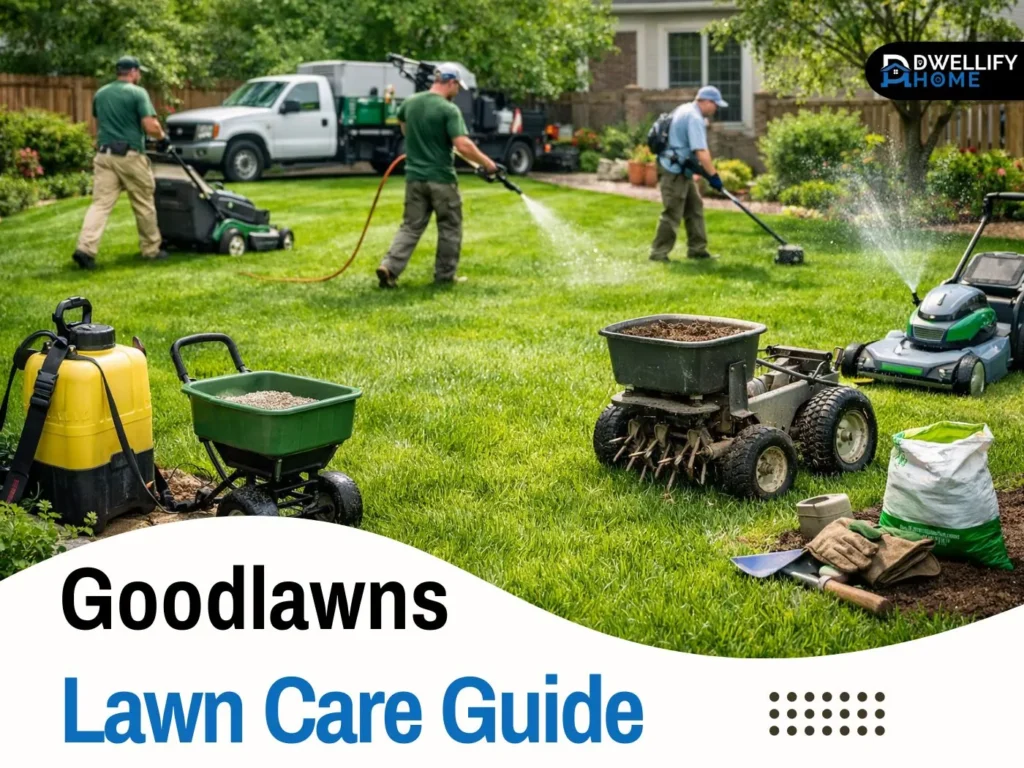
When homeowners ask me about goodlawns lawn care, they’re usually trying to solve one of two problems. Either they want a dependable crew to keep their yard tidy every week… or they’re tired of weeds, thin patches, and that “why does my lawn look tired?” feeling.
I’ve been maintaining residential lawns for over a decade, and I can tell you this with confidence: the best-looking yards aren’t always the ones with the fanciest products. They’re the ones with consistent basics, the right timing, and a plan that matches the grass and the season.
In this guide, I’ll walk you through what “Goodlawns-style” services usually include, how to choose a provider you can trust, and the simple turf rules that actually move the needle.
Snippet-ready definition:
Goodlawns lawn care usually refers to local “Good*” lawn services offering mowing and cleanup, sometimes weed control and fertilization. Always confirm service area, what’s included per visit, and whether treatments are part of the package.
Mission Statement:
To help homeowners make confident lawn-care decisions by explaining what Goodlawns-style services typically include, how to compare local providers fairly, and what simple turf habits create a thicker, healthier lawn.
What does “Goodlawns Lawn Care” mean?
A lot of “Good*” lawn businesses exist, and names can sound nearly identical. One might focus on basic mowing, another might do fertilization and weed control programs, and another might be more landscaping-heavy with mulch and planting.
Guess what? The name alone doesn’t tell you what you’re getting. That’s why I always tell folks to confirm three things first: service area, what’s included per visit, and whether they do lawn treatments or just maintenance.
On top of that, different regions have different grass types and common problems. A plan that works great for one neighborhood can fall flat in another. So instead of trusting a name, you want to look at the service list, the schedule, and the quality signals.
Quick Guide Table (comparison)
| What you need | Best fit | What’s typically included | Ask this before booking |
| Keep it neat week to week | Maintenance plan | Mowing, trimming, edging, blowing | “Is edging and blowing included every visit?” |
| Fix weeds + thin grass | Lawn program | Fertilization + targeted weed control, seasonal timing | “How many visits per year, and what weeds do you target?” |
| Patchy lawn / compacted soil | Renovation add-on | Core aeration + overseeding (sometimes dethatching) | “When do you schedule aeration/overseeding in my area?” |
| Quieter, lower-emission approach | Eco-friendly crew | Battery/electric equipment (varies) | “Do you use electric equipment for mowing and trimming?” |
| Fewer chemicals / soil-first | Organic-style care | Soil-building approach, targeted treatments | “What products do you use and what’s the safety guidance?” |
Step-by-step “Pro Checklist” (fast and practical)
- Confirm the exact company + service area (names can be similar).
- Get a written list of what’s included per visit (mowing, edging, blowing, shrub trimming).
- Ask about schedule rules (rain delays, reschedules, missed visits).
- If treatments are involved: ask what’s applied, how often, and kid/pet safety timing.
- Decide your goal: neat lawn vs thicker lawn (often needs aeration/overseeding + program).
- Start simple: 4–6 weeks is usually enough to judge reliability and consistency.
What services do Goodlawns-style lawn care companies usually offer?
Most local lawn care outfits follow a similar structure: routine maintenance, optional upgrades, and seasonal work. The best part is, once you understand the menu, it’s easier to compare quotes and avoid surprise add-ons later.
In my own route, I’ve had customers switch providers simply because they assumed edging was included, or they didn’t realize weed control wasn’t part of the package. So let’s make it crystal clear.
Routine Maintenance (weekly/bi-weekly): mowing, edging, blowing, trimming/shrubs
This is the classic “keep it neat” visit. The crew mows, trims around obstacles, edges the hard lines, and blows clippings off walkways.
A quick pro tip: ask what kind of edging they do. A sharp, clean edge along sidewalks and driveways is one of the fastest ways to make a lawn look professionally maintained, even before treatments kick in.
Lawn health upgrades: dethatching, aeration, seeding/overseeding, yard rolling
If your lawn feels spongy, looks thin, or struggles after rain, you’re usually in upgrade territory. Core aeration helps with compaction, overseeding thickens weak areas, and dethatching can help when dead material builds up between soil and grass blades.
Real-world example: I had a customer whose backyard stayed muddy and patchy every spring. We did a soil test, found compaction issues, aerated, and overseeded in the right window. Next season, the yard finally started holding up to foot traffic.
Treatments & weed control: fertilizer + targeted weed control style programs (often multi-step)
This is where results can change fast — for better or worse. A good lawn fertilization and weed control plan usually follows the growth cycle. It might include pre-emergent for crabgrass, broadleaf weed control, and seasonal feeding.
One caution, though: more isn’t better. Overdoing nitrogen can make the lawn grow fast but weak, and it can increase disease pressure in humid weather.
Seasonal + cleanup work: leaf removal, yard cleanup, spring/fall cleanup
Spring cleanup and fall cleanup are underrated. Leaves left on turf can block sunlight, trap moisture, and create bare spots.
If you’re booking seasonal cleanup, ask if they’ll handle heavy leaf removal, bed cleanouts, and the first mow properly. That first cut of the season sets the tone.
Landscaping add-ons: mulching, planting, pruning, grading, sod installation, hardscapes/pavers
Many lawn companies offer mulch installation, pruning, planting, and even sod installation or grading. These are great when you want a complete refresh, not just weekly mowing.
If drainage is a recurring issue, grading can be more valuable than another round of seed. Water always wins, so you want it flowing away from the problem areas.
Eco-friendly / sustainable lawn care (2025 me strong demand)
More homeowners ask me about eco-friendly options now than ever. And honestly, that’s a good thing — not because everyone needs an “all-organic” yard, but because people want safer, quieter, more thoughtful lawn care.
The trick is to match the eco approach to what your lawn actually needs, not just what sounds nice.
Electric / quieter equipment & lower-emission approach
Battery-powered equipment is getting better. It’s quieter, less smelly than gas, and many customers love that it doesn’t wake up the whole street.
If noise is a concern or you’ve got close neighbors, electric gear can be a real win. Just make sure the crew still delivers clean cuts and tidy blow-offs. Quiet is great, but quality still matters.
Organic / chemical-free options (soil-first care)
Organic lawn care usually leans into soil health: improving structure, feeding the soil biology, and building density so weeds have less room to move in.
The best part is, even a partial shift helps. You can reduce harsh applications, use targeted treatments only where needed, and keep the lawn thick with aeration and overseeding. A dense turf is the most natural weed control there is.
Pro-level “Good Lawn Care” fundamentals (simple rules that work)
Let me say this like I’m standing in your yard: the basics are boring, but they’re powerful. Most struggling lawns I see don’t need a miracle product. They need consistency and the right timing.
If you nail these four fundamentals, you’ll notice improvements even before you spend extra money on specialty treatments.
Mowing: the one-third rule, height settings, blade sharpness, and clipping strategy
Don’t scalp your lawn. Follow the one-third rule: don’t cut more than a third of the blade height at once. Scalping stresses grass, exposes soil, and gives weeds a chance to move in.
Also, keep the blades sharp. Dull blades tear grass, which looks ragged and can invite disease. If your lawn looks “frayed” a day after mowing, it’s often a blade issue, not a fertilizer issue.
Watering: deep but infrequent watering, morning timing, and “how to know it’s enough”
Water deeply and less often. Light daily watering trains shallow roots, and shallow roots can’t handle heat.
A simple test: after watering, push a screwdriver into the soil. If it goes in 4–6 inches easily, you’re in a good range. Morning watering is usually best because the lawn dries out during the day.
Feeding: growing season planning, a soil-first mindset, and avoiding overuse of nitrogen
If you can do one “grown-up” thing for your lawn, do a soil test once in a while. It tells you if your pH is off and what nutrients are missing.
And please don’t chase the darkest green color with constant high-nitrogen applications. You want steady health, not a growth spurt that turns into mowing twice a week and still looking stressed.
Aeration + overseeding: when it should be done (compaction, thinning, bare spots)
If the lawn feels hard underfoot or water runs off instead of soaking in, compaction is likely. Core aeration opens the soil so air, water, and nutrients can actually get to the roots.
Overseeding works best when the seed has good soil contact and moisture. It’s one of the most effective ways to turn a thin lawn into a thick lawn without replacing everything.
Diagnose lawn problems (quick but useful)
When a lawn looks bad, the surface symptoms can fool you. You’ll see weeds, patches, or yellowing, but the real cause is usually underneath: soil conditions, watering habits, mowing stress, or pests.
Let’s keep this simple and practical.
- Weeds everywhere: Often a sign of thin turf. Treating weeds helps, but thickening the grass is what keeps them from returning.
- Bare spots: Could be pet damage, compacted soil, shade, or poor drainage. The fix depends on the cause.
- Mushy or muddy areas: Usually drainage or grading. Seed won’t love sitting in soggy soil.
- Brown patches in summer: Could be heat stress, irrigation gaps, fungus, or grub activity.
For pests like grubs, or nuisance issues like mosquito control, flea and tick control, it’s worth talking to a pro if the problem keeps coming back. You don’t want to guess and apply the wrong thing at the wrong time.
Provider selection checklist
This is where I see homeowners win or lose. A good provider isn’t just about price. It’s about clarity, consistency, and a process that makes sense.
Here’s my real-world checklist — the same one I’d use if it was my own home.
- Service area + availability: Can they reliably cover your neighborhood and keep the schedule?
- What’s included per visit: Mowing only, or mowing plus edging and blowing?
- Proof of quality: Recent reviews, clear communication, and consistency in results.
- Safety & standards: If they do treatments, ask about kid/pet-safe lawn treatment timing and re-entry guidance.
- Guarantee / re-service policy: A simple “we’ll come back if it didn’t work” approach is a strong trust signal.
And here’s a small detail that matters: do they explain things in plain English? If someone can’t explain what they’re doing, it’s hard to trust the plan.
Pricing & packages
Let’s talk money without making it weird. Lawn care pricing usually comes down to frequency, lawn size, and complexity.
Most companies offer per-cut pricing for mowing and separate pricing for treatments like weed control, fertilization, core aeration, and overseeding. Some also bundle a seasonal program, similar to a “multi-step” plan.
Per-cut vs monthly/seasonal programs: kis situation me kaun better
- Per-cut is great if you just want the lawn neat and you don’t need treatments.
- Seasonal programs make sense if weeds and thin turf are the real problem and you want a consistent plan.
Price drivers: lawn size, growth rate, obstacles, slope, add-ons, cleanup volume
A lawn with flat open space is faster than a lawn with fences, trees, tight corners, and a lot of edging. Sloped yards take more time too.
Add-ons like leaf removal, mulch installation, and sod installation can move pricing quickly, so get it in writing. Clear quotes save friendships and avoid frustration later.
DIY vs Hiring a Pro
I’m not anti-DIY at all. Plenty of homeowners do a great job. The question is whether you want to spend your weekends learning turf management… or if you’d rather outsource the hard parts.
DIY can work well if:
- You enjoy yard work and can mow consistently.
- Your lawn is already in decent shape.
- You’re willing to learn watering and mowing basics.
Hiring a pro is often better if:
- Weeds are out of control and you want a plan, not guesswork.
- The lawn is thin, compacted, or full of bare spots.
- You want consistent results through the whole season.
The best part is, you can mix both. Many homeowners mow themselves and hire pros for aeration, overseeding, and treatments.
“Good*” local businesses
This section is here because local naming overlaps are real, and homeowners often confuse one business for another. So think of this as a clarity check.
Goodman lawn care Columbus MS (local intent snapshot)
When someone mentions goodman lawn care columbus ms, it usually points to straightforward maintenance needs: mowing, weed-eating, edging, and keeping the yard tidy.
If that’s what you want, ask about frequency, what’s included, and how they handle rainy weeks. Simple services can still be great — as long as expectations are clear.
Services offered by Goodall’s Lawn Care
The phrase services offered by goodall’s lawn care tells me the homeowner wants a clean breakdown. Common offerings usually include mowing packages (mowing, trimming, edging, blowing) plus extras like bush trimming and light landscaping.
My tip: request a checklist of what happens on a normal visit versus what’s an add-on. That one sheet can prevent most misunderstandings.
Good Guys Lawn Care Olive Branch, MS
With good guys lawn care olive branch, ms, I often see homeowners aiming for the “lawn health” side — fertilization and weed control, not just mowing.
If treatments are included, ask about scheduling, what weeds they target, and how they measure progress. A good plan should explain what changes you’ll see in 30, 60, and 90 days.
Real-world questions to ask before booking
Before you book anyone, ask these. They’re simple, but they uncover everything.
- What exactly is included in a standard visit?
- How do you handle rain delays and reschedules?
- What equipment do you use, and what’s your cleanup standard?
- If you do treatments, what’s the safety timing for kids and pets?
- How do you communicate updates, and how does billing work?
Here’s the thing: a good company won’t get defensive. They’ll answer clearly. That’s usually a green flag.
Seasonal lawn care mini-calendar (simple & scannable)
Seasonal timing matters more than most people realize. I’ve seen homeowners do the right thing at the wrong time and get disappointing results.
Use this as a simple guide, then adjust based on your local climate and grass type.
- Spring: cleanup, first mow at the right height, start weed prevention, fix thin areas with aeration/overseed if needed
- Summer: raise mowing height slightly, water deeper, watch for heat stress and disease pressure
- Fall: prime window for overseeding, leaf management, and smart feeding for root strength
- Winter: avoid heavy foot traffic on stressed turf, plan for spring, and handle drainage issues when you can
If you do just one seasonal upgrade, fall overseeding (with the right prep) is one of the most noticeable transformations.
Conclusion
If there’s one takeaway I want you to remember, it’s this: great lawns don’t come from hype. They come from a clear plan, consistent maintenance, and fixing the real cause of problems instead of chasing quick fixes.
When you’re comparing options around goodlawns lawn care, focus on clarity. Ask what’s included, confirm the schedule, and make sure the provider can explain the “why” behind the work. Then back it up with the fundamentals: smart mowing, deep watering, seasonal feeding, and aeration or overseeding when the lawn needs it.
Do that, and you won’t just have a greener yard for a week. You’ll have a lawn that holds up — through heat, rain, foot traffic, and real life.
Disclaimer:
This article is for general information only. Lawn results vary by region, grass type, weather, and soil conditions. For fertilizers, herbicides, or pesticides, always follow the product label and local regulations, and consult a qualified local professional for specific issues.

I’m Bilal Hassan, the founder of Dwellify Home. With 6 years of practical experience in home remodeling, interior design, and décor consulting, I help people transform their spaces with simple, effective, and affordable ideas. I specialize in offering real-world tips, step-by-step guides, and product recommendations that make home improvement easier and more enjoyable. My mission is to empower homeowners and renters to create functional, beautiful spaces—one thoughtful update at a time.