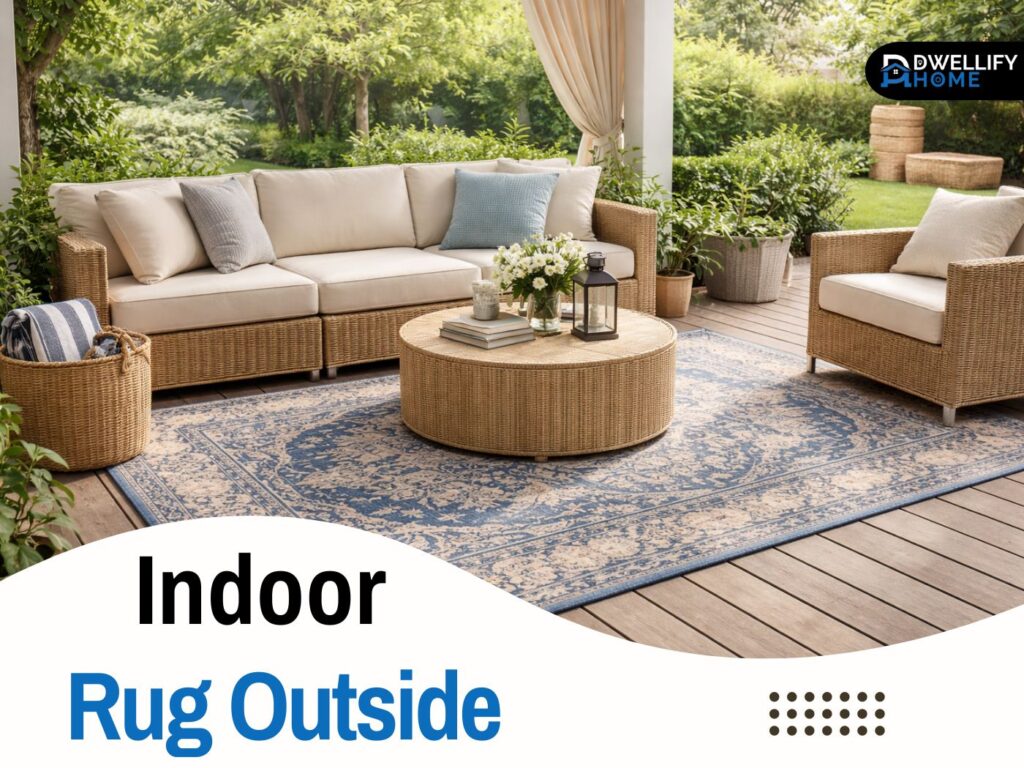
I’ve helped homeowners style patios, porches, balconies, and decks for over a decade, and the rug question comes up all the time. Someone finds a beautiful living-room rug on sale and thinks, “Why not use it outside?” I get it. A rug instantly makes an outdoor space feel finished and comfortable.
Here’s the honest truth. Most indoor rugs aren’t built for sun, humidity, and water. They can look great for a short while, but they often break down fast unless the space is very protected. The good news is you have options, and you can make smart choices that still look like an indoor room.
Snippet-ready definition:
An indoor rug outside can look great short-term, but most indoor fibers trap moisture and fade in sun. For lasting results, choose an indoor/outdoor rug, use a breathable pad, and keep it dry underneath.
Mission Statement:
Dwellify Home helps you create comfortable, good-looking spaces indoors and out with practical design advice you can trust, based on real materials, real homes, and what actually lasts.
Can You Put an Indoor Rug Outside?
You can, but it’s usually a temporary win, not a long-term plan. I’ve seen indoor rugs work for a season on a fully covered porch with good airflow, especially in drier climates. The rug stayed mostly dry, and the homeowner was diligent about lifting and drying it. In that kind of setup, the rug can survive longer than you’d expect.
But in most real backyards, moisture and sun show up in ways people don’t notice at first. Morning dew soaks the underside, sprinklers overspray, or a quick rain blows in sideways. After that, the rug’s backing can start breaking down, and the fibers can hold onto moisture. That’s when you get musty odors, mildew spots, and colors that fade unevenly.
If you’re doing it anyway, treat it like a short-term experiment. Pick a spot where water will not pool, plan to lift and dry it regularly, and accept that it may not last.
Quick Guide Table: Indoor Rug vs Indoor/Outdoor Rug Outside
| Feature | Indoor Rug Used Outside | Indoor/Outdoor Rug (Recommended) |
| Best for | Short-term, fully covered porch | Patios, decks, balconies, covered or semi-exposed areas |
| Moisture handling | Absorbs water, dries slowly | More water-resistant, dries faster |
| Mold and mildew risk | High in humidity or shade | Lower, especially with polypropylene |
| Sun fade | Often fades quickly | Often UV resistant or fade resistant |
| Cleaning | Harder, can stain and hold odors | Hose-clean friendly, easier maintenance |
| Typical materials | Wool, cotton, jute, viscose | Polypropylene, polyester, recycled PET |
| Lifespan outdoors | Weeks to a season (varies) | Seasons to years (with care) |
Fast pick: Polypropylene is widely recommended for outdoor rugs because it resists moisture absorption and is commonly mold and mildew resistant.
Step-by-step: How to Decide If Your Rug Can Go Outside
- Check the label first: Look for “indoor/outdoor” or “outdoor safe.”
- Identify the fiber: Polypropylene and many synthetics handle outdoor conditions better than wool or cotton.
- Look at the backing: Solid backing can trap moisture. Breathable construction is safer for decks and concrete.
- Match it to the location: Covered patio is low-risk. Uncovered areas need true indoor/outdoor durability.
- Plan for airflow: Use an outdoor rug pad and lift the rug after heavy rain to dry the underside.
Indoor Rug vs Indoor/Outdoor Rug (Key Differences That Matter)
Why indoor rugs struggle outdoors
Indoor rugs often use fibers that love comfort but hate weather. Wool can handle wear inside, but outside it absorbs moisture and takes a long time to dry. Cotton is soft, but it drinks up water and can stain easily. Jute and sisal look natural and beautiful, yet they’re especially vulnerable to humidity and can develop mold quickly.
Sunlight is the other big factor. UV exposure can fade dyes fast, sometimes within a few weeks if the rug sits in direct sun. Temperature swings also matter. Hot afternoons and cool nights can stress the backing and adhesives, especially on rugs not made for outdoor use.
A practical example from a client’s deck: they placed a thick cotton flatweave under a dining set. It looked perfect for about a month. Then summer storms rolled through, and even though the deck boards dried, the rug stayed damp underneath. By the time they noticed the smell, mildew had started along the edges where air couldn’t circulate.
What “indoor/outdoor” actually means
Indoor/outdoor rugs are built to handle moisture, sun, and grime better. Many are made with synthetic fibers that do not absorb water the way natural fibers do. They’re also designed to dry faster and resist mildew growth.
The best part is that modern indoor/outdoor area rug options don’t feel like rough plastic anymore. Many are soft enough for bare feet and still tough enough for patios. If you want a rug that can take real outdoor life, start with the label. If it is not clearly marked indoor/outdoor, assume it will need extra babysitting.
Best Materials for Using a Rug Outside (Expert-Backed Picks)
If I had to choose one material again and again for outdoor spaces, it’s polypropylene. A polypropylene patio rug is typically mold and mildew resistant, fade resistant, and easy to rinse. It doesn’t absorb water the same way wool or cotton does, which makes it a safer bet when weather surprises you.
Polyester blends can work too, especially in covered areas. They often feel softer than you’d expect, and some hold color well. Still, polyester can be more prone to flattening in heavy-traffic zones, so I like it best for seating areas rather than under a busy dining table.
Recycled plastic rugs and reversible outdoor rug styles are great for quick drying and easy cleaning. They’re common on decks and RV patios for a reason. If you need something that can be hosed off and dry quickly, they’re worth considering.
Materials I avoid for exposed outdoor use include:
- Wool and cotton, because they stay damp and stain easily
- Jute and sisal, because humidity can trigger mold and fiber breakdown
- Thick shag or high-pile rugs, because they trap water and take too long to dry
Where an Indoor Rug Outside Setup Works Best
Location matters more than people think. A covered patio rug spot is your best chance for success. You want a roof overhead and open sides that allow breeze to move through. A screened porch can be even better because it blocks some sun and keeps debris down.
Balconies and decks can work if they drain well and don’t get constant sprinkler spray. In these spaces, choose thinner, quicker-drying rugs and avoid anything with a heavy backing. If you’re on a balcony with limited sun, pay attention to moisture. Shade can keep rugs from drying, even when it feels warm outside.
Uncovered patios are the toughest. If the area gets full sun plus rain, the rug needs to be truly indoor/outdoor rated, preferably UV-resistant and quick-drying. Otherwise you’ll be replacing it sooner than you planned.
Size & Shape Guide (Rectangular, Large, and 8×10)
Rug size outdoors is not just about looks. It affects drying time, cleaning effort, and how much moisture can get trapped. A large indoor rug outside can look elegant, but bigger rugs take longer to dry and are harder to lift for cleaning.
For most seating areas, the classic goal is to fit the front legs of sofas and chairs on the rug. That anchors the layout without going oversized. For dining sets, it’s usually better to have all chair legs on the rug, even when the chairs slide out.
Here are practical sizing notes I use with clients:
- Outdoor rugs 8×10 are a sweet spot for many patios because they fit a standard conversation set or a medium dining table.
- Indoor/outdoor rugs 8×10 also work well for decks where you want a defined “room” without covering the whole surface.
- A rectangular indoor rug outside is often the easiest shape for furniture placement and traffic flow, especially on long porches.
- If you go very large, plan ahead for maintenance. You’ll need space to lift a corner, check the underside, and let it dry.
Placement Tips to Prevent Mold, Slipping, and Damage
Outdoor rugs fail most often from the underside. The top looks fine, but moisture sits underneath and never fully dries. The fix is airflow. I like to recommend a breathable outdoor rug pad because it creates a little space between the rug and the surface. It also helps reduce slipping, which matters on smooth concrete or composite decking.
A few placement habits make a big difference:
- Avoid areas where water pools. Check after rain and adjust the rug if needed.
- Keep the rug slightly away from walls so edges can breathe.
- Rotate the rug every few weeks in sunny seasons so fading happens more evenly.
- If your patio gets sprinklers, redirect the spray or move the rug out of range.
One more detail people miss is furniture weight. Heavy planters or furniture legs can press the rug down, trapping moisture. If you notice damp spots under table legs, lift the rug and let it dry, then consider adding furniture feet or repositioning slightly.
Care & Maintenance (Simple, Real-Life Routine)
Most outdoor-friendly rugs do best with light, regular cleaning. Dirt and grit act like sandpaper, wearing fibers down faster. A quick sweep once a week goes further than people expect.
For deeper cleaning, hosing down is usually fine for an indoor/outdoor rug, especially a polypropylene outdoor rug. Use mild soap for spots, rinse well, and focus on drying. If the top dries but the underside stays damp, mildew can still form.
A routine that works in real homes:
- Weekly: sweep or shake out debris
- Monthly: rinse and spot-clean as needed
- After rain: lift a corner and check the underside, let it air out if it feels damp
If you smell mustiness, don’t ignore it. That’s your early warning. Move the rug, clean it, and dry it completely. In stubborn cases, the backing may already be breaking down, and replacement is the safest option.
Weather & Seasonal Storage (How to Make It Last Longer)
Even rugs labeled indoor/outdoor last longer when you store them during harsh seasons. Heavy rain for days at a time can keep a rug damp, and winter conditions can be rough on fibers and backing.
Before storing, clean the rug and make sure it is fully dry, top and bottom. Then roll it instead of folding it, since folds can crack backing over time. Store it somewhere dry, and avoid wrapping it in airtight plastic if the rug is not perfectly dry. Trapped moisture is what causes that first mildew bloom.
If your area gets long wet seasons, it’s smarter to treat your rug like outdoor cushions. Bring it in when the weather turns and you’ll get more life from it.
If You Still Want to Use an Indoor Rug Outside (Damage-Control Options)
Sometimes people already own a rug they love, or they want a specific look for a short time. In that case, I focus on damage control and realistic expectations.
First, pick the safest location. A covered porch with airflow is the best place for an indoor rug experiment. Second, use a breathable pad. It won’t make the rug waterproof, but it helps reduce trapped moisture. Third, commit to lifting and drying the rug regularly.
Some homeowners ask about waterproofing sprays. They can add a little water resistance to the top fibers, but they don’t change what happens underneath. The biggest problem outside is moisture trapped between the rug and the surface. Sprays rarely solve that. If you go this route, test in a small area and avoid creating a slippery surface.
Common mistakes I see:
- Placing an indoor rug on an uncovered patio and leaving it through multiple rainstorms
- Using thick, absorbent rugs that never fully dry
- Skipping a pad on smooth surfaces, leading to slipping and trapped moisture
- Ignoring early musty smells until mildew spreads
If you want the indoor look outdoors without the headaches, choose an indoor/outdoor area rug in a style that feels like home. There are plenty of woven patterns that look like designer indoor rugs now.
Buying Guide (What to Look For + Where People Shop)
A good purchase starts with the label and the fiber. Look for rugs clearly marked indoor/outdoor, UV-resistant, and mold and mildew resistant. A water-resistant outdoor rug usually means it won’t soak up water easily and it dries faster. It doesn’t mean it can sit in standing water forever.
If you’re considering an indoor rug outside IKEA option, check the materials tag and product description carefully. Many retailers carry both indoor and indoor/outdoor styles, and the difference matters here. Prioritize synthetic fibers, especially polypropylene, and look for construction that feels stable rather than spongey.
If you’re checking outdoor patio rugs clearance, don’t just look at price and pattern. Inspect the edges and backing quality. A discounted rug can be a great find, but only if it’s built for outdoor conditions.
If you want to shop indoor rug outside nearby, here’s the quick in-store checklist I give clients:
- Confirm the rug is rated for indoor/outdoor use
- Feel the weave, tighter weaves tend to trap less dirt
- Check the backing, it should not feel like it will crumble or peel
- Consider weight, very heavy rugs take longer to dry and are harder to clean
- Ask about return policy, especially if your patio gets full sun
FAQs
1) Can you put a house rug outside?
You can, but it’s usually temporary. Most house rugs absorb moisture and can develop mildew or fade. A covered porch with airflow is the safest place to try.
2) How to tell if a rug can go outside?
Check for an indoor/outdoor label and look for materials like polypropylene. Many buying guides note polypropylene is popular for outdoor rugs because it resists stains, mold, and mildew and can be hosed off.
3) Is a rug ruined if it gets wet?
Not always. Many indoor/outdoor rugs can get wet and recover if they dry fully. The real issue is staying damp underneath, which can lead to mildew over time.
4) Is there a difference between indoor and outdoor rugs?
Yes. Outdoor rugs prioritize durability and resistance to sun, rain, and dirt, often using synthetic fibers like polypropylene.
5) Do you need a rug pad outside?
Often, yes. A breathable outdoor pad helps reduce slipping and improves airflow so moisture is less likely to get trapped underneath
Conclusion
If you’re trying to make an outdoor space feel like a real room, a rug is one of the best moves you can make. The trick is choosing something that can handle the environment you actually have, not the one you wish you had.
For most homes, the safest approach is a polypropylene indoor/outdoor area rug, paired with a breathable outdoor rug pad, placed where water drains well. Keep it clean, let it dry fully after wet weather, and store it during harsh seasons. If you decide to try an indoor rug outside temporarily, use it in a covered spot and stay on top of moisture checks.
Do those few things, and your patio or porch will stay comfortable, clean, and good-looking without the moldy surprises.
Disclaimer:
This article shares general design and care guidance based on professional experience and widely available product information. Always follow your rug manufacturer’s care instructions, and test any cleaner or waterproofing product in a small, hidden area first.

I’m Bilal Hassan, the founder of Dwellify Home. With 6 years of practical experience in home remodeling, interior design, and décor consulting, I help people transform their spaces with simple, effective, and affordable ideas. I specialize in offering real-world tips, step-by-step guides, and product recommendations that make home improvement easier and more enjoyable. My mission is to empower homeowners and renters to create functional, beautiful spaces—one thoughtful update at a time.