If you’ve ever wanted a plant that gives you a neat, modern look without constantly begging for attention, you’re going to like this one. Lomandra Breeze is one of those tough, grass-like plants that quietly does its job and makes a yard look finished.
Here’s the thing. It’s easy to grow, but it still has a few “do this, not that” rules. In this guide, I’ll walk you through how it behaves in the ground, how to space it so it looks right, how to water it during the make-or-break early weeks, and how to keep it looking fresh long term.
Snippet-Ready Definition:
Lomandra Breeze is a low-maintenance, evergreen dwarf mat rush with fine, arching green foliage. It’s drought tolerant once established and works well for borders, mass plantings, and modern landscapes.
Mission Statement:
Our mission is to provide clear, honest, and experience-based home and garden guidance that helps homeowners make confident decisions and create beautiful, low-maintenance living spaces.
What Is Lomandra Breeze?
Lomandra Breeze is a compact form of Lomandra longifolia, often sold as a dwarf mat rush. It’s an evergreen, clumping plant with fine, arching, strap-like leaves. It’s not a true ornamental grass, but in landscapes it plays the same role as one.
The best part is how versatile it is. I’ve seen it used as a clean border along walkways, a mass planting on slopes, and even in large pots where you want something tidy that won’t flop over.
Common names and what “dwarf mat rush” means
You’ll hear names like dwarf mat rush, basket grass, or simply lomandra. “Dwarf” matters because standard lomandras can get quite large, while this one stays more compact and easier to control.
Botanical ID and cultivar notes (Lomandra longifolia ‘LM300’)
Many growers label it as Lomandra longifolia ‘LM300’. That cultivar detail matters when you’re trying to match size and color across a project, especially if you’re replacing older plants.
Lomandra Breeze vs similar strap-leaf plants (quick clarity)
People commonly mix it up with liriope, mondo grass, and dianella. Lomandra typically handles heat, bright sun, and lean soils better than liriope. Compared with dianella, it usually has fewer issues with leaf spotting in humid conditions, assuming your drainage is decent.
Quick Guide / Comparison Table (Easy to Scan)
| Feature | Lomandra Breeze Details |
| Plant Type | Evergreen, clumping perennial |
| Mature Height | About 2–3 feet |
| Mature Width | About 3–4 feet |
| Sun Exposure | Full sun to partial shade |
| Water Needs | Low once established |
| Soil Type | Well-draining soil |
| USDA Zones | 8–11 |
| Deer Resistance | Generally deer resistant |
| Invasive | No, clump-forming |
| Best Uses | Borders, edging, slopes, containers |
Simple Care Checklist (Bullet Format)
- Plant slightly above soil level to protect the crown
- Water regularly for the first 6–8 weeks
- Reduce watering once roots are established
- Mulch lightly, keep mulch away from the base
- Tidy up once a year instead of frequent pruning
- Avoid heavy, soggy soils
Lomandra Breeze Key Features (Why Homeowners Like It)
This plant earns its popularity through consistency. It forms a rounded clump, stays green through most seasons, and doesn’t need weekly trimming like some edging plants.
It’s also a strong option for low-water landscaping once established. You can get that soft, flowing texture without adding a high-maintenance plant that needs constant irrigation to look good.
A few standout traits:
- Fine-textured foliage that reads “modern” in design
- Evergreen look in mild climates
- Handles sun to partial shade
- Low maintenance when planted in the right spot
Lomandra Breeze Size, Height, and Growth Habit
Let’s talk expectations, because “dwarf” can mean different things depending on where you live and how rich your soil is.
Most of the time, lomandra breeze height lands around 2 to 3 feet, with a spread that commonly reaches 3 to 4 feet. In leaner soils and hotter exposures, it often stays a bit tighter. In richer, irrigated beds, it can bulk up faster and wider.
Mature size expectations (height and spread)
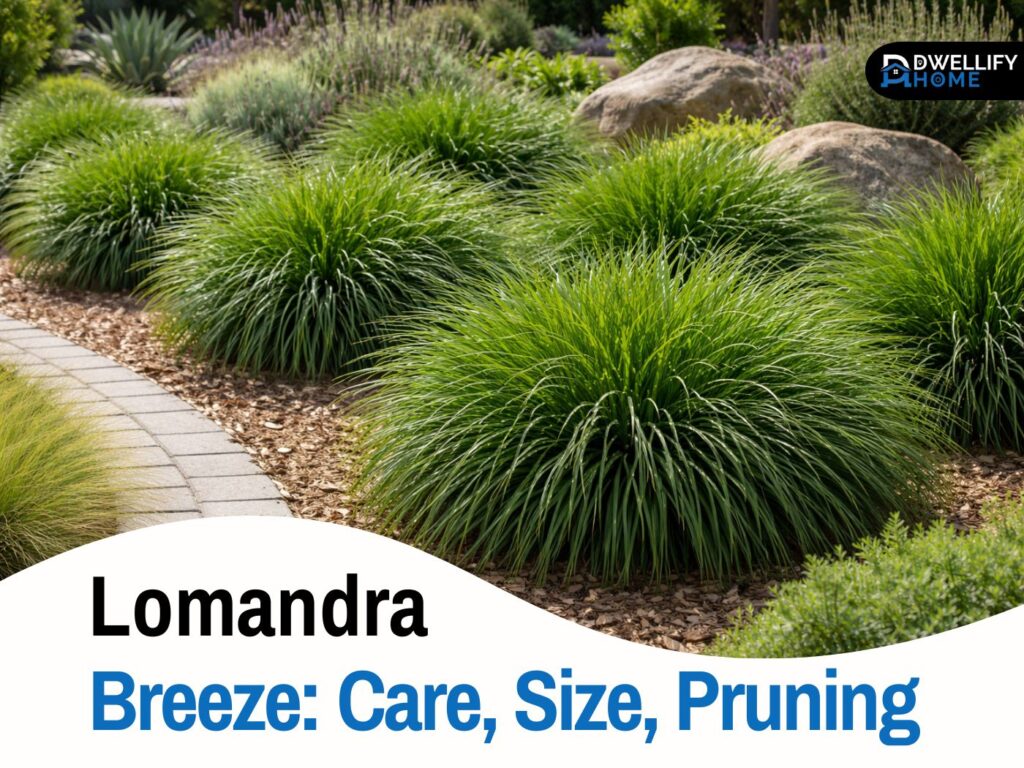
If you’re planning a border, don’t picture a skinny line. Picture a rounded mound that wants elbow room. For a clean look, space based on the spread you want in year two, not week one.
Growth speed (what to expect in year 1 vs year 2)
Year one is usually about rooting in. It’ll look “fine” but not full. Year two is where you see the payoff, when it thickens and starts to look like a solid design element rather than a new planting.
Spacing rules (border look vs mass planting fill-in)
This is where pros avoid regret.
- For a crisp border: space about 24 to 30 inches apart so each clump reads as its own shape.
- For a fuller mass planting: closer spacing, often around 18 to 24 inches, helps it knit together faster.
If you’re unsure, go a touch wider rather than tighter. Overcrowding is one of the fastest ways to get thin centers and constant cleanup later.
Flowers and Seasonal Interest
Lomandra produces small, yellowish flower spikes, often in spring into summer depending on climate. They can be lightly fragrant, but most people don’t plant it for flowers.
What you really get is year-round texture. That arching foliage softens hard edges like retaining walls, pavers, and driveways, and it looks good even when nothing else is happening.
Where Lomandra Breeze Grows Best
If you place it well from the start, care becomes simple. If you place it poorly, you’ll spend your time fixing symptoms.
Sun vs partial shade (best appearance + performance)
It handles full sun well, especially in coastal and mild areas. In hotter inland spots, it often looks its best with afternoon shade or filtered light. Too much deep shade can thin it out and reduce that tidy, mounded shape.
A practical rule: give it morning sun and some protection from late-day heat if your summers are intense.
Soil needs (well-draining explained simply)
It likes well-draining soil, which really means this: water should soak in, not sit around the crown. If your soil stays soggy for days, you’ll risk root issues.
If you’re working with clay, you don’t always need to replace the soil. But you do need to improve drainage with compost, plant slightly high, and avoid piling mulch against the base.
Climate tolerance (heat, drought once established, light frost; zones 8–11)
In many landscapes it performs best in USDA zones 8 to 11. It tolerates heat and, once established, it’s quite drought tolerant. It can also handle some frost, though severe cold can burn tips and slow growth.
Lomandra Breeze Care (Simple Routine That Actually Works)
Lomandra breeze care isn’t complicated, but the establishment phase matters more than most people think.
Watering (establishment phase vs established plants)
The first 6 to 12 weeks are the difference between “thriving” and “always struggling.”
- Weeks 1–2: keep it evenly moist, not swampy
- Weeks 3–8: deep water, then let the top layer dry a bit
- After establishment: deep, infrequent watering works better than frequent light sprinkling
Once it’s rooted in, it’s the kind of plant that looks better with a little toughness. Overwatering often creates floppy growth and invites crown problems.
Mulch and feeding (when it helps, when to skip)
Mulch helps stabilize soil moisture and temperature, especially the first year. Keep mulch a few inches away from the base so the crown stays dry.
Feeding is optional. In average garden soil, a light, slow-release fertilizer in spring can help it fill in. In rich beds that already get regular feeding, you can usually skip it.
Winter and summer care adjustments (heatwaves + cold snaps)
In heatwaves, a deep soak every so often is better than daily splashing. In colder snaps, don’t panic if tips burn. Wait until the worst cold is over, then tidy it up when growth resumes.
Planting Lomandra Breeze Step-by-Step
Planting is where you lock in long-term success. The goal is a healthy crown and roots that can breathe.
Best planting time + site prep
Spring and fall are ideal because roots grow when temperatures are moderate. Prep the bed so you’re not planting into hard, compacted soil.
Planting depth, hole size, and mulch ring (avoid crown rot)
Dig a hole wider than the root ball, loosen the surrounding soil, and set the plant so the crown sits slightly above the finished soil line. That small detail helps prevent rot.
Then water in deeply, and add mulch around the plant, not on top of it.
Containers and planters (best pot size + watering reality)
In containers, use a well-draining mix and a pot with good drainage holes. Bigger pots stay more stable and require less frequent watering.
Container tip: the plant may look thirsty faster in windy spots, even if the soil is still moist. Check the soil before you water, not the leaves.
Lomandra Breeze Pruning (Tidy vs Hard Cutback)
People either ignore lomandra completely or cut it like a hedge. Neither extreme is ideal.
When to prune and how often
A light tidy once a year is often enough. Late winter to early spring is a common window, right before new growth pushes strongly.
How to prune without damaging the crown
For most home landscapes, a tidy-up works best:
- Rake fingers through the clump to pull loose, dead blades
- Snip brown tips if they bother you
- Remove any collapsed outer leaves near the base
Hard cutbacks can be done when a clump looks tired, but they’re not always necessary. If you do a hard cut, avoid cutting into the crown. Leave a low mound rather than scalping it flat.
Fixing brown tips the right way (so it stays natural-looking)
Brown tips usually come from wind, salt spray, drought stress, or old growth. The neat trick is to trim just the tips with shears held vertically, so you don’t leave a blunt, chopped line.
This is where lomandra breeze pruning becomes more about finesse than force.
Common Problems and Fast Fixes
Even tough plants have patterns. The good news is most issues are fixable once you know the cause.
Brown tips or ragged edges:
- Often wind, heat stress, or inconsistent watering
- Fix with deeper watering intervals and a light tip trim
Yellowing:
- Commonly poor drainage or overwatering
- Check soil moisture and improve drainage before adding fertilizer
Thin center or flattened clump:
- Usually age, shade creep, or overcrowding
- Thin it, divide it, or give it more light and space
Root rot risk:
- Nearly always from water sitting around the crown
- Plant slightly high and keep mulch off the base
Is Lomandra Breeze Deer Resistant?
It’s commonly considered deer resistant, meaning deer usually don’t prefer it. That said, deer will sample almost anything when food is scarce or when plants are newly installed and tender.
If deer pressure is high in your area, protect new plantings for the first month or two. Once the foliage toughens up, it typically becomes less interesting to them.
This is why the phrase lomandra breeze deer resistant is best read as “low on the menu,” not “never touched.”
Is Lomandra Breeze Invasive?
In most garden settings, this plant forms a clump and expands gradually. It doesn’t run through beds the way some spreading grasses do. That clumping habit is a big reason people worry less about it.
Still, “invasive” can mean different things in different places. If your region has strict plant lists, it’s smart to check local guidance. In typical residential landscapes, lomandra breeze invasive concerns are usually low because it behaves as a tidy clump.
Landscaping Uses and Design Ideas (Where It Looks Best)
This is where lomandra really shines. It’s a texture plant, and it makes designs feel intentional.
Best uses (borders, edging, groundcover, slopes/erosion control)
It’s great for:
- Borders along paths and driveways
- Mass planting for a clean, modern field of green
- Slopes where you want erosion control with a soft look
- Rock gardens or gravel landscapes as a tough contrast
Pairing ideas (texture + color contrast that looks “designer”)
Try pairing it with:
- Plants with bold leaves like agave or philodendron in mild climates
- Flowering shrubs for contrast, where the lomandra acts like a calm base
- Upright grasses or flax for a layered look
Low-water landscaping and curb appeal layouts (simple examples)
A simple layout that works: lomandra in a ribbon along the front bed, with a few larger shrubs behind it and a couple of accent boulders. It looks finished, and it doesn’t rely on constant blooms to carry the design.
Lomandra Breeze vs Platinum Beauty (and Other Popular Lomandras)
If you like Breeze but want something brighter, Platinum Beauty is often the comparison people make. Lomandra Breeze Platinum Beauty is typically chosen for its lighter, variegated look, which can brighten shady edges and add contrast.
Breeze tends to read as a deep green, clean and classic. Platinum Beauty can look more decorative, but it may show stress faster if watering is inconsistent, especially during establishment.
Other lomandra types may be larger or more upright. If you’re designing a tight border or a small yard, the compact habit of Breeze is usually easier to control.
Propagation, Division, and Longevity
Over time, clumping plants can get dense. Division is the refresh button.
If a clump starts to thin in the center or looks “tired,” dividing it can restore vigor. The easiest time is usually when weather is mild, and you can keep it watered while it re-roots.
One important note: some named cultivars are protected. For a homeowner dividing plants for your own yard, that’s usually a practical maintenance step. For commercial propagation or resale, that’s where restrictions can matter.
Buying Guide (Quick Checklist Before You Purchase)
A healthy plant makes everything easier. When you’re shopping, look for:
- A full clump with minimal browning at the base
- Firm roots that aren’t circling tightly like a solid knot
- No sour smell in the pot, which can hint at wet, stressed roots
Pot size matters too. Smaller pots establish fine but need more careful watering early on. Larger pots cost more but can handle stress a little better and look finished sooner.
FAQs
How big does Lomandra Breeze get?
Lomandra Breeze typically grows about 2–3 feet tall and 3–4 feet wide. Its clumping habit makes it easy to manage without spreading aggressively.
Is Lomandra a sun or shade plant?
It grows best in full sun to partial shade. In very hot climates, some afternoon shade helps keep the foliage looking its best.
Is Lomandra Breeze invasive?
No. Lomandra Breeze is a clump-forming plant and does not spread aggressively. It stays where it’s planted and expands slowly over time.
Can Lomandra Breeze grow in shade?
Yes, it can tolerate shade, but very deep shade may cause thinner growth. Bright or filtered shade produces better shape and density.
Is Lomandra Breeze deer resistant?
It’s considered deer resistant, meaning deer usually avoid it. However, no plant is completely deer-proof during food shortages.
Conclusion
Lomandra Breeze is one of those rare plants that does exactly what most homeowners want: it looks clean, stays tidy, and doesn’t turn into a weekly chore. If you remember three things, you’ll get great results.
First, give it drainage and keep mulch off the crown. Second, water it properly during the first couple of months, then switch to deeper, less frequent watering. Third, prune with a light hand, because small tidy-ups usually beat hard cuts.
Use the right spacing, plant it slightly high, and let it settle in. Do that, and lomandra breeze becomes the kind of plant you stop thinking about, in the best way, because it just works.
Disclaimer:
This article is for general informational purposes only. Growing conditions vary by location, climate, and soil type. Always consider local guidelines and consult a professional if needed.

I’m Bilal Hassan, the founder of Dwellify Home. With 6 years of practical experience in home remodeling, interior design, and décor consulting, I help people transform their spaces with simple, effective, and affordable ideas. I specialize in offering real-world tips, step-by-step guides, and product recommendations that make home improvement easier and more enjoyable. My mission is to empower homeowners and renters to create functional, beautiful spaces—one thoughtful update at a time.