If you’ve ever wanted a plant that feels both wild and well-behaved, Monarda citriodora lemon beebalm is a fun one to try. It has that fresh, lemony scent when you brush the leaves, and it brings pollinators in like you just put out a welcome sign.
Here’s the thing. This plant is easy, but it’s not “plant it and forget it” in every situation. When you understand its little habits, especially how it grows from seed and how it likes to reseed itself, you’ll get a much better result with less effort.
I’ve grown it in tidy garden beds, messy cottage borders, and along the edges of pollinator patches where I wanted something that looks natural but still intentional. Let’s walk through it like we’re standing in your yard together.
Snippet-ready definition:
Monarda citriodora, often called lemon beebalm or lemon mint, is a fragrant Monarda with stacked purple blooms that attracts pollinators. It’s usually grown from seed and often returns by self-seeding.
Mission Statement:
Dwellify Home helps everyday gardeners grow healthier, more beautiful spaces with practical, experience-based plant guidance that’s easy to follow and grounded in real garden results.
What Is Monarda citriodora (Lemon Beebalm)?
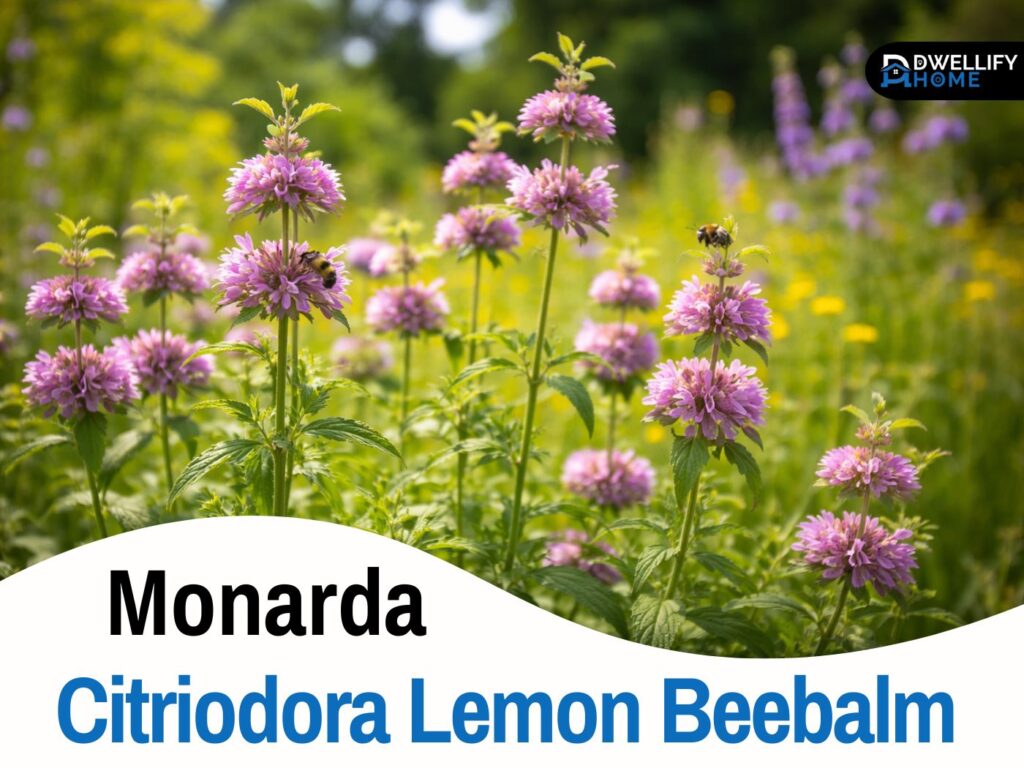
Lemon beebalm is a Monarda with a lighter, brighter personality than the thick, clumping perennial bee balms people often picture. It’s known for stacked, tufted flower whorls and a clean citrus scent that shows up most when the foliage is warm and dry in the sun.
You might also hear it called lemon mint, lemon bergamot, or purple horsemint. Don’t let the name confusion throw you. The plant is the same vibe: a fragrant wildflower that looks great in pollinator gardens and handles real-world conditions better than many fussy blooms.
The best part is that it feels “native-garden beautiful” without needing perfect soil. Give it sun, decent drainage, and a bit of space, and it usually rewards you with a long, lively display.
Quick Guide Table (fast, practical reference)
| Topic | Quick Answer |
| Sun | Full sun is best, light shade is okay |
| Soil | Well-drained soil; average garden soil is fine |
| Water | Water to establish, then water only during dry stretches |
| Height | About 1–3 ft (varies by sun and soil richness) |
| Spacing | About 12 inches is a solid starting point for airflow |
| Bloom window | Spring through mid-summer in many climates |
| Best garden uses | Pollinator patches, borders, meadow-style plantings |
| Notes | Leaves are often used for tea; spacing helps reduce mildew |
Step-by-step: How I’d grow it from seed (simple method)
- Sow on the surface of a fine seed mix (don’t bury deep).
- Press lightly so seed touches the soil.
- Keep evenly moist until sprouts show, but don’t keep it soggy.
- Give strong light (a bright window or grow light).
- Transplant outdoors after seedlings toughen up, then space for airflow.
Key Plant Facts at a Glance
Before you plant anything, it helps to know what you’re signing up for. Lemon beebalm tends to behave like an annual or short-lived plant in many home gardens, but it often keeps showing up because it self-seeds so reliably.
In plain terms, you may not get a forever clump like some perennial bee balms. Instead, you get a plant that can return by seed year after year if you let it.
A quick snapshot of what gardeners usually notice:
- Growth style: upright stems with airy foliage and stacked blooms
- Fragrance: lemony, especially on warm days
- Bloom look: whorled, layered flowers, often with soft purple tones
- Wildlife value: a magnet for bees and other pollinators
- Personality: thrives in “not too perfect” gardens if it gets sun and airflow
If you like plants that feel a bit natural and alive, not stiff and manicured, you’ll probably enjoy this one.
Lemon Beebalm Height and Overall Size
Let’s talk size because it affects everything, especially spacing and whether it flops. Monarda citriodora lemon beebalm height commonly lands in the 18 to 30 inch range in an average garden, sometimes a bit taller if the soil is rich and the weather stays mild.
In my own beds, the tallest plants usually happen when:
- the soil is heavily amended with compost
- the spot gets a little shade in the afternoon
- the plants are watered often, even when they don’t really need it
Guess what, that same combo can also make stems softer, which leads to leaning. If you want more upright plants, keep the soil decent but not overly rich, and water like you mean it, not like you’re pampering a houseplant.
Spread-wise, it doesn’t form a big thick mound like some perennials. It’s more upright and open. That’s why spacing matters so much, and we’ll get into that soon.
Where Lemon Beebalm Grows Best
If I had to pick one secret for success, it’s sun. Lemon beebalm really shines in full sun, especially if you want stronger fragrance and better flowering. It can handle light shade, but too much shade tends to stretch the stems and reduce blooms.
Soil-wise, it’s more flexible than people expect. You don’t need perfect garden loam. What you do need is drainage. Heavy, wet soil is where you’ll see weak growth, more mildew, and disappointing flowering.
Here’s a practical way to judge your spot:
- If water puddles for hours after rain, improve drainage or choose a different spot.
- If the soil dries out within a day or so, you’re likely fine.
- If you’re in clay, a raised bed or a slightly elevated planting strip helps a lot.
For watering, I treat it like a tough wildflower once it’s established. I water more during the first few weeks, then taper off. The goal is to encourage deeper roots, not to keep the topsoil constantly damp.
Monarda citriodora Lemon Beebalm Care
Lemon beebalm care is mostly about doing less, but doing it at the right time. That sounds simple, but it’s where most people slip up. Overwatering and overfeeding are the two big mistakes I see.
Once it’s established, I water only when the plant starts to look slightly dull or the soil is dry a couple inches down. In hot spells, that might mean a deep watering once a week. In milder weather, it can be less.
When it comes to feeding, I’m conservative. A little compost mixed into the soil at planting is plenty. Too much fertilizer can push leafy growth and make stems softer. That’s when you get flopping and more disease pressure.
A few care habits that help without making things complicated:
- Weed early: seedlings hate competition.
- Mulch lightly: keep mulch away from the crown and don’t bury tiny seedlings.
- Don’t crowd it: airflow is the difference between a clean stand and a powdery mess.
At the end of the season, you can either tidy it up or let it go natural. If you want self-seeding, don’t cut everything down too early. Let the seed heads mature first.
Monarda citriodora Lemon Beebalm Seeds
This plant is one of the easiest pollinator favorites to grow from seed if you follow a couple basic rules. And yes, it’s worth starting from seed. You’ll get more plants for less money, and you can build a bigger drift that looks intentional.
The main thing to know is that monarda citriodora seeds are small. Small seeds usually don’t want to be buried deep. If you bury them, they often struggle.
How to sow (the simplest method that works)
You’ve got two easy options: start indoors or sow outdoors. Indoors gives you more control. Outdoors feels more natural and can work great if timing and moisture cooperate.
My simple seed-starting approach:
- Sprinkle seeds on the surface of a fine seed-starting mix
- Press them in gently so they make contact
- Keep the surface lightly moist, not soggy
- Give them bright light
If you’re sowing outside, I like to rough up the soil surface, scatter the seed, and lightly press it in. Then I water gently so I don’t wash it away. A light covering of fine compost can help, but keep it thin.
Transplanting seedlings without setbacks
When seedlings have a few true leaves and look sturdy, you can move them. I transplant on a cloudy day or late afternoon, then water them in well.
Here’s a small trick from real life. If you harden seedlings off too fast, they can stall. Give them a few days to adjust to outdoor sun and wind before you plant them out permanently. That little patience saves you a week of “why aren’t you growing” frustration.
Monarda citriodora Lemon Beebalm Spacing
Monarda citriodora lemon beebalm spacing is not just about size. It’s about airflow. If you crowd it, you raise the risk of powdery mildew and you make the plants stretch, compete, and lean.
In most home gardens, spacing plants about 10 to 14 inches apart works well. In richer soil or humid climates, I lean toward wider spacing. In dry climates or lean soil, you can plant a bit closer.
Here’s how I explain it to gardeners in a quick way. If you can’t easily slide your hand between plants when they’re half grown, they’re too tight.
Spacing also depends on your goal:
- Neat bed look: space evenly, thin extras early
- Naturalized patch: allow a bit of mingling, but thin if the stand gets dense
- Cut-flower style: slightly tighter rows can work, but you must watch airflow
Good spacing is one of the easiest ways to make the plant look like you know what you’re doing.
Common Problems and How to Prevent Them
Most issues with lemon beebalm come from moisture and crowding, not from the plant being delicate. It’s a tough one when you grow it like a wildflower, not like a thirsty ornamental.
Powdery mildew is the classic complaint. It usually shows up when the plant stays damp, airflow is poor, or the spot is too shady. The good news is that prevention is simple.
What helps most:
- plant in sun
- give it breathing room
- water at the base, not over the leaves
- avoid heavy feeding that makes lush, weak growth
Flopping is another common issue. It’s often caused by rich soil, shade, or too much water. If your plants lean, don’t panic. You can add a small, discreet support ring early in the season, or plant it near sturdier neighbors that can gently hold it up.
Pests are usually minor. You might see a few chewed leaves or small insects, but in a pollinator garden, balance tends to show up if you avoid harsh sprays. If a plant is being overwhelmed, it’s often a sign it’s stressed, not a sign you need chemicals.
Monarda citriodora Lemon Beebalm Uses in the Garden
Monarda citriodora lemon beebalm uses go beyond “it looks pretty.” This plant earns its space because it supports pollinators while also bringing texture and movement to the garden.
Bees love it, and you’ll often see different types working the flowers on the same day. Butterflies also visit, and in the right setting you might notice hummingbirds stop by, especially if you’ve got other nectar plants nearby.
In design terms, it’s a great “middle layer” plant. It adds height without feeling bulky, and the whorled blooms give a soft, natural look. I like using it:
- along paths in sunny yards
- in cottage-style borders
- in wildflower patches where you want structure
- mixed with grasses for a more natural meadow feel
It also works as a cut flower. The stems aren’t as stiff as some bouquet plants, but if you cut at the right time, it holds up nicely. And the seed heads can be interesting for dried arrangements too.
Harvesting for Tea and Light Culinary Use
One of the nicest things about lemon beebalm is that it smells like summer when you pick it. People often use the leaves and flowers for tea, and some gardeners like to add small amounts for flavor.
If you want the best aroma, harvest on a dry morning after the dew has dried. That’s when the oils feel strongest. I usually pick a few sprigs at a time rather than stripping the plant. That keeps it looking good and still flowering.
For drying, keep it simple:
- tie small bundles and hang them in a dry, airy spot
- or lay sprigs on a screen out of direct sunlight
- store in a sealed jar once fully dry
A small real-world tip: if the leaves dry too slowly, they can darken and lose that bright scent. Airflow matters more than warmth.
Monarda citriodora Medicinal Uses
Monarda citriodora medicinal uses are often discussed in traditional and home-herbal contexts, usually in gentle ways like soothing teas or aromatic preparations. People in different regions have used Monarda species for a long time, and the plant’s strong scent is part of why it has that reputation.
That said, I always keep this practical and responsible. Plants can be helpful, but they’re not one-size-fits-all, and they’re not a replacement for medical care.
If you’re curious about using it in a wellness routine, keep these safety notes in mind:
- avoid it if you have known allergies to mint-family plants
- be careful during pregnancy or breastfeeding
- if you take regular medications or have a chronic condition, check with a qualified health professional before using herbal preparations
The best approach is to enjoy it primarily as a garden plant, and treat any personal use with common sense and caution.
Seed Saving and Reseeding Control
This is where lemon beebalm can either feel magical or feel annoying, depending on your style. If you love a natural look, letting it reseed is wonderful. If you like tidy borders, you’ll want a little control.
To save monarda citriodora seeds, let the seed heads dry on the plant. When they feel crisp and release seed easily, cut them into a paper bag and shake gently. Store the seeds dry, labeled, and out of heat.
If you want it to reseed, let some seed heads mature and drop seed naturally. I’ve had the best results when the soil surface is a bit open, not buried under thick mulch.
If you want to reduce reseeding:
- deadhead earlier, before seeds mature
- mulch more consistently after you remove seed heads
- thin volunteers in spring while they’re small
Here’s the thing. A few volunteers aren’t a problem. Too many in one spot can be. I thin them like I’m thinning carrots, keeping the strongest ones and giving them space.
Lemon Beebalm vs Other Bee Balm Plants
People often assume all bee balms are the same. They’re not. Monarda citriodora has a lighter, wilder look, and it often behaves differently than the thicker, perennial Monarda types used in traditional flower beds.
Perennial bee balms tend to form clumps and return from roots. Lemon beebalm often returns by seed, which means it can shift around your garden a bit from year to year.
So which one should you choose?
- If you want a stable clump that stays put, a perennial bee balm might suit you.
- If you like a natural, meadow-like feel and don’t mind a bit of movement, lemon beebalm is a great fit.
- If your goal is a pollinator patch that changes with the seasons, this plant feels right at home.
In mixed plantings, I actually like using both. The perennial provides structure, and lemon beebalm fills in with airy blooms and extra fragrance.
Quick FAQ
1) Does lemon bee balm come back every year?
Often, yes, but usually by self-seeding rather than returning as a permanent clump. If you let some seed heads mature, you’ll commonly see new plants pop up the next season.
2) What should you not plant next to lemon balm?
This question is usually about lemon balm (Melissa officinalis), not lemon beebalm. Lemon balm can spread aggressively, so avoid planting it next to small, slow herbs (like thyme) or delicate flowers that can get crowded out.
3) Is Monarda citriodora a perennial?
It’s commonly treated as a short-lived perennial or annual/biennial, depending on climate and conditions. In many gardens it behaves like an annual that reliably returns from seed.
4) What not to plant with bee balm in the fall?
Avoid planting anything that will be crowded tightly against it or anything that needs very dry fall soil right at its base. The main fall mistake is packing plants too close, which reduces airflow and can invite mildew problems later.
5) How much sun does Monarda citriodora need?
Full sun gives the strongest growth and best blooms, though partial shade can work if you keep spacing a bit wider for airflow.
Conclusion
If you want a fragrant wildflower that feels lively, supports pollinators, and doesn’t demand perfection, Monarda citriodora lemon beebalm is a smart choice. It’s the kind of plant that makes a garden feel more like a living habitat, not just a display.
On top of that, it’s easy to shape to your style. Let it reseed for a natural look, or deadhead and thin for a cleaner border. Pay attention to sun and spacing, keep watering sensible, and you’ll avoid most common issues before they start.
If you try just one thing from this guide, make it this: give it breathing room and don’t overfeed it. Do that, and you’ll likely be standing in your garden later in the season, watching bees work the blooms, thinking, okay, that was totally worth it.
Disclaimer:
Gardening results vary by region, soil, and weather. This guide is for general education, not medical advice. For any medicinal use, allergies, pregnancy concerns, or medication interactions, consult a qualified health professional.

I’m Bilal, the founder of Dwellify Home. With 6 years of practical experience in home remodeling, interior design, and décor consulting, I help people transform their spaces with simple, effective, and affordable ideas. I specialize in offering real-world tips, step-by-step guides, and product recommendations that make home improvement easier and more enjoyable. My mission is to empower homeowners and renters to create functional, beautiful spaces—one thoughtful update at a time.