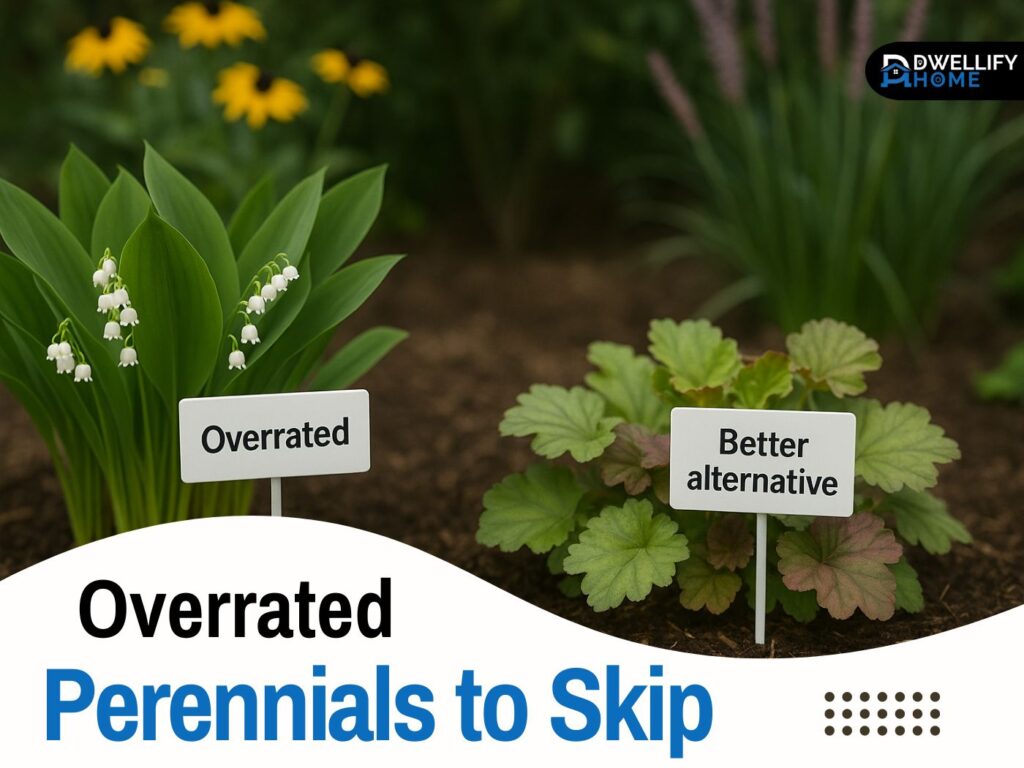
Walk through any garden center in spring and you’ll see the same perennials popping up again and again. They’re labeled as “must-haves,” splashed across catalogs, and praised online. Here’s the thing though: popularity doesn’t always equal performance. Over the years, working hands-on in real backyards, I’ve seen many of these plants turn into disappointments once the novelty wears off.
This guide is about overrated perennials to skip not because they’re terrible plants, but because they often don’t live up to the hype for everyday gardeners. Some spread too aggressively, some demand far more care than expected, and others look great for a week or two and then leave you staring at bare stems. The goal here is simple: help you choose plants that actually work for your space, your climate, and your time.
Short Intro About Overrated Perennials to Skip:
Overrated perennials to skip are popular garden plants that often underperform due to aggressive spreading, short bloom times, or high maintenance, making them a poor fit for many real-world home gardens.
Our Mission:
To help home gardeners make smarter, more realistic plant choices by sharing honest, experience-based advice that values long-term success over trends.
What “overrated” really means in a garden
When gardeners hear the word overrated, they often assume it means useless. That’s not quite true. In garden terms, overrated usually means the plant is widely recommended without enough discussion about its downsides.
I’ve seen this happen countless times. A client plants something because it looked amazing in a magazine photo. Two seasons later, they’re asking how to remove it or why it never looked the same in their yard. The problem wasn’t the gardener. It was a mismatch.
When a good plant becomes the wrong plant
A perennial can become overrated for a few common reasons:
- It spreads faster than most home gardens can handle.
- It has a very short bloom window followed by months of mess.
- It’s prone to disease, flopping, or pest damage.
- It only performs well in very specific soil or climate conditions.
If any of these sound familiar, you’re not alone. Most garden regrets fall into one of these categories.
Quick Guide Table (Clean & Helpful)
Overrated Perennials vs Smarter Alternatives
| Overrated Perennial | Common Problem | Better Alternative |
| Lily-of-the-Valley | Spreads aggressively, hard to remove | Heuchera, Brunnera |
| Old-fashioned Peonies | Flop, short bloom, mildew | Itoh peonies |
| Daylilies | Overcrowding, constant dividing | Coreopsis, Salvia |
| Lavender | Needs perfect drainage | Catmint, Russian sage |
| Garden Mums | Often die after one season | Asters, Sedum |
Why this works:
This table quickly answers “Should I plant this or not?” which matches strong search intent.
Quick Bullet Guide
How to Know If a Perennial Is Overrated for Your Garden
- It spreads faster than you can control
- It blooms briefly, then looks messy
- It requires constant pruning or treatment
- It performs well only in ideal conditions
- It’s popular online but problematic locally
If a plant checks more than two of these boxes, think twice.
Aggressive spreaders that quietly take over
Some perennials don’t just grow, they invade. They look harmless at first, but within a few seasons they’re popping up where you never planted them.
Bishop’s Weed (Goutweed)
Bishop’s weed is often sold as a tough groundcover for shade. And yes, it’s tough. That’s exactly the problem.
Once it’s established, it spreads through underground rhizomes that are incredibly hard to remove. I’ve helped homeowners dig for years trying to get rid of it, only to see it reappear the next spring. Even tiny root fragments can restart the plant.
If you need a shade groundcover, choose clumping plants instead of runners. They’ll stay where you put them and won’t turn into a long-term battle.
Lily-of-the-Valley
This one surprises people because it’s associated with delicate flowers and sweet fragrance. Guess what? Beneath the surface, it behaves very differently.
Lily-of-the-valley spreads quickly underground and can push out neighboring plants. On top of that, it’s toxic to pets and children. In small gardens, it often becomes overwhelming within just a few years.
Chameleon Plant
Chameleon plant draws people in with its colorful foliage, especially in shady spots. Unfortunately, that beauty comes with aggressive growth habits.
I’ve seen it leap garden borders and pop up several feet away from the original planting. Once it’s in the ground, containment becomes a serious challenge.
Loosestrife types and mint
Purple loosestrife and gooseneck loosestrife are part of a family known for spreading quickly. Mint behaves the same way, even though it’s technically an herb.
These plants are best kept in containers. In open soil, they rarely stay polite.
High-maintenance showstoppers that rarely feel worth it
Some perennials look stunning in photos but require constant attention to look even halfway decent in real gardens.
Old-fashioned peonies
Peonies are loved for their huge blooms, but here’s the reality I see most often. They flop after rain, get mildew in humid climates, and bloom for a very short time.
Clients often tell me, “They look amazing for a week, then that’s it.” The rest of the season, you’re left with bulky foliage that doesn’t add much visual interest.
Newer intersectional peonies perform better, but the classic types are often more work than people expect.
Daylilies
Daylilies are tough, no doubt about it. But toughness doesn’t always equal beauty.
Common varieties spread quickly, crowd themselves, and need dividing to keep blooming well. Without maintenance, they turn into dense clumps with fewer flowers over time.
Lavender
Lavender is one of the most misunderstood perennials I work with. People assume it’s easy, but it’s very particular.
It needs excellent drainage, full sun, and proper pruning. Heavy soil or overwatering leads to failure. I also hear the claim that lavender plants fed with kitchen scraps will produce more flowers. In reality, lavender prefers lean soil. Compost is fine, but raw scraps can cause rot and pest problems.
Hybrid garden roses
Modern roses promise endless blooms, but they often come with disease issues and regular spraying. In many home gardens, they struggle unless given near-daily attention.
If you love roses, look for disease-resistant varieties. Otherwise, many gardeners find them more stressful than rewarding.
Foxgloves
Foxgloves are beautiful, but they don’t reliably return every year in many climates. They also struggle in heat and can look ragged late in the season.
They’re better treated as short-term accents rather than dependable perennials.
Overused classics that often disappoint
Some plants aren’t bad, just overused or misunderstood.
Tulips as perennials
Tulips are often sold as perennials, but in many regions they don’t come back strong year after year. After the first season, blooms become smaller or disappear entirely.
On top of that, the dying foliage has to stay in place to recharge the bulb, which isn’t ideal for tidy gardens.
Irises
Irises have a short bloom window and spend the rest of the season as stiff, upright leaves. Without careful placement, they can look awkward once flowering is done.
They’re not wrong for every garden, but they’re often oversold as long-season stars.
Hostas
Hostas are dependable, but many gardens rely on the same few varieties over and over. Add slug damage into the mix, and they can lose their appeal fast.
There are excellent alternatives that offer similar shade tolerance with more texture or color.
Black-eyed Susans
These can self-seed heavily and spread beyond their intended space. In some gardens, they quickly become dominant rather than supportive.
Fall and late-season perennials to think twice about
Late-season color is valuable, but some options don’t always perform as expected.
Garden mums
Mums are often treated as perennials, but many act more like annuals. They’re prone to disease and don’t always survive winter unless planted early and maintained well.
Montauk daisies
Montauk daisies bloom late, sometimes too late. In colder climates, frost can cut the show short just as flowers open. Their spreading habit also surprises many gardeners.
What to plant instead for better results
Instead of fighting your plants, it’s smarter to work with ones that naturally fit your conditions.
Low-maintenance perennials that actually perform
Look for plants that:
- Grow in clumps instead of spreading runners
- Bloom over long periods
- Resist common diseases
This approach alone can save hours of maintenance each season.
Easy perennials that bloom all summer
Layering early, mid, and late bloomers gives continuous color without relying on a single plant to do all the work. This is far more reliable than chasing one “perfect” perennial.
Perennials that like part shade and full shade
Shade-loving perennials flowers often get overlooked. Many late blooming shade perennials offer excellent color when sun-loving plants fade.
Choosing plants based on light levels makes a huge difference in long-term success.
Timing matters more than most people realize
When is a good time to plant perennials?
Early fall and spring are usually ideal. Cooler temperatures allow roots to establish without stress, leading to stronger growth the following season.
Best time to buy perennials
Avoid impulse buying at peak bloom. Instead, shop when plants are young and healthy. Look for strong roots and compact growth rather than flowers.
Smart ways to manage risky plants
If you love a plant that tends to spread, containment is key.
Use barriers, raised beds, or large containers. This gives you control without giving up the plant entirely.
For short-bloom plants, pair them with companions that hide fading foliage. It’s a simple design trick that keeps beds looking intentional.
FAQs
What is the best low maintenance perennial?
Plants like coneflower, catmint, sedum, and salvia are among the best low maintenance perennials because they’re disease-resistant, long-blooming, and don’t require frequent dividing or pruning.
What is the longest blooming perennial?
Catmint and coreopsis are among the longest blooming perennials, often flowering from late spring through fall with minimal care, especially when lightly trimmed mid-season.
What is the most underrated flower?
Catmint is one of the most underrated flowers. It blooms for months, handles heat and drought well, attracts pollinators, and stays well-behaved in garden beds.
Why is Gen Z obsessed with plants?
Gen Z sees plants as affordable self-care, creative expression, and a way to improve mental health. Plants also align with sustainability, aesthetics, and home personalization trends.
Are overrated perennials always bad plants?
No. They’re often just the wrong choice for certain climates, garden sizes, or maintenance levels. What fails in one yard may thrive in another.
Conclusion
Choosing plants isn’t about trends. It’s about honesty. Many of the overrated perennials to skip are only overrated because no one talks about their downsides upfront.
After years of designing and maintaining gardens, including projects documented through Dwellify Home, I’ve learned that the best gardens aren’t filled with the most popular plants. They’re filled with the right plants.
If you match perennials to your light, soil, space, and schedule, your garden becomes easier, healthier, and far more enjoyable. And that’s the kind of success that actually lasts.
Disclaimer
Plant performance can vary based on climate, soil, and care. This article reflects real-world gardening experience and general guidance, not a guarantee of results in every location.

I’m Bilal, the founder of Dwellify Home. With 6 years of practical experience in home remodeling, interior design, and décor consulting, I help people transform their spaces with simple, effective, and affordable ideas. I specialize in offering real-world tips, step-by-step guides, and product recommendations that make home improvement easier and more enjoyable. My mission is to empower homeowners and renters to create functional, beautiful spaces—one thoughtful update at a time.