There’s a reason faux plants have become a go-to in homes, offices, and even storefronts. When they’re done well, they bring calm, color, and softness without the stress of watering schedules or leaf drop.
But the difference between “looks high-end” and “looks obviously fake” usually comes down to two things: how you anchor them and how you finish the surface. I’ve styled hundreds of spaces with artificial greenery, and most of the time, the plant itself isn’t the problem. It’s the potting and the placement.
This guide walks you through a clean, realistic method for indoor and outdoor setups, with practical options for wind, tall planters, and natural-looking top layers.
Snippet-ready definition:
Planting fake plants means anchoring faux greenery in pots or planters so it looks naturally rooted. People use them for low-light rooms, hot patios, and no-fuss styling where real plants struggle.
Mission Statement:
At Dwellify Home, our mission is to make everyday spaces feel calm, welcoming, and lived-in through practical design advice you can actually use, including realistic styling with faux greenery.
What “Planting Fake Plants” Actually Means (And When It’s Worth Doing)
When people talk about planting faux greenery, they’re usually talking about creating the illusion that the plant is rooted, stable, and living in a real container. You’re not trying to bury plastic in dirt and call it a day. You’re building structure underneath and a believable finish on top.
It’s especially worth doing in spots where real plants struggle. Think dark entry corners, bathrooms with tiny windows, or hot patios where containers dry out in a day. Faux plants also shine in busy households, rentals, and commercial spaces where maintenance is unpredictable.
That said, there are places I gently steer clients away from faux. High-traffic areas where people brush past leaves all day can make artificial plants look worn fast. And in exposed outdoor zones with constant harsh sun and strong wind, you’ll need outdoor-rated materials and a sturdier build, or the setup will fade and wobble.
Quick Guide Table (comparison)
| Goal | Best approach | What to use | Top finish |
| Indoor corner, low light | Light anchor + neat top layer | Floral foam, a little gravel | Moss, stones, bark |
| Windy outdoor porch | Heavy base + mechanical tie-down | Gravel/sand + chicken wire + zip ties | Bark + stones for weight |
| Tall planter, faux tree | Inner pot + packed sides | Bricks at bottom + foam/wire | Moss mound to hide edges |
| Ground look without risk | Buried pot method | Pot inside ground sleeve | Mulch or bark around rim |
Mini step-by-step (clean, realistic setup)
- Weight the pot (especially outdoors) with gravel, sand, rocks, or a couple bricks.
- Add an anchor like floral foam or a chicken wire ball so stems don’t wobble.
- Place and shape stems with slight bends and varied angles for a grown look.
- Hide the mechanics using moss, bark, or decorative stones to create a believable soil line.
- For outdoor pots, secure stems with zip ties or run ties through drainage holes.
Choose the Right Faux Plants First (So They Look Real and Last Longer)
A realistic setup starts before you even touch the pot. If the foliage looks flat, glossy, or too perfectly uniform, no amount of moss will save it. A good faux plant has small imperfections built in, like subtle color variation and slight changes in leaf size.
Indoor vs Outdoor Fake Plants (not the same)
Indoor faux plants can be softer and more detailed, but they’re not always made to handle sun and temperature swings. For outdoor fake plants, look for items labeled UV-resistant or outdoor-safe. Those materials are designed to resist fading and brittleness.
If a label doesn’t mention outdoor use, treat it as indoor-only. I’ve seen indoor stems crack after one season outside, especially in places with strong summer sun.
What makes the most realistic artificial outdoor plants
Here’s what I personally look for when choosing pieces for patios and front porches:
- A matte finish, not shiny plastic leaves
- Varied greens, not one flat color
- Leaves with texture or veining
- Stems that can be gently bent into an organic shape
- Slight irregularity, real plants are never perfectly symmetrical
If you’re mixing a few types in one container, choose different leaf shapes and sizes. That layered variety reads more natural from a distance and up close.
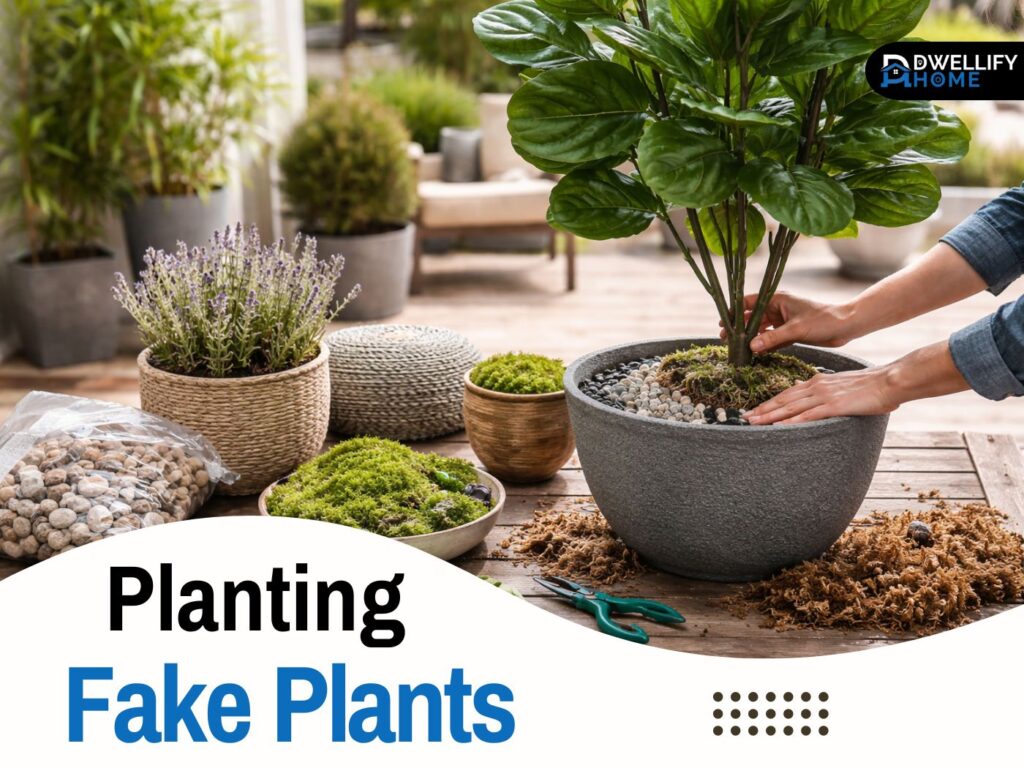
Best Method: Planting Fake Plants in Pots (Indoor & Outdoor)
This is the method I use most often because it looks realistic and it’s easy to maintain. It also lets you swap stems seasonally without rebuilding the entire planter.
Step 1 — Prepare the container (size, weight, and drainage)
Start with the pot. A lightweight pot can look nice, but outdoors it needs extra weight or it’ll tip. I usually choose a container with a wider base, especially for tall stems or faux trees.
For outdoor planters, you also want drainage. Even though you’re not watering, rainwater can collect. Standing water is what makes top dressing look gross and can cause odors.
What to fill fake plant pots with outdoor for weight depends on what you have:
- Gravel or small rocks for steady weight
- Sand for compact, heavy fill
- A couple of bricks at the bottom for tall planters
- A mix of rocks and sand for a really stable base
In indoor pots, you can keep it lighter. A bit of gravel at the bottom is usually enough so the pot doesn’t feel flimsy when you bump it.
Step 2 — Build a secure anchor (so the plant doesn’t wobble)
This is the part that makes everything feel “installed.”
A simple anchor can be:
- Floral foam blocks
- A chicken wire ball tucked inside the pot
- A combination of foam and filler
Floral foam is great for stems and arrangements because it grabs and holds. Chicken wire is my favorite for windier outdoor pots because you can weave stems through it and use zip ties if needed.
If you’re working with a faux plant that has a plastic base or nursery pot, you can still anchor it. Place the plant, then pack around it with foam or wire so it can’t shift.
Step 3 — Insert stems and “shape” them to look grown
This is where your arrangement goes from stiff to believable. Most faux stems arrive straight, so they look like they were placed five seconds ago. Take a minute to bend them gently.
A few styling moves I use constantly:
- Make the center slightly taller than the edges
- Angle some stems outward, not all straight up
- Create small gaps, real growth isn’t packed evenly
- Mix heights, even if the stems are the same type
If it’s a faux shrub with multiple branches, twist and separate them. Let it look a little imperfect. That’s what sells it.
Step 4 — Add a natural top layer (the realism step people skip)
Top dressing is the secret. It hides foam, wire, and plastic while creating the illusion of real soil depth.
Good top options include:
- Preserved moss for a soft, natural finish
- Bark chips for a realistic outdoor planter look
- Decorative stones for a clean modern style
- A thin layer of soil-look material, then moss or bark on top
One pro tip: build a slight mound toward the center, like real pots often have. Flat, perfectly level surfaces can look staged.
How to Secure Artificial Plants in Pots Outdoors (Wind-Proof Setups)
If you’ve ever watched a planter topple over during a gust, you already know why this matters. The fix is usually simple, it’s just not one-size-fits-all.
For windy patios or front steps, I combine weight, anchoring, and discreet attachment. The goal is a setup that doesn’t shift when you nudge it and doesn’t spin in the wind.
Quick stability options (choose what fits your pot)
Here are reliable ways to handle how to secure artificial plants in pots outdoors:
- Use zip ties to attach stems to a chicken wire ball
- Run ties or wire through drainage holes to lock the base in place
- Add more base weight, then anchor stems into foam above it
- For large pieces, use a sturdy inner pot and pack around it tightly
If your planter is tall and narrow, add weight lower than you think you need. A top-heavy arrangement is what causes tipping.
Tall planters and large faux trees (extra support)
Tall planters look elegant, but they’re the most likely to wobble. For faux trees, I like an inner support plan:
- Place the tree in its nursery pot inside the decorative planter
- Pack the space around it with foam or tightly crumpled wire
- Add heavy fill at the bottom if it’s outdoors
- Finish with moss or bark so it looks clean
This keeps the trunk stable and stops that annoying sway when someone walks past.
Planting Fake Plants in Soil / In the Ground (Use Carefully)
Yes, planting fake plants in the ground can be done, but I treat it as a special-case option. It’s most useful for temporary staging, photo-ready corners, or spaces where you want greenery without irrigation.
If you do it, you want stability and a clean base that doesn’t look like plastic sticking out of dirt.
When it can work
I’ve seen it work well in:
- Decorative corners near fences or walls
- Areas meant for seasonal setups
- Commercial displays where upkeep is limited
In these cases, the realism comes from choosing a piece designed for outdoor use and blending the base with natural materials.
Safer alternatives that look better
A better approach is often a buried pot method. You place the faux plant in a pot, then sink the pot into the ground so the soil line looks natural. It’s easier to remove and it avoids loose stems shifting in dirt.
This is also my preferred option if you’re unsure. It’s more controlled and usually more convincing.
Ground-install basics (simple, realistic, and secure)
If you’re set on planting fake plants in soil directly, keep it practical:
- Dig a hole slightly wider than the base
- Add a layer of stones or sand for stability
- Position the plant and pack firmly around it
- Cover the base with bark, mulch, or moss to hide any edges
Avoid low spots where water pools. Even outdoor-rated materials don’t love sitting in soggy ground for weeks.
Planting Fake Plants Indoors (Clean, Quick, and Realistic)
Indoor faux greenery is where you can really make things look high-end with small details. I often use indoor planters to soften corners, add height near furniture, and bring balance to shelves.
If the space is modern, I usually go with simple pots and clean stones. If the space is cozy or traditional, moss and bark look more natural.
Simple indoor potting method
For planting fake plants in pots indoors, you can keep it lightweight:
- A little gravel at the bottom for heft
- Floral foam to hold stems in place
- A top layer of moss or stones to finish
If it’s a faux plant that comes in a plastic nursery pot, you can drop it inside a nicer container and pack the sides so it sits centered and stable.
Make faux plants look real (small edits, big difference)
A few quick fixes that make a big difference indoors:
- Bend stems slightly so they don’t look factory-straight
- Dust leaves regularly, dust makes faux look fake fast
- If leaves are too shiny, wipe gently with a damp cloth to reduce glare
- Mix textures around the plant, like books, ceramics, or baskets
A plant rarely looks realistic if it’s the only “natural” thing in the corner. Pair it with warm materials and it blends better.
Outdoor Care: Stop Fading, Cracking, and “Plastic-Looking” Color
Outdoor fake plants take more abuse than indoor ones. Sun fades color, dust collects, and wind shifts stems. If you take a few preventive steps, they’ll look better for longer.
UV protection for outdoor fake plants
If your plants are in full sun, a clear UV-resistant spray can help slow fading. I treat it like a seasonal task, especially on porches with strong afternoon sun.
Make sure the plant is clean and dry before spraying. A quick rinse and a day of drying prevents sealing in grime.
Weather prep that actually helps
Even outdoor-rated pieces benefit from smart placement:
- Put the most realistic greenery in the most visible spots
- Use slightly hardier pieces in exposed corners
- During storms, move lightweight pots under cover when possible
If you rotate planters seasonally, store them out of direct sun. That alone can add a lot of life to the color.
Cleaning routine (fast and gentle)
A simple routine works best:
- Rinse gently with water
- Use mild soap if there’s grime
- Let it dry fully before putting it back in place
Avoid harsh cleaners. They can dull the finish and make leaves look chalky.
Styling & Placement Ideas (So It Looks Intentional, Not Fake)
This is where your setup starts to feel like it belongs in the space. Faux plants look best when they support the room, not when they scream for attention.
For outdoor areas, I like placing planters where the eye naturally lands, like near the front door, at the edge of a patio, or framing steps.
Easy styling rules
These are simple, but they work:
- Use odd numbers for grouped pots, like 3 or 5
- Mix heights so everything isn’t the same level
- Combine different leaf shapes for a layered look
- Leave a little breathing room, overcrowding looks artificial
If you’re styling shelves or indoor corners, add one real element nearby, like a wooden tray or a natural fiber basket. It helps the faux greenery feel grounded.
Common mistakes that ruin the look
I see these all the time, even in expensive homes:
- Skipping top dressing so foam and plastic show
- Using a pot that’s too small for the plant height
- Leaving stems perfectly straight and symmetrical
- Choosing glossy leaves that catch light like plastic
- Using only one texture, it reads flat and fake
The fix is usually quick. A better pot, a little moss, and a few bends in the stems can completely change the result.
Quick Troubleshooting (Fast Fixes for Common Problems)
If your arrangement is close but not quite right, try these:
- Wobbling stems: push deeper into foam or add wire support inside
- Pot tipping: add more weight low in the base and widen the footprint
- Looks fake up close: add moss or bark and reduce shine on leaves
- Fading color: move out of harsh sun and use UV spray
- Water collecting: ensure drainage and avoid sealing the pot base completely
Most issues come from the foundation, not the plant itself. Stabilize first, then refine the surface.
FAQs
1) How do you plant fake plants?
Set the pot up like a real planter: add weight at the bottom, anchor stems into floral foam or chicken wire, then cover everything with moss, bark, stones, or a soil-look top layer.
2) What to fill a fake planter with?
For outdoor stability, use gravel, sand, rocks, or bricks. Indoors, a small layer of gravel plus floral foam is usually enough to keep it steady and clean-looking.
3) What is the problem with fake plants?
The biggest issues are looking too shiny, wobbling in the pot, and fading outdoors. Most of these are fixable with better anchoring, a natural top dressing, regular dusting, and UV protection for outdoor pieces.
4) What do you put in the bottom of a plastic planter?
Add weight first: gravel, sand, or rocks. If it’s outdoors, keep drainage clear so rainwater can escape. Then place foam or wire above the weight to hold the plant in position.
5) How do you keep outdoor fake plants from blowing over?
Use a wider, heavier pot, add weight low in the base, and anchor the stems with chicken wire and zip ties. If possible, tie through drainage holes for extra hold.
Conclusion
A realistic faux plant setup isn’t about doing something complicated. It’s about doing the simple steps well: a stable base, a secure anchor, and a top layer that hides anything artificial.
Once you get those right, the styling becomes fun. You can adjust height, mix textures, and place greenery where it actually helps the space feel calmer and more finished. And if you’re putting pieces outside, treat them like outdoor decor: choose durable materials, protect them from constant harsh sun, and clean them occasionally so they keep their color and texture.
If you remember one thing, make it this: the potting and the finish matter just as much as the plant. That’s what makes the whole look feel natural, balanced, and truly lived-in.
Disclaimer:
This guide shares general décor and installation tips for faux plants. Always follow product labels for outdoor use, UV protection, and materials, and use caution with tools, adhesives, and heavy planters, especially around kids and pets.

I’m Bilal Hassan, the founder of Dwellify Home. With 6 years of practical experience in home remodeling, interior design, and décor consulting, I help people transform their spaces with simple, effective, and affordable ideas. I specialize in offering real-world tips, step-by-step guides, and product recommendations that make home improvement easier and more enjoyable. My mission is to empower homeowners and renters to create functional, beautiful spaces—one thoughtful update at a time.