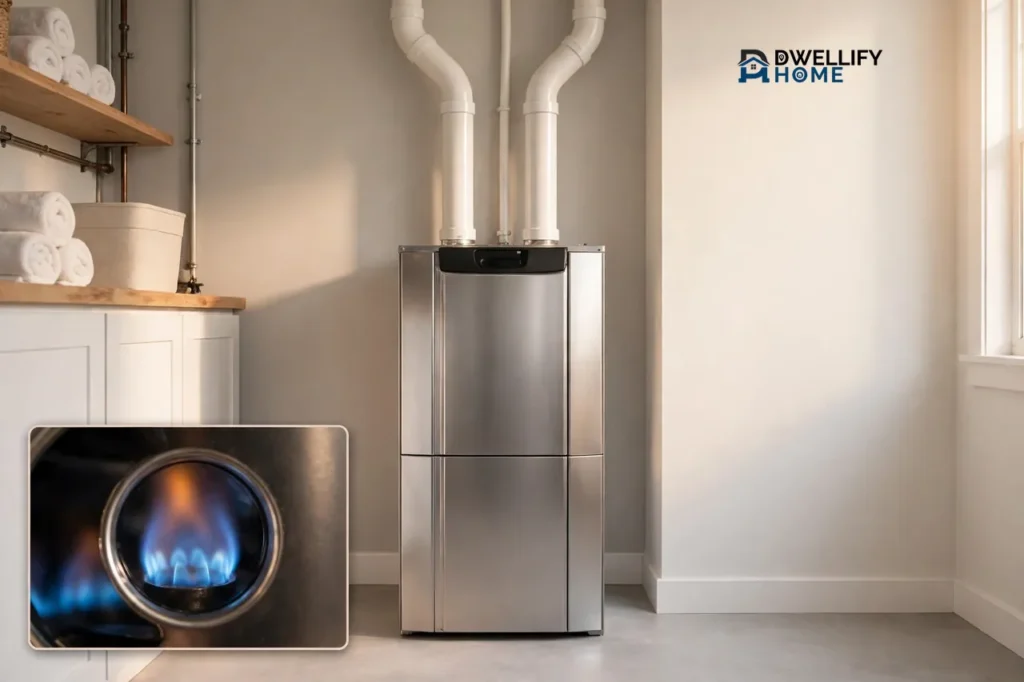
Gas furnace replacement cost usually runs $3,800 to $10,000 installed, and most homeowners pay about $7,000 for a 1,600- to 2,000-square-foot home, according to Angi’s 2026 cost data checked on 5 November 2026. HomeGuide puts the same job at $3,800 to $12,000 installed, with high-efficiency models at the top of that range. Your final price depends on the size of your home, the efficiency of the furnace, and how much extra work your house needs.
This guide gives you the full picture. You will see the cost by furnace size and efficiency, what the equipment costs apart from labor, which extras push the bill up, and how to tell whether you should repair or replace. Every price below comes from a named source and carries its check date, so you can budget with real numbers instead of guesses.
How Much Does a Gas Furnace Replacement Cost?
The short answer is $3,800 to $10,000 installed for a typical gas furnace replacement. Angi reports a national average of $7,000 for a 1,600- to 2,000-square-foot house in 2026, checked on 5 November 2026. HomeGuide gives a wider range of $3,800 to $12,000 installed for gas furnaces, checked the same day.
Why do the two guides differ at the top end? Angi’s range covers the most common replacements, while HomeGuide’s range stretches to large, high-efficiency systems in bigger homes. Both agree on the starting point, and both agree that a high-efficiency model can reach $12,000. For a broader view, HomeAdvisor reports that furnace replacement across all fuel types averages $4,814, with most jobs landing between $2,823 and $6,897, updated 17 June 2026 and checked on 5 November 2026. Gas systems sit above that all-fuel average because the equipment and venting cost more.
Table: Gas furnace replacement cost at a glance, 2026
| Cost item | Typical range | Source |
|---|---|---|
| Total installed cost | $3,800–$10,000 | Angi, updated 29 Oct 2026 |
| Total installed cost, wider range | $3,800–$12,000 | HomeGuide, updated 31 Dec 2025 |
| National average, 1,600–2,000 sq ft home | About $7,000 | Angi, updated 29 Oct 2026 |
| Furnace unit alone | $700–$6,500 | HomeGuide, updated 31 Dec 2025 |
| High-efficiency models, installed | Up to $12,000 | Angi, updated 29 Oct 2026 |
All prices on this page were checked on 5 November 2026. They are national planning ranges, not quotes. Your local price will vary with labor rates, your climate, and the condition of your ducts and venting.
What the Total Covers: Equipment vs. Labor vs. Extras
A furnace quote has three parts, and you should ask every contractor to break them out. The equipment is the furnace itself. Labor covers removing the old unit, setting the new one, and connecting gas, venting, and wiring. Extras cover permits, ductwork, a new gas line, or a new thermostat.
Angi reports that the furnace unit makes up 50% to 75% of the total project cost, checked on 5 November 2026. HomeGuide puts equipment and materials at $2,000 to $4,000 or more for a standard installation, with installation labor at $1,500 to $3,500 or more, checked the same day. Angi reports lower labor figures of $500 to $2,000, at $50 to $100 per hour for a licensed installer. The two guides measure labor differently, and real labor costs vary a lot by city, so treat the combined range as roughly $500 to $3,500 for labor on a standard job.
Table: What makes up your gas furnace replacement cost
| Cost part | Typical range | Notes |
|---|---|---|
| Furnace unit alone | $700–$6,500 | Depends on size, efficiency, and brand |
| Installation labor | $500–$3,500 | Angi and HomeGuide ranges combined |
| Old furnace removal | $60–$500 | Some quotes include it; ask |
| Permits and inspection | $50–$1,500 | Varies widely by town |
| New ductwork, if needed | $1,500–$7,000 | Most homes reuse existing ducts |
| New gas line, if needed | $250–$800 | Only for first-time gas installs |
Most replacements reuse the existing ductwork, gas line, and venting, so most homeowners pay only the first three lines of that table. The big jumps in price come when ducts, venting, or gas lines need work too.
Gas Furnace Cost by Efficiency (AFUE)
AFUE stands for Annual Fuel Utilization Efficiency. It tells you how much of the gas a furnace turns into heat for your home. An 80% AFUE furnace turns 80 out of every 100 units of gas into heat and loses the other 20 up the flue. A 96% AFUE furnace loses only 4. The U.S. Department of Energy requires manufacturers to show the AFUE rating on every furnace, so you can compare models side by side.
Efficiency is the single biggest driver of equipment price. HomeGuide’s 2026 figures, checked on 5 November 2026, show the pattern clearly. A standard 80% to 89% AFUE furnace costs $700 to $1,800 for the unit alone, or $3,800 to $6,200 installed. A moderate 90% to 95% AFUE furnace costs $1,500 to $3,700 for the unit, or $5,200 to $8,800 installed. A high-efficiency 96% AFUE or better furnace costs $2,800 to $6,200 for the unit, or $7,500 to $12,000 installed.
Table: Gas furnace cost by AFUE efficiency rating
| Efficiency rating | Unit alone | Installed |
|---|---|---|
| Standard, 80%–89% AFUE | $700–$1,800 | $3,800–$6,200 |
| Moderate, 90%–95% AFUE | $1,500–$3,700 | $5,200–$8,800 |
| High, 96% AFUE or more | $2,800–$6,200 | $7,500–$12,000 |
Source: HomeGuide gas furnace cost guide, updated 31 December 2025, checked 5 November 2026. Installed costs exclude ductwork changes.
Does the extra money pay off? A high-efficiency furnace can cut heating costs by 15% or more compared with a standard model, according to HomeGuide. The payoff is biggest in cold climates where the furnace runs for months, and in homes with high gas prices. In a mild climate where you heat only a few weeks a year, a standard 80% AFUE furnace often makes more financial sense, because you will not run it enough hours to recover the premium.
One rule change sits on the horizon. The U.S. Department of Energy set a 95% AFUE minimum for new non-weatherized gas furnaces manufactured on or after 18 December 2028. That rule has faced legal and political challenges, so check its current status before you rely on it. For now, the federal minimum for a new gas furnace is 80% AFUE.
Gas Furnace Cost by Size (BTU and Home Size)
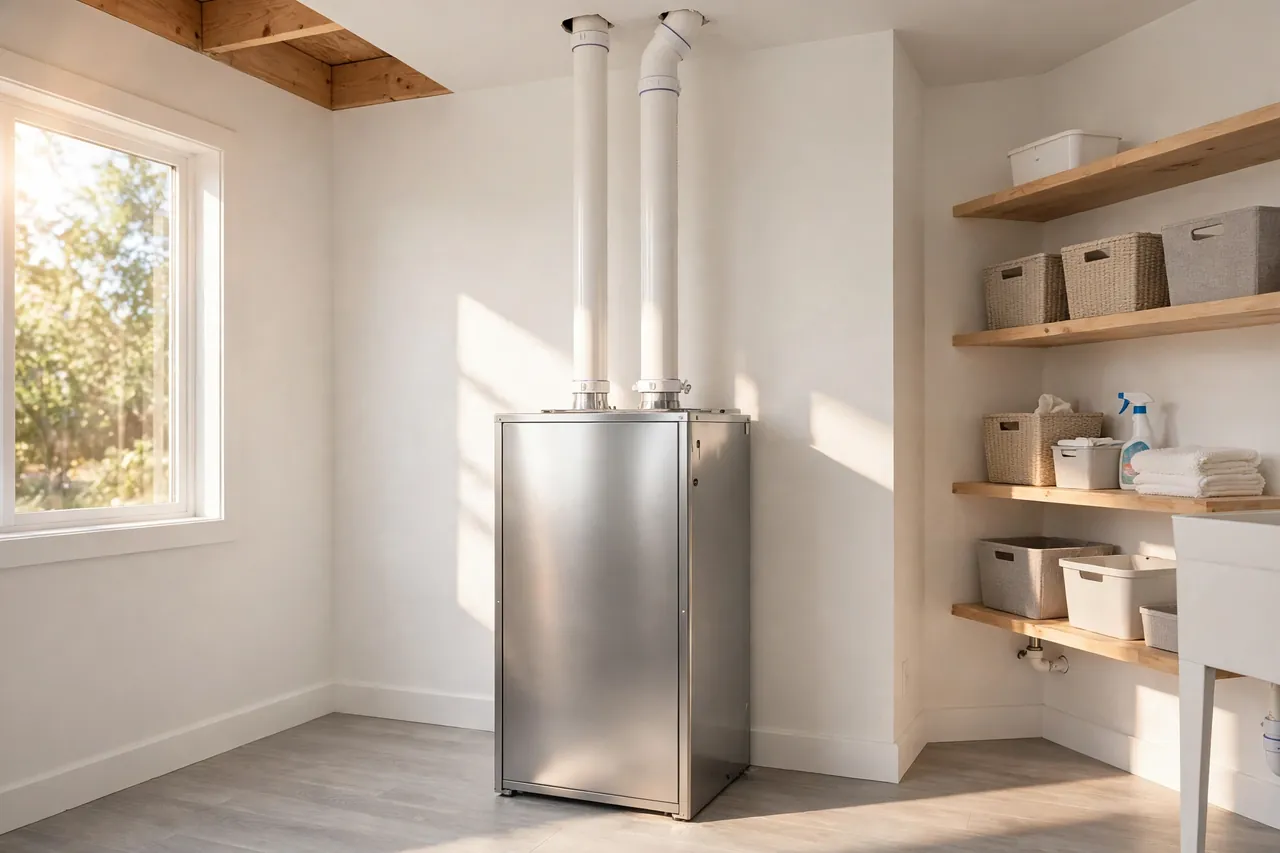
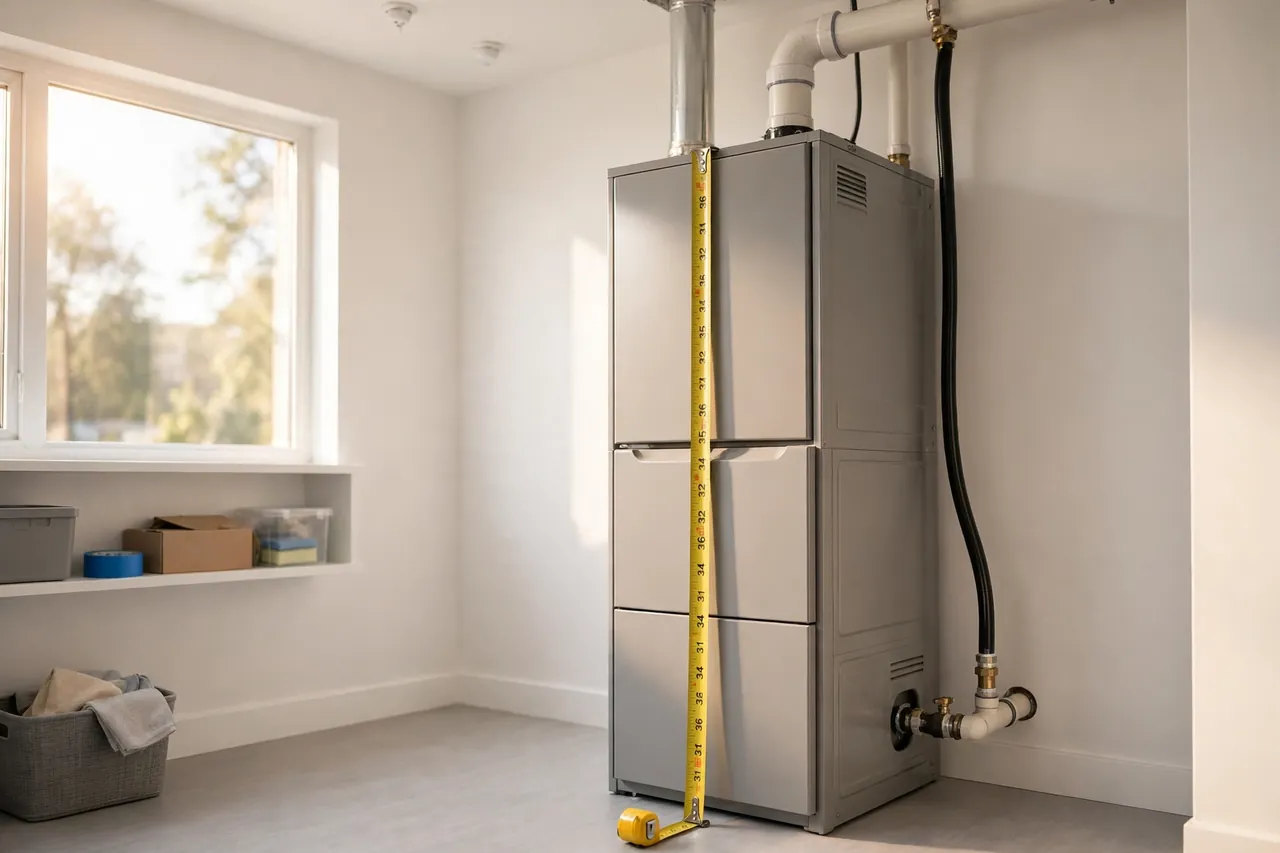
Furnace size is measured in BTUs, or British thermal units. A BTU is a unit of heat, and a bigger home in a colder climate needs more BTUs. A common rule of thumb is 30 to 60 BTUs per square foot, with warm climates at the low end and cold climates at the high end. A licensed contractor should run a proper load calculation that also weighs insulation, ceiling height, and windows, because square footage alone can mislead you.
Angi’s 2026 size figures, checked on 5 November 2026, show how cost climbs with capacity. A 40,000 BTU furnace runs $2,000 to $3,500 and suits a home up to 1,300 square feet. A 60,000 BTU model runs $2,500 to $4,200 for a 1,500- to 1,800-square-foot home. An 80,000 BTU model runs $3,000 to $4,900 for a 2,500- to 2,800-square-foot home. In a cold state, the same 2,000-square-foot home may need 120,000 BTUs at $4,000 to $6,000, while a warm-climate home of the same size may need only 60,000 BTUs.
HomeGuide’s installed costs by home size, checked on 5 November 2026, tell the same story from the other side. A home up to 1,200 square feet costs $3,800 to $6,700 installed. A 1,600- to 2,000-square-foot home costs $4,700 to $8,000 installed. A 2,000- to 2,500-square-foot home costs $5,100 to $9,500 installed. A home of 2,500 to 3,000 square feet or more costs $5,800 to $12,000 installed.
Table: Gas furnace replacement cost by home size, installed
| Home size | Furnace size | Installed cost |
|---|---|---|
| Up to 1,200 sq ft | 40,000–50,000 BTU | $3,800–$6,700 |
| 1,200–1,600 sq ft | 50,000–60,000 BTU | $4,200–$7,200 |
| 1,600–2,000 sq ft | 60,000–70,000 BTU | $4,700–$8,000 |
| 2,000–2,500 sq ft | 70,000–90,000 BTU | $5,100–$9,500 |
| 2,500–3,000+ sq ft | 90,000–120,000 BTU | $5,800–$12,000 |
Source: HomeGuide gas furnace cost guide, updated 31 December 2025, checked 5 November 2026. Installed costs exclude ductwork changes.
Do not buy a bigger furnace than you need. An oversized furnace costs more to buy, cycles on and off too often, wears out faster, and leaves rooms unevenly heated. An undersized furnace runs nonstop and still leaves you cold. The right size is the one your contractor calculates for your house, not the one your neighbor bought. If you are still deciding between a furnace, a heat pump, or another setup, our guide to how to choose a heating and air conditioning system compares the options for your home.
Single-Stage vs. Two-Stage vs. Modulating Furnaces
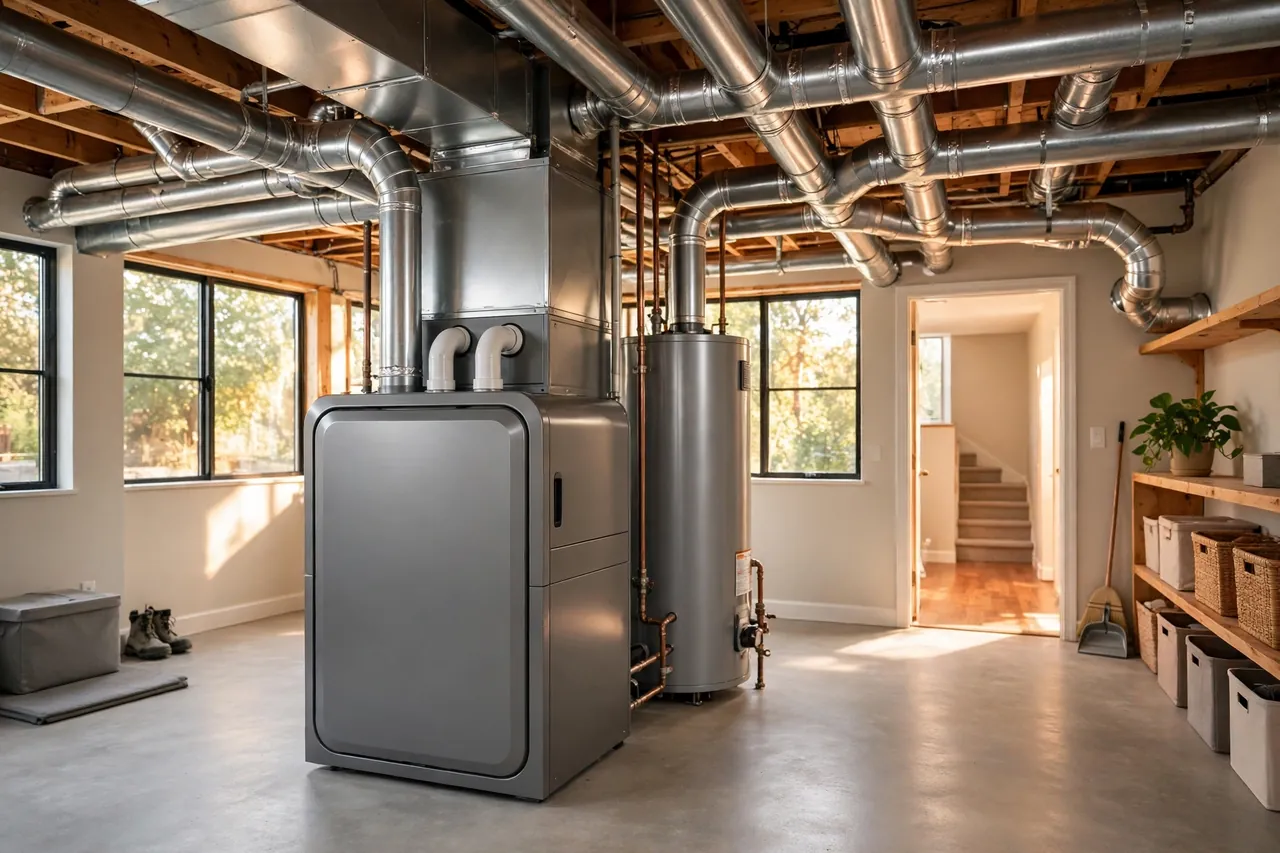
Most gas furnaces heat your home through a forced-air system, and they differ in how they deliver that heat, which affects both price and comfort. A single-stage furnace has one speed: full blast or off. It costs the least, but it can leave rooms swinging between warm and chilly. A two-stage furnace runs on low most of the time and shifts to high only on the coldest days, so temperatures stay steadier and the furnace runs quieter. A modulating furnace adjusts its output in tiny steps to hold an exact temperature, which gives the best comfort and the best efficiency.
Angi’s 2026 unit prices, checked on 5 November 2026, show the gap. A single-stage furnace costs $700 to $3,000 for the unit. A two-stage furnace costs $1,000 to $3,500. A modulating furnace costs $1,300 to $6,500. Those are equipment-only prices; installation adds to each one.
Table: Single-stage vs. two-stage vs. modulating gas furnaces
| Furnace type | How it heats | Unit cost | Best for |
|---|---|---|---|
| Single-stage | Full power or off | $700–$3,000 | Mild climates, tight budgets |
| Two-stage | Low and high settings | $1,000–$3,500 | Steadier heat, moderate climates |
| Modulating | Adjusts in tiny steps | $1,300–$6,500 | Best comfort, cold climates |
Source: Angi gas furnace cost guide, updated 29 October 2026, checked 5 November 2026.
Which one should you pick? For a mild climate or a rental property, a single-stage furnace does the job at the lowest price. For most family homes, a two-stage furnace hits the sweet spot: noticeably steadier heat for a modest premium. A modulating furnace earns its price in cold climates and in homes where someone is home all day and notices every draft. Pair any of them with a good thermostat, because the controls matter as much as the burner.
What Drives the Price Up or Down
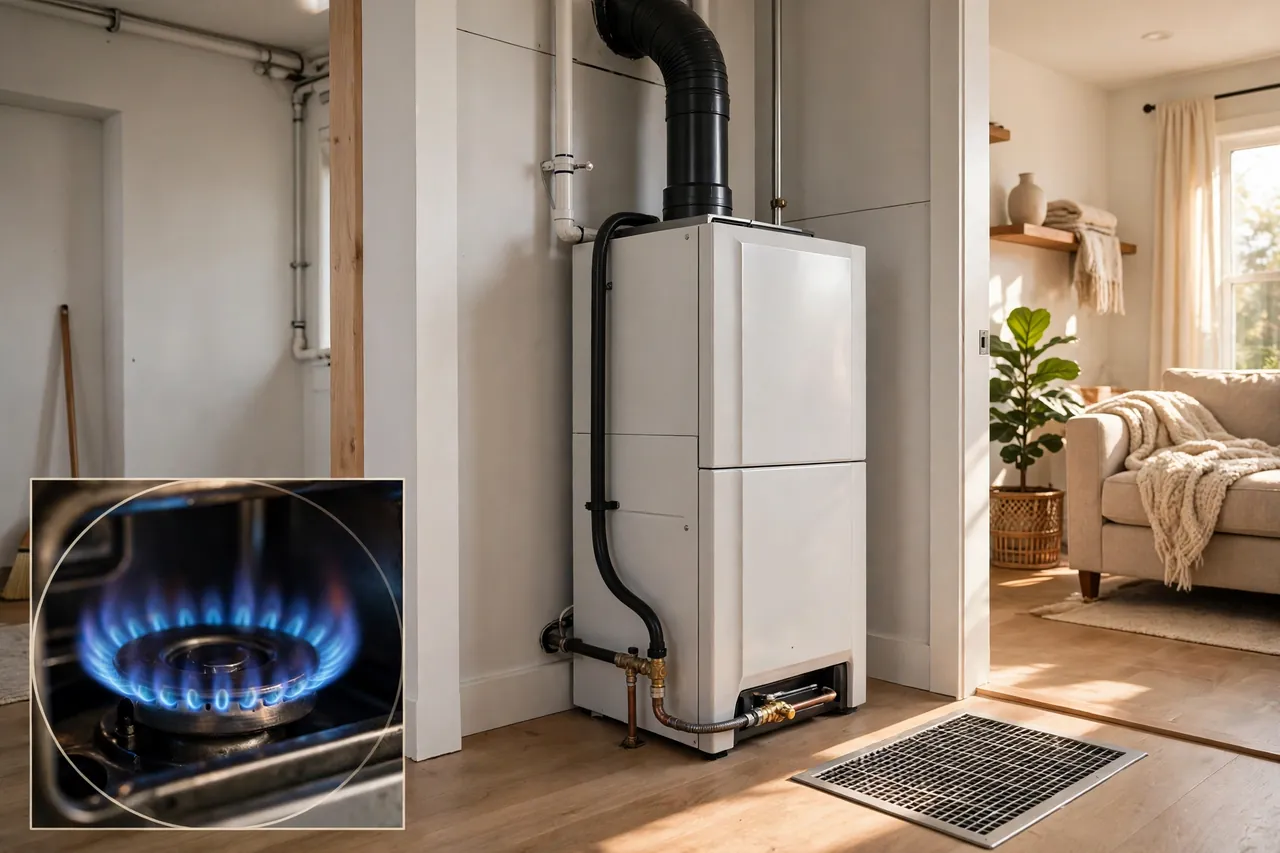
Two neighbors can buy the same furnace and pay very different totals. These are the factors that move the number, and knowing them helps you read a quote line by line.
Ductwork
Most replacements reuse the existing ducts, and that keeps the bill down. When ducts leak, they can waste a large share of your heat, so a contractor may suggest sealing or repairs. HomeGuide puts minor duct sealing and repairs at $300 to $1,500, checked on 5 November 2026. Full ductwork replacement costs $1,400 to $5,600 or more according to HomeGuide, and $1,500 to $7,000 according to Angi. Angi puts minor duct adjustments at around $1,000. If your ducts run through a cold attic or crawl space, ask whether sealing them is a better spend than a fancier furnace.
Permits and inspections
Many towns require a building permit and an inspection before a new gas furnace can run. Angi reports permits at $400 to $1,500, usually including the inspection, checked on 5 November 2026. HomeGuide reports local permits at $50 to $300, checked the same day. The wide gap reflects real differences between towns, so ask your contractor for your town’s actual fee instead of budgeting from a national average. An inspection protects you: it confirms the gas and venting were installed safely.
Removal of the old furnace
Removing and disposing of the old unit costs $60 to $500, according to Angi, checked on 5 November 2026. HomeGuide puts removal and disposal at $50 to $200 or more in its new-furnace guide, and $150 to $400 in its gas-furnace guide. Some quotes include removal and some do not, so check the line item before you compare bids.
Gas line and venting
If you already have a gas furnace, the gas line is in place and costs you nothing extra. A first-time gas install needs a new line, which Angi prices at $250 to $800, checked on 5 November 2026. HomeGuide puts gas line installation at $350 to $2,000 or more. High-efficiency condensing furnaces also need PVC venting and a condensate drain, which adds cost in a home built for an older chimney-vented unit.
Brand
Premium brands cost more, and they often bring longer warranties and quieter operation. HomeGuide’s installed costs by brand, checked on 5 November 2026, run from $2,100 to $6,300 for Goodman, $2,500 to $7,800 for Rheem or Ruud, $2,400 to $8,000 for Carrier, $3,000 to $9,500 for Lennox, and $5,200 to $13,500 for Trane. Brand matters less than the installer, though. A mid-range furnace installed well will outlast a premium furnace installed badly.
Region and climate
Labor rates drive much of the regional gap. Big cities and high-cost states charge more per hour, and cold climates need bigger, higher-efficiency units. Angi notes that a 2,000-square-foot home in a warm state may need only 60,000 BTUs at $2,500 to $4,200, while the same home in a cold state may need 120,000 BTUs at $4,000 to $6,000, checked on 5 November 2026. Get quotes from local contractors, because a national average cannot capture your market.
Switching fuel types
Converting from another fuel to gas adds real money. Angi’s 2026 conversion figures, checked on 5 November 2026, are $100 to $1,950 for propane to gas, $120 to $9,850 for electric to gas, and $500 to $6,540 for oil to gas. HomeGuide reports higher figures for the same conversions, up to $12,000 or more for oil to gas, so treat these as wide planning ranges and get a site-specific quote before you commit.
Repair or Replace? How to Decide
A furnace repair is cheap compared with a replacement. HomeGuide reports gas furnace repairs at $100 to $480 on average, checked on 5 November 2026, and an annual tune-up at $70 to $200. Modernize puts the average repair at around $325. So when does a repair stop making sense?
Use two simple rules. First, the age rule: a gas furnace lasts 15 to 25 years with regular maintenance, according to HomeGuide, and 15 to 20 years according to Angi. Past 15, start planning and saving, because breakdowns get more frequent and parts get harder to find. Second, the cost rule: if a repair costs more than half the price of a new furnace, replacement usually wins. Modernize states the same idea as the $5,000 rule: multiply the repair cost by the age of the furnace, and if the result tops $5,000, replace it. A $400 repair on a 16-year-old furnace gives $6,400, so replacement is the better call.
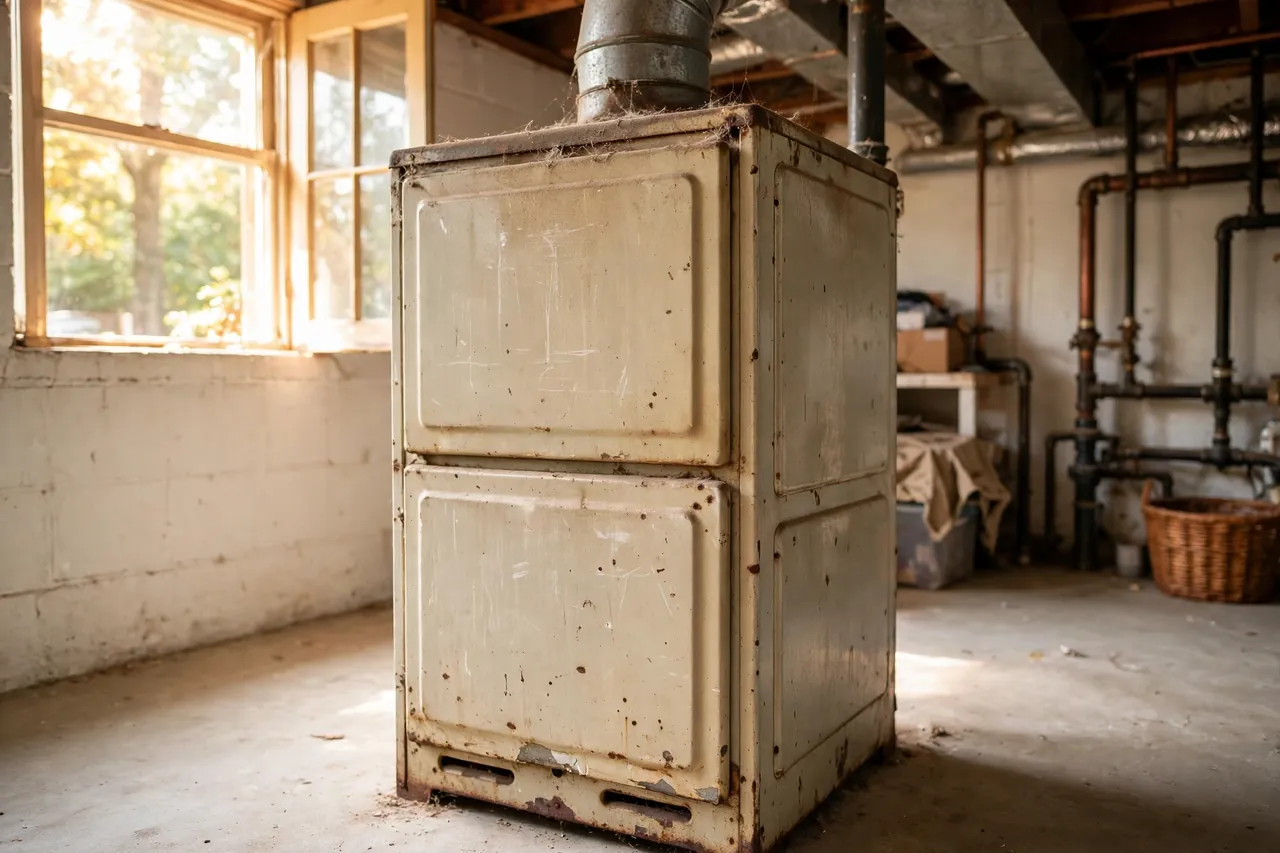
One problem overrides all the math: a cracked heat exchanger. The heat exchanger keeps combustion gases out of your home’s air, and a crack can leak carbon monoxide into the house. That almost always means replacement, whatever the age of the furnace. Other strong signs include rising gas bills, rooms that heat unevenly, frequent cycling, loud banging or rattling, a yellow burner flame instead of blue, and rust or cracks on the unit.
If you want the full comparison, the repair-vs.-replacement decision comes down to age, repair cost, and comfort, as this guide covers above. And if your furnace keeps dying on the worst night of the year, read why your furnace quits on the coldest night of the year to see the common failure points.
Rebates and Tax Credits in 2026: What Is Actually Left
Here is the change most cost guides have not caught up with yet. The federal Energy Efficient Home Improvement Credit, known as Section 25C, ended for equipment placed in service after 31 December 2025. The One Big Beautiful Bill Act, Public Law 119-21, moved the end date up from 2032. For a furnace installed in 2026, there is no federal tax credit to claim.
Through 2025, the credit covered 30% of the cost of a qualifying furnace, capped at $600, for natural gas furnaces rated at 97% AFUE or higher with ENERGY STAR certification. If your qualifying furnace was installed and running by 31 December 2025, you can still claim it on your 2025 tax return with IRS Form 5695. A furnace bought in 2025 but installed in 2026 does not qualify, because the IRS uses the date the equipment was placed in service.
That leaves two live sources of savings. First, utility rebates: many gas utilities offer rebates for high-efficiency furnaces, often $550 to $2,500 for 95% AFUE or better models, though amounts vary by utility. Ask your gas company what it offers before you sign a contract. Second, manufacturer rebates: brands run seasonal promotions, and the best deals often appear in spring and fall, between the heating and cooling peaks. Your contractor should know both, and you should ask them to put any rebate in writing.
How to Get a Fair Quote
Three itemized quotes beat one friendly estimate every time. Follow these steps and you will spot the padded bid fast.
- Ask at least three licensed, insured HVAC contractors for written, itemized quotes. Each quote should list the furnace model, AFUE rating, labor, permits, removal, and any ductwork or venting separately.
- Ask for a proper load calculation, often called a Manual J. A contractor who sizes your furnace from square footage alone is guessing.
- Compare the same equipment. Ask for model numbers and AFUE ratings on every bid, so you compare like with like instead of comparing a budget unit with a premium one.
- Check what the warranty covers. Most new gas furnaces carry a 10-year limited warranty on parts and a 20-year warranty on the heat exchanger, according to Angi, checked on 5 November 2026. Ask whether the installer registers the warranty for you.
- Ask how long the job takes. A standard replacement takes 4 to 8 hours with a professional team, according to HomeGuide, checked on 5 November 2026. Complex jobs with ductwork or fuel changes can take 1 to 2 days.
- Time it well. Spring and early fall usually bring faster scheduling and sometimes better pricing than a midwinter emergency call.
- Watch for red flags. A quote with no model number, no permit line, or a demand for full payment up front deserves a second opinion.
A big bill is easier to handle when you plan for it. If the timing is tight, our guide on when a home repair can’t wait and how to manage the cost covers ways to handle an urgent replacement without panic. For the full buying process, from vetting installers to rebates and warranties, see our guide to how to buy a new HVAC system. And if your air conditioner is nearly as old as your furnace, replacing both at once can cost less than two separate jobs, so ask your contractor to price the pair together.
Quick-Reference Cost Guide
Use this table as the one place to check any number in this guide. Every figure comes from a named source and was checked on 5 November 2026.
Table: Verified gas furnace replacement costs, checked 5 November 2026
| Item | Verified range | Source and date |
|---|---|---|
| Total installed, typical | $3,800–$10,000 | Angi, updated 29 Oct 2026 |
| Total installed, wide range | $3,800–$12,000 | HomeGuide, updated 31 Dec 2025 |
| Average, 1,600–2,000 sq ft | About $7,000 | Angi, updated 29 Oct 2026 |
| Unit alone, standard 80%–89% AFUE | $700–$1,800 | HomeGuide, updated 31 Dec 2025 |
| Unit alone, high 96%+ AFUE | $2,800–$6,200 | HomeGuide, updated 31 Dec 2025 |
| Installed, high 96%+ AFUE | $7,500–$12,000 | HomeGuide, updated 31 Dec 2025 |
| Single-stage unit | $700–$3,000 | Angi, updated 29 Oct 2026 |
| Two-stage unit | $1,000–$3,500 | Angi, updated 29 Oct 2026 |
| Modulating unit | $1,300–$6,500 | Angi, updated 29 Oct 2026 |
| Labor | $500–$3,500 | Angi and HomeGuide combined |
| Old furnace removal | $60–$500 | Angi, updated 29 Oct 2026 |
| Permits and inspection | $50–$1,500 | Angi and HomeGuide combined |
| New ductwork | $1,500–$7,000 | Angi, updated 29 Oct 2026 |
| New gas line | $250–$800 | Angi, updated 29 Oct 2026 |
| Gas furnace repair, average | $100–$480 | HomeGuide, updated 31 Dec 2025 |
| Annual tune-up | $70–$200 | HomeGuide, updated 31 Dec 2025 |
| Gas furnace lifespan | 15–25 years | HomeGuide, updated 31 Dec 2025 |
When two trusted guides disagree, this guide shows both numbers and says so, because a single “average” would hide the real spread. Your three local quotes are the final word on your price.
Stay Safe: Gas Work Is Not a DIY Job
A gas furnace connects to a gas line, a venting system, and your home’s wiring. A bad gas connection can leak, a bad vent can send carbon monoxide into your home, and a bad wire can start a fire. Hire a licensed HVAC professional for the installation, the gas connections, and the venting, and make sure the job gets its permit and inspection. Clear the area around the furnace before the crew arrives, and keep the manual and warranty papers where you can find them. Prices in this guide are national planning ranges checked on 5 November 2026, and your local quotes may differ.
Related Guides
How to Buy a New HVAC System: A Step-by-Step Guide to Getting It Right · How to Choose a Heating and Air Conditioning System · What Is Forced Air Heating? How It Works, Pros and Cons
- Why Your Furnace Quits on the Coldest Night of the Year — the failures that strand homeowners midwinter.
- When a Home Repair Can’t Wait: How to Manage the Cost — handling an urgent replacement without panic.
Frequently Asked Questions
How long does a gas furnace last?
A gas furnace lasts 15 to 25 years with regular maintenance, according to HomeGuide, checked on 5 November 2026. Angi puts the range at 15 to 20 years. Yearly tune-ups, clean filters, and prompt repairs help it reach the top of that range, while neglect and oversizing shorten its life.
How long does it take to replace a furnace?
A standard furnace replacement takes 4 to 8 hours with a professional installation team, according to HomeGuide, checked on 5 November 2026. Complex jobs that involve fuel changes, major ductwork, or tight access can take 1 to 2 full days. Spring or early fall scheduling is usually fastest.
Does a heat pump replace a furnace?
A heat pump can replace a furnace in many homes, especially in moderate climates, according to HomeGuide, checked on 5 November 2026. It heats and cools in one system. In very cold regions, heat pumps lose efficiency below about 30°F, so many homeowners choose a dual-fuel system with a gas furnace as backup.
How does a gas furnace work?
A gas furnace draws in cold air, warms it by burning gas in a heat exchanger, then sends the heated air through your ductwork, according to HomeGuide, checked on 5 November 2026. The combustion gases vent outdoors while the warm air circulates through your home.
Does a gas furnace use electricity?
Yes, a gas furnace needs electricity to run the blower, the controls, and the electronic ignition, according to HomeGuide, checked on 5 November 2026. It will not heat your home during a power outage, even though the heat itself comes from natural gas.
Is my furnace gas or electric?
Look for a gas line connection and an exhaust vent on or near your furnace, according to HomeGuide, checked on 5 November 2026. Gas furnaces have burners and a flue, while electric models have no gas line and only need a large electrical supply. If you still cannot tell, check the label on the unit.
Now you know the real numbers. Get three itemized quotes from licensed contractors, compare the same furnace model on each bid, and pick the installer you trust, not just the lowest price. Your next step is one phone call: book the quotes this week, while you still have time to choose instead of rushing through a midwinter breakdown. And before winter arrives, our complete guide to how to winterize a house covers the other jobs that protect your home and your new furnace.