To organize a small apartment, declutter first, give every daily item one home near where you use it, and build the whole system around zones, vertical storage, and furniture that does more than one job. Start at the entryway, work room by room, and finish with a short weekly reset so clutter never gets a chance to pile up again.
That order matters, because a small apartment leaves almost no room for error. In a larger home, a bag of returns can sit in a spare room for weeks without causing trouble. In a small apartment, the same bag takes over the dining table, then the couch, then your whole evening. A calm system, not more storage boxes, is what fixes that.
💡 Practical Home Tip: Pick one small win for today, such as clearing the entryway or one kitchen shelf, and finish it before you buy anything new. A visible win makes the rest of the apartment feel doable, and it stops you from buying containers for things you may not even keep.
Start Before You Buy Anything: Declutter First
Buying bins before you declutter is the most common small-apartment mistake. Containers do not create space. They only hold what you already own, and if you own too much for the apartment, neat containers just hide the problem for a little while.
Work by category, not by room, when you declutter. Gather every item in one category, such as mugs, cables, towels, or cleaning supplies, onto one surface. Seeing the whole group at once makes duplicates obvious and decisions much easier than finding items one at a time in three different cupboards.
For each item, ask four simple questions. Have you used it in the last year? Would you buy it again today? Does another item already do the same job? Does it have a clear home in this apartment? If an item fails most of those questions, it belongs in a donate, sell, or recycle pile.
Set Up an Exit System While You Work
Keep three bags or boxes going as you sort: one to donate, one to sell, and one to trash or recycle. Put the donate bag by the front door as soon as it fills up, so it actually leaves the apartment instead of becoming a new pile in a corner.
Give the sell pile a firm deadline, such as two weeks. Anything still unsold at the deadline goes to donation. Without a deadline, a sell pile can sit for months and quietly undo all your decluttering work.
Measure before you shop for any organizer. Note the shelf depth, cabinet height, gap under the bed, and space beside the fridge, and keep those numbers in your phone. A container that does not fit is not a bargain, no matter how good it looked in the store.
Map Your Apartment Into Zones
A zone is simply one area with one job. Even a studio can have zones, because zones come from how you use a space, not from walls. When every area has a clear purpose, items stop drifting from room to room and clutter has fewer places to hide.
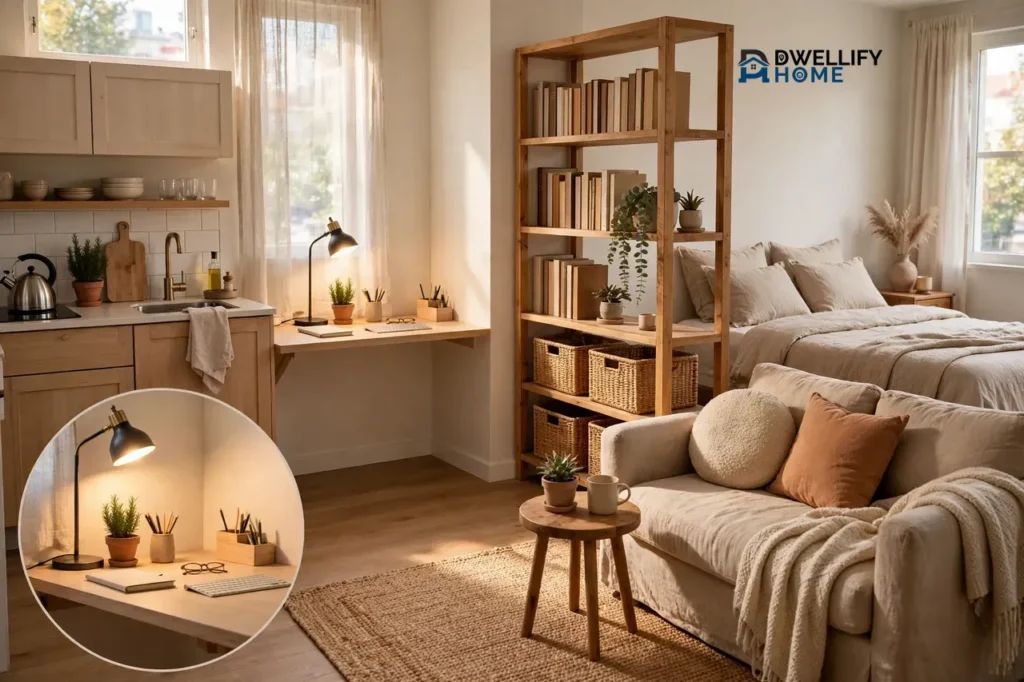
Start with the zones most small apartments need: an entry zone, a sleep zone, a work zone, a cooking zone, and a relax zone. In a studio, these zones may share walls or furniture, and that is fine. A rug can mark the relax zone, a bookcase can separate the sleep zone, and a small desk against a wall can hold the work zone.
Store items near where you use them. Keep coffee supplies near the coffee maker, cleaning supplies near where you clean, work tools at the work zone, and pajamas near the bed rather than across the room. This one rule cuts down daily walking, searching, and re-sorting more than any single product can.
The table below gives you a quick starting map. Use it as a guide, then adjust each zone to fit your own rooms and habits.
| Zone | Keep Here | Move Elsewhere |
|---|---|---|
| Entry | Keys, bag, shoes, coat | Mail piles, spare gear |
| Sleep | Bedding, sleep clothes | Work papers, gym bags |
| Work | Laptop, charger, notebook | Household clutter |
| Kitchen | Daily dishes, cooking tools | Occasional appliances |
| Bathroom | Daily toiletries, towels | Backups, bulk supplies |
Once you map the zones, you can see the real problem spots. Most small apartments do not lack storage in general. They lack storage in the exact spot where an item gets used, so that item ends up on the nearest flat surface instead.
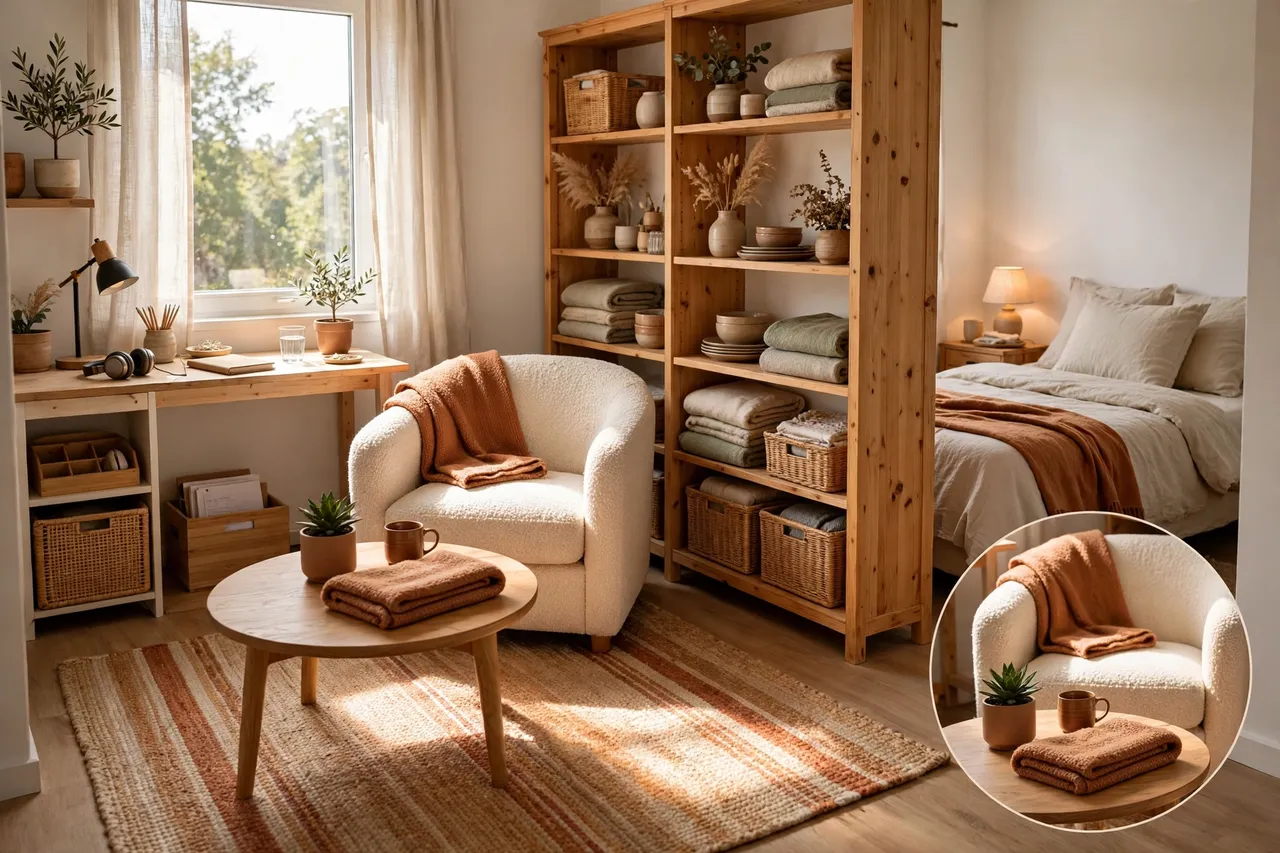
Go Vertical Without Damaging the Walls
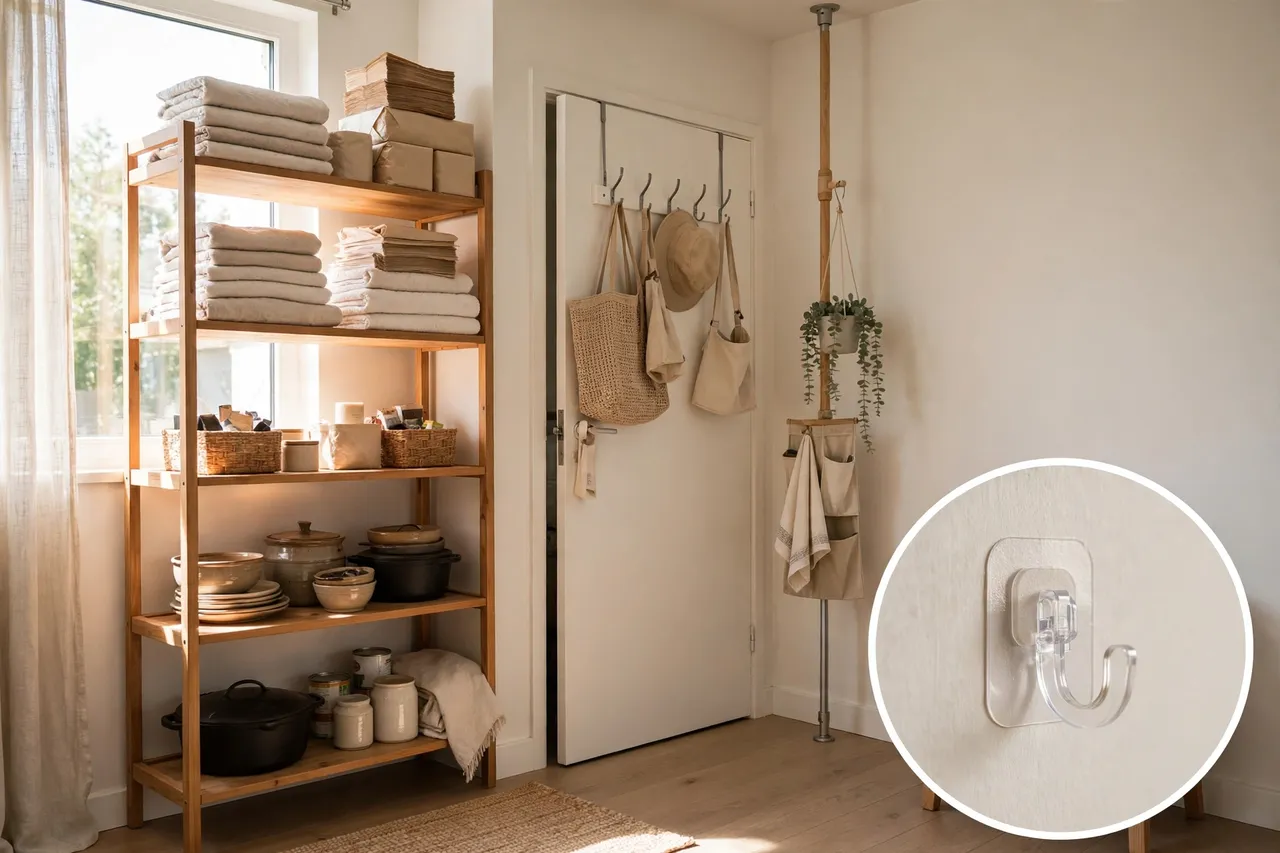
Floor space runs out fast in a small apartment, but walls, doors, and the space above furniture often sit empty. Going up, rather than spreading out, is usually the fastest way to gain storage without crowding the room.
As a renter, you can use a lot of vertical space without drilling. Over-door hooks and organizers, tension rods and tension poles, freestanding shelving, and removable adhesive hooks all come off when you move out. Always follow the weight limit on adhesive hooks, test them on a hidden spot first, and remove them slowly so paint stays intact.
Use vertical storage for light, stable categories first, such as linens, off-season clothing, paper goods, and cleaning backups. Heavy items belong low, where they stay safe and easy to lift. Tall furniture should sit steady, so check with your landlord before you anchor anything that needs a screw.
Keep visible storage selective. Open shelves work best when the items on them are few and calm to look at. When open shelves hold too many mixed items, they add visual clutter even when they are technically organized. Closed bins and doors hide the busy categories, such as cables, spare parts, and bulk supplies, and they make a small room feel calmer at a glance.
Organizing guides for small spaces agree on this balance: use the height you already have, but do not turn every wall into storage. A wall full of organizers can feel just as crowded as a floor full of clutter. Leave some wall space empty so the room can breathe.
Choose Furniture That Does More Than One Job
In a small apartment, every large piece of furniture should earn its floor space twice. A storage ottoman can hold blankets and serve as seating. A lift-top coffee table can hide remotes and chargers and double as a laptop perch. A bed with drawers underneath can replace a dresser.
Before you buy a multi-use piece, check three things. First, measure the space it will sit in, including the room it needs to open. Second, check what it will actually hold, not just what it promises in a photo. Third, ask how easy it is to reach what you store inside it, because storage you dread opening soon becomes storage you never use.
Watch out for furniture that only looks useful. A coffee table with a tiny hidden compartment may hold almost nothing, while a simple lidded bench may hold a whole season of bedding. Size, access, and daily use matter more than a clever label.
For a work corner, a compact setup often beats a large desk. A corner desk setup can turn an unused corner into a focused work zone while keeping the rest of the room open. Add a shelf above it for books or supplies, and keep the desk surface clear for the work itself.
Set Up the Entryway First
The entryway deserves to go first, even when it is just a door opening straight into the living room. Everything enters the apartment through that door, so whatever you do not deal with there spreads everywhere else within a day.
Give every landing item one home within a step or two of the door. Keys go in a small dish or on a hook. Mail goes in one upright file or sorter, and you open it over the recycling bin so junk paper never reaches a table. Bags and coats go on hooks, and shoes go on a slim rack or in an over-door organizer.
Keep only the shoes you wear in a typical week by the door. The rest belong in the closet or under the bed. A slim, tiered shoe rack uses height instead of floor space, and a narrow console can add a drop zone without blocking the walkway. A narrow console table with drawers can hide keys, chargers, and mail while leaving the surface clear for one lamp or a small bowl.
If your entry has no closet, do not skip this step. A few hooks, a small tray, and a shoe spot can create a full landing zone on one short stretch of wall. The system only needs to catch what arrives each day, not store everything you own.
Organize the Kitchen by Task, Not by Cabinet
Small kitchens usually lack both cabinet space and counter space, so grouping by task helps more than grouping by type alone. Think in four tasks: prep, cook, clean, and store. When each task has its own spot, you stop crossing the kitchen for every step of a meal.
Clear the counters first and keep out only what you use daily, often a kettle or coffee maker and a dish rack. Appliances you use twice a month, such as a blender or a specialty cooker, belong in a cabinet. A clear counter makes cooking easier and makes the whole apartment feel tidier, because the kitchen is usually visible from the living area.
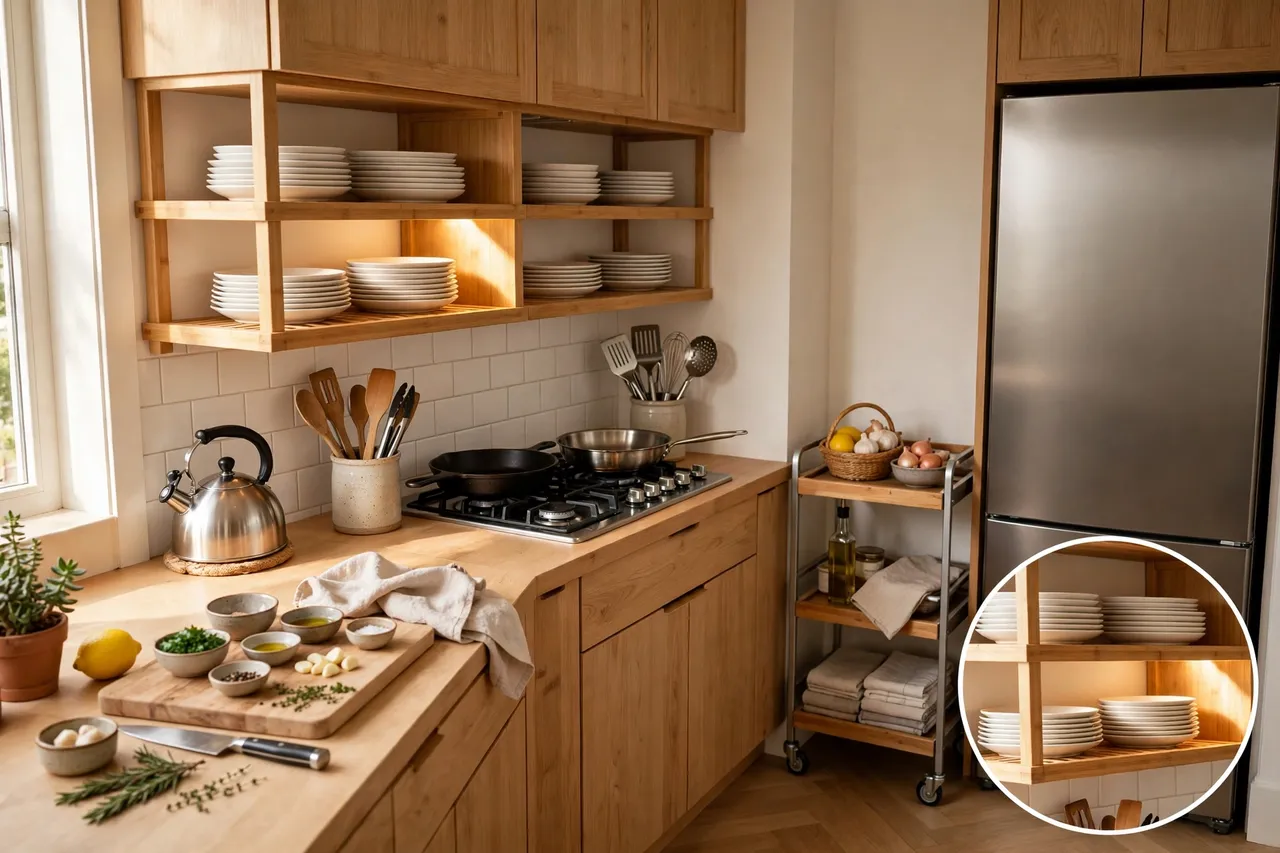
Inside cabinets, double the usable levels instead of adding more cabinets. Shelf risers create a second level for plates, mugs, or cans. Under-shelf baskets hang below an existing shelf and use the wasted gap above your dishes. Turntables in corner cabinets or under the sink stop items from getting lost at the back.
Use the inside of cabinet doors for light items, such as measuring spoons, pot lids, or cleaning cloths, with removable adhesive hooks or small over-door racks. Measure the depth first so the door still closes. A slim rolling cart can slide into the gap beside the fridge or stand in a corner as extra prep space, and it moves out of the way when you need the floor.
For the pantry, whether it is a closet or a single cupboard, group food by use: breakfast, baking, grains and pasta, canned goods, and snacks. Put newer items behind older ones, keep heavy cans low, and use clear containers or simple bins so you can see what runs low. For a compact cooking area, small kitchenette ideas can show how a single wall, light cabinets, and hidden appliances keep a tiny cooking zone calm instead of cramped.
Make the Bathroom Feel Bigger With Small Changes
Rental bathrooms often offer one tiny cabinet and not much else, yet they must hold daily toiletries, towels, cleaning supplies, and backups. The fix is the same as elsewhere: use vertical space, group by use, and edit what you keep.
An over-the-toilet freestanding shelf adds storage in space that usually goes to waste, with no drilling needed. Under the sink, a two-tier sliding organizer or a few small bins can sort cleaning supplies, spare toiletries, and hair tools around the plumbing. In the shower, a tension-rod caddy or adhesive hooks can hold what you use daily without new holes in the tile.
Edit the products before you add organizers. Gather every bottle and tube in one place, keep what you actually use, and finish duplicates before you buy more. Store backups in one labeled bin, out of the daily zone, so the shelf you reach for each morning holds only the few items you need.
Keep daily items at eye level and move bulk supplies higher or lower. When the morning routine needs only one shelf and one hook, the bathroom feels larger even though nothing about its size has changed.
Make the Bedroom and Closet Work Harder
Bedroom clutter piles up quietly: clothes on a chair, books on the floor, and laundry that never quite gets put away. The goal is a restful room with storage out of sight, not a room that looks like a second closet.
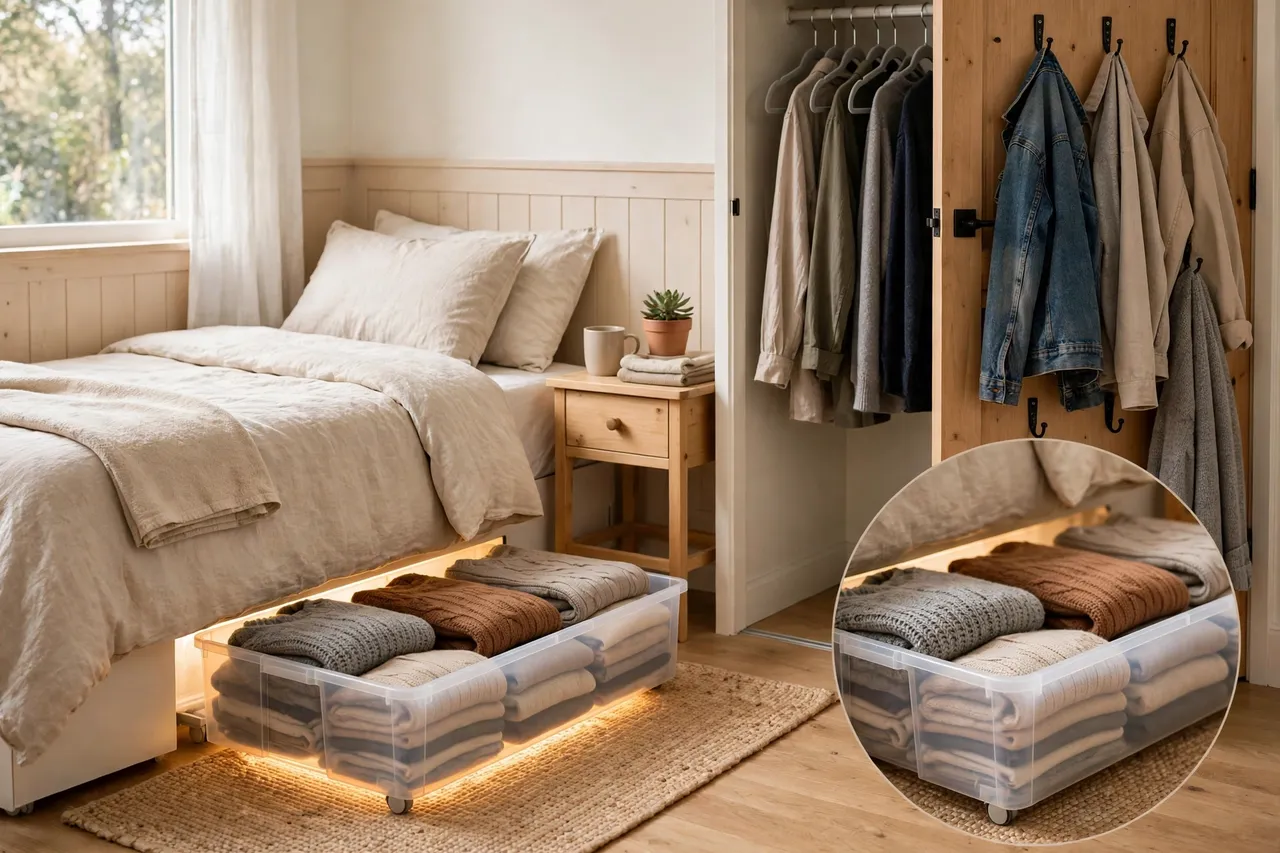
Use the space under the bed first. Lidded, low-profile containers or rolling drawers can hold off-season clothes, extra bedding, or shoes. If your bed sits too low, bed risers can add clearance, but measure the gap first so the containers you buy actually slide in and out with ease.
Rethink the nightstand. A nightstand with a drawer or shelf beats an open table, because it hides the small items that otherwise spread across the top. If floor space is tight, a small stool or a clip-on bedside shelf can hold a phone, glasses, and a book without adding another full piece of furniture.
Stop the chair pile by giving worn-once clothes a real home. A few hooks on the back of the bedroom door work well for items you will wear again before washing. Without that spot, the chair becomes the default, and the pile grows a little every day.
In the closet, use the whole height. Slim, matching hangers free up rod space and stop clothes from sliding off. A hanging rod extender can add a lower level for shirts and skirts. Bins or fabric boxes on the top shelf can hold seasonal items, bags, or hats, and labels save you from pulling everything down to find one thing.
Try the hanger-turn trick to keep the closet honest. Turn all your hangers backward, and after you wear something, hang it the normal way. After a season, anything still facing backward is a strong candidate to donate. Seasonal rotation helps too: keep only current-season clothes in the main closet and store the rest under the bed or on a high shelf.
Keep It Organized With a Short Weekly Reset
Organizing once is the easy part. Keeping it that way is what makes a small apartment feel calm week after week. A short reset, done on the same day each week, beats a big clean-up every few months, because small apartments slide back into clutter fast.
Set a timer and work through six short tasks. Empty the reset basket and return every item to its home. Clear the entryway, sort the mail, and take out the donate bag if it is full. Reset the kitchen counters and check the fridge for anything past its best. Hang or fold the chair pile, put laundry away, and clear the nightstand. Sweep the bathroom, return products to their bins, and note anything running low. Finally, add to the shopping list and pick one small problem spot for next week.
Follow a one-in, one-out rule for categories that multiply, such as mugs, food containers, and bags. When something new comes in, something old goes out. This rule alone can hold a small apartment steady for years, because it caps the total amount your zones must hold.
Top organizing guides for small apartments point to the same habit: a short weekly reset, every item with a home, and a one-in, one-out rule for fast-growing categories. The system does not need to be perfect. It only needs to run every week, so clutter never builds up enough to feel overwhelming again.
Mistakes That Make a Small Apartment Feel Messier
Some organizing moves look helpful but make a small space feel worse. Watch for these traps before you spend money or time on them.
- Buying storage before decluttering. Fix it by sorting one category at a time first, then measuring the space that remains.
- Filling every wall with open shelves. Fix it by keeping open storage selective and hiding busy categories behind doors or in bins.
- Storing items far from where you use them. Fix it by moving each daily item to the zone where its task happens.
- Letting one junk drawer become five junk spots. Fix it by giving stray items a reset basket with a weekly empty date, not a permanent home in every room.
- Skipping the weekly reset. Fix it by picking one fixed day, setting a timer, and stopping when it ends. Progress beats perfection.
When a system stops working, do not buy a new organizer first. Ask which step broke: did too much come in, did an item lose its home, or did the reset get skipped? Most small-apartment clutter comes from one of those three causes, and each one has a free fix.
For more room-by-room ideas, ApartmentGuide’s small-apartment tips cover decluttering, vertical space, and multi-use furniture, while Organize Small Spaces’ complete guide explains why every item needs a home and daily items deserve the easiest reach. The room-by-room system at The Small Apartment also shows how a weekly reset keeps each zone in order.
Related Guides
Under Stairs Storage Ideas · Laundry Room Shelving: Practical Ideas, Heights, and Storage That Works · How to Organize a Bookshelf
Frequently Asked Questions
How do you organize a small apartment?
Declutter one category at a time, then give daily items one home per room, starting at the entryway. Measure before you buy storage, use the space under the bed, the backs of doors, and vertical wall space, and keep the system going with a short weekly reset.
How do I organize a small apartment with no storage?
Declutter first so you store less, then use hidden spaces you already have: under the bed, the backs of doors, above closet rods, and gaps beside appliances. Storage furniture, such as ottomans, cube shelves, and rolling carts, can fill in for built-in storage without any permanent changes.
What is the cheapest way to organize a small apartment?
Decluttering costs nothing and makes the biggest difference, because it shrinks what you must store. Reuse shoeboxes and jars as organizers first, then buy only low-cost, high-impact items, such as slim hangers, over-door organizers, and shelf risers, after you measure the space they must fit.
How can I add storage to a rental without drilling?
Use over-door organizers, tension rods and poles, removable adhesive hooks within their weight limits, freestanding shelving, and under-bed containers. All of these can be removed when you move out, and adhesive hooks work best when you test a hidden spot first and remove them slowly.
How do I keep a small apartment organized long term?
Give every item a home, follow a one-in, one-out rule for categories that multiply, and run a short weekly reset on the same day each week. When clutter returns, check whether too much came in, an item lost its home, or the reset got skipped, then fix that one cause.
A Calm Small Apartment Is a System, Not a Shopping Trip
You do not need a bigger apartment, and you do not need a cart full of organizers. You need fewer things, a clear zone for each part of daily life, storage that uses height and hidden space, and a weekly reset that keeps the system honest.
Start today with one zone, most usefully the entryway, and let that one win set the tone for the rest. Over a few weeks, those small wins add up to a home that feels bigger, calmer, and much easier to live in.
A quick note: homes, leases, and layouts vary, so check your lease before you hang, anchor, or stick anything to a wall, and ask your landlord when a fix needs a screw or a permanent change.