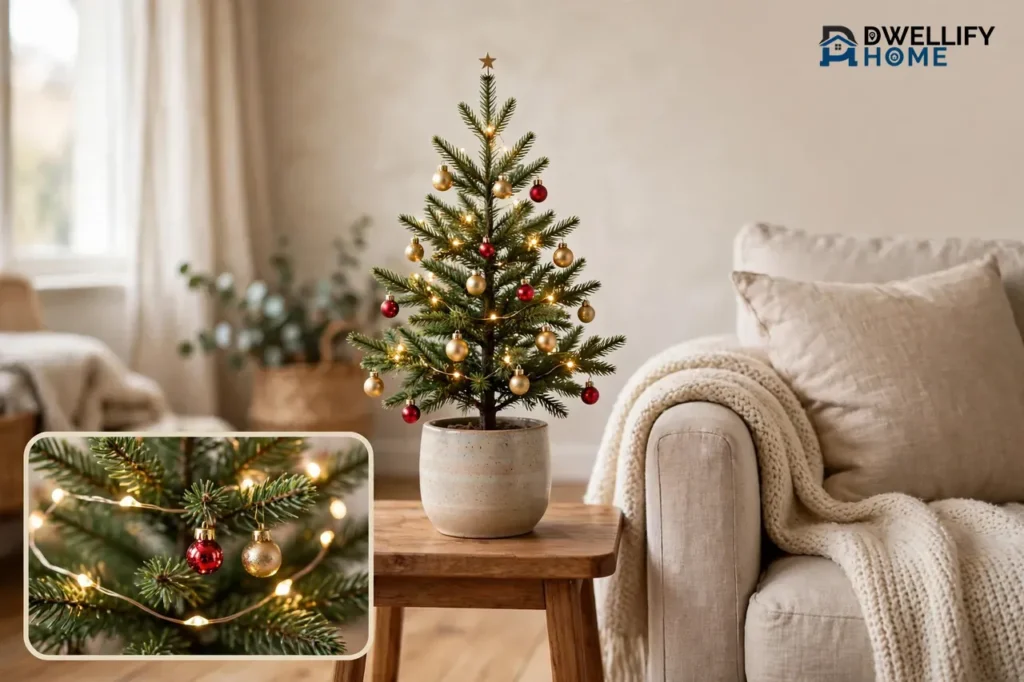
Miniature Christmas tree decorations work best when you scale everything down to fit the tree. Pick a tabletop tree that is 2 to 3 feet tall, use tiny ornaments about 1 to 2 inches wide, add one short strand of fine fairy lights, and finish with a light topper, like a small star or a soft bow. Keep your colors to two or three, leave breathing room between ornaments, and place the tree where you can actually see it, at eye level, on a sturdy table or shelf, so the smallest tree in the house still feels like a real Christmas centerpiece.
That is the whole secret. A small tree does not need fewer ideas than a big tree. It needs smaller decorations, lighter decorations, and a little more restraint. When you get the scale right, a mini tree looks full and festive, not crowded and not sad. This guide shows you how to pick the tree, size the decorations, light it safely, and style it for any room in your home.
💡 Practical Home Tip: Before you buy anything new, pull out the ornaments you already own and sort them by size. Keep the pieces that are 2 inches wide or smaller for your mini tree, and move the big, heavy baubles back to the full-size tree box. This five-minute sort stops the most common mini-tree mistake before you spend a dollar.
Pick the Right Mini Tree for Your Space
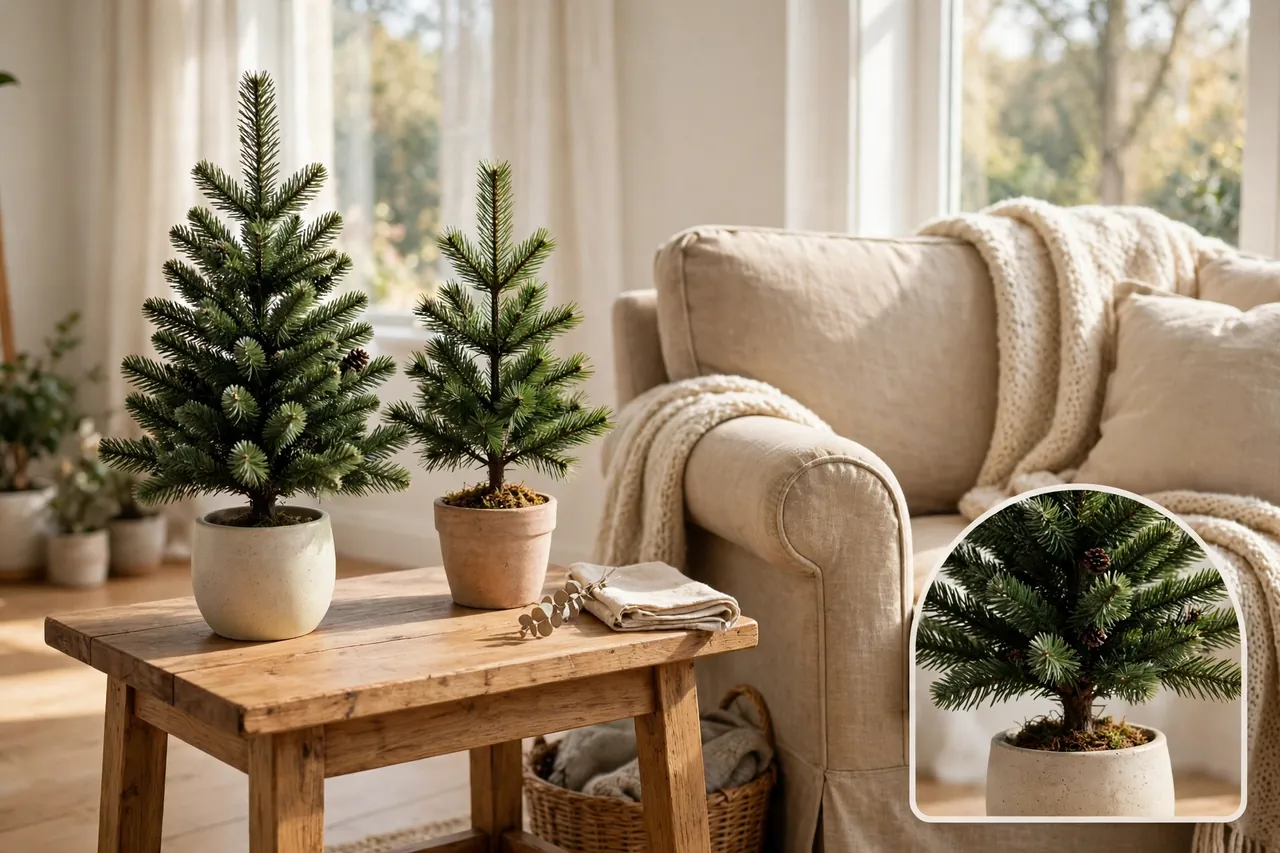
A miniature tree is any tree small enough to sit on furniture instead of standing on the floor. Most tabletop Christmas tree decor starts with a tree between 18 inches and 3 feet tall. Anything taller starts to act like a floor tree, and anything much smaller becomes a desk accent rather than a real tree.
Shopping for mini Christmas tree decorations starts with the spot, not the tree. Every mini Christmas tree decoration you buy should pass a simple size test before it goes in the basket. Start by measuring the spot, not the tree. Measure the depth of the table or shelf, the height from the surface to the shelf or ceiling above it, and the width you can spare without blocking a walkway. A 2-foot tree on a side table needs a surface at least 12 inches deep, plus room for its base. Write the numbers down, and shop inside them.
Next, choose between an artificial tabletop tree and a live potted tree. An artificial mini Christmas tree keeps its shape year after year, packs into one small box, and needs no water. A live potted pine or spruce smells wonderful, and you can plant it or gift it in January, but it needs light and regular water while it is indoors. Pick the one that fits your routine, not just your mood in the store.
Then decide about lights. A pre-lit mini tree saves you the fiddliest step, and the lights already fit the tree. An unlit tree gives you control over light color and brightness, and you can replace the strand without replacing the tree. If you buy unlit, buy fine-wire fairy lights made for small trees, because thick, heavy light strings drag small branches down.
Finally, think about where the tree will live. A mini Christmas tree and decorations belong where people actually spend time. A tree on a high shelf that nobody looks at wastes its charm. A tree on the side table beside your favorite chair, on the entry console, or on the kitchen counter earns its keep every evening.
The Scale Rule That Makes a Small Tree Look Right
Scale is the one rule that matters most for miniature Christmas tree decor, and it is the rule people break most often. Full-size ornaments look fine in the store box, but on a small tree they hide the branches, pull the tips down, and make the whole tree look lumpy. Small ornaments keep the tree shape visible, and the tree shape is half the beauty.
Use this sizing guide as your starting point. These are guide ranges from decorating guides, not strict laws, because branch strength varies from tree to tree. When in doubt, go smaller and lighter.
Mini tree sizing at a glance
| Tree height | Ornament size that fits | How many ornaments | Light strand to use |
|---|---|---|---|
| Under 12 inches | Under 1 inch, very light pieces | 6 to 12 | One short battery fairy strand |
| 12 to 24 inches | About 1 to 1.5 inches | 12 to 20 | One short fine-wire strand |
| 2 to 3 feet | About 1.5 to 2.5 inches | 20 to 30 | One 50-light fairy strand |
| 3 to 4 feet | About 2 to 2.5 inches | 30 to 40 | One or two short strands |
Guides agree on the same idea in different words. One professional guide to decorating small trees advises mini ball ornaments of 1.5 to 2.5 inches for small trees, with larger pieces tucked deeper inside and smaller pieces on the branch tips. Another guide for decorating mini trees suggests ornaments no larger than 4 to 5 centimeters, about 1.5 to 2 inches, for trees under 60 centimeters tall, and even tinier pieces for trees around 30 centimeters or smaller. The reason is structural as well as visual: a heavy ornament pulls a small branch down, and the branch often stays bent for the rest of the season.
Weight matters as much as size. Choose lightweight ornaments for a mini tree: small plastic or felt baubles, flat paper shapes, fabric stars, paper ornaments, and tiny glass pieces only on the strongest branches. Hang heavy glass ornaments close to the trunk, where the branch is thickest, or leave them for a bigger tree. If a branch droops the moment you hang a piece, that piece belongs somewhere else.
Color follows the same restraint. Pick two or three colors and repeat them across the tree. Red and gold, silver and white, or blue and silver all work beautifully at small scale. A tree with eight competing colors looks busy, while a tree with two colors and mixed finishes, shiny, matte, and frosted, looks rich and calm. For help choosing a wider theme first, our guide to Christmas tree themes walks through color families and style choices that also work on small trees.
Light It Safely Before You Hang Anything
Read this section before you plug anything in, because a small tree sits closer to people, pets, curtains, and table edges than a floor tree does. A few minutes of care here protects the whole season.
First, inspect every light strand before you use it. Look for frayed wires, cracked sockets, bare spots, and loose bulb connections, and throw a damaged strand away instead of trying to fix it. Use only lights that carry the label of a recognized testing laboratory, and check whether the strand is rated for indoor use. Follow the maker’s limit for how many strands you can connect, and never force a plug into an overloaded outlet.
Keep the tree at least three feet from heat sources, including fireplaces, radiators, space heaters, heat vents, and candles. The National Fire Protection Association reports, through fire-safety guidance, that more than one in four home Christmas tree fires comes from an electrical problem, and a heat source too close to the tree causes one in four of those fires. Never use lit candles to decorate a tree, and never place a lit candle beside a small tree on a crowded table. Battery candles give you the same glow without the flame.
Turn the lights off when you leave the house or go to bed. A timer makes this easy, and battery strands with built-in timers switch themselves off every evening. Keep cords out of walkways, off the edge of the table where a child or pet can tug them, and away from water. If your tree sits on a dining table or kitchen counter, keep the cord and battery pack behind the tree, not beside plates or a sink.
Protect kids and pets with the same care. Hang small ornaments, metal hooks, and battery packs out of reach of toddlers and curious pets, because tiny pieces can break off and become choking hazards. Put shatterproof ornaments on the lowest branches, where little hands and paws reach first, and save glass pieces for the top of the tree. Anchor a tabletop tree so it cannot tip: set it in a heavy pot or basket, keep it away from table edges, and secure a top-heavy tree with a wider base.
How to Decorate a Mini Christmas Tree Step by Step

Decorating mini Christmas trees takes less time than decorating a full-size tree, and the order still matters. Work in this order, and step back for a look after each step. The steps below follow the same lights-first, large-to-small order that professional decorating guides recommend for trees of every size.
- Set the tree and shape it. Place the tree on a flat, stable surface and set its base inside a pot, basket, or collar so it cannot wobble. Gently pull the branches outward and downward, fill thin spots by hand, and turn the tree slowly to check it from all sides.
- Add the lights first. Weave one short strand of fine fairy lights in and out of the branches, from the trunk outward, so light glows from inside the tree as well as around it. Plug the lights in and check for dark patches before you move on.
- Drape ribbon lightly, if you use it. Choose a narrow ribbon, no wider than about half an inch on a very small tree, and drape it in loose swoops around the tree. Do not pull it tight, and do not wrap thick garland around a mini tree, because bulk hides the branches.
- Hang the largest ornaments first, deep inside. Place your biggest mini ornaments, still only 1.5 to 2.5 inches wide, closer to the trunk. These inner pieces fill the dark center and give the tree depth.
- Add medium ornaments at eye level. This is the band people see most, so give it your best pieces and your main color. Space ornaments so each one has breathing room, roughly one ornament per visible branch section.
- Fill gaps with small pieces and picks. Tuck tiny baubles, small berry clusters, frosted pinecone picks, or felt shapes into bare spots. These finishers turn a good tree into a full one without adding weight.
- Top the tree last. Choose a light topper that fits the tree: a small star, a soft wired-ribbon bow, or a few decorative picks gathered at the peak. A heavy angel or star will lean, and on a mini tree a leaning topper ruins the whole silhouette.
- Step back in low light. Turn the room lights down, walk to the far side of the room, and look for bare spots, color clumps, or a leaning topper. Fix those now, while fixing is still easy.
One habit separates tidy mini trees from beautiful ones: hang ornaments at different depths. If every ornament sits on the branch tips, the tree looks like a flat picture. If some pieces sit deep, some sit mid-branch, and some sit on the tips, light bounces between them and the tree gains a shape you can feel, not just see. Balsam Hill’s guide to decorating small trees gives the same advice: choose compact, lightweight ornaments, use fairy lights with smaller bulbs for a subtle glow, and build a small vignette around the base.
Tabletop Christmas Tree Decor for Every Room
A tabletop Christmas tree works in rooms where a floor tree never could, and each room asks for a slightly different version of the same tree. Tabletop Christmas tree decorations work best when you match the tree to the room, not when you force one big look into every corner. These small Christmas tree decor ideas follow that rule room by room.
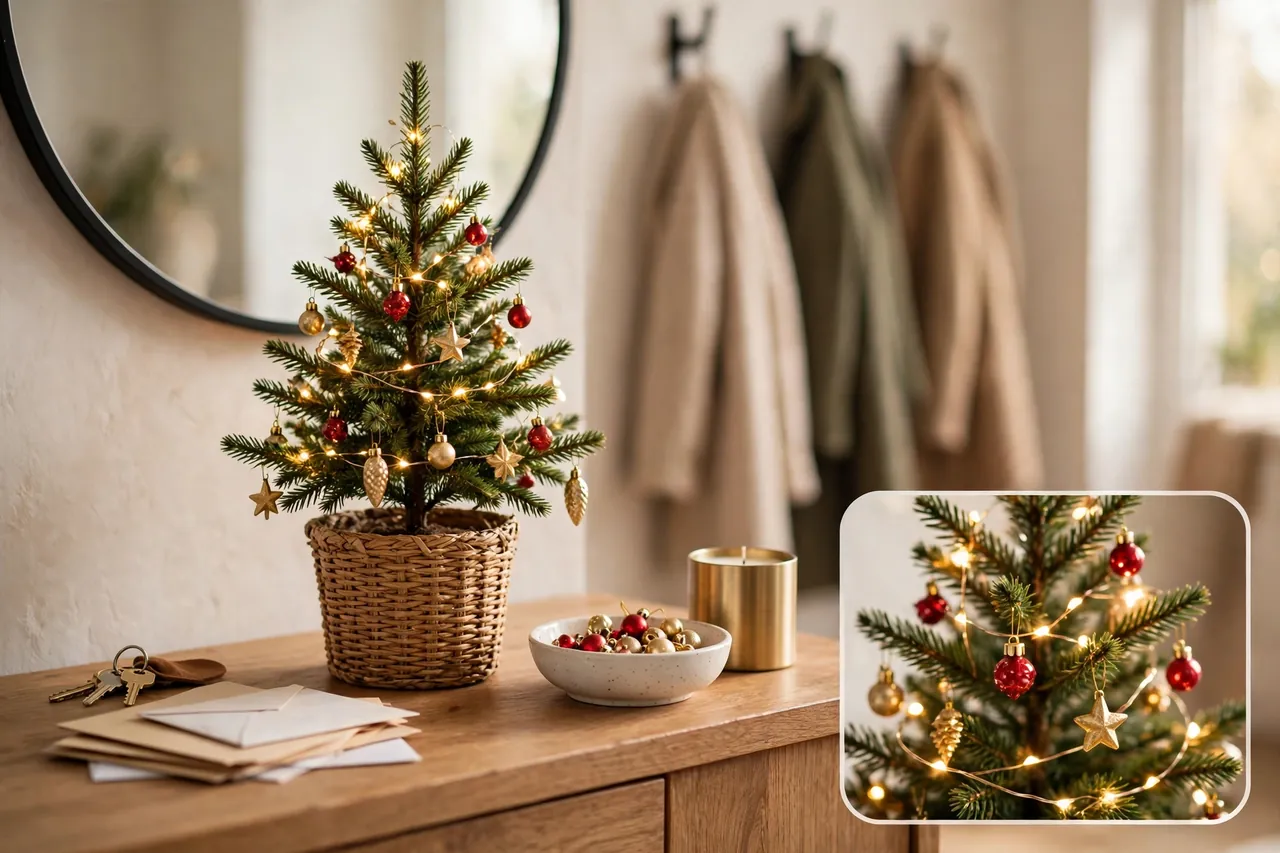
In the entryway, a decorated mini Christmas tree on the console gives guests their first hello. This mini Christmas tree decor works because it greets people at eye level without blocking the door. Keep it slim, keep the base tidy in a ceramic pot or woven basket, and leave room beside it for keys and mail. One small tree, one candle, and one small bowl of ornaments make a complete entry display. If you want the whole entry to match, pair the tree with the ideas in our guide to indoor Christmas decorations, which spreads one look across a room without cluttering it.
In the living room, a small Christmas tree and decorations that echo the room earn their place on a side table, a bookshelf, or the top of a storage bench, right where you sit in the evening. Decorating with a small Christmas tree in the living room works best when the tree echoes the room’s colors, so repeat one color from your sofa cushions or rug on the tree. Our guide to decorating ideas for a living room for Christmas shows how one focal point, two or three colors, and warm light pull the whole room together, and a mini tree fits that plan perfectly as a second focal point.
In the bedroom, keep the tree calm and quiet. A small tree on a dresser, with warm white lights and two colors at most, feels cozy without stealing sleep. Skip real candles here, use battery lights with a timer, and keep the tree away from bedding and curtains. A bedroom tree is for winding down, not for showing off.
For table top Christmas tree decorations on a dining table, a miniature decorated Christmas tree makes a lovely centerpiece, but only if it stays low and small. Keep the total height, tree plus pot, under about 12 inches for a dining table, so guests can see each other across it. Set the tree on a tray to catch needles and water, and keep ornaments off the lowest branches so nobody brushes them while reaching for food.
On a desk or in a home office, a tiny tree, 12 to 18 inches tall, brings Christmas to your workday without taking over the desk. Use almost no ornaments, just lights and a tiny topper, and keep the tree at the back corner of the desk, away from papers, coffee, and cables. A desk tree should lift your mood, not crowd your work.
For a child’s room, a mini tree is a gift in itself, because kids can decorate the whole thing themselves. Hang unbreakable ornaments low, where small hands can reach them, and keep glass and tiny hooks high or out of the tree entirely. Let kids pick the theme, even if it is gloriously mismatched, because a tree they decorated is a tree they will remember.
How to Make a Small Christmas Tree Look Full
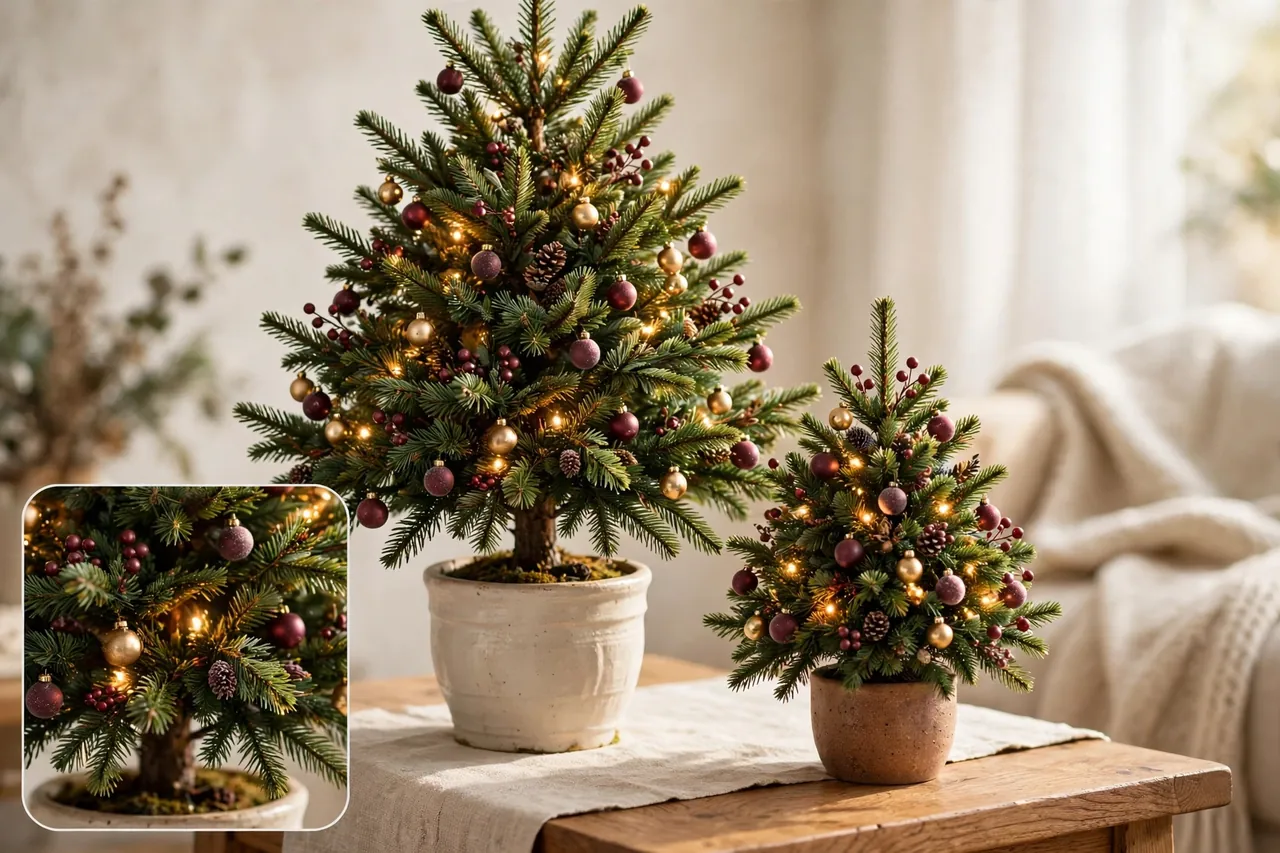
Small trees look thin for a few fixable reasons, and none of them require buying a bigger tree. Work through these fixes in order, and check the tree from across the room after each one.
First, fluff the tree properly. Artificial mini trees ship flat, and branches that stay flat leave gaps. Pull each branch outward, spread the tips, and bend the outer tips slightly upward so the tree holds a full silhouette. Spend real time here, because fluffing does more for fullness than any ornament can.
Second, add depth before you add more ornaments. Push a few larger mini ornaments deep toward the trunk, and weave lights inside the branches, not just around the outside. Inner light and inner ornaments fill the dark hollow near the trunk, and the tree looks thick from every angle. Balsam Hill’s small-tree guide answers this exact question directly: fluff the foliage first, then use small, light ornaments and trim, and anchor the display with coordinating decor at the base.
Third, build the base into the display. A bare plastic stand makes a mini tree look like an afterthought, while a pretty pot, basket, or collar makes it look intentional. Wrap the base in a small piece of fabric, set it in a ceramic cachepot, or nestle it in a woven basket with a little moss or faux snow at the rim. Raise the tree on a stack of books or a low plant stand when it sits too low to see, as long as the whole arrangement stays stable and cannot tip.
Fourth, group trees instead of stretching one tree thin. Two or three miniature trees at different heights, on a mantel, shelf, or sideboard, read as one intentional display. Vary the heights by 4 to 6 inches, keep the colors in one family, and leave a little space between the trees so each one keeps its own shape. A group of small trees often looks richer than one lonely tree trying to carry a whole room.
Fifth, finish with texture, not just color. Mix matte, shiny, and frosted finishes, add one soft element like a velvet ribbon or felt ornament, and tuck in one natural touch like a tiny pinecone or berry cluster. Texture gives the eye rough and smooth, soft and hard, to travel across, and that movement makes a small tree feel full even when it holds few ornaments.
Small Christmas Tree Decorating Ideas That Suit Tiny Spaces
Small-space decorating rewards a different kind of thinking. Instead of spreading out, go up, group up, and use surfaces you already own.
Try a trio on a shelf. Three mini decorative Christmas trees, or miniature decorated Christmas trees, in one color family, at three heights, turn a bookshelf into a Christmas display without taking a single square foot of floor. Decorated tabletop Christmas trees grouped this way read as one display, not three afterthoughts. Keep the tallest tree at the back or center, and let the smaller trees step down beside it like a little forest.
Try a windowsill forest. A row of small decorative Christmas trees on a windowsill glows beautifully at dusk, and neighbors see it too. Keep the trees low so daylight still comes in, use battery lights so no cord crosses the sill, and set each tree on a small tray or saucer to protect the wood from water and needles.
Try a centerpiece tree. One small Christmas tree decoration, set on a tray with greenery, pinecones, and a battery candle, makes a dining or coffee table centerpiece in minutes. Keep the whole arrangement low, keep half the table clear for everyday life, and lift the tray away in one move when you need the table back.
Try a tree for every person. Small trees make wonderful personal trees: one for each child’s bedroom, one for a grandparent’s apartment, one for a desk at work. Decorating a personal tree takes twenty minutes, costs little, and gives each person a tree that is truly theirs. This is also the kindest solution for apartments, dorms, and small homes, because nobody has to give up floor space for Christmas.
Try the same tree in a new pot each year. A plain artificial mini tree changes character completely when you move it from a ceramic pot to a basket, a metal bucket, or a wrapped gift box. Changing the base is cheaper than buying a new tree, and it keeps the display fresh without adding another box to storage.
Mistakes That Shrink a Small Tree
Most disappointing mini trees fail in the same few ways, and every one is fixable without starting over.
- Oversized ornaments. Full-size baubles hide the branches and drag tips down. Swap them for pieces 2 inches wide or smaller, and move the big pieces to a bigger tree or another room.
- Too many colors. Six colors on a tiny tree read as noise. Pick the two colors you love most, and move the rest to another display.
- Thick garland and heavy ribbon. Bushy tinsel and wide ribbon bury a mini tree. Use a thin beaded garland or a narrow ribbon, draped loosely, or skip garland entirely.
- A heavy topper. A big angel or star leans on a thin top branch. Choose a light star, a soft bow, or a small pick cluster, and wire it gently to the strongest center stem.
- A bare, wobbly base. A plastic stand on a bare table looks unfinished and tips easily. Set the tree in a heavy pot or basket, and keep it away from table edges.
- Lights only on the outside. Lights wrapped only around the outside leave a dark center. Weave the strand in and out, from trunk to tips, so the tree glows from inside.
- Decorating in the dark corner. A tree nobody sees feels pointless. Move it to eye level, near where you sit, and let the lights do their work in the evening.
Quick Reference: Your Mini Tree at a Glance
Keep this checklist beside you on decorating day. It condenses the whole guide into one pass.
- Measure the surface first: depth, height above it, and width you can spare.
- Pick a tree 18 inches to 3 feet tall for a tabletop display.
- Use ornaments 1 to 2.5 inches wide, lightweight, with heavier pieces near the trunk.
- Limit colors to two or three, with mixed finishes for texture.
- Use one short strand of fine fairy lights, woven trunk to tips.
- Keep the tree three feet from heat sources, and never use lit candles on it.
- Turn lights off when you leave the house or go to bed, or use a timer.
- Hang shatterproof ornaments low, keep small pieces and battery packs out of reach.
- Top with a light star, bow, or pick cluster, never a heavy topper.
- Step back in low light, fix bare spots and color clumps, then enjoy it.
Troubleshooting: When Your Mini Tree Does Not Look Right
- The tree looks thin. Fluff the branches again, push ornaments deeper toward the trunk, and add lights inside the branches. If gaps remain, tuck in small berry picks or frosted pinecone stems.
- Branches droop after decorating. Remove the heaviest ornaments from the tips, move them closer to the trunk, and replace heavy glass with felt, plastic, or fabric pieces.
- The topper leans. Swap it for a lighter topper, wire it gently to the strongest center stem, and check the tree from three sides before you finish.
- The colors clash. Remove one color entirely and see if the tree calms down. Two colors that agree beat four colors that argue.
- The tree looks lost on the table. Raise it on a stable stand or stack of books, set it in a larger pot or basket, or group it with two smaller trees at different heights.
- Lights look patchy. Unplug the strand, reweave it in and out of the branches, and check for a dead section before the ornaments go back on.
- The tree tips over. Move it away from the table edge, set it in a heavier pot, and keep cords and battery packs behind the tree where nobody can tug them.
Pack It Away So Next Year Starts Easy
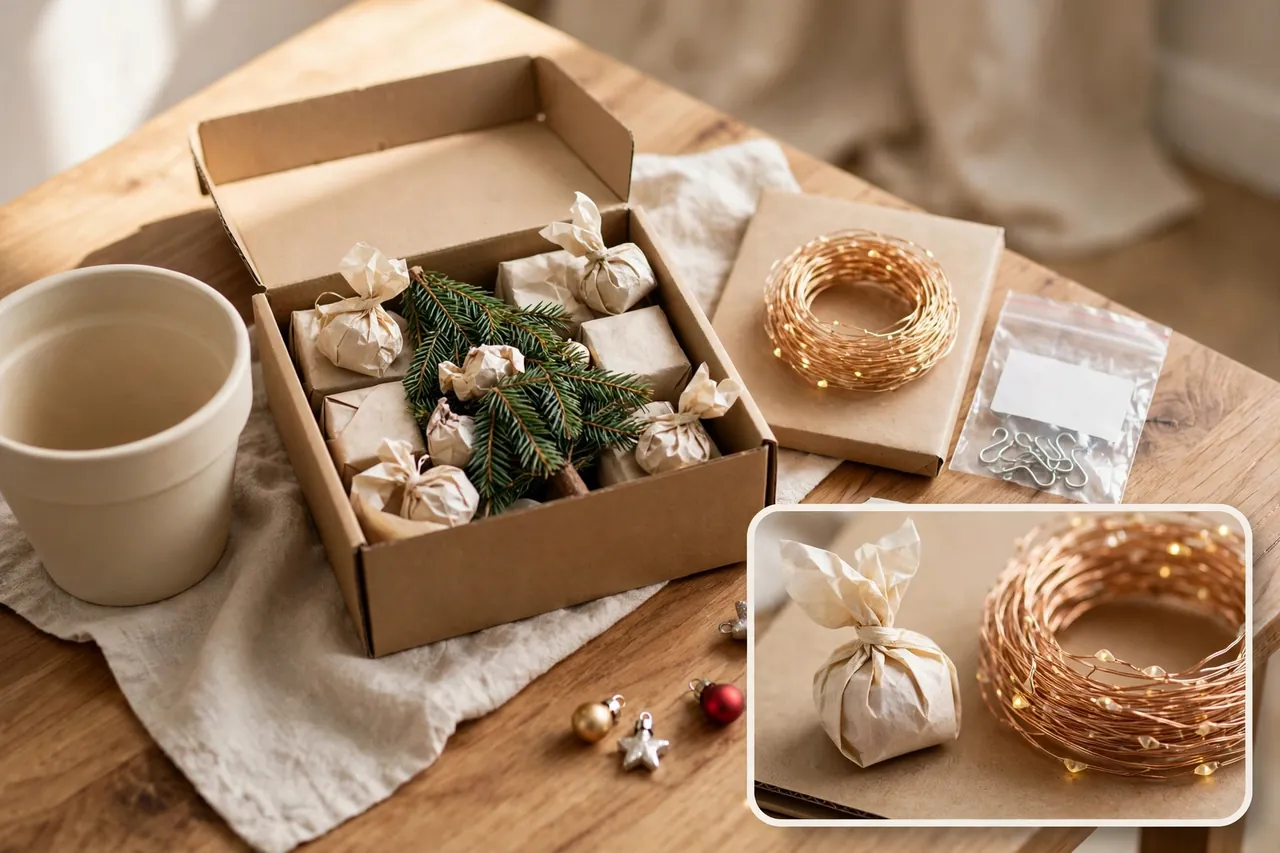
A mini tree earns its keep twice: once at Christmas, and once in January, when packing takes minutes instead of an afternoon. Work top-down, and pack the ornaments before the tree.
First, unplug the lights and remove every ornament, starting at the top. Wrap fragile pieces individually, and keep hooks and clips in one small labeled bag so next December starts without a hunt. Coil light strands around a piece of cardboard so they do not tangle, and store spare bulbs in the same bag.
Next, fold the branches gently inward, starting at the top section, and slide the tree into its original box or a small storage bag. Label the box with the tree’s height and the ornament size that fits it, so next year you shop from the label instead of guessing. Store the box where it stays cool and dry, off the floor, with nothing heavy stacked on top.
Finally, keep the pot or basket with the tree, or label it too. A mini tree without its base is a tree you cannot display, and a base without its tree is clutter. For the full-size tree in your home, our guide to Christmas tree storage bags covers bag types, sizing, and packing steps in detail, and the same top-down, label-everything habits work at any size.
A short safety note before you close the box: this guide shares general decorating ideas, not professional safety advice for your specific home. If a light strand is damaged, an outlet feels warm, or wiring worries you, replace the strand or ask a qualified electrician instead of forcing a repair. Homes, trees, and budgets vary, so treat sizes and light counts here as starting guides, and follow your product maker’s instructions first.
Related Guides
Flocked Christmas Tree Decorating Ideas That Let the Snow Shine · Farmhouse Christmas Tree Decorations: A Cozy, Gathered Look That Feels Like Home · Wooden Christmas Tree Decorations: Warmth You Can Touch
Frequently Asked Questions
How do you decorate with tiny Christmas trees?
Place a decorated mini tree on a table, mantel, shelf, or desk, light it with fine fairy lights, and build a vignette around its base with a pot, a candle, or a few accents. Tiny trees work best as focal points on furniture, not as floor trees, because their charm sits at eye level.
How do you make a small Christmas tree look full?
Fluff the foliage first, then use small, light ornaments and trim, weave lights deep inside the branches, and anchor the display with a pretty pot or basket at the base. Push larger mini ornaments toward the trunk to fill the dark center, and step back to check the tree from across the room.
Where do you put a tabletop Christmas tree?
A tabletop Christmas tree works well on entryway consoles, kitchen counters, mantels, side tables, bookshelves, and office desks. Choose a flat, stable surface at least 12 inches deep, keep the tree away from table edges and heat sources, and put it where you spend evenings, not on a shelf nobody looks at.
What should you look for when buying a tabletop Christmas tree?
Consider size and scale first, then tree type, lighting, and ease of storage. Measure your surface before you shop, pick a tree 18 inches to 3 feet tall for most tables, decide between pre-lit and unlit, and choose a tree that packs into one small box so it stays in good shape year after year.
How do you pack up a small Christmas tree?
Unplug the lights, remove ornaments top-down, and wrap fragile pieces separately, following the maker’s instructions for your tree. Fold branches gently inward, coil light strands around cardboard to stop tangling, and store the tree in a cool, dry place, protected from dust and pests, until next season.
A small tree asks for less of everything except care, and care is exactly what makes it shine. Pick one tree, size the decorations to fit it, light it safely, and give it a spot where you will see it glow every evening. Then step back, turn the room lights down, and enjoy the smallest tree in the house doing the biggest job of all: making the whole room feel like Christmas.