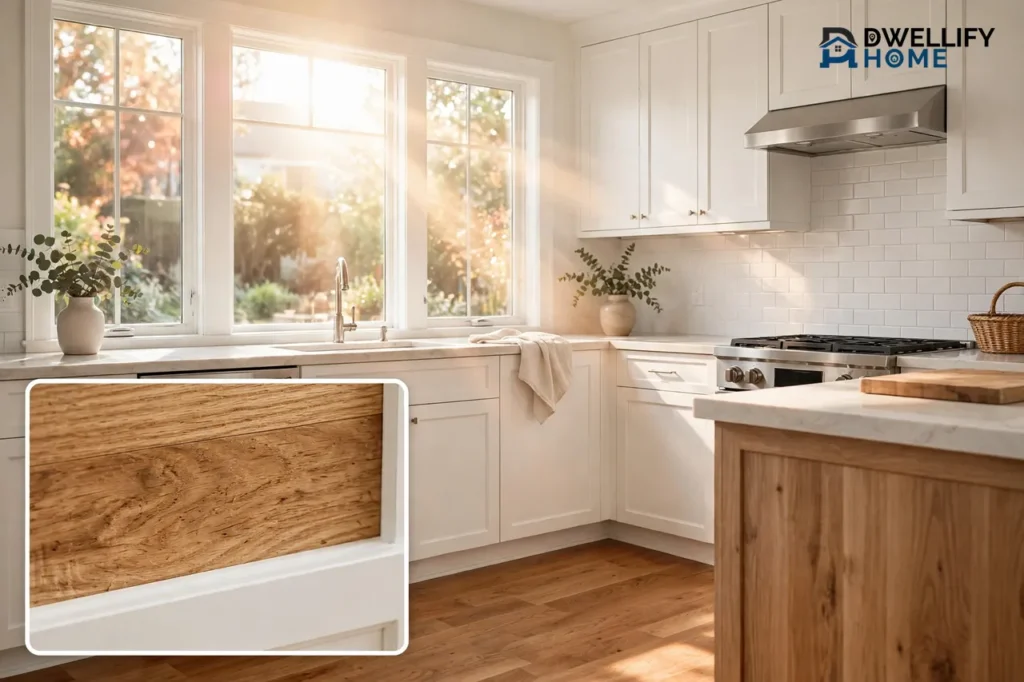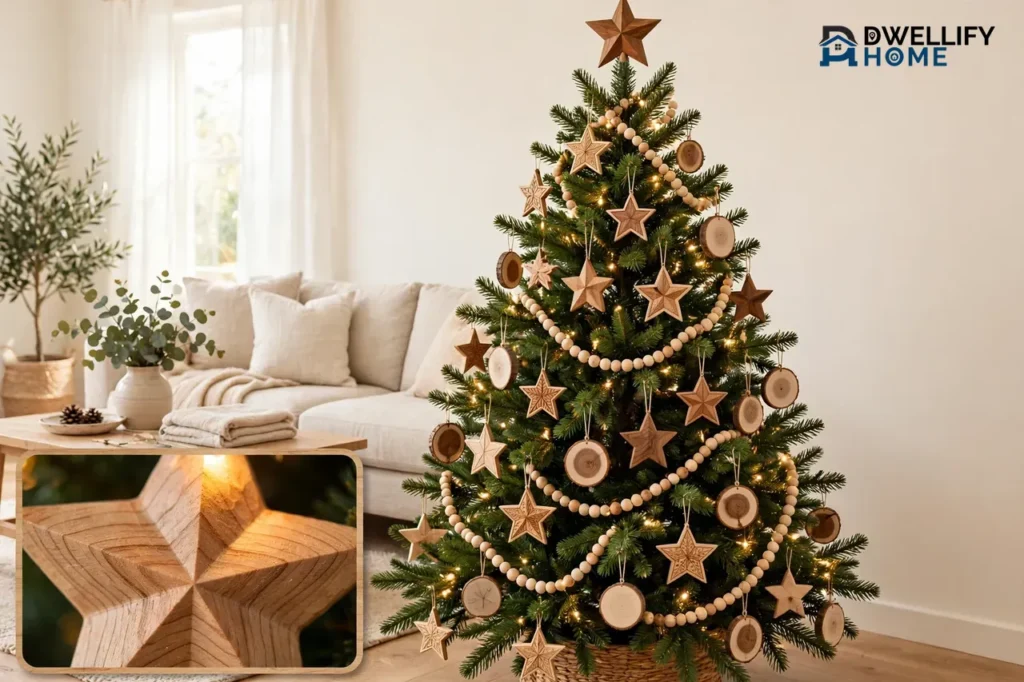
Wooden Christmas tree decorations bring warmth, texture, and a handmade feel to your tree. They include wooden ornaments, wooden bead garlands, carved figures, and even small decorative wooden Christmas trees that sit on the tree or beside it. Wood softens bright lights, calms shiny baubles, and makes a tree feel calm and lived-in instead of loud and store-bought.
If you want a tree that feels cozy without looking dark or heavy, start with wood as your main material. Pick one or two wood tones, add warm white lights, and let a few natural textures do the work. You do not need a whole new tree or a big budget. A small set of well-chosen wooden pieces can change the whole mood of the room.
💡 Practical Home Tip: Before you buy anything, hold three wooden pieces together under your tree lights at night. If they look like one family in that light, they will look like one family on the tree. If one piece fights the rest, leave it out now, while the choice is still free.
What Wooden Christmas Tree Decorations Actually Are
Wooden Christmas tree decorations are tree decorations made mostly from wood. That simple fact matters, because wood is the material here, not just a style word. A wooden Christmas tree decoration can look rustic, modern, classic, or playful, and it still counts as wood decor as long as wood leads the look.
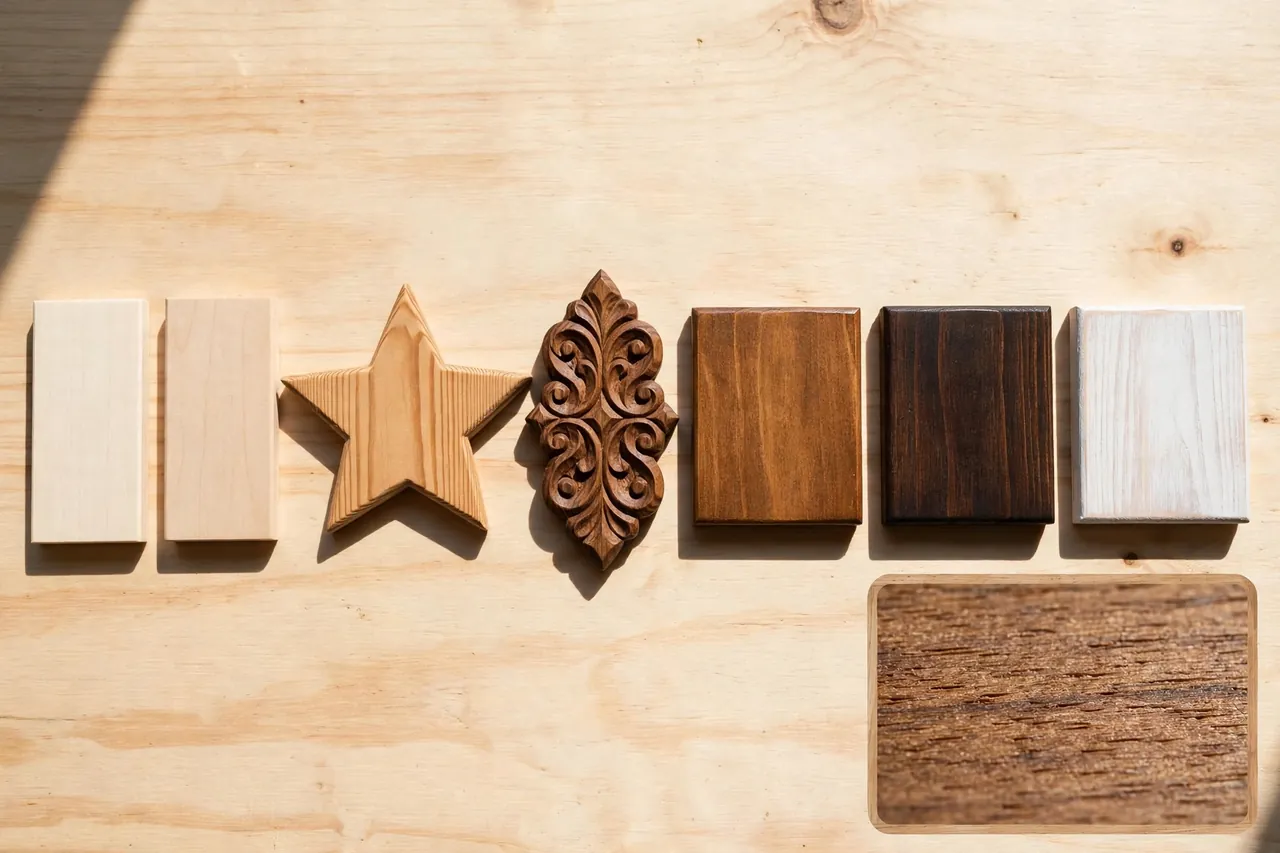
The Wood Itself: Types, Grain, and Finishes
Not all wood looks or feels the same, and that is good news. Grain is the pattern you see in the wood, and it gives each piece its character. A straight, even grain looks calm and modern. A wild, knotty grain looks warm and handmade. Neither one is better. They just set a different mood.
For ornaments, makers often use light, easy-to-cut woods such as basswood and birch. Basswood has a fine, even grain that takes paint and stain smoothly. Birch looks pale and clean, and it suits whitewashed and modern looks. Pine brings a warmer tone and a clear grain, and it often costs less. Mango wood, a byproduct of fruit farming, brings a richer brown tone and a strong grain.
Plywood and MDF also appear in many wooden ornaments. Plywood is light and strong, and it holds laser-cut shapes well. MDF gives a very smooth surface for paint, but it feels less like real wood and it does not like damp rooms. If you want the wood itself to show, choose solid wood or plywood with a real wood face. If you want a painted shape and you do not mind a smoother look, MDF can still work.
Finishes change the mood even more than the wood type does. Raw wood looks pale, matte, and natural. A clear oil or wax deepens the color a little and makes the grain pop. A stain adds brown, gray, or walnut tones without hiding the grain. Whitewash lets the grain show through a soft white veil. Paint covers the grain and turns the piece into a color accent, which suits stars, snowflakes, and playful shapes.
Wood Christmas tree decor works best when you limit your finishes. Pick one main finish, such as natural or stained, and one accent, such as whitewashed or gold-touched. Three or more finishes on one tree can look busy, even when each piece looks lovely on its own.
Wood types and finishes at a glance
| Wood or finish | Look | Best for |
|---|---|---|
| Basswood and birch | Pale, fine grain | Painted and engraved ornaments |
| Pine | Warm tone, clear grain | Stars, slices, and classic shapes |
| Mango wood | Rich brown, strong grain | Carved figures and bead garlands |
| Natural or oiled | Warm, matte, grain-forward | A calm, natural tree |
| Stained | Deeper brown or gray | A rich, grown-up tree |
| Whitewashed or painted | Light, soft, or colorful | Bright rooms and playful trees |
Wooden Ornaments, Garlands, and Wooden Trees
Wood gives you more choices than most people expect. The trick is to mix shapes and sizes while you keep the material steady. Wood ties the whole set together, even when the shapes differ.
Flat ornaments and wood slices
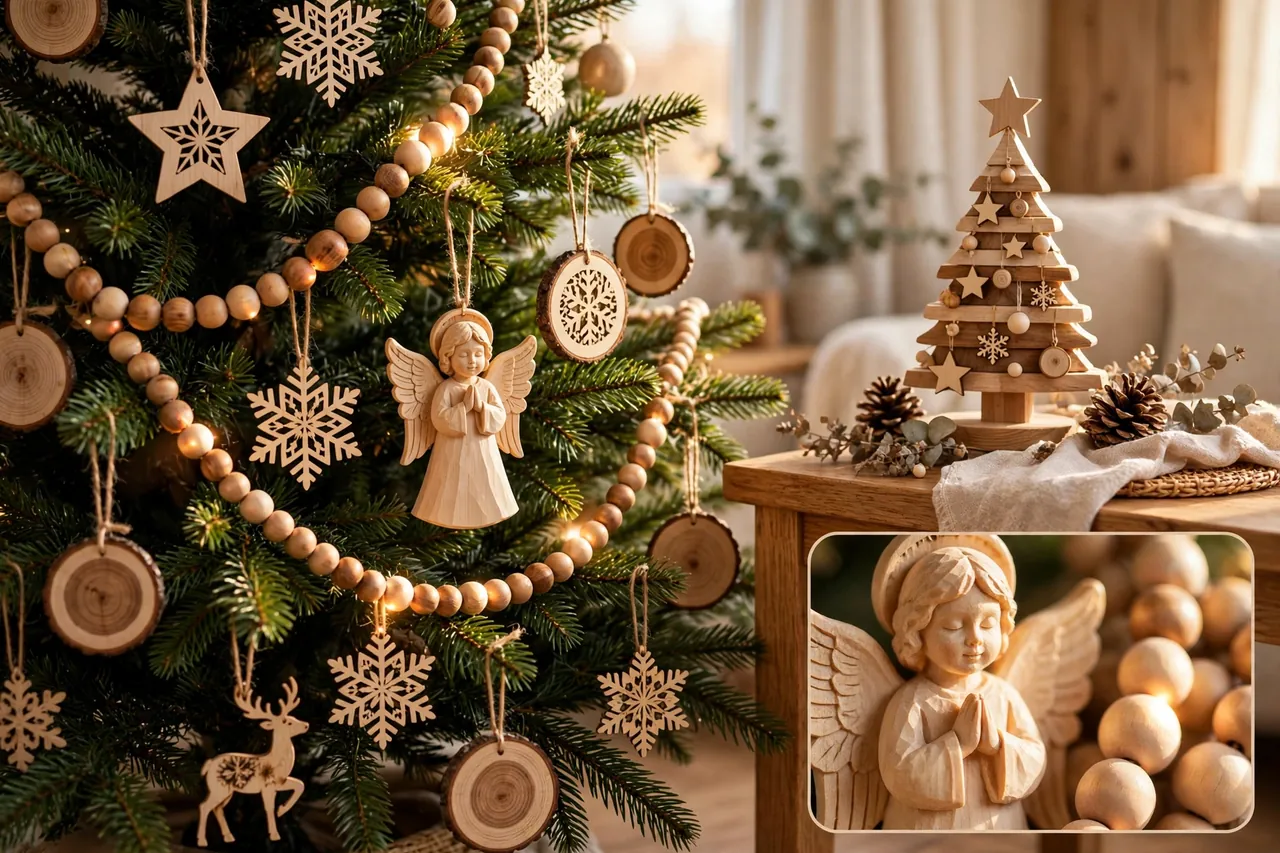
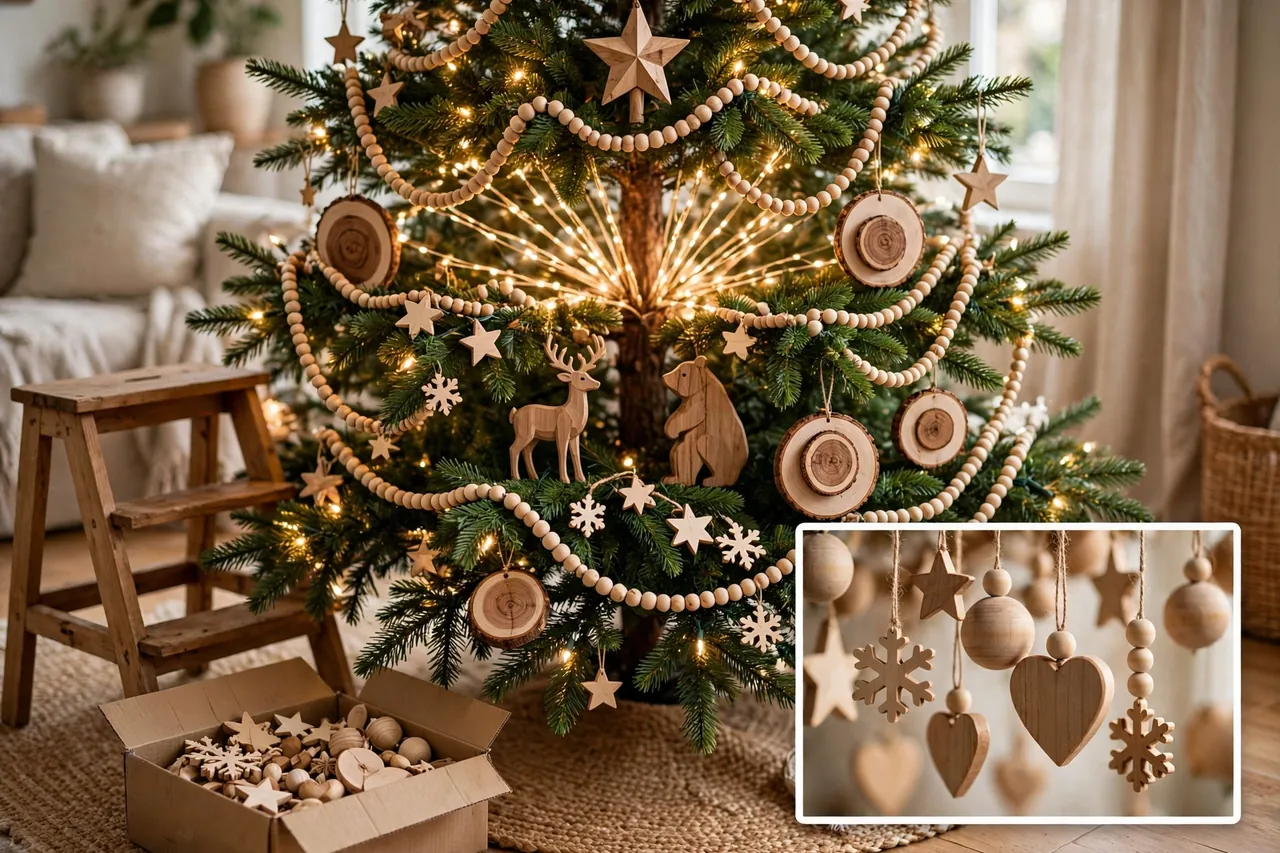
Flat ornaments are the workhorses of a wooden tree. Stars, snowflakes, hearts, trees, and reindeer cut from thin wood hang light on the branches, and they catch light without weighing branches down. Wood slices, cut across a branch or small log, show the tree rings and bark edge, and they suit names, dates, and short words.
Carved figures and bead garlands
Carved figures add weight and story. A small wooden angel, a reindeer, a house, or a nativity figure gives the eye a place to rest. Use carved pieces sparingly, one or two per tree zone, so they read as treasures instead of clutter. A carved topper, such as a wooden star or angel, can crown the whole tree and tie the wood theme together.
Wooden bead garlands do a quiet but powerful job. They wind through the branches like a soft line, and they break up the green without adding shine. Natural wood beads suit a calm tree. Painted beads in cream, red, or gold add color while they keep the wood feel. Drape a bead garland in loose waves, not in a tight spiral, so the tree still shows through.
Decorative wooden Christmas trees
Decorative wooden Christmas trees earn their own moment. A small layered wooden tree on a table gives you the whole ritual in a small space: lights, a few tiny ornaments, and a star, without a full-size tree. A flat wooden tree on the wall suits a rental or a tiny room, and it packs flat in January.
How to Decorate a Tree With Wood, Step by Step
Wood decor rewards a calm order. Work in layers, step back often, and let the wood lead. Follow these steps in order, and your tree will look planned instead of piled.
- Set your wood palette first. Choose one main wood tone and one accent finish, then gather only pieces that fit both. Put the rest back in the box for another year.
- Shape the tree and add lights. Fluff the branches, then string warm white lights from the trunk outward. Warm light flatters wood and makes the grain glow. Cool white light can make pale wood look gray.
- Drape the bead garland. Wind one wooden bead garland in loose waves from top to bottom. Step back and check that the waves look even before you add ornaments.
- Hang the largest wooden pieces first. Place carved figures and large slices deep in the tree, near the trunk, at eye level and just above. These anchors set the rhythm for everything else.
- Add medium ornaments in clusters. Hang stars, snowflakes, and slices in small groups of three or five, close together, at different depths. Clusters read as rich moments, while evenly spaced singles read as dots.
- Fill gaps with small pieces. Tuck tiny wooden beads, mini stars, and small slices into bare spots. Small pieces finish the tree without adding weight.
- Top the tree with wood. Add a wooden star or angel that matches your main finish. Check its size and weight first, because a heavy topper can lean on a thin top branch.
- Step back in low light. Turn the room lights down, walk to the far side of the room, and look for bare spots, color clumps, or a leaning topper. Fix those now, not on Christmas Eve.
Pairing Wood With Glass, Metal, and Greenery
Wood loves company, but it needs the right partners. The goal is contrast without a fight. Wood brings matte warmth. Glass brings shine. Metal brings sparkle. Greenery brings fresh color. Together, they make a tree that feels rich instead of flat.
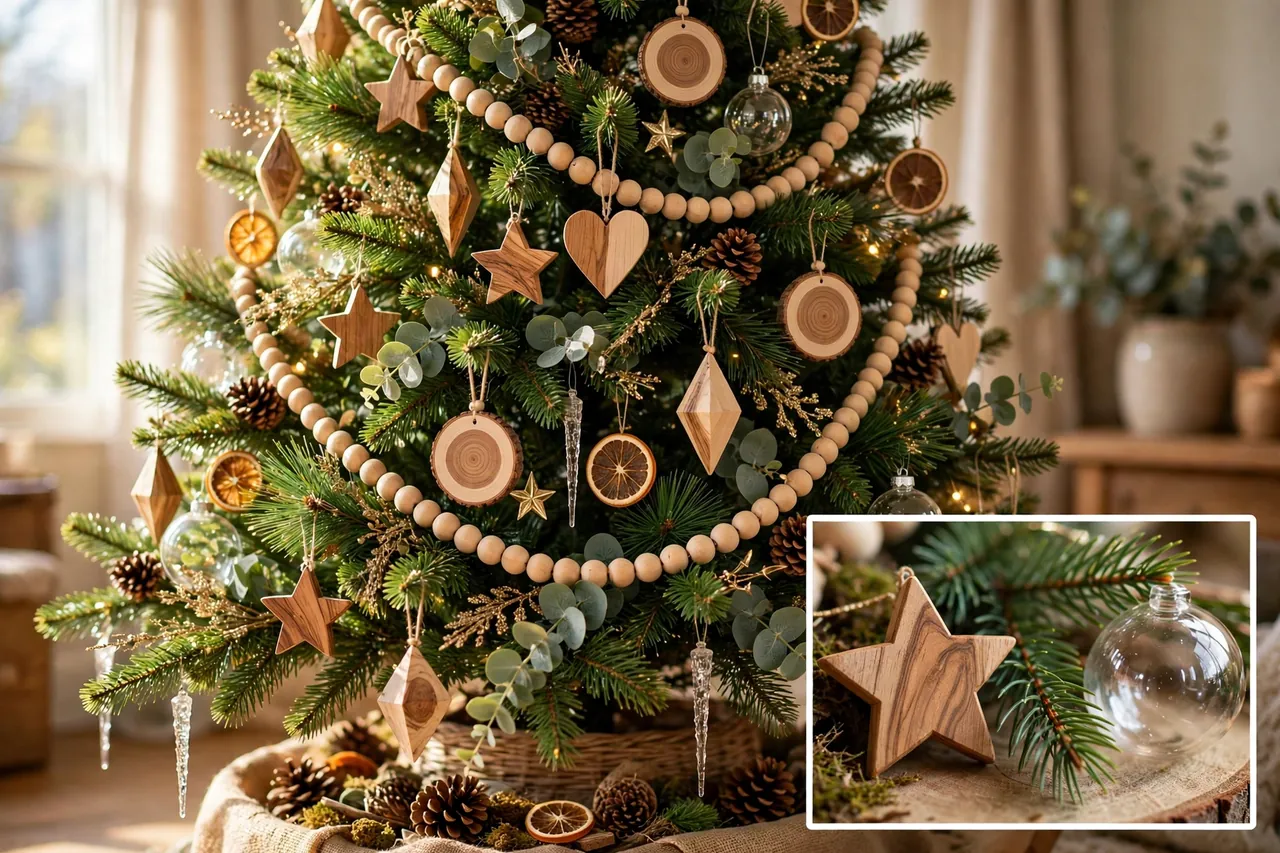
Start with glass in small doses. Clear glass balls and icicles catch light and throw it back, which helps wood glow in a dim room. Keep glass to about one piece in every four or five ornaments, so wood still leads. If glass takes over, the tree stops feeling wooden and starts feeling glittery.
Greenery ties wood to the tree itself. Real or faux pine sprigs, eucalyptus, and dried orange slices warm a wooden tree and keep it from feeling like a craft display. Tuck sprigs deep in the branches, not just on the tips, so the green reads as part of the tree. Pinecones work the same way, and they echo the wood theme without adding a new material.
For the wider room, carry the wood theme gently beyond the tree. A wooden tray on the coffee table, a few wooden ornaments in a bowl, or a small wooden tree on the mantel echoes the main tree without copying it. Our guide to decorating ideas for a living room for Christmas shows how to spread one palette through the room, and our guide to Christmas ideas for decorating a fireplace mantel helps you echo the wood on the mantel. A small village scene under the tree can extend the story too, and our guide to a Christmas village display shows how to build one without crowding the presents.
Wood Is a Material, Not Just a Style
This point matters, because wood often gets mixed up with other tree styles. Rustic is a style, and it paints a picture of a cabin in the woods, with pinecones, plaid, and rough textures. Farmhouse is a style too, and it leans on gathered, homey pieces, gingham, and signs. Flocked describes snow-dusted branches, not a material. Miniature describes size, not material.
Wood cuts across all of those styles. A wooden ornament can sit happily on a rustic tree, a farmhouse tree, a modern tree, or a classic tree, and it still reads as wood. That is why this guide stays material-led. Pick the wood first, then choose the style mood around it, and the tree will feel coherent instead of confused.
Our guide to Christmas tree themes maps the big style families side by side, and it helps you pick one style word before you shop. If you love a white tree, our guide to white Christmas tree decorations shows how wood warms a pale tree without dulling it. And if you want the whole house to agree with the tree, our guide to indoor Christmas decorations spreads one look room by room.
Make Your Own Wooden Ornaments Safely
Making your own wooden ornaments is one of the best parts of a wooden tree, and it suits beginners well. Start simple, and let the wood do most of the talking. A painted wood slice, a bead garland, or a star cut from thin wood all make lovely first projects.
Read the safety notes before you start any cutting, sanding, or drilling. Safety comes first, and it only takes a minute.
- Wear safety glasses when you cut, sand, or drill wood, and keep loose sleeves and long hair away from saws and drills.
- Work in a well-ventilated space when you sand, paint, or seal wood, and let each coat dry fully before you handle the piece.
- Use a clamp or a vise to hold small pieces while you drill or sand them, and keep your fingers clear of the drill path.
- Use a stable step stool, never a chair, when you reach the top of the tree, and ask someone to hold the stool and the tree steady.
- Check light strings for worn cords or loose bulbs before you hang them, and switch lights off when you leave the house or go to bed.
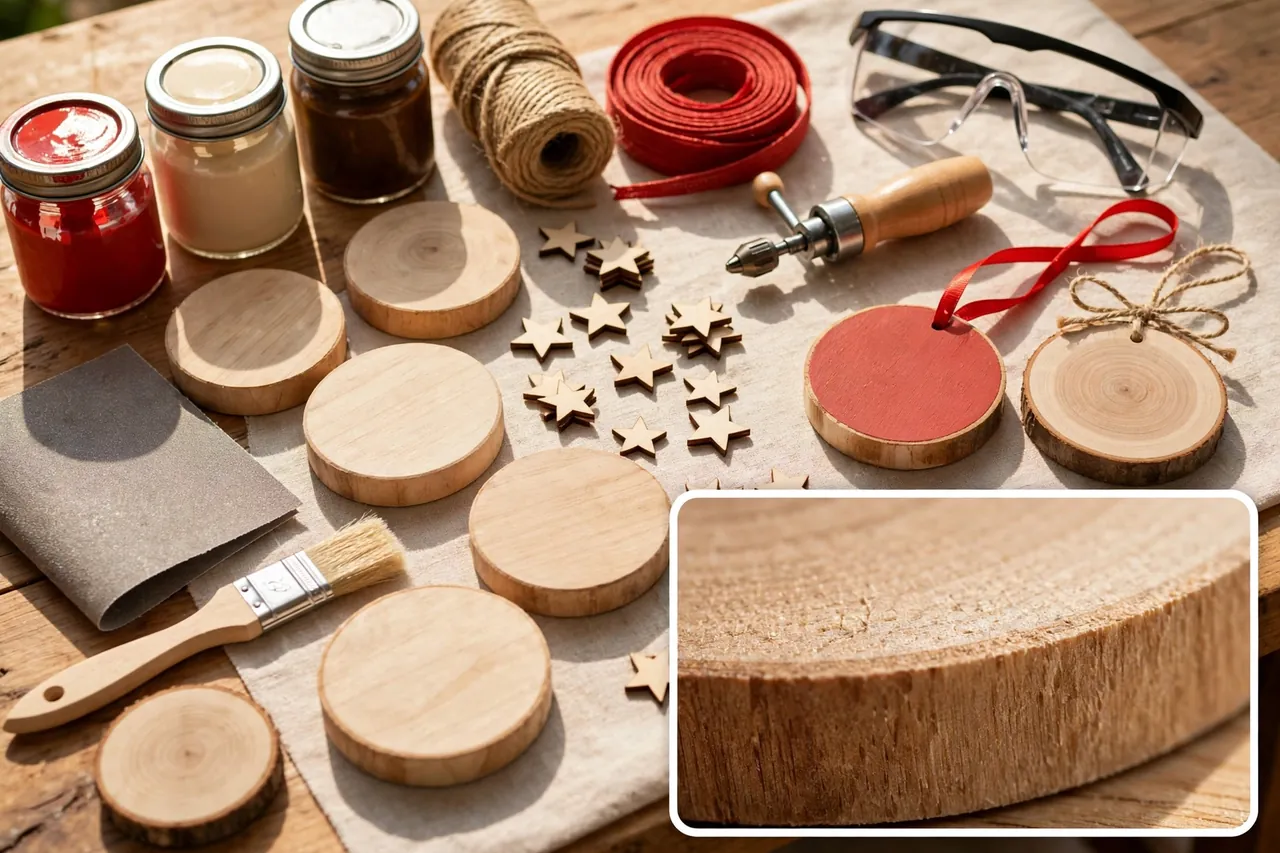
Now try a simple first project. You will need wood slices or thin wooden shapes, acrylic paint or stain, a brush, fine sandpaper, ribbon or twine, and a small drill or hand awl.
- Sand the edges smooth. Rub fine sandpaper along every edge until it feels smooth. Wipe the dust off with a dry cloth.
- Paint or stain one side. Paint a simple shape, a word, or a wash of color, then let it dry fully. Paint the other side only after the first side feels dry.
- Seal the piece lightly. Brush on one thin coat of clear sealer if the maker recommends it, and let it dry fully. A thin coat protects the wood without hiding the grain.
- Add the hanger. Drill a small hole near the top, or use a shape that already has one, then thread ribbon or twine through it and tie a firm knot.
- Test it on the tree. Hang the ornament, step back, and check the weight and the look. If it pulls the branch down, move it to a stronger branch or use a lighter piece.
A guide to DIY wooden Christmas ornaments follows the same order: shape first, finish second, and hang the largest pieces at eye level so the tree reads in a clear rhythm.
Wooden Christmas Tree Decorations at a Glance
This quick reference pulls the whole guide into one place. Use it while you shop, while you decorate, and while you pack away.
Quick reference
| Decision | Simple rule | Why it works |
|---|---|---|
| Wood palette | One main tone, one accent finish | The tree reads as one family |
| Lights | Warm white, trunk outward | Wood glows instead of looking gray |
| Order | Lights, garland, large, medium, small, topper | Each layer supports the next |
| Partners | Glass and metal as accents only | Wood stays the lead material |
| Storage | Dry, wrapped, off damp floors | Wood lasts for many seasons |
Care, Cleaning, and Storage for Wooden Decorations
Wood rewards gentle care. It does not need much, but it does need dryness. Wood is porous, so damp storage can cause warping and mold, while dry, steady storage keeps pieces looking warm for years.
Clean wooden ornaments with a dry, soft cloth first. Dust falls off easily, and a dry cloth protects paint and finish. For grooves and knots, use a soft brush and work gently along the grain. If a piece needs a damp wipe, use a barely damp cloth only when the maker allows it, and dry the piece fully before you hang it or store it. Never soak wooden ornaments, and skip scented polishes and solvents on pieces children may touch. A care guide for wooden ornaments gives the same order: dust first, damp only when the maker permits it, and dry fully before storage.
Wrap each piece in tissue paper and pack it in a sturdy box with dividers, so pieces do not rattle against each other. Keep the box in a cool, dry closet or cupboard, not in a damp garage or against an outside wall, where damp and temperature swings do more harm. Add a silica gel packet to the box if you have one, and keep the box off the floor. Our guide to Christmas tree storage bags covers the tree itself, and the same dry, labeled, off-the-floor rule protects your wooden ornaments too.
Safety Around a Wooden Tree
Wood is warm and natural, but it can still burn, so treat a wooden tree with the same care you give any tree. Keep the tree at least three feet from fireplaces, radiators, space heaters, and candles, and never use lit candles to decorate the tree. The Illinois Office of the State Fire Marshal, reporting National Fire Protection Association guidance, gives the same three-foot rule and warns that a heat source too close to the tree causes one in every four Christmas tree fires, so distance is not a small detail. Use lights with a safety-testing label, check cords for wear before you hang them, and switch lights off when you leave the house or go to bed.
Disclaimer: This guide shares general decorating advice for a typical home. It does not replace your ornament maker’s care instructions, your light maker’s safety limits, or your fireplace maker’s clearance rules. If a piece feels damaged, a cord feels worn, or a placement feels too close to heat, trust that feeling, move the piece, and ask a professional before you light a fire or plug in a damaged string.
Related Guides
Rustic Christmas Tree Decorations: A Warm Woodland Look for Your Home · Farmhouse Christmas Tree Decorations: A Cozy, Gathered Look That Feels Like Home · Miniature Christmas Tree Decorations: Small Trees, Big Christmas Feeling
Frequently Asked Questions
What is the best wood type for wooden Christmas tree decorations?
Basswood and birch suit most ornaments best, because their fine, even grain cuts cleanly and takes paint and stain smoothly. Pine suits warm, classic shapes, and mango wood suits carved figures. Choose solid wood when you want the grain to show, and check for smooth, splinter-free edges.
Can I paint or stain my wooden Christmas tree decorations?
Yes, and water-based paints and stains suit beginners well. Sand the piece smooth first, paint or stain one thin coat, and let it dry fully before you add a second coat. Seal it lightly only if the maker recommends a sealer, and test your finish on the back of one piece first.
How do I clean a wooden ornament?
Dust it with a dry, soft cloth, and use a soft brush along the grain for grooves and knots. Use a barely damp cloth only if the maker permits it, and dry the piece fully before you hang or store it. Never soak wooden ornaments, and skip solvents and scented polishes on pieces children may touch.
How should I store wooden ornaments after Christmas?
Dust each piece, confirm it is fully dry, wrap it in tissue paper, and pack it in a sturdy box with dividers. Store the box in a cool, dry closet, off the floor and away from damp walls. A silica gel packet in the box helps control moisture, and a label on the box saves time next December.
Are wooden Christmas tree decorations safe around children and pets?
Wooden ornaments are often safer than glass, because they do not shatter, but small parts still need care. Choose smooth, sealed pieces with no tiny parts that can break off, hang unbreakable pieces low, and keep small beads, hooks, and carved pieces with tiny parts high and out of reach.
Wood gives your tree something no shiny bauble can give it: warmth you can feel with your eyes and your hands. Start with one wood tone, add warm light, and let a few honest pieces carry the season. Next December, when you open that labeled box and the grain glows again under the lights, you will be glad you chose a material that grows more beautiful with every year it stays in the family.