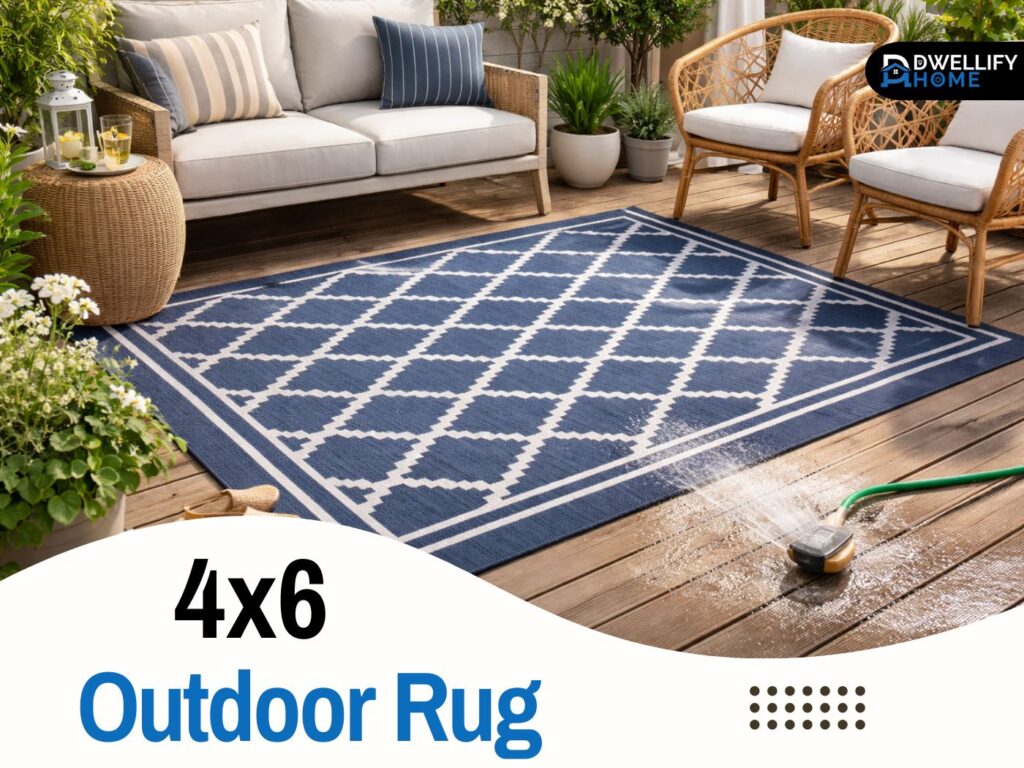
A small outdoor rug can change how a space feels. I have used this size in real outdoor spots that get full sun, sudden rain, dusty winds, and constant foot traffic. When it’s chosen well, it makes a balcony or porch feel finished and comfortable without adding maintenance stress.
A 4×6 outdoor rug is also one of the easiest sizes to live with. You can pick it up, shake it out, hose it down, and move it when the weather turns. The key is choosing a material and build that match your surface and your climate, not just the pattern you like.
Snippet-ready definition:
A 4×6 outdoor rug is a small, durable rug made for patios, decks, and balconies. The best ones dry fast, resist sun fading, and are easy to hose clean without trapping moisture underneath.
Mission Statement:
Dwellify Home helps homeowners make practical, good-looking choices for everyday living spaces, with clear guidance that works in real conditions, not just in staged photos.
What a 4×6 Outdoor Rug Is Best For (and When You Should Size Up)
This size shines in small, defined zones. On balconies, it can anchor a bistro set or a reading chair without swallowing the walkway. On porches, it works well as a “front-of-bench” rug or a soft landing zone near the door where shoes and dirt tend to collect.
I also like it for problem areas. For example, a small deck section near a grill often gets grease splatter and extra foot traffic. A tough patio rug 4×6 gives you a sacrificial surface that’s easier to clean than bare wood or textured concrete.
That said, it can look undersized if you’re trying to cover an entire seating group. If your outdoor sofa and chairs feel like they’re floating around the rug, it’s usually a sign to size up. A good rule I use on-site is this: the rug should either sit fully under the main front legs of the furniture, or it should clearly define a smaller zone on purpose, like a coffee corner or entry zone.
Quick Guide Table (comparison you can add in the article)
| If your outdoor space is… | Best rug type | Why it works | Watch-outs |
| Uncovered patio, heavy rain | Plastic weave (reversible patio mat) | Dries fast, lightweight, easy to rinse | Can feel firm underfoot |
| Sunny deck or patio, daily use | Polypropylene (olefin) flatweave | Good UV resistance, durable, easy care | Needs airflow under it |
| Smooth concrete or tile | Any + outdoor rug pad/grippers | Reduces slipping and edge movement | Avoid pads that trap water |
| Humid climate, shaded area | Mildew-resistant synthetic | Less odor risk, easier upkeep | Lift occasionally to dry |
| Covered porch, low rain | Washable outdoor rug | Comfortable, easy routine cleaning | Must dry fully to avoid musty smell |
| RV/camping setup | 4×6 outdoor rug plastic | Rolls up, shakes clean, quick-dry | Secure corners in wind |
Step-by-step “Buy Right the First Time” checklist (short and practical)
- Measure the exact spot and test door swing.
- Pick the material based on exposure: sun, rain, humidity, wind.
- Decide if you need non-slip (smooth concrete usually does).
- Choose a flatweave if drainage and easy cleaning matter most.
- Check reviews for curling, fading, and slipping issues.
- Plan quick care: shake, hose, dry fully.
Measure First: The 60-Second Sizing Check (So It Fits Right the First Time)
Before you buy anything, do a quick tape-measure check. Measure the width and depth of the area where the rug will live, then subtract a little breathing space so the rug doesn’t jam into railings, walls, or door thresholds.
Also check the door swing. I’ve seen plenty of beautiful rugs get chewed up because a door drags across the edge every time it opens. If the rug is near a slider or patio door, leave enough clearance so the rug edge stays flat and doesn’t become a trip point.
If you want a quick visual, lay painter’s tape on the floor in a 4 by 6 rectangle. Walk around it, open the door, pull a chair back. In two minutes you’ll know if it feels right.
Placement Layouts That Look “Designer” (Without Guessing)
“On the edge” layout (best for small seating areas)
This is my favorite approach for balconies and compact patios. The rug sits under the front portion of the seating setup, not buried under everything. You place the front legs of chairs on the rug, with a little border visible around the edges so it looks intentional.
It works because it leaves airflow and drainage around the rug, especially on wet decks. It also keeps the rug from becoming a furniture trap where water sits underneath. If you’ve had mildew smells before, this layout helps a lot.
Dining setup: chair-slide clearance (so chairs don’t catch)
For a small dining set, the biggest mistake is placing a rug that’s too tight. Chairs need space to slide without snagging the edge. With a 4×6 size, this setup works best for a compact bistro table, two chairs, or a small café style corner.
If you plan to pull chairs out often, keep the rug centered and ensure the chair legs land on the rug when seated. If the legs sit half on and half off, the rug edge curls faster and chair movement becomes annoying.
Pick the Right Material (This Is What Controls Durability)
Material matters more outdoors than almost anything else. I’ve seen a rug with a gorgeous pattern fail in one season because it held moisture or faded quickly. When you choose based on performance first, the styling part is easy.
Polypropylene outdoor rug options, often called olefin, are the most reliable all-around. They handle sun well, don’t absorb much water, and clean up easily. For most patios and decks, this is the safest pick if you want something that lasts and doesn’t demand special care.
If you need something lightweight for camping or an RV setup, a 4×6 outdoor rug plastic weave is hard to beat. These are often the reversible patio mat style. They dry fast, shake clean easily, and roll up for storage. The tradeoff is comfort, they can feel less soft underfoot than a woven polypropylene rug.
Cotton and washable blends can work in covered areas, like a screened porch that doesn’t get heavy rain. A 4×6 outdoor rug washable sounds convenient, but outside it’s only truly easy if it can dry fully and quickly. In damp climates, thicker washable textiles can stay wet longer than you’d expect.
Natural fiber blends like jute-mix can look great, but they are the riskiest in wet conditions. They can discolor, smell musty, and break down faster when they stay damp. If your space gets regular rain or morning dew, I usually steer people toward synthetic outdoor builds instead.
Waterproof vs Water-Resistant: What Those Labels Really Mean
This is a spot where marketing language can confuse people. Most outdoor rugs are water-resistant, not fully waterproof. They can handle rain and hose rinsing, but they still need airflow to dry.
When someone asks for an outdoor rug 4×6 waterproof, I first ask where it’s going. If it’s on an uncovered balcony where rain hits directly and water pools, you want a rug that sheds water and doesn’t trap it underneath. Plastic weave and flatwoven polypropylene are the safest choices for that situation.
The biggest issue I see is trapped moisture. A rug can be “outdoor safe” and still cause problems if it sits flat on a surface with no drainage. If your deck boards are tight or your concrete is slightly sloped the wrong way, water can linger under the rug. In that case, choose a lighter flatweave and occasionally lift the rug to let the surface breathe.
Features That Actually Matter (The “Don’t Regret It Later” Checklist)
Outdoor rugs live a harder life than indoor rugs, so features matter. I focus on these because they affect safety, fading, and how often you’ll want to replace the rug.
- UV resistance and fade resistance: essential for sunny patios
- Mold and mildew resistance: especially for humid areas
- Flatweave construction: tends to drain better and is easier to clean
- Edge binding and corner stability: helps prevent curling
- Weight: heavier rugs stay put, lighter rugs are easier to move and clean
- Backing: some rugs have a grippy back, but many need help on smooth surfaces
If your rug is going on slick concrete or tile, a non slip outdoor rug feature is a big deal. If the rug you love doesn’t have it, an outdoor rug pad or gripper tape can make it safer. Just make sure the pad is rated for outdoor use so it doesn’t trap water.
Best Rug Styles for a 4×6 Outdoor Space (Simple, High-Impact Choices)
With small rugs, style choices show up fast. A bold pattern can look great, but it can also overwhelm a narrow balcony. I usually suggest starting with a pattern scale that matches the space. Medium patterns and simple geometrics tend to age well outdoors and hide dirt.
Neutrals are the easiest for high-traffic spots near doors. If you want color, green is a good outdoor-friendly option because it plays well with plants and wood tones. A 4×6 outdoor rug green looks best when it echoes something already in the space, like planters, cushions, or a painted railing.
Reversible rugs are practical when the rug is in a messy zone. If one side looks worn or stained, flipping it buys you time. It also helps if your outdoor area changes seasonally and you want a different look without buying a second rug.
Cleaning & Maintenance (Easy, Real-World Care)
Weekly upkeep (shake, sweep, quick vacuum)
Most outdoor rugs stay in good shape with simple weekly care. Shake it out or sweep it, especially if it sits under trees or near a dusty street. A quick vacuum also helps, but avoid a beater bar on looser weaves because it can pull threads.
If the rug is near an entry, a quick brush-off routine prevents grit from grinding into the fibers. That grit is what makes rugs look tired early, more than rain does.
Deep clean (spot clean → soap + rinse → dry fully)
For deeper cleaning, I like a mild soap and a soft brush, followed by a thorough rinse. The goal is to remove grime without leaving soap residue that attracts more dirt.
Drying is the step people skip. Even mildew-resistant rugs can smell off if they never dry fully. If possible, hang the rug over a railing or fence for a few hours. On plastic weave rugs, a quick towel pass speeds things up and helps prevent water spots.
Weather & Surface Tips (Where Most People Mess Up)
Deck boards, concrete slabs, and pavers all behave differently under rugs. On wood decks, airflow matters. If the rug covers the same spot all season, you can end up with a shadowed area and uneven weathering. Rotating the rug every few weeks helps the surface age more evenly.
On concrete, the main issue is slipping and water pooling. If your slab has a low spot, water may sit under the rug. In that case, choose a flatweave, avoid thick padded rugs, and lift it occasionally after heavy rain.
On pavers, the texture can wear down rug edges faster, especially if the rug shifts. A pad or corner grips can reduce movement and extend the rug’s life.
Safety & Comfort Add-Ons (Worth It in High-Traffic Areas)
If the rug is near a door, on steps, or in a spot where kids run around, safety matters more than style. Even a small shift can cause a trip.
An outdoor rug pad can help on smooth surfaces, but only use one that drains and dries well. If you don’t want a full pad, outdoor rug corner grippers can be enough for a 4×6 size.
For comfort, consider what you do barefoot. Plastic weave rugs are great for practicality, but they can feel firm. A woven polypropylene rug often feels softer while still staying outdoor-friendly.
Where to Buy a 4×6 Outdoor Rug (Online vs “Near Me”)
Sometimes you want to see the texture in person, especially if comfort matters. Buying a 4×6 outdoor rug near me also makes returns simpler if the color doesn’t match your space.
Big home retailers are practical for outdoor rugs. A 4×6 outdoor rug Home Depot option is often easy to pick up quickly, and you can check thickness and backing in person. A 4×6 outdoor rug Lowe’s selection can be similar, especially during the outdoor season when they bring in more patio inventory.
Online stores can offer more pattern variety, but read the details carefully. Look for material type, UV notes, and cleaning guidance. If reviews mention corners curling, that’s worth paying attention to because small rugs show curling more than large rugs do.
Getting a Good Deal Without Buying Junk
Outdoor rugs are one place where bargain hunting can work, as long as you check the basics. A 4×6 outdoor rug clearance find can be great at the end of summer when stores rotate seasonal stock.
What I avoid is “cheap for the sake of cheap.” If the listing is vague about materials or the edges look unfinished, it often won’t hold up. A few minutes of checking saves you from replacing the rug next season.
Here are quick red flags I’ve learned to take seriously:
- Multiple reviews mention fading within weeks
- Corners won’t lay flat or curl badly
- Backing feels slick on smooth surfaces
- Strong chemical smell that doesn’t fade
Also check the return policy. Outdoor rugs can look different in real sunlight than they do on a screen.
Quick Buyer Checklist (Read This Before You Click “Add to Cart”)
Before you commit, run through this short list. It keeps the decision simple.
- Your measurements work with door swing and thresholds
- The material fits your weather and how wet the area gets
- UV and mildew resistance are mentioned clearly
- You have a plan for grip on smooth surfaces
- Cleaning feels realistic for your routine
- Weight makes sense for wind and portability
Conclusion
A good small outdoor rug isn’t about chasing the fanciest pattern. It’s about picking a build that handles your actual conditions, then choosing a style that feels calm and intentional in the space.
If you remember just three things, make them these: measure and check door clearance, choose a material that dries well, and plan for grip if the surface is smooth. Do that, and a 4×6 outdoor rug can stay looking good through sun, rain, and everyday life without turning into another chore.
Disclaimer:
This article shares general guidance based on real-world outdoor rug use and common material performance. Conditions vary by climate and surface. Always follow the manufacturer’s care instructions and safety notes for your specific rug and flooring.

I’m Bilal Hassan, the founder of Dwellify Home. With 6 years of practical experience in home remodeling, interior design, and décor consulting, I help people transform their spaces with simple, effective, and affordable ideas. I specialize in offering real-world tips, step-by-step guides, and product recommendations that make home improvement easier and more enjoyable. My mission is to empower homeowners and renters to create functional, beautiful spaces—one thoughtful update at a time.