A home starts to feel memorable when it stops looking like it was copied from a showroom. That shift usually happens in small decisions: a worn wood side table beside a clean-lined sofa, a dark lamp that changes the mood of a room at night, a handmade ceramic bowl that feels more personal than a matching set from a big box store. Good interiors don’t need to be loud, but they do need some point of view.
That’s where alternative home décor comes in. It’s less about following one strict style and more about building a space that feels collected, thoughtful, and a little unexpected. In real homes, the best results usually come from mixing comfort with character, not chasing a perfect theme from top to bottom.
Snippet-Ready Definition
Alternative home décor refers to decorating styles that move beyond traditional interiors by using eclectic pieces, vintage items, bold textures, and personal objects to create a unique and expressive living space.
Mission Statement
Dwellify Home helps homeowners make practical, stylish, and informed décor decisions through clear guidance, real-world insight, and thoughtful design ideas.
What Makes a Home Feel “Alternative” Instead of Traditional
A traditional room often leans on safe choices: matching furniture, predictable wall art, and colors that don’t ask for much attention. An alternative space usually feels more personal because it has contrast. That might mean mixing old and new pieces, choosing sculptural lighting instead of standard lamps, or using décor that tells a story rather than simply filling empty corners.
The difference is often in the editing. A room doesn’t become interesting just because it has unusual objects in it. It feels intentional when those objects relate to each other in some way through color, texture, shape, or mood. That’s why the most successful unconventional interior design still has structure behind it. It may look relaxed, but it’s rarely random.
Key Benefits of Alternative Home Décor
- Creates a home that feels personal rather than showroom-styled
- Encourages mixing vintage, handmade, and modern pieces
- Adds depth through texture, lighting, and unusual accessories
- Supports sustainable decorating through thrifted or repurposed items
- Helps rooms feel more relaxed, collected, and authentic
Choosing an Alternative Style That Fits Your Home
One mistake people make is trying to combine every interesting style they like into one room. Moody colors, bohemian textiles, vintage furniture, industrial metal, and whimsical accessories can work together, but not all at once and not in equal amounts. It helps to decide what should lead. Some homes work better with dark and moody interiors, while others feel stronger with lighter walls and just a few bold accents.
The room itself matters too. A small apartment with limited daylight may need a softer version of this look, using texture and shape more than heavy color. A larger room with high ceilings can usually handle deeper paint, oversized art, and more dramatic alternative home furnishings. The goal isn’t to force a style into the space. It’s to let the space support the style.
1. Mix Vintage Pieces With Modern Furniture
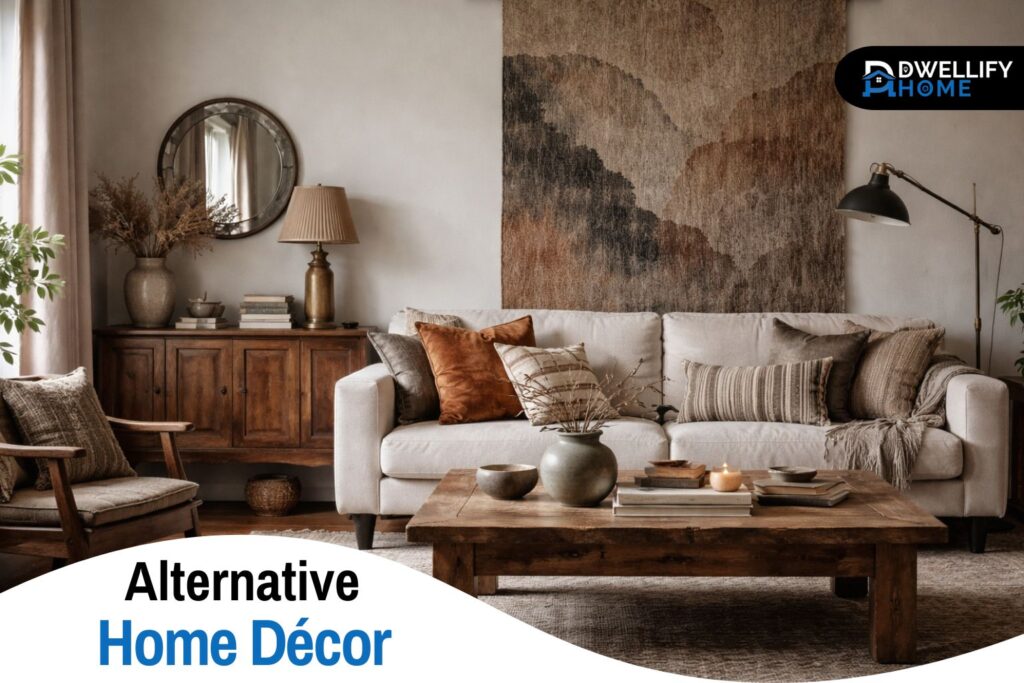
This is one of the easiest ways to give a room character without making it feel themed. A modern sofa beside an older coffee table or a clean bed frame paired with a vintage dresser usually creates more depth than buying everything new from one collection. The contrast makes both pieces look better.
The safest place to start is with smaller vintage accents that are easy to live with. Mirrors, side tables, lamps, chairs, and wood stools tend to mix well with newer pieces. In practice, one old item with real presence often does more for a room than five trendy accessories. Vintage home accents also tend to soften spaces that feel too flat or overly polished.
2. Replace Traditional Wall Art With Creative Wall Displays
A lot of homes rely on framed prints because they’re easy. There’s nothing wrong with that, but walls can do more than hold standard artwork. Decorative mirrors, hanging textiles, sculptural wall pieces, open shelving, mural-style wallpaper, and even a carefully arranged group of found objects can bring a stronger sense of identity into a room.
The key is scale and placement. One large wall feature usually works better than several small competing ones. In bedrooms, a textile hanging can add softness without the visual stiffness of framed art. In dining areas or entryways, a mirror or antique-style wall object can create a focal point with less effort. This is one of the most practical alternative home décor ideas because it changes the feel of a room quickly without requiring a full redesign.
3. Use Texture to Add Depth and Personality
Texture often does more work than color, especially in homes that don’t want to feel busy. Linen curtains, velvet cushions, wool throws, raw wood, aged metal, stone, and handmade ceramics all create a room that feels layered and lived in. Even a neutral palette can feel rich when the materials have enough variation.
This is where people often overlook the small details. A room with smooth surfaces everywhere can feel cold, even when the furniture is expensive. Adding textured textiles, a woven rug, matte ceramics, or a rough wood bench can fix that fast. In real spaces, texture is often what makes unique home décor feel grounded rather than decorative for its own sake.
4. Experiment With Moody or Bold Color Palettes
Alternative spaces often lean into stronger color choices, but that doesn’t mean every room needs black walls or dramatic paint. Deep green, brown, burgundy, charcoal, muted plum, and earthy rust can all add mood without making a home feel heavy. The balance usually comes from pairing darker tones with natural wood, soft fabrics, and warm light.
A common mistake is using dark color everywhere at once. It tends to work better when it has room to breathe. You might keep the walls lighter and bring in moody home décor through curtains, lampshades, cushions, side chairs, or painted furniture. That gives you depth without committing the whole room to one intense move.
5. Let Statement Lighting Become a Design Feature
Lighting is one of the fastest ways to shift a room from ordinary to memorable. A sculptural lamp, vintage-style sconce, pleated shade, ceramic base, or oversized pendant can act almost like functional art. During the day, it shapes the room visually. At night, it changes the mood completely.
Homes with personality usually have layered light rather than one harsh ceiling fixture doing all the work. A table lamp near a chair, a wall light in a hallway, and softer ambient light around the room create a more thoughtful atmosphere. Statement lighting also works especially well in spaces that need character but don’t have room for much extra décor.
6. Add Botanical Elements for Natural Character
Plants bring life into a room in a way that store-bought accessories often can’t. A tall plant in a corner, a cluster of smaller pots on a shelf, or a few branches in a ceramic vase can break up hard lines and make a room feel more settled. Botanical home décor works especially well in homes that mix vintage, handmade, and natural materials.
Fresh greenery isn’t the only option. Dried stems, olive branches, seed pods, and sculptural branches can all work in a more understated way. The container matters as much as the plant. Handmade pots, stoneware planters, and aged terracotta usually fit better than shiny plastic or overly polished pieces. This is one of those small decisions that changes the tone of a space more than people expect.
7. Choose Home Accessories That Tell a Story
The strongest rooms usually have a few objects that feel personal. That might be handmade ceramics, old books, travel finds, inherited pieces, collected candles, or unusual sculptural décor. These items don’t need to be expensive. They just need to feel chosen rather than added at the last minute to fill a shelf.
The easiest way to keep alternative home accessories from looking random is to repeat something subtle. That could be a material, a shape, or a color family. For example, a shelf can hold very different objects and still feel cohesive when they all share earthy tones or matte finishes. Good styling is less about quantity and more about relation.
8. Repurpose or Thrift Unique Furniture and Décor
Secondhand shopping is one of the best ways to create a home that doesn’t look mass-produced. Older furniture often has better shape, stronger materials, and more character than newer pieces at the same price point. Thrifted home décor also gives you room to experiment without overspending.
Repurposing works best when the piece already has something going for it. A side chair with a good silhouette can be reupholstered. A solid wood cabinet can be refinished or used in a different room than expected. A small vintage table can become a nightstand. The point isn’t to buy something because it’s cheap. It’s to notice when a piece has enough character to earn a place in the room.
9. Create a Unique Look Without Overcrowding the Room
One of the biggest problems in alternative home design is overfilling the space. People get excited about layered interiors and assume more objects mean more personality. Usually, the opposite is true. Too many statement pieces start competing with each other, and the room loses its direction.
A better approach is to choose a few anchors and let them stand out. That could be one dramatic lamp, one bold rug, one textured wall treatment, and a few smaller artisan home accessories around them. Negative space matters. It gives the eye a place to rest and helps unusual pieces feel intentional rather than messy.
10. Shop More Intentionally for Alternative Home Décor
Shopping well matters more than shopping often. The easiest way to lose the personality of a room is to buy everything in one weekend from the same source. A more original home usually comes together in stages, with pieces from vintage markets, local makers, small online shops, handmade sellers, and a few reliable mainstream basics.
When comparing alternative home decor stores or smaller décor brands, pay attention to material, finish, scale, and whether the piece will still make sense six months from now. That’s especially important with rugs, lamps, mirrors, and larger furniture. Good alternative home furnishings don’t have to look extreme. They just need enough character to make the room feel like it belongs to someone real.
Alternative Home Décor Ideas by Room
The living room usually benefits most from contrast. A vintage coffee table, textured rug, layered lighting, and a few sculptural objects can shift the space quickly. Bedrooms often work better with softer moves such as darker bedding, a unique bedside lamp, a wall hanging, or a moody paint color used in moderation. Entryways are a good place to be slightly bolder because they don’t need the same level of comfort as a main living space.
Kitchens and dining spaces can carry this style too, just in a more practical way. Open shelves with ceramics, unusual pendant lighting, antique-style hardware, wooden boards, and collected tableware can add personality without getting in the way of daily use. The best room-by-room decisions usually come from asking one simple question: what can change the mood here without making the room harder to live in?
Common Mistakes That Make Alternative Home Design Look Forced
The most common mistake is trying too hard to make the room look different. That usually leads to buying novelty items instead of building a space with depth. Another issue is committing too heavily to one narrow look, whether that’s gothic, bohemian, industrial, or retro. Rooms feel stronger when they borrow from a style without becoming trapped by it.
Function gets ignored a lot too. A chair still has to be comfortable. A side table still has to work beside the bed. A dark room still needs enough lighting to live in. The homes that feel most convincing are the ones where personality and practicality exist together. That balance is what keeps a room from feeling staged.
Frequently Asked Questions
What is the 3-5-7 rule for decorating?
The 3-5-7 rule suggests grouping decorative items in odd numbers. Groups of three, five, or seven usually look more natural and balanced than even-numbered arrangements.
What is the 3 4 5 rule in decoration?
The 3-4-5 rule focuses on layering different heights and shapes. A typical arrangement might include a tall object, a medium item, and a shorter accent to create visual balance on shelves or tables.
How to decorate a house without clutter?
Choose fewer decorative pieces and focus on items with meaning or function. Leave open space around furniture and shelves so key décor pieces stand out rather than competing with each other.
What is the 80/20 rule in decorating?
The 80/20 rule suggests that about 80 percent of a room should stay neutral or calm, while the remaining 20 percent introduces bold colors, textures, or statement pieces.
How do you make a home look unique without overspending?
Start with secondhand finds, handmade accessories, and statement lighting. Mixing older items with simple modern furniture often creates a more original look without needing a full redesign.
Conclusion: Alternative Home Décor Works Best When It Reflects Your Personality
The best results come from choices that feel considered, not rushed. A home with character usually grows piece by piece through better lighting, stronger textures, more personal accessories, a few secondhand finds, and a willingness to move beyond matching sets. That process tends to create spaces that feel warmer, more original, and easier to remember.
Alternative home décor works best when it reflects how you actually live, what you’re drawn to, and what you want to notice every day in your own space. Start with one or two changes that add real character, then build from there. That’s usually how a room stops looking decorated and starts feeling personal.
Disclaimer
The information provided on Dwellify Home is intended for educational and inspiration purposes. Décor choices may vary depending on individual preferences, budgets, and living spaces.

I’m Bilal, the founder of Dwellify Home. With 6 years of practical experience in home remodeling, interior design, and décor consulting, I help people transform their spaces with simple, effective, and affordable ideas. I specialize in offering real-world tips, step-by-step guides, and product recommendations that make home improvement easier and more enjoyable. My mission is to empower homeowners and renters to create functional, beautiful spaces—one thoughtful update at a time.