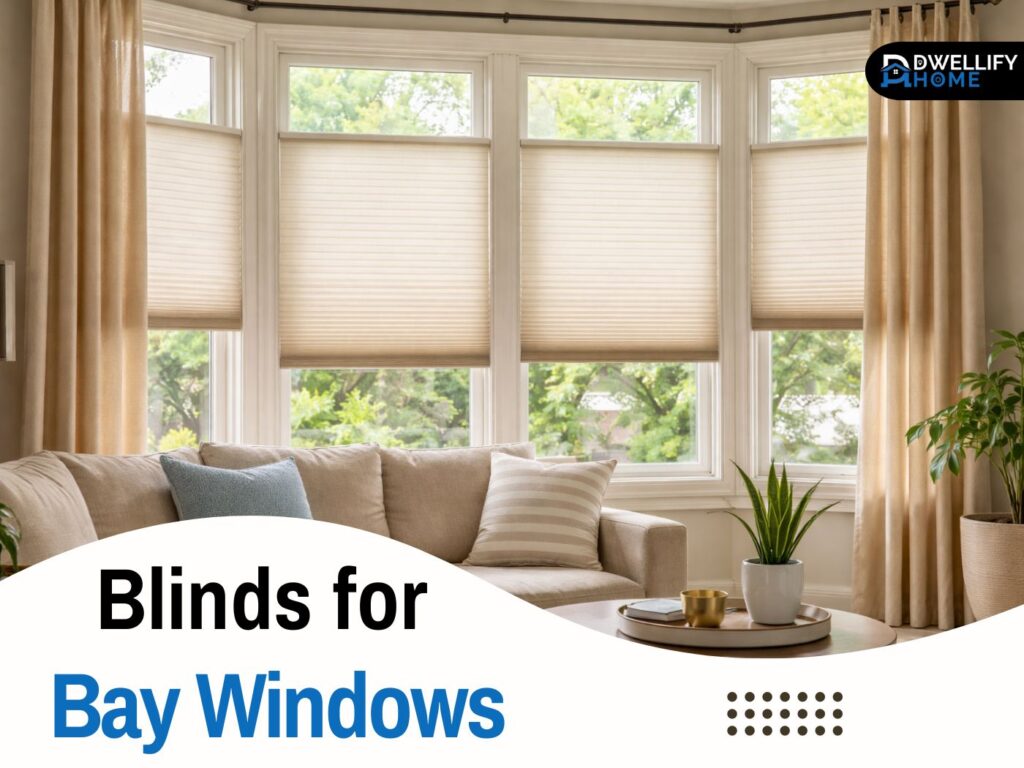
Bay windows look beautiful, but they can be frustrating to cover. The angles create odd corners, the frames aren’t always perfectly square, and one wrong measurement can leave you with blinds that bump into each other or never sit straight.
I’ve measured and installed bay window treatments for more than a decade, and the biggest lesson is simple: don’t pick a style first. Start with the window’s shape and depth, then choose the blind that will actually work day to day.
By the end of this guide, you’ll know what to buy, how to measure it, and how to avoid the common mistakes that cost people time and money.
Snippet-ready definition:
Blinds for bay windows are window coverings sized for each angled pane, designed to manage light, privacy, and insulation without bumping at the corners. The right choice depends on depth, angles, and how you use the room.
Mission Statement:
At Dwellify Home, our mission is to help homeowners make confident, practical choices for better living spaces, with clear advice that respects real budgets, real rooms, and real day-to-day use.
Quick answer: What are the best blinds for bay windows?
If you want the short version before we get into details, these are the options I see working most often in real homes.
- Cellular (honeycomb) shades: great for tight corners and better insulation
- Venetian and faux wood blinds: strong privacy and light control, especially with slimmer slats
- Roman shades: soft and tailored, popular for bay window living rooms
- Roller shades: clean look, best when you understand the gap trade-off
- Plantation shutters: the most consistent coverage, usually the premium choice
There isn’t one best option for every bay. The “best blinds for bay windows” depends on your window depth, how close the panels sit at the angles, and what you need more, privacy, light control, warmth, or a clean look.
Quick Guide Table: What works best on bay windows
| Option | Best for | Why it works | Watch-outs |
| Cellular (honeycomb) shades | Drafty rooms, tight corners | Slim profile, great insulation, forgiving fit | Fabric needs gentle cleaning |
| Faux wood or Venetian blinds | Strong privacy and light control | Tilting slats gives precise control | Slat size and headrail depth must fit |
| Roman shades | Living rooms, softer look | Tailored, warm, design-friendly | Stack height can reduce view when raised |
| Roller shades | Minimal, modern spaces | Clean lines, easy operation | Side light gaps are common on angled panes |
| Vertical blinds or panel track | Very wide bays, some bow windows | Flexible coverage, easy to move | Style matters, choose modern fabrics |
| Plantation shutters | Long-term, built-in finish | Consistent coverage, durable, great privacy | Higher cost, usually custom-measured |
Step-by-step mini guide: How to choose without costly mistakes
- Identify the window type
Bay, box bay, or bow. Bow windows often need more separate panels. - Measure each pane separately
Don’t assume both side windows match. Measure width and height per pane. - Check depth before choosing a style
Depth affects inside-mount fit and whether blinds will feel bulky or collide at the corners. - Do the corner collision test
A simple cardboard template helps you see if headrails will bump at the angles. - Pick by your main goal
- Insulation: cellular
- Light and privacy control: faux wood or Venetian
- Soft look: Roman
- Minimal look: roller plus curtains if needed
- Best overall coverage: shutters
Know your window first: Bay vs bow vs box bay (why it matters)
Before you buy anything, take a minute to identify what you’re working with.
A typical bay window has three sections, a larger center pane and two angled sides. A box bay is similar but the side panes are closer to 90 degrees. A bow window has more panes and a softer curve, and that curve changes everything about mounting and stacking space.
Why it matters: the tighter the angles, the more likely the blinds can collide at the corners when you raise or tilt them. On bow windows, you may also have more individual panels, which makes “one big blind” ideas unrealistic. For bow window blinds, I often lean toward simpler profiles like cellular shades, or treatments that tolerate slight variation pane to pane.
The 3 measurements that decide everything (before you shop)
Most bay window problems start with guessing. Here’s what I measure every time, even in small rooms.
First, measure each pane separately. Don’t assume the side panes match. I’ve seen bays where the left pane is half an inch narrower than the right, and that’s enough to create a noticeable gap.
Second, measure depth. Depth tells you whether you can do an inside mount with a neat, tucked-in look, or whether the blind will stick out and feel bulky. Depth also predicts corner collisions. If the headrail is too deep, two blinds can meet and rub at the angles.
Third, find the corner collision points. My simple method is a cardboard template. Press a thin piece of cardboard into the corner area where two panes meet, mark where the blind would sit, and you’ll see how much space you really have. This saves people from ordering wide headrails that can’t physically fit together.
Inside mount vs outside mount for bay windows
An inside mount is usually the cleanest look. It shows off the bay window’s shape and keeps the treatment tight to the glass. When the depth is good and the trim is fairly square, this is the route I prefer.
An outside mount is the problem-solver. I recommend it when the window doesn’t have enough depth, the frame is uneven, or you’re trying to reduce light gaps that come from tight angles. Outside mounts can also help if you want more room-darkening in a bedroom.
One real example: I worked in a living room where the bay window had gorgeous trim, but the depth was shallow on the side panes. We used inside-mounted cellular shades on the center pane and outside-mounted rollers on the sides, aligned carefully to look consistent. It wasn’t the “textbook” approach, but it worked because we respected the window’s limits.
Best blinds for bay windows: Choose by your goal (not just looks)
For insulation and energy savings: Cellular and honeycomb shades
Cellular shades are one of my first picks for bays, especially older homes where the window can feel drafty. The profile is usually slim, they fit into tight corners well, and they’re forgiving when your panes aren’t perfectly identical.
If you want privacy during the day without turning the room into a cave, look at top-down bottom-up styles. I’ve installed these in street-facing living rooms where homeowners wanted light at the top, privacy at eye level, and a tidy look from the outside.
For maximum light and privacy control: Venetian and faux wood blinds
Venetian blinds are still one of the best tools for controlling light and privacy. You can tilt slats to bounce daylight up while blocking sightlines, which is perfect for bay windows in busy neighborhoods.
Slat size matters. In tight bays, 1-inch faux wood blinds tend to reduce corner conflicts and can minimize visible gaps. 2-inch slats look more traditional and open the view more when raised, but they may need more depth. I prefer faux wood over real wood in humid areas because it’s less likely to warp.
For a soft, tailored living-room look: Roman shades
Roman shades are a favorite when homeowners want warmth and texture. They’re especially popular for blinds for bay window in living room setups where furniture is close to the window and you don’t want bulky hardware.
A practical tip: Romans look best when the folds line up across panes. If you go custom, ask how the maker handles pattern matching and stacking height. If you go ready-made, choose a solid or subtle texture so minor differences don’t stand out.
For clean, modern style: Roller shades (light-gap reality check)
Roller shades look simple and modern, and they’re great when you want the window to disappear into the background. The trade-off is that rollers can show side light gaps, especially on angled panes.
In real homes, I often recommend roller shades when the bay window is wide, the frames are consistent, and the homeowner plans to layer with curtains. If you need strong privacy at night, consider light-filtering fabric plus side panels, or step up to a different style.
For texture and warmth: Woven wood and natural shades
Woven wood shades add a natural texture that works well with cozy interiors. They’re a good fit for casual spaces, especially if you like the look of warm wood tones without heavy blinds.
Keep in mind: woven materials can let in pinholes of light. If that bothers you, choose a lined option or use curtains for evening privacy.
For wide bays and flexible coverage: Vertical blinds and panel-style options
Vertical blinds for bay windows get a bad reputation because people picture old office blinds. But modern verticals and panel tracks can be surprisingly practical for wide bays or bow windows where you have many panes and need easy operation.
They’re also a solid choice in rooms where you open and close the blinds constantly, like a busy family living space. The key is choosing a cleaner fabric vane or a modern panel style.
For a built-in premium finish: Plantation shutters
If you want the most consistent coverage and a “built-in” look, shutters are hard to beat. They handle angles well, offer great privacy and airflow control, and they don’t sway or shift like some fabric shades can.
They’re usually a bigger investment, so I suggest them when the bay window is a main feature of the home, and you plan to stay long enough to enjoy the upgrade.
Blinds for bay window in living room: Simple style formulas that work
Most living rooms need a mix of privacy, light control, and visual balance. Here are a few formulas that rarely fail.
- Cellular shades + curtain panels: practical and soft, good for street-facing rooms
- Romans alone: clean and tailored, especially if the bay is the main focal point
- Woven wood + light curtains: warm and relaxed, great with neutral decor
If you want blinds for bay window ideas that look finished, aim for consistency. Match the color tone across panes and keep the hardware similar, even if the blind type changes slightly to fit the window’s depth.
Bay window blinds and curtains ideas: Layering without bulky corners
Layering can make a bay window feel more intentional, but it can also look cluttered if you overbuild it.
My rule: keep one layer functional and the other layer decorative. For example, blinds for daily light control, curtains for softness and evening privacy. If you put heavy fabric plus bulky headrails on every pane, the corners get crowded fast.
Use a bay-specific rod or track if possible. And make sure the curtain “stack back” doesn’t block the side panes when open. In many living rooms, that means placing the rod slightly wider than you think, so the curtains sit outside the glass area.
Common problems (and the fixes pros use)
Shallow depth is the biggest issue I see. If the window doesn’t have enough depth, avoid thick headrails and look at cellular shades or outside mounts.
Corner collisions happen when two blinds meet at a tight angle. Slimmer products, careful measuring, and that cardboard template method usually prevent it.
Light gaps between sections are normal on many bays, but you can reduce them. Slimmer slats, better inside-mount fit, or switching to shades instead of blinds can help. For true room darkening, outside mounts or shutters are often the better route.
Uneven frames are common in older homes. If your measurements vary from top to bottom, outside mount can hide the imperfections and still look neat.
Where to buy blinds for bay windows (budget to custom)
For budget shopping, you’ll see options at big retailers, and they can work fine when the bay window is fairly standard.
- Blinds for bay windows IKEA: good for simple windows, but watch depth and limited sizing
- Blinds for bay windows Home Depot: lots of choices, and you can compare materials in person
- Specialty online blind stores: often offer better measuring guides and more customization
When I recommend custom: tight angles, odd depths, strong privacy needs, or when the bay window is a major feature you want to look seamless. Custom doesn’t just mean nicer fabric, it often means fewer gaps and fewer installation surprises.
Installation tips that save time (and prevent regrets)
Start by installing the center section first. It gives you a visual reference, and it helps you line up the side panes so everything feels level.
Choose cordless options where possible. Bays are often in family rooms and kids gravitate toward cords. Cordless also looks cleaner.
If your bay is tall or hard to reach, motorized blinds can be worth considering. I’ve installed them in homes where the bay window sits behind a sofa, and it changes how often people actually use the blinds.
Maintenance and longevity (so they keep looking good)
Dust builds up fast in bay windows because the angles catch air movement. A quick weekly pass keeps blinds looking fresh.
Faux wood and aluminum wipe clean easily. Fabric shades usually need gentle vacuuming with a brush attachment. Woven wood can trap dust, so a soft brush works better than a cloth.
If you’re in a sunny room, keep an eye on fading. Lined fabrics and UV-friendly materials help, especially on south-facing bays.
Expert checklist: Choose the right blinds for your bay window in 60 seconds
Use this to make a confident choice without overthinking it.
- Window type: bay, box bay, or bow
- Depth: enough for inside mount, or better outside mount
- Goal: insulation, privacy, blackout, or style
- Daily use: do you raise them often or mostly tilt them
- Best match: cellular for tight corners, faux wood for control, roman for softness, shutters for consistency
FAQs
1) What kind of blinds are best for bay windows?
For most homes, cellular shades and faux wood blinds work well because they fit tighter corners and handle daily use smoothly. If you want the most seamless look, shutters usually give the cleanest coverage.
2) Can you put blinds on a bay window?
Yes. The key is treating it like multiple windows, not one. Measure each pane, confirm depth, and plan for corner clearance so the blinds don’t collide when raised.
3) How to make a bay window private?
Use one of these setups depending on the room:
- Cellular shades (light filtering for daytime privacy)
- Faux wood blinds (tilt slats to block sightlines)
- Roman shades with lining (better night privacy)
For street-facing rooms, many homeowners add curtain panels for evening privacy without making the window feel heavy.
4) What are the best shades for bow windows?
Cellular shades are often the easiest because bow windows have more panes and tighter curves. If you want a softer look, Romans can work too, but they usually need careful planning so the folds line up nicely across sections.
5) Is inside mount or outside mount better for bay windows?
Inside mount looks cleaner when you have enough depth, but outside mount can solve shallow frames and reduce fit issues. Inside mount is often recommended when possible to reduce operating problems in tight corners.
Conclusion: A practical way to get it right the first time
Blinds for bay windows don’t have to be complicated, but they do need a smart order of operations. Identify the window type, measure each pane, confirm depth, and think about corner collisions before falling in love with a style.
When homeowners follow that process, they usually end up with something that looks intentional and works smoothly every day. If you’re unsure, start with a slim, forgiving option like cellular shades or carefully sized faux wood blinds, then layer curtains if you want a softer finish.
And if your bay is the star of the room, it’s often worth choosing the option that fits cleanly, not just the one that looks good in a product photo.
Disclaimer:
This article shares general guidance based on hands-on window treatment experience. Always verify measurements on your specific window and follow the manufacturer’s instructions. For complex angles, high windows, or electrical and motorized installs, consider a qualified installer.

I’m Bilal, the founder of Dwellify Home. With 6 years of practical experience in home remodeling, interior design, and décor consulting, I help people transform their spaces with simple, effective, and affordable ideas. I specialize in offering real-world tips, step-by-step guides, and product recommendations that make home improvement easier and more enjoyable. My mission is to empower homeowners and renters to create functional, beautiful spaces—one thoughtful update at a time.