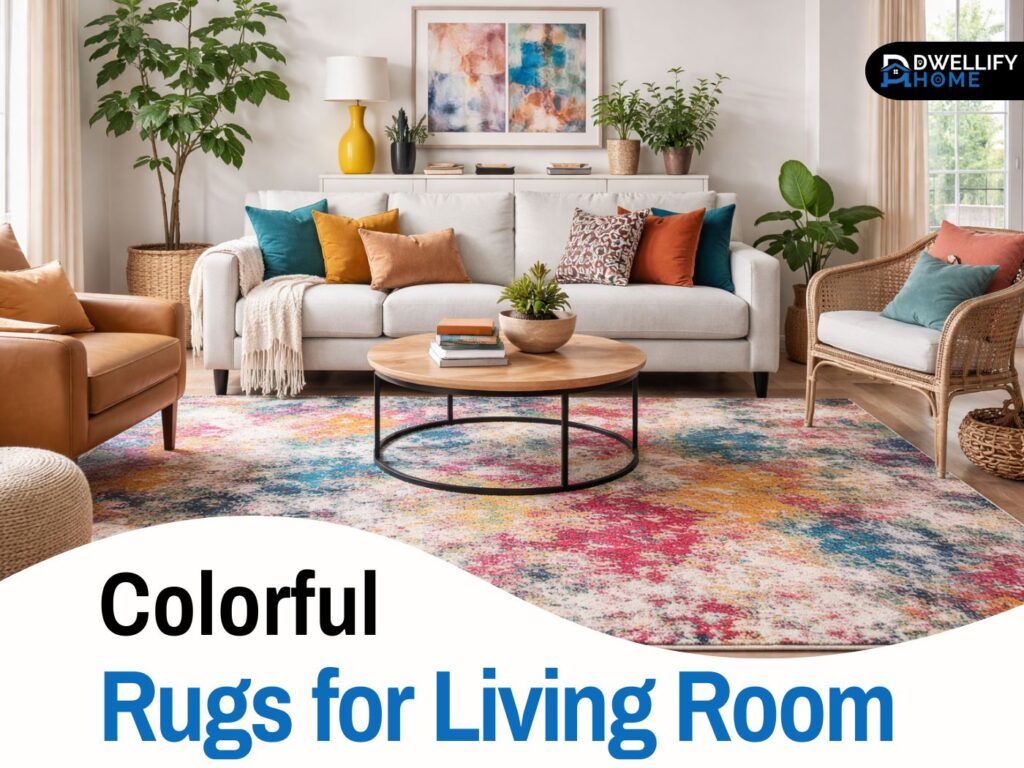
A colorful rug can do more for a living room than a new paint color sometimes. I’ve seen it bring a plain space to life, soften a room that felt too sharp, and even make mismatched furniture look like it belongs together.
A bold rug only looks beautiful when it looks intentional. The goal isn’t to cram color everywhere. It’s to use color, pattern, size, and texture in a way that feels calm, balanced, and lived-in.
In this guide, I’ll walk you through the same steps I use when I’m sitting in a client’s living room deciding what will actually work with their layout, lighting, lifestyle, and taste.
Snippet-Ready Definition:
Colorful rugs for living room spaces are patterned or multicolor area rugs designed to add warmth, personality, and balance while tying furniture, walls, and décor together in a practical, stylish way.
Mission Statement:
At Dwellify Home, our mission is to help homeowners make confident, practical design choices by sharing real-world interior advice that balances style, comfort, and everyday living.
Quick Guide Table: Choosing the Right Colorful Rug
| Living Room Situation | Best Rug Choice | Why It Works |
| Small living room | Light-base multicolor rug | Adds color without making the room feel tight |
| Large open space | Large colorful rug (8×10 or 9×12) | Grounds furniture and defines the seating area |
| Kids or pets | Washable low-pile rug | Easy cleaning and better durability |
| Neutral sofa (gray, beige) | Rug with warm accents | Balances cool tones and adds warmth |
| Modern interior | Clean geometric colorful rug | Keeps the look bold but controlled |
| White living room | Soft multicolor with clear accents | Adds interest without overpowering |
Simple Step-by-Step Buying Guide (Easy & Clean)
- Measure your seating area first
Decide if the rug will sit under front legs or all furniture legs. - Choose function before pattern
Think traffic, pets, kids, and cleaning needs. - Pick one hero color from the rug
Repeat it subtly in cushions or décor. - Decide pile height
Low pile for busy rooms, medium for comfort. - Always add a rug pad
Improves comfort, safety, and rug life.
Helpful Bullet List: When Colorful Rugs Work Best
- Neutral or white living rooms that need warmth
- Gray sofas that feel flat or cold
- Open layouts that need visual zoning
- Homes where décor styles are mixed
- Spaces where wall color can’t be changed
The 2-Minute Checklist Before You Buy
Before you fall in love with a pattern, do this quick check. It saves money and prevents that “why does this look off?” feeling later.
Start with your layout. Look at where the sofa and chairs sit, and where your coffee table lands. A rug should connect the seating area, not float like a random patch of color.
Then think about real life. Do you have kids running through with snacks? Pets that love naps right in the middle? If so, a washable colorful rug for living room use can be a smart choice, especially in medium to low pile.
Finally, pick your anchor colors. I usually recommend choosing two or three shades from the rug that you can repeat somewhere else. A cushion, a throw, a small piece of art. The best part is, this tiny decision is what makes bright multi colored area rugs look styled, not chaotic.
Quick checklist:
- Measure your seating area first
- Decide low pile or plush based on traffic
- Pick 2 to 3 rug colors to repeat in the room
- Plan a rug pad from the start
Why Colorful Rugs Work So Well in Living Rooms
A living room is where everything happens. Sitting, watching, hosting, playing, sometimes even working. Color helps it feel like a place with personality, not just furniture arranged in a box.
A colorful area rug can act like floor art. It adds movement and warmth, and it can pull together pieces that don’t match perfectly. I’ve styled rooms with a gray sofa, a wood coffee table, and mixed accent chairs that only looked “right” after the rug tied the story together.
On top of that, color is practical. Many multicolor rugs for living room setups hide small marks and lint better than solid light rugs. That’s one reason families often love them, even when they want a clean, modern look.
Choose the Right Rug Size (Most Important Step)
This is the step that makes or breaks the whole room. A rug that’s too small can make a living room feel cramped and unfinished, no matter how beautiful the pattern is.
I usually start by deciding if we want the rug to sit under the front legs of the sofa, or under all legs. Both can look great, but they create different feelings in the space.
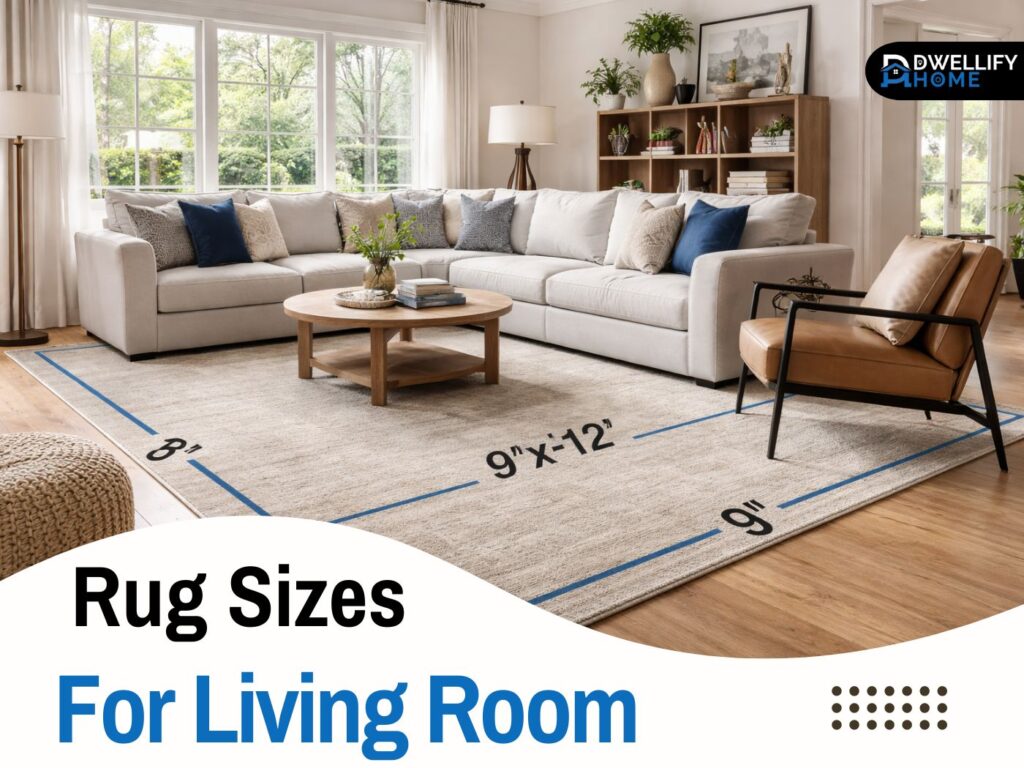
Best living room rug sizes (5×7, 8×10, 9×12, oversized)
- 5×7 works best for very small rooms or a compact seating corner. It’s often tricky in a full living room because it can look like a “mat” instead of a foundation.
- 8×10 is the most flexible standard size for average living rooms. It usually fits front legs of the sofa and chairs nicely.
- 9×12 is amazing when you want a finished, designer feel. It makes the room look larger and more expensive, especially with large colorful rugs for living room layouts.
- Oversized can be a game-changer in open concept spaces. If the rug is big enough to frame the whole seating zone, everything feels calmer.
A practical tip from real projects: if you’re unsure between two sizes, go bigger. Most people regret going too small, not too large.
Rug placement rules (front legs vs all legs)
- Front legs on the rug: This is the most common and usually the easiest to get right. It connects the seating pieces while keeping costs reasonable.
- All legs on the rug: This feels luxurious and cohesive, but you need a large rug. It’s great for bigger rooms or formal seating areas.
If you have a sectional, try to get the rug to extend at least 8 to 12 inches beyond the sides. It keeps the layout from looking squeezed.
Pick the Right Rug Shape for Your Layout
Most living rooms look best with a rectangle rug, but shape can solve layout problems in a subtle way.
A rectangular rug anchors seating arrangements. It works for sofas, sectionals, and classic living room layouts.
A round rug is a secret weapon for small rooms, especially when you have a round coffee table or a single chair corner. Round rugs soften harsh angles and can make a tight space feel friendlier.
A runner can work in a long, narrow living room or an open-plan path behind the sofa. It’s also a nice way to add color without committing to a full area rug look.
Color Strategy That Makes a Bright Rug Look “Designed”
Color is where people get nervous, and I get it. A bold rug can feel like a big decision. But once you know a simple method, it’s not scary anymore.
The goal is balance. If the rug brings energy, the room needs a little calm to support it. If the room is already full of color, the rug should “talk” to those colors instead of competing.
The “hero color + 2 supporting colors” method
This is my go-to approach in real homes. Choose one main color in the rug that you want to feature, then pick two smaller supporting shades.
Example:
- Rug has teal, rust, cream, and navy
- Hero color: teal
- Supporting colors: rust and cream
Then you echo those shades around the room in small ways. A teal cushion, a rust vase, cream curtains. Guess what, even a very bold rug instantly feels intentional when you do this.
This is especially helpful with bright multi colored area rugs because it prevents the “everything is shouting” look.
How to coordinate with walls, sofa, curtains, and art
Here’s a simple way to decide what should lead:
- If your sofa is bold, pick a rug with a calmer base color
- If your sofa is neutral, your rug can be the statement
- If your walls are warm (beige, tan, off-white), warm tones in the rug feel natural
- If your walls are cool (gray, crisp white), cooler rug accents help the room feel cohesive
For gray sofas, I often choose rugs with warm accents like terracotta, mustard, or soft blush. That warmth keeps gray from feeling cold.
Styling colorful rugs in a light or white living room
A white room is the perfect canvas for color. But the rug needs to look grounded, not like paint splashed randomly.
If you’re using white colorful rugs for living room styling, look for a rug with a lighter base and clear color accents. It keeps the space airy while still adding personality.
One real-world trick: add one black or dark accent somewhere, even if it’s tiny. A black picture frame, a dark lamp base. That little contrast makes the rug colors look sharper and more sophisticated.
Pattern Strategy: How to Mix Prints Without Making the Room Busy
Patterns are fun, but they need a plan. Without a plan, the room can feel visually noisy and tiring.
The easiest method is scale. Pair one “big” pattern with one “small” pattern. For example, a bold geometric colorful rug with small, simple stripe cushions, or a vintage colorful rug with solid pillows and textured throws.
Another trick I use all the time is repeating shapes. If the rug has curved motifs, add one rounded element like a round tray, a curved lamp, or a soft round ottoman. This creates pattern rhythm without adding more prints.
And if you’re doing statement rug styling, keep the curtains simple. Let the rug be the star.
Choose Your Style Direction (Pick the Look You Want)
This part is about matching the rug to the vibe you want, not just the colors.
For modern colorful rugs for living room looks, I recommend clean patterns, geometric shapes, and a tighter color palette. Even if the colors are bold, fewer shades feel modern.
For a maximalist feel, you can go bolder with pattern and color. The rug becomes the hero, and the rest of the room should stay supportive. Think neutral sofa, simple curtains, and a few repeated colors.
For boho or eclectic rooms, layered rugs and mixed textures work beautifully. A colorful rug with a jute layer underneath can look intentional, cozy, and collected.
For the clean Scandinavian vibe, a colorful rug IKEA style often works well. Simple shapes, practical materials, and balanced color combinations fit that look nicely.
Material & Texture Guide (Comfort, Durability, and Real-Life Use)
Material affects everything: comfort, cleaning, shedding, and how the colors show up.
I always ask clients how they live in the room. Do you sit on the floor? Do you eat snacks in there? Do you entertain often? Your answers decide the best rug material more than any trend.
Washable colorful rugs for living room: what to look for
Washable rugs can be amazing, but not all are equal.
Look for:
- Strong edge stitching so it doesn’t curl
- A backing that doesn’t crumble or slip
- A thickness that fits your washing setup
- Reviews that mention whether it lays flat after washing
If you like the look but want it to feel softer, add a rug pad. It makes a washable rug feel much more premium.
Best materials for everyday living rooms
- Wool: Soft, durable, naturally resilient. It’s a designer favorite for a reason, but it can shed early on.
- Cotton flatweave: Light, casual, easier to clean, and great for layering.
- Performance synthetics: Often the most practical for families. Many are stain-resistant and low maintenance.
- Jute: Great as a textured base layer, but not ideal for heavy spills.
Pile height basics (low pile vs plush)
Low pile is easier to vacuum, shows fewer footprints, and works better with doors and furniture. Plush rugs feel cozy but can trap more dust and make furniture wobble if they’re very thick.
If you’re adding a coffee table, low to medium pile is usually best. It stays stable and feels tidy.
Rug Pad & Safety (Small Detail, Huge Upgrade)
A rug pad is one of those boring details that makes everything better. It prevents slipping, protects your floors, and makes the rug feel softer underfoot.
It also helps rugs last longer, especially in high-traffic living rooms. And if you’re using a thinner washable rug, a pad can stop the corners from lifting and reduce bunching.
Quick guidance:
- On hard floors, use a non-slip pad designed for wood or tile
- On carpet, use a pad made specifically for carpet-on-carpet grip
Styling Tips That Make the Rug Feel Like It Belongs
This is where the room starts to feel finished.
First, pull one or two rug colors into soft decor. Cushions and throws are the easiest. You don’t need perfect matches. Similar tones are enough.
Second, let neutrals frame the rug. If the rug is bold, keep the sofa and large furniture calmer. If the sofa is bold, choose a rug with a calmer base.
Third, consider lighting. Rugs can look completely different in the evening than in daylight. Warm bulbs can make blues look muted and reds look richer. If your room gets strong sun, consider fade-resistant or rotate the rug regularly.
A personal tip I’ve learned the hard way: if you’re unsure about a bold rug, start by styling the room with a few small accessories in the rug’s colors first. When those colors already exist in the space, the rug won’t feel like a surprise.
Layering Colorful Rugs (Trendy and Practical)
Layering isn’t just a trend, it solves problems.
If you want color but you’re working with a tight budget, you can layer a smaller colorful rug over a larger neutral base like jute. It creates a designer look without needing a huge statement rug.
Layering is also great in open layouts. You can use a neutral rug to define the main seating area, then add a colorful layer to bring personality closer to the coffee table zone.
If you’re layering on carpet, keep the bottom rug low pile and flat. That makes the top rug sit cleaner and reduces slipping.
Where to Shop (Smart Filters + Quality Checks)
Shopping for rugs can feel overwhelming, but you can simplify it fast.
For colorful rugs for living room Amazon shopping, filters matter more than scrolling. Filter by size first, then material, pile height, and washable if needed. Then check return policy before you get attached to a pattern.
For colorful rug IKEA options, you’ll often find practical sizes and modern styles that work well in simple rooms. They can be a solid choice for first apartments, rentals, or anyone wanting a clean, modern look without overthinking.
Quality checks I always do:
- Look at edge binding and corners in photos
- Read reviews for shedding, fading, and curling
- Check thickness so it works with doors
- Confirm return policy for bold colors
Care & Maintenance (Keep Colors Bright Longer)
A little maintenance keeps a rug looking new for years.
Vacuum regularly, especially in high traffic areas. If the rug is new and shedding, don’t panic. Some materials shed early on and calm down with time.
Rotate your rug every few months. This prevents uneven fading and wear, especially if sunlight hits one side of the room.
For spills, blot first. Don’t rub. Rubbing pushes stains deeper and can spread dye in some rugs. Use a gentle cleaner that matches the rug’s material, and test in a hidden spot if you can.
If your rug is washable, follow the care instructions exactly. Overheating or aggressive cycles can warp backing and change how it lays flat.
Common Mistakes to Avoid
I’ve seen these mistakes in beautiful homes, so don’t feel bad if you’ve done one before.
- Buying too small: It makes the room feel disconnected.
- Using too many colors everywhere: Let the rug lead, then repeat only a few shades.
- Skipping the rug pad: Slipping and curling can ruin the look.
- Choosing thick plush rugs for busy rooms: They can trap dirt and feel messy fast.
- Ignoring lighting: A rug can look perfect in a bright photo and totally different at night.
FAQs
What size rug is best for a living room with a sectional?
Usually 8×10 or 9×12, depending on the sectional size. Try to have the front legs of the sectional on the rug, and make sure the rug extends past the ends so it doesn’t feel tight.
Can colorful rugs work in a small living room?
Absolutely. Go for a rug with a lighter base or a smaller-scale pattern. It adds personality without making the room feel crowded.
How do I match a colorful rug with a gray sofa?
Choose a rug with at least one warm accent like rust, mustard, or soft beige. Warm colors balance the coolness of gray and make the room feel inviting.
Are washable rugs durable for daily use?
Many are, especially low pile ones with strong stitching and quality backing. Pairing with a
good rug pad helps them look better and last longer.
Should the rug go under the couch or stop at the front legs?
Front legs on the rug is the easiest and most common. All legs on the rug looks more high-end, but it requires a larger rug.
Can I use a colorful rug in a bedroom too?
Yes, and it can be beautiful. Colorful rugs for bedroom spaces often work best when you keep the bedding calmer, so the rug adds interest without making the room busy.
Conclusion
A colorful rug doesn’t have to feel risky. When you start with the right size and placement, the rest becomes much easier. Then you use a simple color plan, one hero color and two supporting shades, and suddenly the rug feels like it belongs.
If you want a modern look, keep the pattern clean and the palette tighter. If you want warmth and personality, go bolder, but let the rug be the hero and keep the big furniture calmer. Add a rug pad, repeat a couple of colors around the room, and you’ll be surprised how “finished” everything feels.
Most importantly, choose a rug that fits how you actually live. A living room should feel welcoming, not fragile. When your rug matches your lifestyle and your space, you’ll enjoy it every day, and it’ll look good doing it.
Disclaimer
This article is for general informational purposes only. Design preferences, room layouts, and lifestyle needs vary, so results may differ. Always consider your specific space and requirements before making final décor decisions.

I’m Bilal, the founder of Dwellify Home. With 6 years of practical experience in home remodeling, interior design, and décor consulting, I help people transform their spaces with simple, effective, and affordable ideas. I specialize in offering real-world tips, step-by-step guides, and product recommendations that make home improvement easier and more enjoyable. My mission is to empower homeowners and renters to create functional, beautiful spaces—one thoughtful update at a time.