
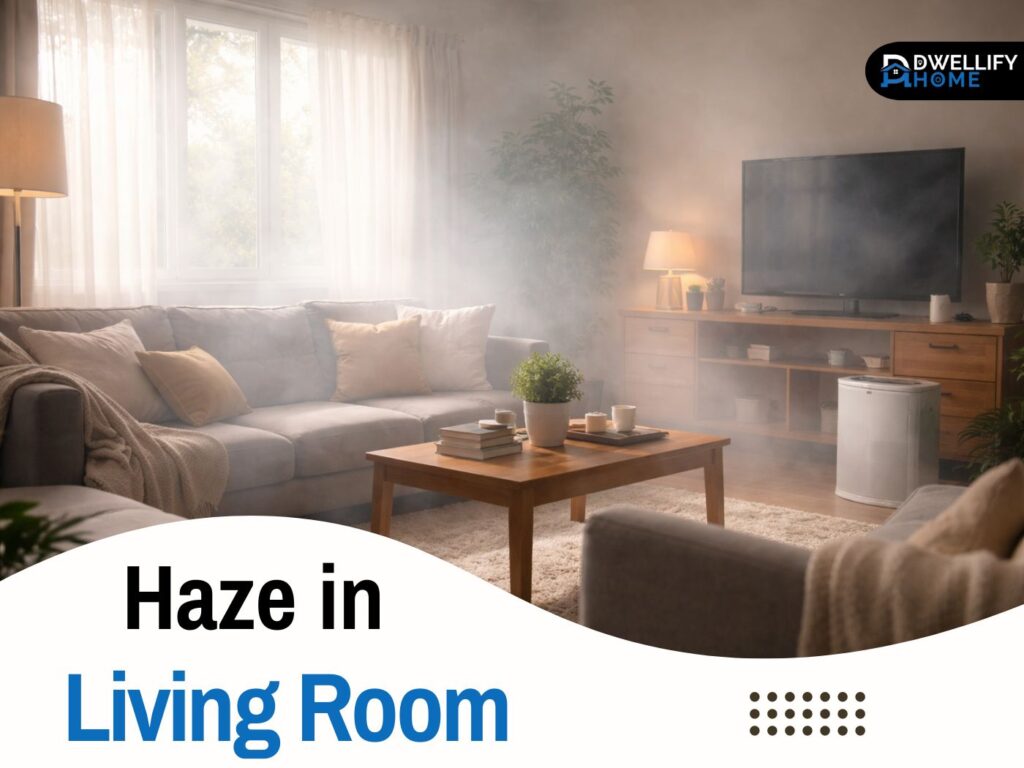
You’re sitting on the couch, sunlight hits the room just right, and the air looks… off. Not exactly smoke, not exactly fog, but a dull, blurry veil that makes the living room feel “dirty” even after you cleaned. Here’s the thing, that hazy look usually has a real cause, and once you identify it, it’s almost always fixable.
In a typical indoor air quality consultation, I approach this like a simple puzzle. We look at what’s floating in the air, what’s being added to the air, and what’s keeping it trapped there. Then we solve it step by step, without turning your home into a science project.
Snippet-Ready Definition:
Haze in a living room is usually caused by fine airborne particles, humidity, smoke residue, or chemical vapors that scatter light, making the air look foggy even when there’s no visible smoke or smell.
Mission Statement:
Our mission is to help homeowners understand their indoor environment clearly, identify air quality issues with confidence, and make practical, informed decisions that create healthier, more comfortable living spaces.
What “Haze” in a Living Room Really Means
That visible haze is usually one of two things: tiny particles suspended in the air, or moisture interacting with the air and surfaces in a way that makes the room look cloudy. Most people describe it as “my room looks hazy,” especially when a lamp is on or sunbeams cut through the space.
The tricky part is that haze can be completely odorless. That’s why “odorless haze in house” is such a common complaint. You may not smell anything wrong, but the air still looks dull, and sometimes your eyes or throat feel slightly irritated.
Haze vs Condensation vs “Foggy Windows”
A quick way to separate problems is this:
- If the haze looks like it’s hanging in the air and becomes obvious in sunlight, you’re likely dealing with particles or gases.
- If the “fog” is mostly on windows or glass surfaces, that’s often condensation, meaning moisture is condensing on a cooler surface.
Foggy windows can happen even when your air is fine. On the other hand, air haze can be present even when windows look clear. They can overlap, but they don’t always.
Quick Guide Table: What Causes Haze & What to Do
| What You’re Seeing | Likely Cause | What Helps Most |
| Haze visible in sunlight | Fine dust or particles | HEPA air purifier + deep cleaning |
| Room looks hazy in the morning | High overnight humidity | Ventilation + humidity control |
| White haze on furniture | Humidifier mineral dust | Distilled water + unit cleaning |
| Room looks smokey but it’s not | Cooking oils or candle soot | Better kitchen ventilation |
| Haze worsens when HVAC runs | Dirty filter or ducts | Filter upgrade + HVAC inspection |
Step-by-Step: How to Clear Haze in Living Room (Fast)
- Open windows briefly if outdoor air is clean to flush stale air
- Run a HEPA air purifier in the living room for several hours
- Check indoor humidity and reduce moisture if air feels heavy
- Vacuum and dust properly using filtered tools and microfiber
- Identify the source like cooking fumes, humidifiers, or HVAC airflow
Quick Safety Check Before You Troubleshoot
Before you do anything else, do a calm, basic safety sweep. The goal isn’t to panic. It’s to rule out the few situations that shouldn’t wait.
Take action right away if you notice:
- A strong burning smell, melting plastic odor, or visible soot streaks
- Dizziness, nausea, chest tightness, or sudden intense headaches
- Smoke alarms or carbon monoxide alarms sounding
If any of those are present, get fresh air, leave the space, and contact the right professional help. If you’re simply seeing a hazy look without acute symptoms, you can move into troubleshooting with confidence.
Why Does My House Look Hazy Inside? The Most Common Causes
Most “why does my house look hazy inside” cases come down to a few repeat culprits. The best part is you don’t need expensive equipment to narrow them down.
1) Dust and Fine Particles
Dust isn’t just “dirt.” It’s a mix of fibers, skin cells, outdoor pollen, tiny bits of soil, and pet dander. In living rooms, soft furnishings act like dust reservoirs. Rugs, curtains, couches, and throw blankets can quietly reload particles into the air every time someone sits down or walks through.
If the haze is worse right after vacuuming with an older machine, that’s another clue. A vacuum without decent filtration can blow fine dust back out.
2) Cooking Fumes and Invisible Aerosols
A living room connected to an open kitchen is a very common setup. Cooking, especially frying or high-heat sautéing, releases aerosolized oils that can hang in the air and create that “room looks smokey but it’s not” effect.
Even if you don’t smell smoke, those tiny droplets scatter light. That’s why haze can look dramatic at certain angles and almost disappear when you change positions.
3) Candles, Incense, Fireplaces, or Outdoor Smoke
Candles and incense often produce fine soot. Fireplaces can do it too, especially if the draft isn’t ideal or the damper isn’t fully open. Outdoor smoke, even from a neighbor’s fire pit, can slip indoors through small gaps and pressure changes.
One simple clue is where you see it most. If haze is heavier near a window, a door, or a vent line, it often points to outdoor sources or airflow patterns.
4) High Humidity and Poor Ventilation
If you’ve ever wondered, “why does my house look hazy in the morning,” humidity is a top suspect. Overnight, homes are usually closed up. Humidity rises from breathing, houseplants, residual moisture, and sometimes indoor laundry drying. When the air gets moist and still, it can look thicker, especially when early sunlight hits it.
Humidity also makes particles stick around longer and encourages biological growth if there’s a damp spot somewhere.
5) Mold and Mildew Spores From Damp Areas
Mold doesn’t always announce itself with dramatic black patches. Sometimes the first sign is a slight musty note, or a haze that seems to return no matter how often you clean.
If there’s a past leak, damp drywall, a wet crawlspace, or recurring condensation behind furniture on an exterior wall, mold spores can become part of your indoor particle mix.
6) HVAC Issues That Circulate Contaminants
Your HVAC system can be a helper or a distributor of dust and moisture-related problems. A dirty filter, dusty returns, or a damp coil area can keep sending fine particles back into the room.
If the haze gets worse shortly after the system starts blowing, that’s a strong diagnostic clue.
7) VOCs and Chemicals, Including Odorless Haze
VOCs are gases released from certain paints, cleaners, adhesives, and some new furniture. Sometimes people expect VOCs to smell strong. Guess what, some don’t. You can have a chemical haze with very little odor, especially if it’s a blend of low-level off-gassing plus fine particles from everyday living.
Why Is There a White Haze in My House?
A very specific cause of white haze is mineral dust, often tied to ultrasonic humidifiers. If you use tap water with minerals, the humidifier can send those minerals into the air as fine particulate. They settle as a light dust on furniture, but they also create that visible milky look in certain lighting.
If you’ve noticed a powdery film on dark surfaces, this explanation often fits.
How to Diagnose What’s Causing Your Living Room to Look Hazy
You don’t need a lab test to get a good answer. You need a few observations that point you in the right direction.
Start with three simple checks:
- The flashlight test
Turn off the main lights and shine a flashlight across the room at eye level. If you see lots of sparkly particles moving, you’re dealing with airborne particulate. If you see a more uniform “cloud,” humidity or chemical vapors may be contributing. - The timing test
Ask yourself when it’s worst:
- Only in the morning points to overnight humidity, poor ventilation, or temperature swings.
- After cooking points to aerosols and ventilation.
- When HVAC turns on points to filtration, duct dust, or coil moisture.
- The location test
Walk the room and notice where the haze looks strongest:
- Near vents suggests airflow distribution issues.
- Near windows or doors suggests infiltration from outside.
- Near rugs and couches suggests resuspended dust.
If you can, grab a simple hygrometer. Relative humidity gives you a real anchor. When humidity stays high for long periods, haze often becomes easier to see and harder to get rid of.
Fixes That Work (Start With the Fast Wins)
Most homes clear up noticeably when you combine ventilation, filtration, and source control. The key is doing it in a smart order.
Improve Ventilation Without Making It Worse
Fresh air helps, but only when outdoor air is cleaner than your indoor air. If you’re near traffic, construction, or seasonal smoke, opening windows can backfire.
A practical approach:
- Use kitchen and bath exhaust fans during moisture and cooking events.
- Create short cross-ventilation bursts when outdoor air is good, then close up and filter.
- If the haze is worst in the morning, ventilate briefly after sunrise and then run filtration.
Use the Right Filtration (HEPA and HVAC Filter Upgrade)
A true HEPA air purifier is one of the most reliable tools for fine particles like dust, pollen, and smoke residue. Place it where air circulates freely, not tucked behind a couch.
On top of that, check your HVAC filter. Many homes run low-grade filters that catch only the largest debris. A better filter can reduce the fine dust cycling through your vents. Just make sure your system can handle the upgrade, because overly restrictive filters can reduce airflow on some setups.
Remove the Source With Targeted Cleaning
This is where homeowners usually get the biggest payoff, because it tackles what keeps getting stirred up.
A clean, effective routine looks like:
- Vacuum rugs with a sealed, well-filtered vacuum
- Use microfiber cloths for dusting, not dry feather dusters
- Wash throw blankets and cushion covers regularly
- Clean the top of ceiling fan blades, return vents, and behind TVs
If the haze seems to “come back” after cleaning, that often means particles are being reintroduced by the vacuum, the HVAC system, or a hidden moisture area.
Humidity Control (The Hidden Driver of “Foggy” Air)
Humidity doesn’t always create haze by itself, but it makes haze more visible and more stubborn. It also supports mold and dust mite activity, which can make the air feel heavier.
If your living room feels muggy, focus on:
- Running your bathroom fan during and after showers
- Using the range hood during cooking
- Avoiding long periods of indoor laundry drying without ventilation
- Using AC or a dehumidifier during humid stretches
The goal is comfort and balance, not desert-dry air. When humidity is controlled, the room usually looks clearer and smells fresher without any artificial fragrance.
Humidifiers Can Create Haze (Especially If You Do This Wrong)
Humidifiers are helpful in dry climates and winter heating season, but they can also create the exact problem you’re trying to solve.
The most common issue is ultrasonic humidifiers producing mineral dust. That’s a frequent answer to “why is there a white haze in my house.” The fix is usually simple: change the water source and keep the unit clean.
A few practical rules:
- Use distilled or demineralized water if you notice white dust
- Clean the humidifier on schedule, because biofilm builds fast
- Don’t run it on high 24/7
- Place it away from dust-heavy surfaces and electronics
If you turn the humidifier off and the haze improves in a day or two, you’ve likely found a major contributor.
HVAC Clues People Miss (That Keep the Haze Coming Back)
This is the part many articles skip, but it matters. Living rooms often get haze because airflow patterns keep cycling the same contaminants.
Look for these clues:
- Dust lines around supply vents or returns
- A filter that loads up unusually fast
- A musty smell when the system first turns on
- Visible moisture around the indoor unit, drain pan, or nearby insulation
Another overlooked factor is a clogged condensate drain. If moisture can’t leave the system properly, humidity rises and biological growth can follow. That can create a repeating cycle where the room clears briefly, then gets hazy again.
If your HVAC is older or you’ve had water issues, an HVAC service visit focused on cleanliness and drainage can be a smart move.
When Haze Is a Mold or Moisture Warning Sign
Most haze problems are manageable. Still, you should take moisture seriously because moisture changes what grows and what spreads.
Pay attention to:
- Musty odors that don’t go away
- Paint bubbling, staining, or soft drywall
- Condensation that returns daily on the same surfaces
- Haze that worsens after rain or after running AC
If you suspect a hidden damp spot, don’t mask it with fragrances or constant air fresheners. That often makes the room feel worse and delays the real fix. Instead, identify the moisture source, dry the area, and repair the cause.
Health Effects: When Haze Starts Affecting You
A hazy room isn’t automatically dangerous, but it can irritate people, especially those with allergies, asthma, or sensitive sinuses.
Common complaints include:
- Dry or itchy eyes
- Sneezing, throat scratchiness, or mild coughing
- Headaches that improve when you leave the room
- A heavy, tired feeling in the air
If symptoms show up at the same time as visible haze, treat it as a quality-of-life problem worth solving, not something to ignore. Better filtration and humidity control often improve comfort quickly.
When to Call a Pro
Call for professional help when the haze persists despite reasonable steps. That usually means the source is hidden or the system is involved.
It’s time to bring someone in if:
- The haze returns within a day or two after cleaning and filtering
- You see signs of water damage or suspect mold behind walls
- HVAC operation clearly makes the haze worse
- Someone in the home has ongoing respiratory symptoms that improve elsewhere
A good professional will focus on evidence, not guesswork. They’ll look at moisture conditions, filtration, airflow, and potential particle sources, then recommend targeted fixes instead of generic upsells.
Prevention Plan (Simple Weekly and Seasonal Routine)
You don’t need a complicated routine to keep the air looking clear. You need consistent habits that reduce buildup.
Weekly basics:
- Vacuum main living room floors and rugs with good filtration
- Dust with microfiber, especially electronics areas and fan blades
- Run the range hood during cooking, even for “quick” meals
Seasonal basics:
- Replace HVAC filters on schedule
- Check bathroom and kitchen fans for airflow
- Inspect for condensation spots behind furniture on exterior walls
- If you use a humidifier, clean it and monitor for white dust
On days when outdoor air is poor, keep windows closed and rely on filtration. On cleaner-air days, short ventilation bursts can refresh the space without dragging in new particles.
FAQs
Why does my living room look hazy?
Most often, it’s caused by fine dust, cooking aerosols, humidity, or air circulation issues that make particles visible in sunlight or artificial light.
What would cause a haze in my house?
Common causes include poor ventilation, dirty HVAC filters, high humidity, humidifiers, mold spores, candle soot, or chemical vapors from cleaning products or furniture.
How to tell if the air in your house is making you sick?
Signs include irritated eyes, headaches, sinus pressure, coughing, fatigue, or symptoms that improve when you leave the house for a few hours.
How to tell if your house is unhealthy?
Persistent musty smells, visible haze, recurring condensation, mold growth, and ongoing respiratory irritation are strong indicators of poor indoor air quality.
Is odorless haze in house dangerous?
Not always. It’s often dust or humidity-related. Still, if it lingers or causes symptoms, it should be identified and corrected rather than ignored.
Conclusion
If you’re seeing haze in your living room, you’re not stuck with it. In most homes, it comes from a small set of causes: fine particles, humidity, combustion byproducts, chemical off-gassing, or airflow that keeps recycling the problem.
Here’s a practical way to remember the fix: observe first, then act in layers. Identify when it appears, where it concentrates, and what events trigger it. After that, improve ventilation at the right times, use strong filtration, clean in a way that actually removes fine dust, and keep humidity under control.
If the haze keeps returning, don’t take it personally and don’t keep guessing. That’s usually the sign of a hidden moisture issue or an HVAC-related source. Once that root cause is handled, the room typically looks brighter, feels lighter, and stays that way.
Disclaimer:
This article is for general informational purposes only and does not replace professional inspection or medical advice. If symptoms persist or safety concerns arise, consult a qualified indoor air quality or home inspection professional.

I’m Bilal, the founder of Dwellify Home. With 6 years of practical experience in home remodeling, interior design, and décor consulting, I help people transform their spaces with simple, effective, and affordable ideas. I specialize in offering real-world tips, step-by-step guides, and product recommendations that make home improvement easier and more enjoyable. My mission is to empower homeowners and renters to create functional, beautiful spaces—one thoughtful update at a time.