Industrial style design has a way of making a home feel grounded. It borrows from old factories and warehouses, but the version that works best today is less about looking rough and more about using honest materials well. Brick, steel, concrete, wood, and leather all have a place here, but they need balance. A room with too many hard surfaces can feel cold fast. A room with the right mix feels calm, practical, and full of character.
That balance is what makes this style last. In real homes, the goal usually isn’t to copy a loft in an old mill building. It’s to bring in the texture, structure, and simplicity of industrial interiors while still keeping the space comfortable enough to live in every day.
Snippet-Ready Definition
Industrial style design is an interior design approach inspired by old factories and warehouses. It uses raw materials like brick, metal, concrete, and wood to create spaces that feel practical, textured, and visually grounded.Mission Statement
Dwellify Home helps homeowners create spaces that feel practical, balanced, and thoughtfully designed through clear guidance and realistic interior design ideas.
What Defines Industrial Style Design?
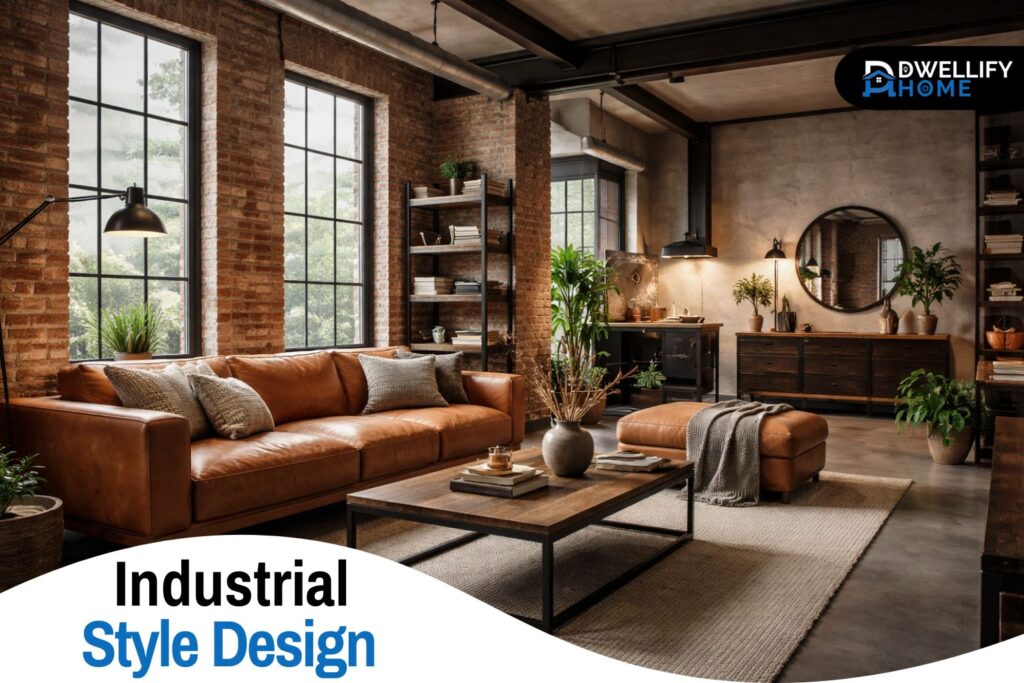
The roots of this look come from converted factories and warehouses where the original structure stayed visible. Instead of covering brick walls, pipes, beams, or concrete floors, designers treated them as part of the finished space. That idea still shapes industrial style interior design now. Materials are meant to look real, not polished beyond recognition.
The main characteristics are easy to spot. You’ll usually see raw or lightly finished surfaces, strong lines, practical furniture, and a restrained color palette. Black metal, aged wood, worn leather, concrete, and matte finishes show up often. Decor tends to be minimal, and the best rooms don’t feel crowded.
It also helps to separate a few related styles. Industrial chic interior design is softer and a little more styled, often with warmer textiles, cleaner furniture, and a more refined finish. Modern industrial interior design usually keeps the metal and wood pairing but trims away the heavier warehouse feel. That version tends to work better in newer homes where exposed ductwork and original brick aren’t part of the structure.
Key Characteristics of Industrial Style Design
- Visible materials such as brick, steel, and concrete
- Metal and wood furniture combinations
- Neutral color palettes with dark accents
- Functional lighting like pendants and track lights
- Open layouts with minimal decoration
1. Highlight Raw Materials Like Brick, Concrete, and Steel
Raw materials do most of the heavy lifting in an industrial room. A brick wall, concrete-style finish, or blackened steel detail can give a plain space real presence without needing much extra decoration. Even one strong material can change the tone of the room. In a living area, for example, a brick fireplace wall or a concrete-look feature behind open shelving often says more than a wall full of framed decor.
That said, real materials are not always necessary. Brick veneer, porcelain tile with a concrete finish, and metal-framed furniture can create the same mood in a more practical way. In family homes, I’ve seen faux concrete plaster and well-done brick cladding work better than raw surfaces that stain easily or collect dust in every crevice.
2. Build the Room Around a Neutral Industrial Color Palette
Most industrial spaces work best with a quiet palette. Charcoal, black, warm gray, off-white, brown, rust, and muted green all fit naturally. These shades let the textures stand out, which matters more here than bright color ever will. A wall in soft gray can make metal lighting and reclaimed wood look more intentional without competing for attention.
The mistake I see most often is making everything dark. Deep tones can look strong in photos, but in a home with limited daylight they can make the room feel flat and smaller than it is. A better approach is to anchor the space with darker accents and keep larger surfaces lighter. White or pale greige walls with black metal, medium wood, and leather usually give a better result than an all-charcoal room.
3. Mix Metal Frames With Warm Wood Furniture
Steel and wood are one of the easiest pairings in industrial chic style. A dining table with a thick wood top and slim black legs, open shelving with metal brackets, or a console that combines oak and iron can bring the look in without forcing it. These pieces feel sturdy and useful, which suits the style.
Warm wood matters more than people expect. Without it, rooms can feel too sharp and one-note. Reclaimed wood furniture or even new wood with visible grain helps soften the edges created by concrete, steel, and dark paint. In most homes, this mix is what keeps industrial decor from feeling like a commercial set.
4. Use Industrial Lighting as a Visual Statement
Lighting plays a bigger role here than in many other styles. Factory pendants, cage lights, wall sconces, and track lighting all suit an industrial room because they look functional first. They don’t need decorative flourishes. Their shape, finish, and placement are usually enough.
Warm bulbs are especially important. A room with black fixtures and concrete finishes can feel harsh under cool white light. Swap that for a softer warm glow and the whole space feels more lived-in. In kitchens and dining areas, oversized pendants work well as focal points. In living rooms and home offices, wall lights and floor lamps often create a more layered and comfortable result.
5. Expose Structural Elements for Authentic Character
One reason industrial style interior design feels so distinctive is that it doesn’t try to hide structure. Beams, pipes, columns, metal frames, and factory-style windows become part of the room’s identity. In older homes, even one preserved architectural detail can add a lot of authenticity.
Newer homes can still borrow the idea. You can introduce panel-framed glass doors, exposed shelving supports, ceiling beams, or black-framed partitions to echo that structural look. The key is restraint. Adding too many fake industrial details usually feels staged. One or two well-placed architectural features make more sense than trying to imitate a warehouse from scratch.
6. Design With Open Layouts and Practical Furniture
Industrial rooms usually feel best when they have breathing room. Furniture should look useful, not fussy. That doesn’t mean you need a huge open-plan loft. It means the layout should be simple enough that the materials and forms can stand out.
Choose pieces with solid shapes and clear purpose. A low-profile sofa, a substantial coffee table, a clean-lined storage unit, and a bench or stool in metal and wood often work better than multiple decorative side pieces. In smaller homes, this matters even more. Too much furniture makes industrial spaces feel cramped instead of relaxed.
7. Soften the Industrial Look With Textiles and Leather
A good industrial room always has something soft in it. That’s the part beginners often miss. Exposed brick, concrete interior design details, and metal accents create character, but without rugs, curtains, cushions, or upholstered seating, the room can feel unfinished in the wrong way.
Leather is especially effective because it fits the style while adding warmth. A brown leather chair, a textured area rug, or heavy linen curtains can take the edge off hard finishes without changing the overall mood. This is often the difference between a room that looks interesting and one that actually feels comfortable to spend time in.
8. Combine Vintage Pieces With Modern Industrial Elements
Industrial spaces benefit from a little age. A room made entirely of new black metal and new wood can look too uniform. Vintage stools, old storage trunks, worn cabinets, or salvaged decor bring depth and make the space feel collected over time.
The trick is not to lean so far into vintage that the room starts to feel themed. One old workbench-style console or a set of aged dining chairs is usually enough. Pair those with cleaner modern industrial interior design elements like simple lighting, uncluttered walls, and streamlined seating so the room still feels current.
9. Use Contrast to Create a Modern Industrial Interior
Contrast gives this style its energy. A black-framed shelf against a pale wall, a rough wood table under a smooth pendant light, or a concrete-look floor with a soft woven rug all create tension in a good way. These combinations keep the room from feeling flat or overly heavy.
This is where modern industrial house design usually succeeds. It takes the rougher side of industrial style and pairs it with cleaner silhouettes and better visual balance. Instead of filling the room with dark finishes, it uses contrast to keep things lighter. That approach tends to work especially well in bedrooms and living rooms where a softer mood matters.
10. Adapt Industrial Style to Different Rooms in the Home
Living rooms usually benefit from the warmest version of this style. A neutral sofa, metal-and-wood tables, a textured rug, and one strong architectural feature often do enough. Kitchens and dining areas can handle more edge, especially with black hardware, open shelving, metal pendants, and stools that feel simple and durable.
Bedrooms need a gentler approach. Upholstered beds, layered bedding, warm wood nightstands, and subtle metal details work better than too much exposed metal. In a home office, industrial style makes practical sense because desks, shelving, task lighting, and storage naturally suit the look. Small spaces can use the style too, but lighter walls, fewer heavy pieces, and glass or open-frame furniture will keep the room from feeling boxed in.
How to Make Industrial Style Work in a Regular Home
Most people aren’t decorating an actual loft, and that’s fine. You don’t need soaring ceilings or factory windows to make this style work. Start with furniture, lighting, and surface finishes rather than trying to force architectural drama into a standard room.
A few simple upgrades usually go a long way. Swap in black metal lighting, add a reclaimed wood table, use matte hardware, and bring in a concrete or brick finish through one wall or surface. For the outside, industrial style house exterior details like black-framed windows, mixed brick and metal finishes, or a restrained modern facade can connect nicely with the interior without making the house feel severe.
How to Balance Industrial Style So It Feels Comfortable
Balance is what separates a well-designed room from one that feels hard to live in. Warm wood, natural fabrics, soft lighting, and a few rounded forms can soften the sharper side of industrial interiors. Even one plant or a woven basket can help break up too much metal and stone.
It also helps to repeat materials rather than keep adding new ones. A room with the same black finish on lighting, shelving, and hardware usually feels more settled than one mixing several metals and unrelated textures. Industrial style works best when it’s edited.
Common Industrial Style Design Mistakes to Avoid
The most common mistake is confusing industrial with unfinished. A room can have raw character and still feel intentional. Dusty corners, random pipes, poor lighting, and harsh finishes do not create style on their own. They just make a space feel neglected.
Another issue is overcommitting to the look. Too many cage lights, too much distressed wood, or an excess of heavy black furniture can push the room into costume territory. Comfort matters too. Homes need softness, storage, and function. The strongest industrial interiors never forget that people actually live in them.
Expert Insights: What Makes Industrial Style Design Timeless
What keeps this style relevant is not the trend of exposed brick or metal shelving. It’s the honesty of the materials and the usefulness of the furniture. Rooms built around texture, proportion, and practical choices usually age well because they don’t depend on decoration alone.
Lighting also changes everything. I’ve seen average rooms feel thoughtful just by improving the warmth and placement of the light. I’ve also seen good material palettes fall flat because the lighting was too cold or too weak. In industrial interiors, mood comes from materials, but comfort comes from how you finish the space around them.
FAQs
What is the industrial design style?
Industrial design style is an interior approach inspired by converted warehouses and factories. It highlights structural elements, raw materials, and simple furniture to create spaces that feel practical, textured, and visually balanced.
What are the 4 types of industrial design?
Interior design discussions often group industrial styles into four common variations:
- Modern industrial design
- Industrial chic style
- Rustic industrial design
- Urban loft industrial design
Each uses similar materials but varies in warmth, finish, and overall atmosphere.
What is the 3-5-7 rule in interior design?
The 3-5-7 rule suggests decorating in odd-number groupings to create visual balance. For example, arranging three objects on a shelf or five items on a console often feels more natural than even-number groupings.
What are examples of industrial design?
Examples include exposed brick walls, metal shelving, concrete floors, factory-style pendant lighting, reclaimed wood furniture, black-framed glass partitions, and open shelving with steel brackets.
Can industrial style work in small homes?
Yes. Smaller homes can use lighter wall colors, minimal furniture, metal accents, and open shelving to bring industrial character without making the space feel heavy or crowded.
Conclusion
Industrial style design works best when it feels real, balanced, and easy to live with. The strongest spaces don’t try too hard. They use a few honest materials, keep the layout practical, and soften the harder edges with warmth in the right places.
That’s why this look continues to hold up in modern homes. It gives a room structure and character without asking for excess. Start with one or two strong elements, build around them carefully, and let the space feel collected rather than forced.
Disclaimer
Content on Dwellify Home is provided for informational and inspiration purposes only. Design choices may vary based on space, budget, and personal preference.

I’m Bilal, the founder of Dwellify Home. With 6 years of practical experience in home remodeling, interior design, and décor consulting, I help people transform their spaces with simple, effective, and affordable ideas. I specialize in offering real-world tips, step-by-step guides, and product recommendations that make home improvement easier and more enjoyable. My mission is to empower homeowners and renters to create functional, beautiful spaces—one thoughtful update at a time.