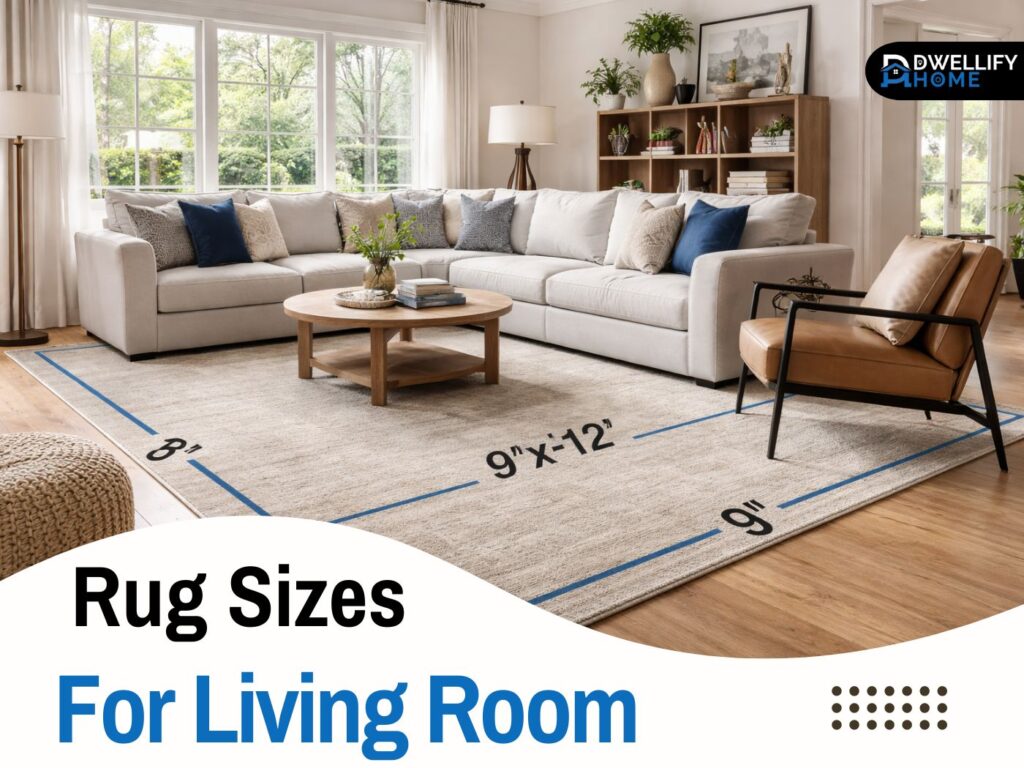

A rug can make a living room feel grounded in about five minutes, or it can make it feel a little off no matter how nice the furniture is. After working in real homes for years, I’ve learned that most rug frustration comes from two things: the size is wrong, or the rug doesn’t match how the room is actually used.
Let’s walk through this the same way I would if we were standing in your living room together. We’ll start with what you need the rug to do, then we’ll get practical about size and placement, and finally we’ll talk style, materials, and how to buy smart.
Snippet-ready definition:
Living room rug ideas are practical ways to choose the right rug size, placement, color, and material so your seating area feels connected, balanced, and comfortable, without the room looking messy or unfinished.
Mission Statement:
At Dwellify Home, our mission is to help homeowners create living spaces that feel calm, functional, and personal, with practical design guidance that works in real homes, not just in photos.
Start With the Rug’s Job in Your Living Room
Before color or pattern, decide what the rug is responsible for. In a well-planned room, the rug acts like a frame. It gathers the sofa, chairs, and coffee table into one clear “conversation area” so the room feels intentional instead of scattered.
It can also solve real-life problems. In open-concept spaces, a rug defines the living zone without adding walls. In echo-y rooms with hard floors, it softens sound. In busy family rooms, it protects flooring and makes the space more comfortable for kids and pets.
A quick way to choose the right direction is to ask: Do you want the rug to be quiet and supportive, or do you want it to be the main visual moment? Either choice can work, but knowing it upfront prevents impulse buys that don’t fit the room.
Quick Guide Table: Rug Size + Placement Cheat Sheet
| Room Setup | Best Placement | Common Size That Works | Notes |
| Small apartment seating (sofa + 1–2 chairs) | Front legs on rug | 8×10 | Helps the space feel bigger than a small rug. |
| Standard living room (sofa + 2 chairs) | Front legs on or all legs on | 9×12 | My “safe size” for most layouts. |
| Larger seating area (sectional or wide spacing) | All legs on rug | 10×12 | Looks more finished and keeps furniture from “floating.” |
| Big family room or open concept | All legs on rug | 12×15 | Defines the living zone clearly and feels intentional. |
Quick rules (simple and practical)
- If the rug is smaller than the sofa, it usually looks off.
- Try to get at least the front legs of the main seating on the rug.
- Leave a consistent border of visible floor near the walls for a clean look.
- Use a rug pad for grip, comfort, and longer rug life.
Rug Size and Layout: The Fastest Way to Make the Room Look Better
I’ve seen beautiful rugs fail because they were too small. When the rug doesn’t “catch” the front of the furniture, everything looks like it’s floating. The room feels unfinished, even if every piece is nice.
If you only take one practical tip from this article, take this: pick the size and placement first, then shop for style. You’ll save money and you’ll avoid returns.
The 3 best placement layouts (simple rules)
Front legs on the rug is the layout I use most often. The front legs of the sofa and chairs sit on the rug, while back legs stay off. It connects the seating and still keeps some floor visible, which helps the room breathe.
All legs on the rug is the most polished option and it works best in larger rooms. The rug becomes a true platform for the furniture group. This is where you get that calm, “everything belongs” feeling.
Floating rug means the rug sits under the coffee table only, not under furniture legs. I only recommend this if the rug is still generously sized and the furniture arrangement is tight and intentional. Otherwise, it reads as too small.
Popular sizes people actually shop for and what they’re best for
Rugs for living room 8×10
This is a common choice for apartments and smaller seating areas. It can work beautifully if the sofa is not oversized and you’re using the front-legs-on layout.
Rugs for living room 9×12
This is my most-used “safe” size for standard living rooms. It’s often enough to anchor a sofa and two chairs without feeling cramped.
Living room rug 10×12
This size is great when you have a larger sectional, wider spacing between pieces, or you want the all-legs-on look without jumping to an extra-large rug.
Large area rugs for living room 12×15
For open-concept homes and big family rooms, this can be the right move. It creates a defined living zone and keeps furniture from drifting visually in a large space.
Small Living Room Rug Ideas (Make It Feel Larger, Not Tighter)
With small living room rug ideas, the instinct is often to go smaller so you “see more floor.” In real rooms, the opposite is usually true. A too-small rug chops the space up, while a larger rug makes it feel more expansive and calmer.
One approach I use a lot is the front-legs-on layout with a lighter rug. A soft neutral or low-contrast pattern helps the eye move across the room instead of stopping at a harsh border. It’s a subtle trick, but it works.
If you’re stuck with an awkward size, layering can help. A thin jute or flatweave base that fits the room, topped with a smaller patterned rug, can look intentional. It also gives you flexibility if you like to change decor seasonally.
Modern Living Room Rug Ideas (Clean, Current, Not Cold)
Modern living room rug ideas don’t have to mean stark or uncomfortable. A modern room still needs softness, especially if you have clean-lined furniture and hard surfaces like wood, tile, or polished concrete.
For a calm modern look, I often use tone-on-tone rugs where the pattern is created by texture instead of bold color. Think subtle geometric shapes, raised lines, or a gentle abstract wash. It reads modern but it doesn’t fight with the rest of the room.
If you want a little edge, a geometric rug can add structure and make the space feel designed. Just keep the scale in mind. In a small room, large-scale patterns usually look better than tiny busy prints, because they feel less cluttered.
Color + Pattern Ideas Designers Use (Easy to Copy)
Color and pattern are where people get nervous, so I like to keep it simple. The goal is not to match everything perfectly. The goal is to make choices that repeat naturally across the room so nothing looks accidental.
A helpful rule is: pick one main idea for the rug. That might be a color story, a pattern, or a texture. Then let everything else support it.
Let the rug lead the color scheme
If your living room feels disjointed, start with the rug and pull two or three colors from it. Repeat those colors in small ways, like pillows, a throw, a piece of art, or even books on a shelf. This is one of the quickest ways to make a room feel pulled together without buying new furniture.
For example, if your rug has warm beige, soft blue, and a bit of charcoal, you can:
- Add a blue pillow on the sofa
- Use a charcoal frame or lamp base
- Keep larger pieces neutral so the rug does the work
Pattern play without chaos (the one-hero rule)
When a room already has pattern in curtains, wallpaper, or busy upholstery, the rug should calm things down. A textured solid, a subtle stripe, or a low-contrast vintage style works well.
When your furniture is plain and the room feels flat, the rug can be the hero. That’s where bolder patterns, deeper colors, or a more graphic design adds life. The key is balance, not bravery.
Statement Rug Ideas (When You Want the Rug to Be the Star)
A statement rug is like a piece of art on the floor. It’s a strong choice when the rest of the room is fairly simple, or when you want to shift the whole mood without remodeling.
Black and white rugs can look crisp and modern, but I prefer softer versions with a slightly aged look or a bit of texture so they don’t feel harsh. Animal-inspired patterns can be surprisingly neutral when done subtly, especially in warm tans and creams.
Stripes are another reliable option. They can make a room feel longer or wider depending on direction, and they bring structure without being too loud. Terrazzo and speckled patterns are practical too, because they hide crumbs and wear better than solid colors.
If you like that marbled, watercolor look, it’s great for blending multiple colors together gently. It’s often a good fit when you have mixed wood tones or a mix of warm and cool decor that you want to unify.
Cozy & Textured Rug Ideas (For Warm, Inviting Living Rooms)
If a living room feels a little formal or flat, texture is usually the missing piece. I’ve used textured rugs to make modern spaces feel more welcoming without changing the furniture at all.
Chunky looped rugs and knit-like textures add softness and a relaxed feel. Plush rugs can be cozy, but I recommend them most in adult spaces or low-traffic sitting rooms, because they show footprints and can be harder to clean.
Natural fiber rugs like jute and sisal add warmth and a grounded look. They’re not as soft underfoot, but they’re great as a base layer and they work with almost any style, from coastal to modern farmhouse.
Vintage-inspired rugs are another favorite. They add depth and hide everyday life well. In family rooms, they can be more forgiving than a flat solid color.
Layering Rugs the Right Way (Pinterest Look, Real-Life Practical)
The layered look is popular for a reason. It helps when you can’t find the perfect size, and it adds depth fast. The trick is making it look deliberate, not like you ran out of budget halfway.
I usually start with a large base rug in a simple texture, often jute or a neutral flatweave. Then I add a smaller patterned rug on top, centered under the coffee table and aligned with the seating area. This is a great way to bring in color without committing to a huge bold rug.
A few practical layering notes:
- Keep the top rug thinner so edges don’t curl
- Make sure both rugs are secured with a proper rug pad
- Skip layering in tight walkways where toes can catch an edge
Match the Rug to What’s Already in the Room (So It Looks Intentional)
A rug should feel connected to the room, even if it’s not “matching.” I like to choose a rug that relates to something already present, like the wall color, the tone of the wood floor, or the color in a painting.
Coordinating with window treatments is an easy win. You don’t need identical colors, just a shared tone. For instance, if your curtains are warm linen, a rug with warm undertones will look more natural than something icy gray.
Contrast also matters. In a dark room, a lighter rug can lift the space. In a very light room, a deeper rug adds grounding and prevents the room from feeling washed out.
Materials & Pile: Choose What Fits Your Lifestyle
This is the part most decor posts skip, but in real homes it matters. A rug that looks great but doesn’t suit your lifestyle becomes annoying fast.
Wool is still one of the best all-around materials. It’s resilient, it holds up well, and it can hide wear. It does shed at first, which surprises people, but it usually settles down with regular vacuuming.
Synthetic performance rugs can be a smart choice for homes with kids, pets, or frequent spills. They tend to be easier to clean and often cost less for larger sizes.
Pile height matters too. Low pile is easier to vacuum and better for doors that swing over the rug. It also works well under dining chairs in open-plan spaces. Higher pile feels soft, but it can trap crumbs and show traffic more.
Rug Placement Dos & Don’ts (Quick Fix Checklist)
If your room feels slightly off, these are the first things I check.
Do:
- Choose a rug large enough to connect the seating
- Leave consistent floor border near walls
- Use a rug pad to prevent slipping and to add comfort
- Keep the rug centered with the main seating area, not the room itself
Don’t:
- Buy a rug that only fits under the coffee table
- Push the rug too far forward so the sofa feels disconnected
- Ignore door clearance and walking paths
- Mix too many patterns at the same intensity level
Budget-Friendly Living Room Rugs (Including Clearance Tips)
You can absolutely get a great look on a budget. The biggest mistake I see is spending less, then choosing a size that’s too small because it’s cheaper. A correctly sized rug in a simpler design will almost always look better than a tiny rug with an expensive pattern.
If you’re browsing living room rugs clearance, check the practical details before you fall in love with the design:
- Return policy and restocking fees
- Backing quality and whether it needs a pad
- How it’s shipped and how wrinkles relax
- Whether the pile shows footprints easily
A smart place to invest is the rug pad. A good pad helps the rug sit flat, feel thicker, and last longer. It’s also a safety issue if you have kids or older family members.
Care & Maintenance (Short, Useful, No Fluff)
A rug lasts longer with small habits. Vacuum regularly, but adjust your vacuum settings based on pile height so you don’t damage the fibers. Rotate the rug every few months so traffic and sun exposure don’t create uneven wear.
For spills, blot first, don’t rub. Keep a simple cleaner on hand that’s safe for your rug type, and test in a hidden corner. If you have a wool rug, avoid soaking it, too much water can cause problems.
If a rug starts looking dull even after cleaning, professional cleaning every couple of years can bring it back. I usually recommend it for larger wool rugs or vintage-style rugs that are worth maintaining.
Quick FAQs
1) What type of rug is best for a living room?
For most homes, a low-pile wool or performance synthetic rug is the best balance of comfort and durability. Low pile is easier to vacuum and works better with doors and heavy furniture.
2) What is the rule on rugs in a living room?
A solid rule is: your rug should connect the seating area, not sit under only the coffee table. In most layouts, the front legs of the sofa and chairs should sit on the rug.
3) What size rug looks best in a living room?
In many standard rooms, a 9×12 looks best because it anchors the sofa and chairs cleanly. An 8×10 can work in smaller spaces, while 10×12 or 12×15 suits larger rooms.
4) Should your rug be darker or lighter than your couch?
Either can work. If your couch is dark, a lighter rug can lift the room. If your couch is light, a medium-to-darker rug can ground it. The key is having some contrast so the pieces don’t blend into one flat tone.
5) Is it okay to layer rugs in a living room?
Yes, as long as it’s intentional. Use a large, simple base (like jute or flatweave) and a smaller patterned top rug, then secure both with the right pad so edges don’t shift.
Conclusion
When you’re choosing living room rug ideas, the best results usually come from a simple order of decisions. Start with the rug’s job, then lock in the size and placement, and only after that choose color, pattern, and material.
If you’re unsure, go one size bigger than your first instinct, keep the palette connected to the room, and choose a pile and material that fits your real routine. That’s how you end up with a rug that looks good on day one and still feels right months later.
Disclaimer:
This article shares general interior design guidance based on real-world styling experience. Always measure your space and check product care instructions and flooring requirements before purchasing, especially for large rugs and rug pads.

I’m Bilal Hassan, the founder of Dwellify Home. With 6 years of practical experience in home remodeling, interior design, and décor consulting, I help people transform their spaces with simple, effective, and affordable ideas. I specialize in offering real-world tips, step-by-step guides, and product recommendations that make home improvement easier and more enjoyable. My mission is to empower homeowners and renters to create functional, beautiful spaces—one thoughtful update at a time.