A 9×12 rug can change the whole mood of a living room. It pulls the seating together, softens sound, and makes the space feel intentional instead of “pieces floating around.” I’ve used this size in everything from compact apartments to open-plan family rooms, and the biggest win is how quickly it helps a room feel grounded.
In this guide, I’ll walk you through fit, placement, comfort, materials, washable options, style, and smart buying. I’ll keep it practical, like we’re standing in your living room with a tape measure and a cup of tea.
Snippet-ready definition:
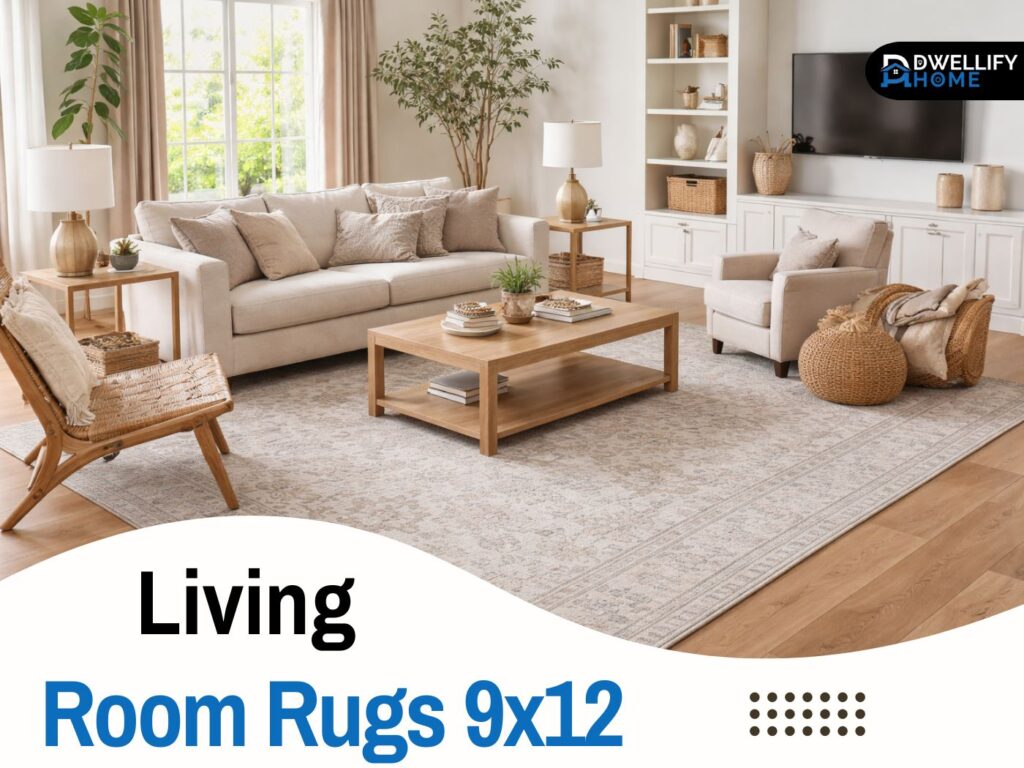
Living room rugs 9×12 are large area rugs that anchor a full seating layout. They help connect sofas and chairs, soften sound, and define the lounge zone when placed with front legs or all legs on the rug.
Mission Statement:
At Dwellify Home, our mission is to help you plan a living room that feels comfortable and put-together, using practical layout advice you can trust, from real design experience, not trends.
9×12 Rug Size Basics (What it means plus who it’s for)
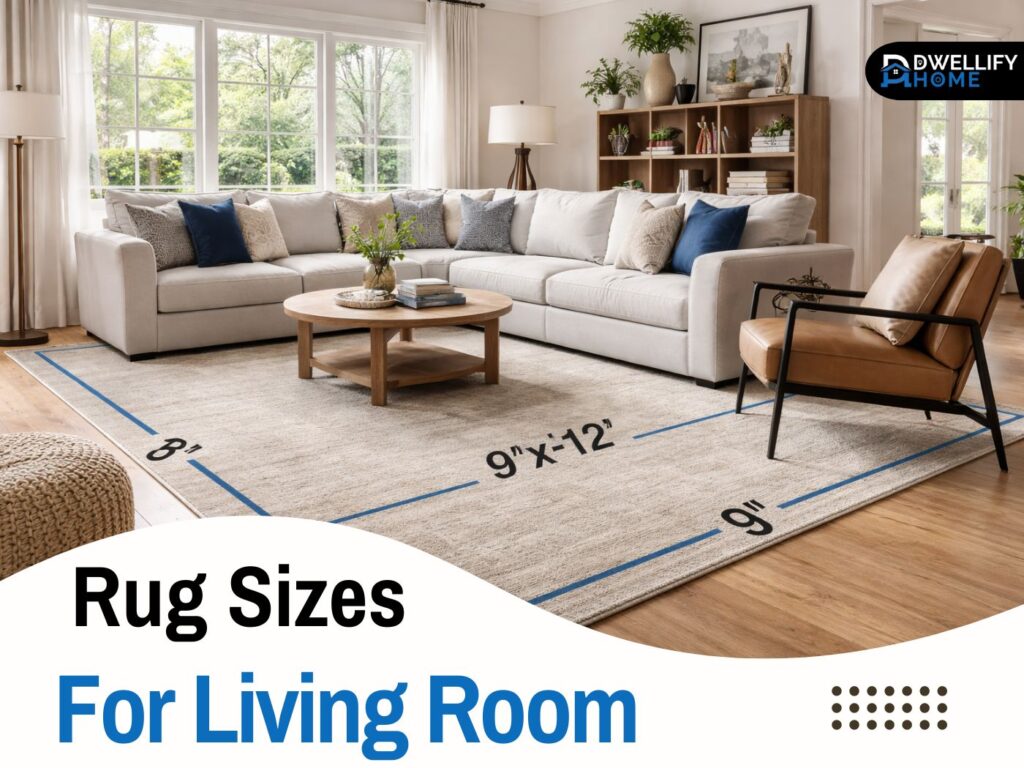
A 9×12 rug size is nine feet by twelve feet, which is big enough to anchor a full seating area. In most living rooms, it’s the size that finally lets the sofa and chairs feel connected, instead of each piece sitting on its own little island.
I recommend 9×12 most often when you have a standard sofa with two chairs, a sectional, or an open layout where the living room needs a clear “zone.” If your room is very small, an 8×10 can work, but it sometimes leaves front chair legs off the rug or makes the coffee table feel cramped.
Before you commit, do a quick fit check:
- Make sure doors can swing freely without catching the rug edge
- Leave comfortable walkways, especially from hallways into the seating area
- Notice floor vents and baseboard heaters so you’re not blocking airflow
- If you have a fireplace hearth, decide if the rug should stop before it or frame it
This size usually looks best when the rug defines the seating area rather than being pushed against every wall. A little breathing room around the edges often looks more polished.
Quick Guide Table (comparison you can scan fast)
| What you’re deciding | Best choice | Why it works in real living rooms |
| Placement style | Front legs on rug | Most balanced look, fits many rooms, keeps flow open |
| “Finished” designer look | All legs on rug | Strongest zone definition, great for medium-large rooms |
| Busy household (kids, pets) | Low to medium pile | Easier vacuuming, fewer snags, smoother traffic flow |
| Want extra softness | Medium pile + pad | Comfort without the maintenance headaches of very thick rugs |
| Washable priority | System or clear care label | Many 9×12 “washable” options vary by construction, check instructions |
| Shopping on a budget | 9×12 area rugs clearance | Good value if you verify return policy, pile, backing, and edge finish |
Step-by-step placement checklist (simple, no fuss)
- Tape the size: Mark a 9×12 rectangle on the floor with painter’s tape.
- Pick one layout: front legs on, all legs on, or floating (only if space is tight).
- Confirm traffic flow: make sure walkways and door swings stay clear.
- Center to a focal point: fireplace or TV wall, not the room’s exact middle.
- Add a pad: reduces sliding and helps the rug wear better over time.
- Live with it for a day: move chairs, open doors, sit down. If it feels right, you’re good.
Measure and Plan Like a Designer (Simple rules that prevent costly mistakes)
The best way to plan a rug is to measure the seating zone, not the whole room. Picture the area where feet land, where the coffee table sits, and where chairs slide back. That’s the “working zone” your rug needs to support.
Here’s the method I use with clients because it removes guesswork. Grab painter’s tape and mark a 9×12 rectangle on the floor. Walk around it, open doors, and pull a chair back like you normally would. In five minutes, you’ll know if it feels right.
A simple proportion rule that helps in most homes is this: your rug should extend beyond the sofa on both sides, so the sofa doesn’t look like it’s balancing on the rug. I also like the rug length to feel generous in relation to the sofa, not equal or shorter. If your sofa is long, a 9×12 often fixes that “too small” feeling.
If your home is open concept, this rug size is one of the easiest ways to create zones. You can separate the living area from the dining area with a clear edge, while keeping the overall space cohesive.
Best 9×12 Rug Placement for Living Rooms (3 layouts that always work)
Placement matters as much as the rug itself. A 9×12 gives you options, and the right one depends on your room shape, furniture size, and traffic flow.
All furniture legs on the rug (most polished look)
This is the layout that looks the most finished. The sofa, chairs, and even side tables sit fully on the rug. It feels like a complete “room within the room.”
I use this when the living room is medium to large, or when the furniture is substantial. It also works beautifully in formal seating areas where people aren’t constantly cutting through the space.
Front legs only on the rug (most common plus space-smart)
This is my most-used approach in everyday homes. The front legs of the sofa and chairs sit on the rug, while the back legs stay off. It keeps the seating connected, but you don’t need as much space around the perimeter.
It’s also forgiving if your room is slightly narrow. You get the design benefit of a large rug without forcing furniture into awkward spots.
Floating layout (for smaller rooms or flexible seating)
In a floating layout, the rug sits under the coffee table and central area, but the furniture may sit just off the edges. I use this when the room has unusual angles, tight walkways, or you rearrange often.
If you go this route with a 9×12, make sure the rug still relates to the sofa. You don’t want a big rug that looks like it drifted away from the seating.
For sectionals and chaise sofas, aim to keep the rug extending past the chaise edge so the shape feels intentional. Also, try to center the rug on your main focal point, usually the fireplace or TV wall, not the exact middle of the room.
Rug Thickness and Comfort (Thick vs low-pile, what actually works)
A thick rug can feel cozy and quiet, especially in homes with hard floors. I’ve placed living room rugs 9×12 thick in family rooms where people sit on the floor, kids play, and the room needs warmth. It makes a space feel softer immediately.
The trade-off is maintenance. Thick, plush rugs can trap crumbs and pet hair, and some vacuums struggle with them. If you have a lot of traffic, or if doors swing over the rug area, low pile often behaves better.
If you want comfort without the “too fluffy” issues, I usually recommend a medium pile rug with a quality pad. A rug pad does three important things: it reduces slipping, adds softness, and helps the rug wear evenly. It’s one of the easiest upgrades you can make, even with a clearance rug.
Materials That Hold Up in a Living Room (Durability plus feel plus upkeep)
Material choice is where real life meets style. A rug can look perfect online and still feel wrong in your home if the fiber doesn’t match your habits.
Wool is a classic for a reason. It’s comfortable, insulating, and holds up well. Many wool rugs shed at first, which surprises people. I tell clients to expect a break-in period and vacuum regularly in the beginning.
Synthetic rugs, like polypropylene or polyester, are often a smart fit for busy homes. They tend to be easier with stains and usually cost less. If you’re furnishing a first home or updating a playroom-living room combo, synthetics can be a practical choice.
Natural fibers like jute and sisal look beautiful, but they’re lifestyle-specific. They can feel rougher underfoot and don’t love moisture. I use them in calmer spaces, or layered with a softer rug on top.
If you have kids or pets, focus on three things: low to medium pile, a pattern that can hide everyday marks, and a color that plays nicely with your furniture. A slightly mixed pattern often looks cleaner longer than a solid color.
Washable Living Room Rugs 9×12 (Realistic expectations plus how to choose)
Washable rugs are appealing, but it helps to know what “washable” means in real life at this size. Some are truly one-piece and can be washed in large machines, but many systems use a removable cover with a base. Others are “washable” in the sense that they’re designed for easier cleaning, not necessarily a home washer.
If you’re considering washable living room rugs 9×12, check the care label first. Look for clear washing instructions, drying guidance, and whether the backing is safe for your floors.
From a designer standpoint, here’s what matters most:
- A backing that stays flat and doesn’t curl
- Edges that feel well-finished, especially if the rug will be in a walkway
- Colors and patterns that won’t show every little spot
- A realistic cleaning plan, like spot cleaning plus occasional deeper cleaning
For many homes, the most practical routine is frequent vacuuming, quick spot cleaning, and a deeper clean once or twice a year. If your household is messy in a normal way, that plan usually keeps the rug looking good without stress.
Color and Pattern Choices That Make a 9×12 Look Expensive (Not overwhelming)
With a larger rug, scale becomes important. A tiny repeating pattern can look busy on a 9×12, while an oversized pattern can feel bold fast. I often recommend a medium-scale pattern or a subtle distressed look because it hides wear and blends into different decor styles.
If you’re leaning toward gray living room rugs 9×12, pay attention to undertones. Cool gray can feel crisp, but it can also make a room feel cold if your sofa and walls are also cool. Warm gray, greige, or gray with beige notes often feels more welcoming with wood floors and warm lighting.
Think about how you live. If you drink coffee on the couch, if kids snack in the room, or if pets lounge by the window, a rug with some variation will be more forgiving.
A simple styling tip I use often is to repeat the rug color in two or three places. Maybe that’s a pillow, a throw, and a piece of art. It makes the rug feel like it belongs, not like it was dropped in last minute.
Where to Buy 9×12 Living Room Rugs (Smart shopping without regrets)
If you’re shopping 9×12 area rugs clearance, you can find great value, but read details carefully. I always check return policy, shipping cost, fiber content, and edge finishing. Clearance is fine, but you don’t want to get stuck with a rug that won’t lay flat or sheds badly.
Many people choose living room rugs 9×12 amazon because it’s convenient. The best approach is to filter by pile height and material, then read the reviews for two things: how it feels underfoot and how it behaves after a few months. Look for comments about curling corners, slippery backing, and shedding.
If you’re browsing 9×12 area rugs clearance amazon, it’s worth double-checking measurements. Some listings use rounded dimensions or include fringe in the stated length. That can change how it fits in your seating zone.
IKEA is also a solid option for straightforward, modern styles. If you like clean lines and easy coordination, 9×12 area rugs – ikea can be a helpful category to explore. Their sizing guidance is also practical, which helps you visualize placement.
No matter where you buy, I suggest verifying:
- Exact size and whether fringe is included
- Pile height and how it affects doors and vacuuming
- Backing type and whether a pad is recommended
- Care instructions that match your lifestyle
Common Mistakes With 9×12 Living Room Rugs (And quick fixes)
The most common mistake is actually choosing a rug that’s too small, not too big. When the rug doesn’t reach the front legs of the sofa and chairs, the room looks disconnected. If you already have a smaller rug, a quick fix can be adding larger furniture placement on top, but often the better solution is sizing up.
Another mistake is pushing the rug against the wall because it feels like it should “fill the room.” In many living rooms, leaving some floor visible around the edges looks more intentional and helps the rug frame the seating zone.
Skipping the rug pad is another one I see all the time. Without a pad, the rug shifts, corners curl, and wear happens faster. A good pad can also make a thinner rug feel more comfortable.
Finally, people sometimes choose the wrong pile for how they live. A fluffy rug can be lovely, but if you’re vacuuming daily and dealing with pets, it can become frustrating. Picking the right structure is often more important than picking the perfect pattern.
Expert Tips for Long-Term Rug Performance
Here’s what I tell homeowners who want their rug to look good for years, not just the first month.
Vacuum regularly, but adjust your vacuum settings to match the pile. If the rug is thick, a high suction setting can pull fibers too aggressively. Rotate the rug every few months if the room gets uneven sunlight or traffic. That prevents one side from fading or wearing faster.
For curling corners, a pad helps, and so does patience. Many rugs relax after a few weeks. If the corners persist, rug corner grippers or gentle weighting can help. Avoid soaking the rug edges in water, since that can sometimes make curling worse.
When it comes to cleaning, spot clean quickly, and test products in a hidden corner first. For a deeper clean, professional cleaning can be a safer option for wool or vintage-style rugs. For synthetic rugs, careful home cleaning often works well.
If you’re deciding where to spend more, invest in the pad and a durable fiber. You can save on trend patterns, but the structure and comfort are what you’ll feel every day.
FAQ
1) Is a 9×12 rug good for a living room?
Yes, it’s often ideal for anchoring a full seating area, especially with a sofa plus chairs or a sectional. It helps the room feel connected rather than “floating.”
2) What size rug looks best in a living room?
The best size is usually the one that lets at least the front legs of the sofa and chairs sit on the rug, so the layout reads as one zone.
3) Should a rug be darker or lighter than the floor?
Either can work. Lighter rugs open up a room, while darker rugs feel grounding and hide some marks. The key is contrast that fits your lighting and furniture tones.
4) What furniture complements a 9×12 rug?
A standard sofa with two chairs, a sectional, or a sofa plus loveseat setup all pair well. The goal is that the rug supports the full seating “conversation area.”
5) Should all couch legs be on the rug?
If you have space, all legs on the rug looks most finished. If the room is tighter, front legs on the rug still looks intentional and balanced.
Conclusion
A 9×12 rug is one of those choices that can make your living room feel pulled together, even if you don’t change anything else. Start by measuring your seating zone, then choose one of the three reliable layouts, all legs on, front legs only, or floating. From there, match pile and material to your daily life, not just your style mood.
If you’re on the fence, tape the size on the floor and live with it for a day. That quick step saves so many regrets. Once the rug fits the way you move through the room, everything else, the sofa placement, the coffee table spacing, even the lighting, starts to feel easier to get right.
Disclaimer:
This guide shares general interior design and layout advice. Room sizes, flooring, lighting, and product quality vary, so always measure your space and check product care labels and return policies before buying.

I’m Bilal Hassan, the founder of Dwellify Home. With 6 years of practical experience in home remodeling, interior design, and décor consulting, I help people transform their spaces with simple, effective, and affordable ideas. I specialize in offering real-world tips, step-by-step guides, and product recommendations that make home improvement easier and more enjoyable. My mission is to empower homeowners and renters to create functional, beautiful spaces—one thoughtful update at a time.