Sliding glass doors are one of those features people love until the window covering starts getting in the way. I’ve installed shutters on hundreds of sliders, and the pattern is always the same. Homeowners want something that looks clean, gives real privacy, and still lets the door work the way it should.
This guide walks you through what actually matters: which shutter system fits a slider, how to avoid clearance mistakes, what materials last, and how to judge cost and quality. I’ll also point out a few situations where shutters are not the best answer, because honest advice saves you time and money.
Snippet-ready definition:
Plantation shutters for sliding glass doors are track-mounted shutter panels that slide or fold so you can control privacy and light without blocking daily access. The right system depends on door traffic, handle clearance, and panel stacking space.
Mission Statement:
At Dwellify Home, our mission is to make home decisions simpler with practical, experience-backed guidance that helps you choose products that fit your space, your routine, and your budget.
Are plantation shutters a good idea for sliding glass doors?
In many homes, yes, but only if you choose the right configuration. Sliding doors are high-traffic openings. People brush past them, kids push on them, pets rub against them, and the handle area becomes a problem spot if the shutters are planned like a regular window.
The biggest benefit is control. You can tilt louvers for privacy while keeping daylight, or close them for glare control. Compared with vertical blinds, shutters feel sturdier and quieter, and they’re easier to wipe clean. They also add a built-in look that fits most styles.
Here’s the honest part I tell clients while we’re standing at the door. With most slider shutter setups, the panels need somewhere to go. That means you may not get a fully clear opening in the same way you would with curtains pulled to the side. You can still make the door very usable, but you plan for how you live, not just how it looks.
Quick Guide Comparison Table
| Option | Best for | Main upside | Main downside | Typical pick when |
| Bypass shutters for sliding glass doors | Daily in-and-out traffic | Smooth sliding on a track, no folding into the room | You rarely get a fully clear opening all at once | You use one side more than the other |
| Bi-fold plantation shutters | Wanting a wider open area | Panels fold and stack to the side | Needs stacking space, can feel bulky | You often open the door wide (hosting, pets) |
| Vertical blinds | Tight budgets | Cheap, widely available | Noisy, tangles, breaks easily | Rental or short-term solution |
| Drapes or curtains | Soft look, large opening | Full clear opening when pulled back | Less precise light control, can collect dust | You want fabric style more than louver control |
Step-by-step buying checklist (clean and practical)
- Decide your main walking lane: Which side do you use most? That side should stay easiest to access.
- Pick your system: Bypass for frequent daily use, bi-fold for wider opening.
- Choose material by environment: Composite or PVC for humidity and heavy use, wood for stable, dry rooms.
- Confirm clearance: Door handle, trim depth, floor track, and panel stacking space.
- Compare quotes correctly: Panel count, track quality, warranty, and who handles adjustments.
- Plan installation: For sliders, pro measuring often prevents expensive fit mistakes.
Plantation shutters for sliding glass doors: the 2 systems that work (Track Options)
Sliding doors usually do best with a track-based system. The two most common options are bypass and bi-fold. You’ll see both marketed as sliding shutters for sliding glass doors, but they behave differently day to day.
Bypass shutters for sliding glass doors (sliding shutters on a track)
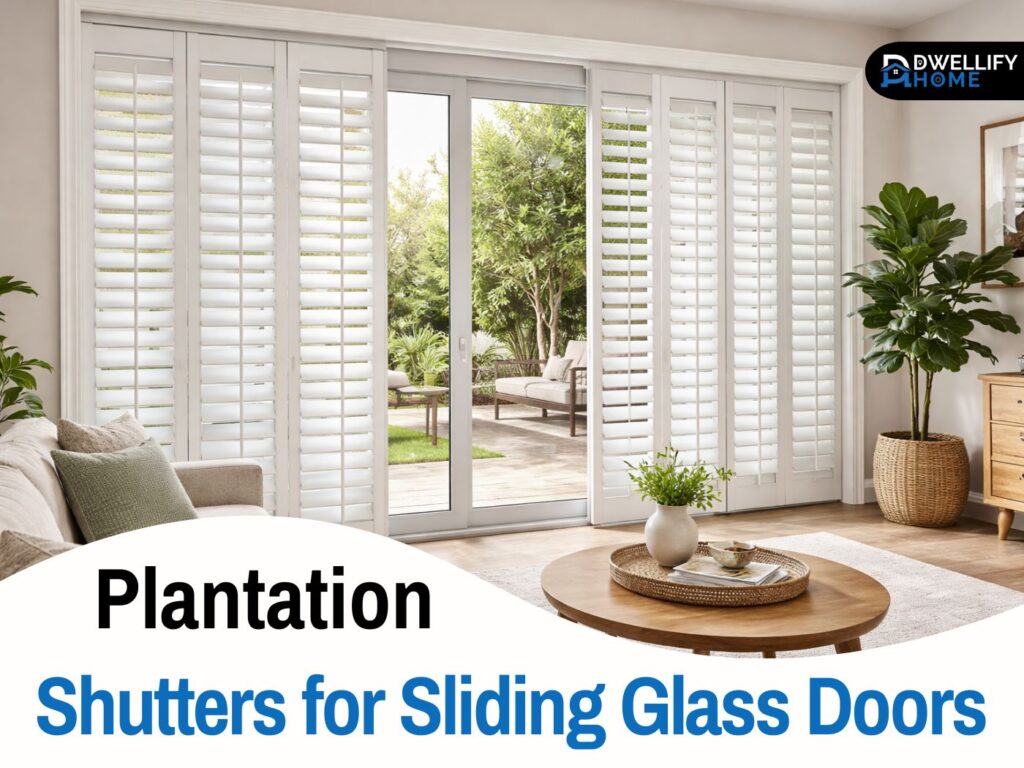
Bypass shutters are the most popular setup I install on standard two-panel sliding doors. Think of two or more shutter panels that slide past each other on a track, similar to how the door moves. That’s why people call them bypass shutters for sliding glass doors.
They’re a good fit when you want a straightforward routine. You slide the shutter panel to the side you are not using, open the door, and you’re through. It’s especially helpful when you don’t have space for folding panels to stick out into the room.
A real-world tip from installs: bypass panels need a smooth track and the right guide at the floor or frame. If the track is flimsy, you’ll feel it every time you open it. If you have kids or a frequently used patio, I lean toward sturdier hardware even if it adds a bit to the quote, because cheap tracks are where complaints start.
Bi-fold plantation shutters for sliding glass doors (folding panels)
Bi-fold shutters are panels that fold like an accordion and stack to one side. They’re great when you often want a wider opening, like when carrying trays outside, moving furniture, or letting a dog run in and out.
They do need space to stack. In some rooms, that stack can feel bulky. Also, if the door is used constantly, the folding action can become annoying. Not always, but it depends on your habits. If you open the slider 20 times a day, bypass often feels smoother. If you mostly open it for evenings and weekends, bi-fold can feel more open and natural.
How to choose the best plantation shutters for sliding glass doors (Expert checklist)
When clients ask me for the best plantation shutters for sliding glass doors, I don’t start with color or louver size. I start with how the door is used and what can go wrong.
Use this checklist and you’ll avoid most regret purchases:
- Which side do you use most? Your “main walking lane” should stay as clear as possible.
- How many panels are needed? Wider doors may need more panels for stability and smoother movement.
- Handle clearance matters. A proud handle can hit a frame or panel if you don’t plan around it.
- Track quality and alignment. A good system glides easily and doesn’t rattle.
- Louver size. Bigger louvers give a cleaner view when open, smaller louvers give tighter privacy control.
- Inside mount vs outside mount. Inside mount looks built-in, but outside mount can solve clearance and trim issues.
One more practical point. If your slider has a raised threshold track, or if the door trim is irregular, custom shutters for sliding glass doors often fit better than a one-size option. That’s not sales talk. It’s because sliders are rarely perfectly square.
Materials that hold up on sliding doors (what to pick and why)
Sliding doors take more abuse than most windows. The wrong material can warp, chip, or get loose at the joints. Here’s what I see hold up in real homes.
Real wood shutters (premium look, lighter feel)
Wood is a favorite for a warm, natural look. It’s also lighter than many composite options, which can help on large panels. If your room stays pretty stable in temperature and humidity, wood can be a great choice.
The downside is moisture. In humid climates, or in rooms with lots of condensation, wood can expand and contract. That’s when you see slight warping over time. If your slider faces a pool area, coastal air, or a steamy kitchen, I usually steer people toward a moisture-resistant option.
Faux wood, composite, or PVC (high durability for busy doors)
For most families, faux wood shutters or composite shutters are the workhorses. They handle humidity better, resist dents, and clean up easily. If you have pets, toddlers, or a patio that gets used hard, this is often the safer long-term pick.
PVC shutters are also common in humid areas. They’re a strong option when moisture is a concern, but quality varies. Some cheaper PVC products can feel flexible on wide spans. A good installer will recommend reinforcements or panel sizing that keeps everything rigid.
If you’re deciding between interior plantation shutters for sliding glass doors in wood versus composite, ask yourself one thing: will this door get bumped daily? If yes, durability tends to win.
Style and design choices that make sliding door shutters look intentional
Even though function comes first, shutters should still look like they belong. The easiest way to get an intentional look is to match key choices with nearby windows.
If your living room windows have 3.5 inch louvers and a clean white frame, matching that on the slider makes the whole wall feel planned. Mixing sizes can work, but it often looks accidental unless the room has a strong design reason.
Color matters more than people think. Bright white can look crisp, while a softer white blends better with warm trim and cream walls. If your floor is warm wood, a stained finish can look beautiful, but it also shows dust more quickly on wide sliders.
One detail I see overlooked is frame thickness. A thicker frame can look more finished, but it can also reduce the clear opening and bump into handles. On sliders, the best-looking setup is often the one that’s slightly simpler.
Plantation shutters for sliding glass doors price (what it costs and why)
Pricing is all over the map because sliding doors are big and the hardware is specialized. In most quotes, the main drivers are the door size, number of panels, the track system, and the material.
Here’s what usually increases the price:
- Wider or taller openings that need more panels
- Stronger track systems and better hardware
- Composite or specialty materials
- Larger louvers and custom color matching
- Professional measuring and installation
If you compare the cost to basic blinds, shutters will look expensive. If you compare them to higher-end drapery with motorized tracks, the gap often shrinks. The real value is longevity. A well-built shutter system can last for years with basic care, while cheaper coverings tend to break, tangle, or discolor.
If you want plantation shutters for sliding glass doors price clarity, get quotes that list the panel count and track type. A single number without details makes it hard to compare.
Where to buy (Near me vs online vs Home Depot vs Lowe’s)
You have a few buying paths, and each one makes sense for different priorities.
If you want plantation shutters for sliding glass doors near me, local shutter companies are often the smoothest experience. The best ones measure professionally, handle the installation, and stand behind adjustments. Sliders sometimes need fine-tuning after settling, and local support helps.
Big-box retailers can work too. People often check plantation shutters for sliding glass doors Home Depot or plantation shutters for sliding glass doors Lowe’s for price and convenience. The key is to ask how measuring and installation are handled. Some orders rely on your measurements, and that’s risky on sliders. Others use installation partners. Make sure you understand the warranty and who services issues later.
Online custom brands can be a good middle ground if you’re comfortable measuring and you have a fairly standard opening. If the door trim is uneven, the handle protrudes, or the opening is extra wide, I’d be cautious about DIY measuring.
A simple quote-comparison checklist I use with clients:
- Exact track type and hardware included
- Panel count and panel widths
- Material and finish details
- Warranty terms and who services it
- Lead time and installation timeline
Measuring and installation basics (avoid costly mistakes)
I’ve seen great shutters fail because of one inch of bad planning. Measuring is not just width and height. It’s also clearance, obstacles, and how the panels will move.
Measure width at the top, middle, and bottom. Measure height on both sides and in the center. Sliding door frames are often slightly out of square, especially in older homes.
Now the big slider-specific checks:
- Handle clearance: will the panel or frame hit the handle?
- Floor and threshold: will a guide interfere with rugs or traffic?
- Trim depth: is there enough depth for an inside mount?
- Stack space: where will panels rest when open?
Installation is usually track mounting, panel hanging, and final alignment. The final alignment step is where experience matters. A millimeter off can cause rubbing, uneven gaps, or a panel that doesn’t glide smoothly.
If you’re paying for professional installation, the value is not just drilling holes. It’s making sure the panels run straight and stay that way.
Maintenance and cleaning (keep it smooth and quiet)
Shutters are fairly low maintenance, but sliders have one extra responsibility: track care.
For cleaning, a microfiber duster or soft cloth handles most dust. For deeper cleaning, a lightly damp cloth works well. Avoid soaking the louvers, especially on wood products.
For the track, vacuum with a brush attachment every so often. Patio doors collect grit. That grit is what causes grinding or sticky movement. If you hear scraping, don’t force it. Clean the track first, then check if a guide is out of alignment.
A small routine I recommend: once a season, wipe the track and check that screws are snug. That simple habit prevents most service calls.
Common problems (and how to prevent them)
Most issues I fix were preventable with better planning or better hardware.
If the shutters feel sticky or rough, it’s often a dirty track or a low-quality track system. A well-built bypass track shutters setup should glide smoothly with one hand.
If panels bump the handle, it’s usually a clearance issue from the beginning. Sometimes a handle cut-out can help, but it’s better to plan around it before ordering.
If louvers don’t line up across panels, the panels might be slightly out of level, or the frame could be out of square. Skilled installers account for that, but it’s harder to correct after the fact.
If you see warping, moisture is usually the culprit. That’s why moisture-resistant shutters are worth it in the right environment.
FAQs
Can I put plantation shutters on a sliding glass door?
Yes. The most common setups are bypass track panels that slide past each other, or bi-fold panels that fold and stack to the side. The right choice depends on traffic, handle clearance, and space for panels to park.
How much are plantation shutters for sliding doors?
Cost depends on door size, panel count, track system, and material. Sliding doors usually cost more than windows because they need larger panels and specialized hardware. Get quotes that list panel widths and track type so comparisons are fair.
What is the downside of plantation shutters?
The main trade-off is panel parking space. Panels must slide or stack somewhere, so you may not get the same wide-open feel as curtains. Poor track hardware can also feel rough over time, so build quality matters.
What is the best window covering for sliding glass doors?
It depends on what you care about most. For long-term durability and clean light control, sliding door shutters on a track are a strong option. For the widest clear opening, curtains often win. For budget, vertical blinds are common but less durable.
Do bypass shutters block part of the doorway?
Often, yes, partially. With bypass, one set of panels usually overlaps the other when open. The benefit is smooth daily use and a neat look, but you plan for which side you want most accessible.
Conclusion
If you want a clean, lasting upgrade from blinds or curtains, plantation shutters for sliding glass doors can work beautifully, but only when they’re planned like a door system, not a window cover.
Start by choosing the right configuration. Bypass is often best for daily traffic, bi-fold is great when you want a wider opening. Then pick a material that matches your environment. Wood looks classic in stable rooms, while composite or PVC often wins for busy homes and humid areas.
Finally, take measuring seriously. Handle clearance, track alignment, and panel stack space decide whether the shutters feel effortless or annoying. If you nail those details, you’ll end up with shutters that look intentional, move smoothly, and hold up for years.
Disclaimer:
This article is for general educational purposes based on real installation experience. Your exact needs may vary by door size, trim, handle style, and wall structure. For precise sizing and safe installation, consult a qualified local installer or manufacturer guidelines.

I’m Bilal Hassan, the founder of Dwellify Home. With 6 years of practical experience in home remodeling, interior design, and décor consulting, I help people transform their spaces with simple, effective, and affordable ideas. I specialize in offering real-world tips, step-by-step guides, and product recommendations that make home improvement easier and more enjoyable. My mission is to empower homeowners and renters to create functional, beautiful spaces—one thoughtful update at a time.