A round rug can change the whole feel of a living room faster than a new paint color. It softens sharp furniture lines, creates a natural focal point, and helps the space feel more “finished” without adding clutter.
I’ve used round rugs in everything from tiny apartments to big open-plan family rooms. Here’s the honest truth: a round rug can look incredible, but only when it has a clear job to do. In this guide, I’ll walk you through where it works best, how to size it, how to place it, and how to avoid the common mistakes that make a round rug look random.
Snippet-ready definition:
A round rug in a living room softens straight lines, creates a clear focal point, and helps define a seating zone. It looks best when sized to the furniture footprint and centered around a coffee table or seating cluster.
Mission Statement:
At Dwellify Home, our mission is to make everyday home styling simple and realistic, with practical design advice you can actually use, even in busy, lived-in spaces.
Why a Round Rug Works So Well in a Living Room
Here’s the thing: most living rooms are full of rectangles. Sofas, TV units, coffee tables, and even windows usually come in straight lines. A round rug breaks that “boxy” feeling and adds flow, especially in rooms that feel stiff or too formal.
On top of that, a round rug can help you define a cozy zone without building walls. In open layouts, a circle creates a gentle boundary for conversation areas, reading corners, or a small sitting spot that feels separate from the dining space.
That said, round rugs are not a magic fix for every room. If the living room is very narrow, or the furniture layout is long and straight with no “center,” a round rug can look like a floating island. In those cases, a rectangular rug may support the shape of the room better.
Quick Guide Table (fast decisions)
| Your living room setup | Best use | Quick size cue (diameter) | Placement tip |
| Small nook (chair + lamp) | Accent zone | 4′ round rug | Front legs of the chair on the rug |
| Small living room | Light seating zone | 3’–5′ | Center on coffee table, keep walkways clear |
| Medium living room | Main seating area | 6’–8′ | Aim for at least sofa front legs touching |
| Large living room / open plan | Full conversation zone | 8’–12′ | Treat the rug edge like “invisible walls” |
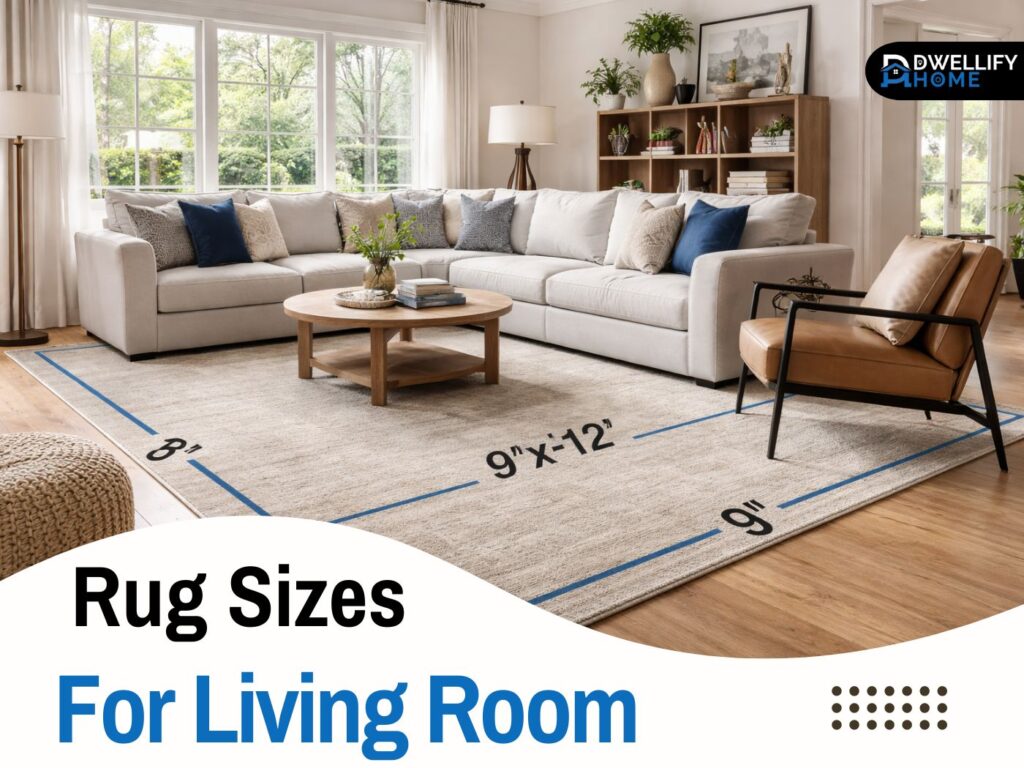
| Sectional sofa | Soften the L-shape | Usually bigger than you think | Center on coffee table, tuck slightly under front legs |
5-step mini checklist
- Pick the anchor (coffee table or seating cluster).
- Tape a circle on the floor first (prevents wrong sizing).
- Make sure the rug relates to the seating footprint, not empty floor.
- For sectionals, avoid a “dot” rug; go larger.
- Add a rug pad to stop sliding and curling.
Round Rug Living Room Layout Basics (Simple Rules Designers Use)
A great round rug living room layout starts with one simple question: what should this rug anchor? If the rug doesn’t anchor something, it usually looks like an afterthought.
I always choose one anchor point first, then build around it. The rug is there to support the furniture story, not compete with it.
Choose the “anchor” first
Pick one of these as your anchor:
- Coffee table and main seating area
- A pair of chairs and a side table for a conversation nook
- A statement chair near a window for a reading corner
- The space between a sofa and fireplace when the fireplace is the visual center
Once you know the anchor, centering becomes easy. For most living rooms, the coffee table is the best anchor because it naturally sits in the middle of the action.
Keep walkways comfortable
Round rugs look best when the edges don’t sit right where feet constantly land. If the rug edge lines up with a major walking route, it tends to get kicked, curled, and annoyed by daily life.
A quick trick I use: stand where you normally walk through the room and look down. If the rug edge is right under your step, move it slightly or size up so the edge lands in a calmer zone.
What Size Round Rug for a Living Room? (The No-Stress Size Guide)
Sizing is where most people get stuck, so let’s make it simple. The rug should feel proportional to the furniture, not just the empty floor.
The easiest method is the tape test. Use painter’s tape or even bedsheets to mark a circle on the floor in the size you’re considering. Live with it for a day. Walk around it. See if it feels balanced. This one step prevents so many regrets.
A good rule I use in real homes: the rug should relate to the seating area footprint. If your sofa and chairs take up a big area, a tiny circle will look like a coaster.
Quick size examples (by common use)
A 4′ round rug works best as a supporting piece, not a main living room anchor. It’s great for:
- A single accent chair and a small side table
- A reading corner with a floor lamp
- A small round coffee table in a very compact space
For a main seating area, you’ll usually need a larger diameter so the rug connects to the furniture. A large round rug in living room setups often works best when the circle reaches at least the front legs of the sofa or the chairs. That’s what makes the room feel unified instead of scattered.
Round Rug Placement Options (Pick One and Commit)
Round rugs look best when the placement is intentional. Half-hearted placement is what makes them feel “off.” I typically use one of three approaches, depending on the room.
The front legs on approach is the safest and most common. The rug sits under the coffee table, and the sofa’s front legs rest on the rug. This creates connection without swallowing the whole room.
The floating approach means the rug sits under the coffee table only, with no furniture legs on it. This can work, but only when the furniture is light and scaled small. In larger rooms, floating usually makes the rug look too tiny.
The all legs on approach is the most luxurious look when the room is big enough. The rug is large and the entire seating set fits on it. This is where a large round rug in living room designs can look surprisingly elegant, especially when the furniture is curved or the room has plenty of air.
Round Rug in Living Room With Sectional (The Most Common Problem)
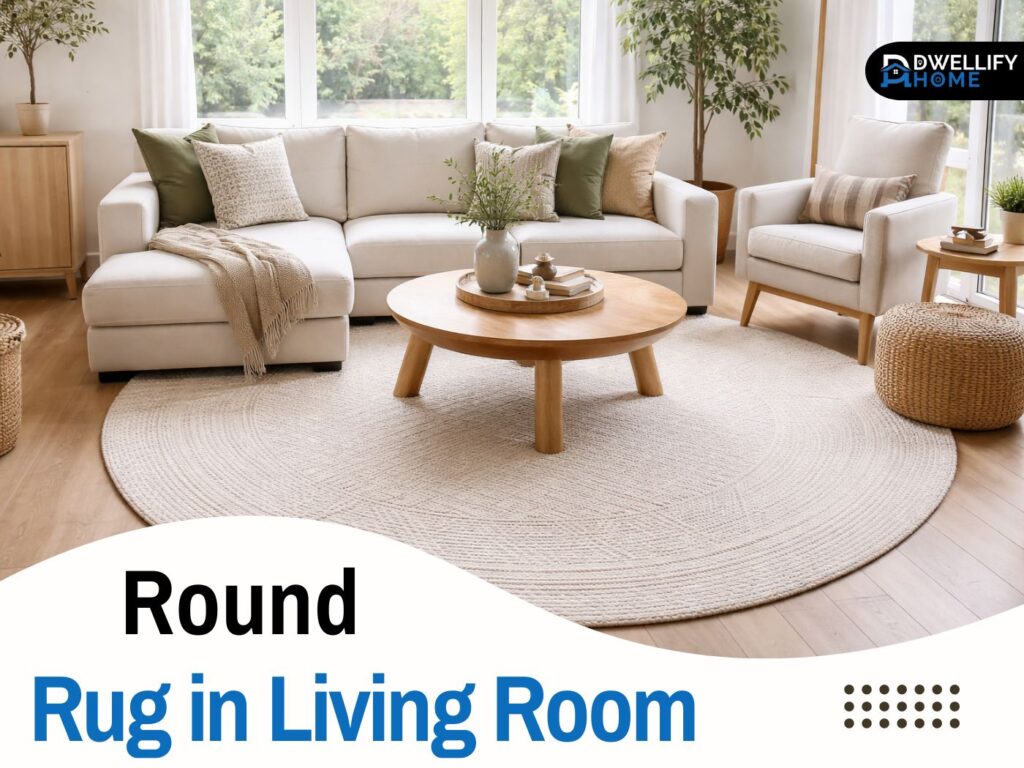
A round rug in living room with sectional setups can look amazing because it breaks up the strong L-shape. But it also has the highest chance of looking awkward if the rug is too small.
The best placement is usually under the coffee table, slightly tucked under the sectional’s front edge. Even a few inches under the front legs helps the circle feel connected, not just placed in front.
If your sectional is large, don’t be afraid of going bigger than you think. The biggest mistake I see is choosing a circle that looks cute in the store but becomes a dot in front of a big sectional. If the rug looks like it belongs to a different room, it probably does.
One more practical tip: if the sectional has a chaise, make sure the rug doesn’t stop abruptly right at the chaise edge. Either center the rug to the coffee table and accept a little asymmetry, or size up so the rug feels like it belongs with the whole seating zone.
Style Looks That Rank and Work in Real Homes (5 Classic Round Rug Looks)
Round rugs can lean playful, cozy, modern, or relaxed. The style depends on color, texture, and how much contrast you bring into the room.
A minimalist Scandinavian look usually means a light neutral rug with subtle texture. It pairs well with wood tones, simple furniture lines, and soft lighting. This works beautifully in small rooms because it doesn’t visually shrink the space.
Natural textures like jute or woven wool blends create warmth fast. I’ve used this look in family homes where the goal is “comfortable and pulled together” without looking overly styled.
A pop-of-color round rug can be a focal point when the rest of the room is calm. If you’re doing this, keep the sofa and large pieces more neutral so the rug doesn’t fight with everything else.
Green and earthy tones are a great middle ground. They add interest but still feel grounded. I’ve used muted olive rugs in rooms with lots of cream and oak, and it instantly made the space feel calmer.
The neutral layered look is cozy and practical. A textured neutral circle can hide everyday wear while still looking elevated, especially when paired with a few warm accessories like a throw and a wood coffee table.
Modern Round Rugs for Living Room (Clean, Updated Ideas)
Modern round rugs for living room spaces usually work best when the pattern is simple and the scale matches the room. Clean doesn’t mean boring. It just means the rug isn’t screaming for attention.
Geometric rugs can look sharp, but they need balance. If the room already has patterned curtains or busy art, go for a softer geometric that doesn’t compete.
Minimal solids with texture are my favorite “safe modern” choice. A looped wool, a subtle ribbed weave, or a low-pile textured finish looks rich without being fussy.
Curved or organic designs are perfect when everything else is straight. If you have a boxy sofa, sharp-edged coffee table, and a linear TV unit, an organic round rug adds softness in a way your eye can feel.
Choosing Color the Smart Way (So the Rug Doesn’t Control the Whole Room)
Color is about connection. You want the rug to talk to something else in the room, even if it’s subtle.
One easy method is the three-link rule. Pick a rug color that connects with at least three elements, like the sofa, cushions, curtains, or a piece of art. It doesn’t need to match exactly. It just needs to relate.
If the living room feels flat, a round rug can add contrast and define the seating zone. In open layouts, this helps create separation without adding furniture.
Pattern is great, but it has to be realistic. Busy patterns hide stains, but they can also make a small living room feel crowded. If your room already has a lot going on, a simple rug with texture will look cleaner.
White Round Rug in Living Room (How to Keep It Looking Fresh)
A white round rug in living room spaces can look stunning, but it has to be a realistic white. Bright white can feel harsh, while warm ivory often looks softer and more forgiving.
Texture matters a lot here. Flat smooth weaves show every mark. A textured weave, subtle pattern, or slightly mottled look hides lint and footprints better. In homes with kids or pets, this makes a big difference.
Keep it fresh with simple habits. Vacuum regularly, rotate the rug every couple of months, and treat spills quickly. If you want the low-stress version, choose a washable round rug or a performance fiber that’s designed to handle stains.
Material and Pile Height (Real-Life Choices: Kids, Pets, Daily Traffic)
Material is where design meets real life. A rug can look gorgeous, but if it doesn’t fit your lifestyle, it’ll become a headache.
Wool is a classic for a reason. It’s resilient, comfortable underfoot, and tends to bounce back well. It can shed at first, but that usually settles. For many living rooms, wool is a long-term win.
Synthetic rugs are often easier to clean and budget-friendly. They’re great for high-traffic family rooms, especially if spills are common. Many newer options look much better than older synthetics, so you don’t have to sacrifice style.
Natural fibers like jute or sisal look beautiful and earthy, but they’re not always cozy. They can be rough underfoot and don’t love moisture. I like them in low-spill areas or layered with a softer top rug.
Pile height matters too. Low pile is easiest to vacuum and works well with doors and furniture movement. Plush pile feels cozy, but it shows footprints and takes more effort to keep looking neat.
And don’t skip the rug pad. A rug pad keeps the rug from sliding, adds comfort, and helps it wear evenly. It’s one of those behind-the-scenes details that makes the whole setup feel more professional.
Borders, Patterns, and Visual Balance (Small Details That Make It Look Expensive)
Borders can be a great design tool. A border can frame the seating zone and make the rug feel more structured. But if the border is too bold, it can shrink the space visually by pulling your eye inward.
Pattern scale is another big deal. In a small room, huge patterns can feel overwhelming. In a large room, tiny patterns can look busy and fussy. I usually match pattern scale to the furniture scale. Bigger furniture tends to handle bigger pattern better.
If your room has patterned pillows, busy art, and textured curtains, keep the rug calmer. If the room is simple and quiet, the rug can take more personality. The goal is balance, not perfection.
Round Rug for Dining Room (Yes, But Do It Correctly)
A round rug for dining room use can be a great match, especially under a round table. It reinforces the shape and feels intentional.
The key is chair movement. Chairs need to stay on the rug when pulled out, otherwise the rug edge becomes a constant snag point. A simple check is to pull a chair out the way you normally would and see if all chair legs stay on the rug.
For dining areas, choose a material that handles crumbs and cleaning. Low pile is usually best, and patterns can help hide everyday mess. If the dining space is connected to the living room in an open plan, matching the rug’s tone or texture to the living room rug helps the whole area feel cohesive.
Layering a Round Rug (A Unique Look That’s Still Practical)
Layering can look stylish, but it needs a simple plan. The easiest version is a neutral base rug with a smaller round rug layered on top. This works well in large rooms where the base rug anchors the whole zone and the round rug adds interest.
I like layering when a space needs warmth and texture, or when you’re working with a neutral room that feels a bit flat. It also helps if you already own a rug that’s slightly too big or too plain and you want to refresh the look without replacing everything.
Watch out for thickness. Two thick rugs can make furniture wobble and create tripping edges. Keep at least one layer low pile, and always use a rug pad so the stack stays stable.
Quick “Copy This” Layout Examples (Fast Decisions)
If you want quick direction, here are layouts I’ve used in real homes that consistently work.
For a small living room layout, place the round rug under the coffee table and tuck it slightly under the sofa’s front legs. Keep the rug proportional so it connects to the seating area, not the whole room.
For open-concept zoning, center the round rug in the seating area and let it define the conversation zone. This works especially well when your dining space is close by, because the circle creates a softer boundary.
For a sectional layout, center the circle under the coffee table, then tuck the edge under the sectional’s front legs if possible. If the chaise makes it feel off, size up so the rug feels connected to the whole arrangement.
For an accent chair nook, a 4′ round rug is often perfect. Place it under the front legs of the chair with a small side table on the rug, and add a floor lamp. It creates a complete mini-zone with almost no effort.
Round Rug Mistakes That Make a Living Room Look “Off”
The number one issue is scale. A rug that’s too small makes the living room feel disconnected, like the furniture is floating around it.
Poor centering is another big one. A round rug needs a clear center point, usually the coffee table or a specific seating cluster. If it’s halfway between zones, it looks lost.
Too much pattern can make a room feel noisy. If the rug is busy and the room is busy, your eye has nowhere to rest. In those rooms, a textured solid or a subtle pattern is the calmer choice.
And yes, skipping the rug pad is a mistake. Without it, rugs slide, curl, and wear unevenly. It’s a small add-on that makes the whole setup safer and longer-lasting.
FAQ
1) Can you use a round rug in a living room?
Yes. It’s especially good for boxy rooms because it softens hard lines and creates a cozy focal point under a coffee table or seating nook.
2) When not to use a round rug?
Skip it when the room is long and narrow or when your furniture layout is very linear with no clear center. In those cases, a rectangular rug often supports the room shape better.
3) Does a round rug make a small room look bigger?
It can. A round rug often feels lighter visually and can reduce the “boxed-in” look, especially when the color is light and the size fits the seating area instead of chopping it up.
4) Is a round or rectangle rug better for a living room?
Rectangles are usually the safest for standard sofa layouts. Round rugs are better when you want to soften angles, highlight a central coffee table, or create a distinct zone in an open layout.
5) What size round rug works best with a sectional?
A larger diameter usually looks more intentional. Center it on the coffee table and, if possible, tuck the rug slightly under the sectional’s front legs so the seating area feels connected.
Conclusion
A round rug can be a beautiful choice when it’s doing a clear job. If you want a calm living room that feels softer and more balanced, a circle can be the piece that ties everything together.
Start by choosing your anchor, usually the coffee table or a seating nook. Then size the rug to the seating scale, not just the empty floor. Pick a realistic material for your lifestyle, add a rug pad, and you’ll get a look that feels intentional and easy to live with.
And if you only remember one thing, make it this: the right placement makes the rug feel like it belongs. That’s what turns a round rug in living room styling from “nice idea” into a room that feels genuinely finished.
Disclaimer:
This guide shares general interior styling advice based on real-world design experience. Room sizes, furniture layouts, and materials vary, so measure carefully and follow the care instructions provided by your rug manufacturer and installer.

I’m Bilal, the founder of Dwellify Home. With 6 years of practical experience in home remodeling, interior design, and décor consulting, I help people transform their spaces with simple, effective, and affordable ideas. I specialize in offering real-world tips, step-by-step guides, and product recommendations that make home improvement easier and more enjoyable. My mission is to empower homeowners and renters to create functional, beautiful spaces—one thoughtful update at a time.