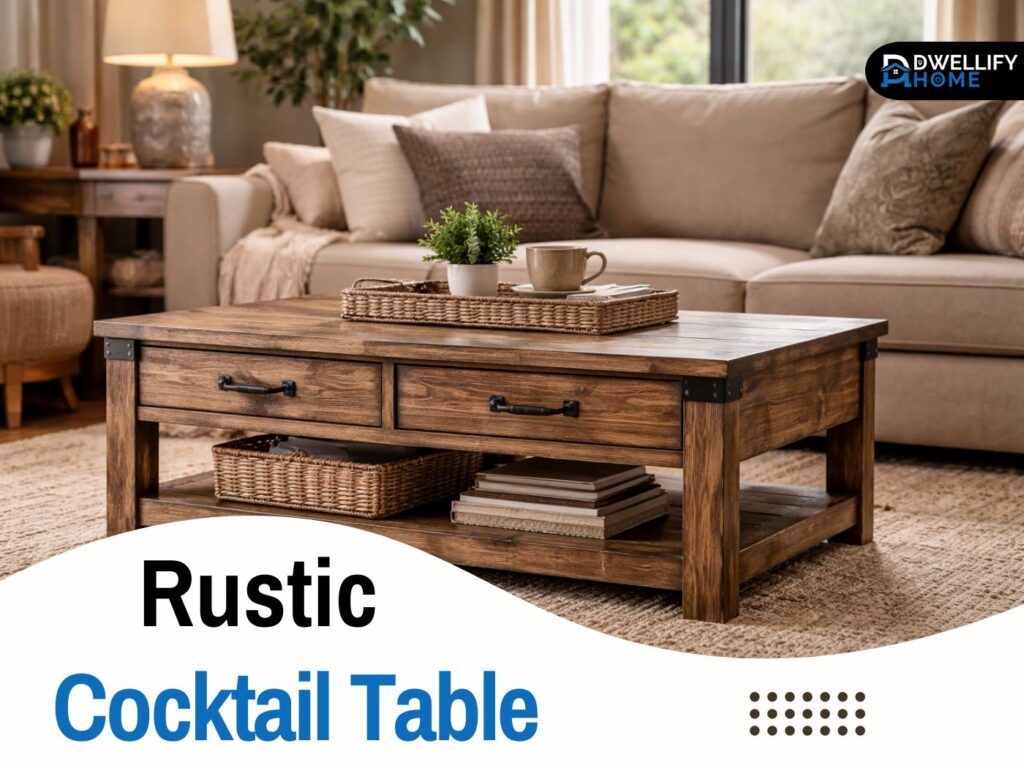
A rustic living room has a certain comfort to it. The textures feel honest, the materials feel grounded, and the space looks better as it’s lived in. That’s exactly why a rustic cocktail table can be such a smart centerpiece. It takes the daily wear of real life and still looks right at home.
In the homes I’ve worked on over the last 12 years, the “right” table almost always comes down to a few practical choices: shape, size, construction, and how the finish will hold up to your routine. Let’s walk through it the way I would if we were standing in your living room together.
Snippet-ready definition:
A rustic cocktail table is a sturdy living room table made to feel warm and natural, often with visible wood grain, knots, and aged finishes. People use it to anchor seating areas and handle everyday life comfortably.
Mission Statement:
At Dwellify Home, our mission is to help you build a home that feels calm, warm, and livable, with design advice that’s practical, style-aware, and easy to use in real spaces.
What Is a Rustic Cocktail Table (and Is It the Same as a Coffee Table?)
In most home furniture listings, “cocktail table” and “coffee table” are used for the same thing: the low table that sits in front of your sofa. You’ll often see the term cocktail table in more traditional or formal furniture collections, while coffee table is the more common everyday label.
What matters is not the name, but the proportions and purpose. This table needs to hold drinks, snacks, books, and remotes, and it has to fit the way your seating area actually works. When you choose well, it becomes the anchor that makes the room feel finished and functional.
Quick Guide Table
| What you’re choosing | Best pick | Why it works | Watch-outs |
| Shape | Rectangular rustic cocktail table | Fits most sofas and sectionals, offers the most usable surface | Can feel bulky in tight walkways |
| Shape | Round rustic cocktail table | Easier traffic flow, softer look, fewer sharp corners | Less surface area for trays and books |
| Storage | Rustic cocktail table with storage (drawers) | Hides clutter fast, keeps the top clean | Check drawer depth and glide quality |
| Storage | Lift-top | Great for casual work or meals, hides items | Needs clearance and sturdy hinges |
| Material | Solid wood rustic cocktail table | Long-lasting, can be refinished, feels heavy and stable | Heavier to move, costs more |
| Material | Veneer/engineered | Budget-friendly and can look great | Less repairable, edges can chip |
Fast checklist (shopping in 60 seconds)
- Measure sofa seat height and aim for a table about the same height or up to 2 inches lower
- Leave 14–18 inches between sofa and table for legroom
- Keep 24–30 inches for main walkways when possible
- Prefer stable bases and tight joins over “pretty photos”
- Choose storage based on your habits: drawers for clutter, shelf for baskets, lift-top for multi-use
Rustic Style Basics (How to Tell if It’s Truly Rustic)
Rustic is more than “brown wood.” A well-done rustic look has depth and character, and it doesn’t feel overly polished. The best pieces usually show a few clear signs of authenticity.
Look for these features:
- Visible grain patterns and natural variation
- Knots, mineral streaks, or small checks that look natural, not printed
- Chunkier proportions and a sturdy stance
- Metal accents like iron corner straps, bolts, or a steel base
- Handcrafted details like breadboard ends or a plank-style top
Now, rustic has a few close cousins that can change the vibe.
Farmhouse rustic tends to feel lighter and cleaner, often with softer edges and warm, homey finishes. Industrial rustic leans harder into metal, darker tones, and sharper lines. Vintage rustic usually has a slightly aged look, like worn hardware, patina, or a distressed finish that mimics time and use.
If you’re unsure, a simple test is to step back and ask, does it look like it could have been built to last, not just styled to sell?
Picking the Right Shape (What Works Best in Real Rooms)
Shape matters more than most people expect. I’ve seen beautiful tables returned simply because they made the walkway feel tight or made the room look off-balance.
Rectangular Rustic Cocktail Table
A rectangular rustic cocktail table is the easiest fit for most living rooms. It works especially well with a standard sofa, a long couch, or a sectional with a straight front edge.
If you entertain often, rectangular shapes also give you more usable surface area. There’s room for a tray, a couple of drinks, and still space for a book or a board game without things feeling crowded.
Round Rustic Cocktail Table
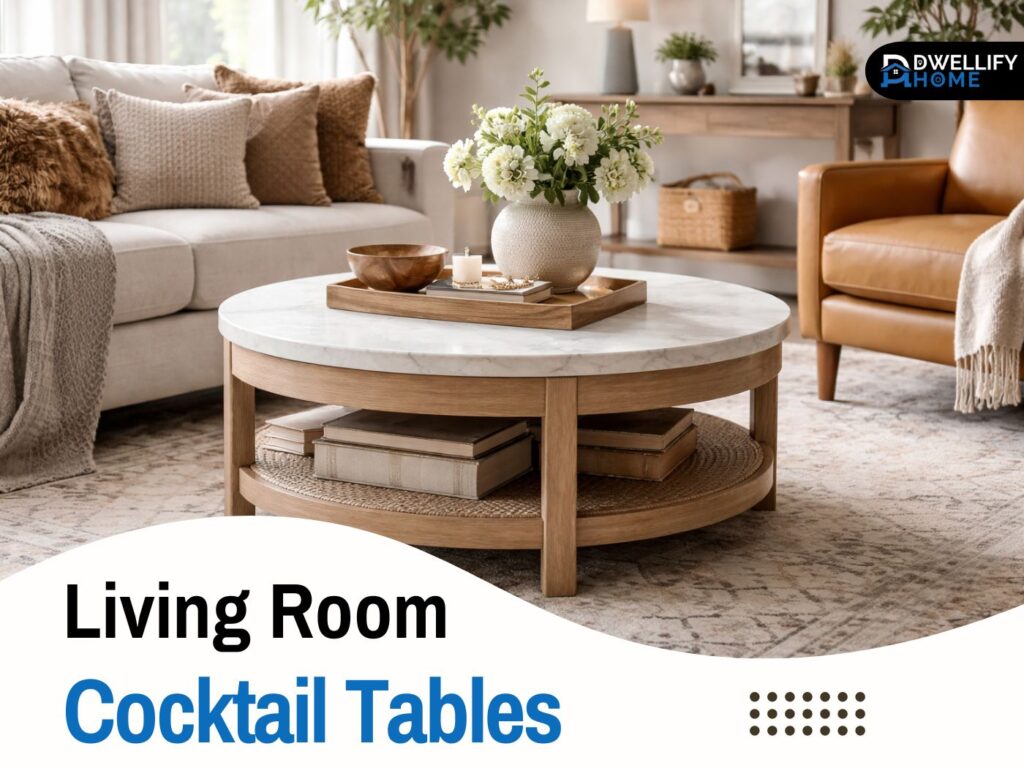
A round rustic cocktail table can be a lifesaver in tight spaces. Round edges make it easier to move around the seating area, and it softens a room that already has lots of straight lines.
I also recommend round tables for homes with young kids. Fewer sharp corners means fewer hip bumps and bruises, and that matters day to day.
Square and oval styles can work too. Square is best when your seating forms a true square, like a sectional chaise that creates a balanced footprint. Oval is great when you want a softer shape but still want more surface length than a round table provides.
Size and Placement Rules Designers Actually Use
This is where most mistakes happen, and it’s usually not because someone picked a bad table. It’s because the measurements weren’t checked against the sofa and the walking paths.
Here are the rules I use in real projects:
- Height: aim for about the same height as your sofa seat, or up to 2 inches lower. If it’s much taller, it feels awkward. Much lower, and it’s annoying to use.
- Distance from the sofa: leave about 14 to 18 inches between the sofa and the table. That gives your legs room and keeps it easy to reach.
- Walkway clearance: try for about 24 to 30 inches for main walking paths. If you have a tighter room, 18 inches can work, but it will feel snug.
- Length: a good guideline is around two-thirds the length of your sofa. That usually looks balanced without swallowing the room.
A quick real-world example: in a small apartment living room, I often use a slightly smaller table and add a slim side table for overflow. It keeps the center open, and the room feels calmer.
Materials and Build Quality (What to Buy and What to Avoid)
If you care about long-term durability, material choice is not the place to compromise. Rustic styles are forgiving visually, but the construction still needs to be strong.
A wood rustic cocktail table made from solid wood is usually the best investment. Solid wood can be refinished, it holds hardware better, and it tends to age more gracefully.
Veneer and engineered wood aren’t automatically “bad,” but you need to know what you’re buying. Veneer is a thin layer of real wood over a different core. It can look great, but it can’t be sanded and refinished the same way, and edges are more prone to damage if the piece is bumped often.
If you’re considering reclaimed wood, expect character. Hairline cracks, small gaps, and uneven grain patterns are normal. A reputable maker will stabilize the wood properly and finish it in a way that protects it without hiding what makes it special.
Here’s what I check when judging craftsmanship:
- Weight and balance: if it feels too light, it often is
- Base stability: it shouldn’t wobble when you press on a corner
- Joinery: look for tight seams and clean connections, not sloppy gaps
- Hardware: drawers should glide smoothly and feel solid
- Underside build: flip photos matter, a strong frame underneath is a good sign
Finishes That Survive Real Life
In busy homes, the finish matters as much as the wood. A distressed finish can hide minor scratches, but you still want a topcoat that protects from moisture and rings.
For everyday living, look for a sealed top, and avoid finishes that feel sticky or overly soft. If the seller can’t explain the finish type at all, that’s a red flag. In my experience, that usually leads to stains from water glasses or heat marks from mugs.
Rustic Cocktail Table With Storage (Most Useful Feature for Homes)
Storage is not just a bonus, it’s often the difference between a living room that feels relaxing and one that always looks cluttered. A rustic cocktail table with storage lets you keep the essentials close without leaving them out.
Common storage options include:
- Drawers for remotes, chargers, candles, and small items
- A lower shelf for baskets, books, or throws
- Lift-top styles for working on a laptop or eating casually
- Trunk-style tops for deeper storage, great for board games and blankets
One tip from real projects: if you like a clean look, choose drawers or a trunk-style top. Open shelves can look great, but they require more tidying to keep them from feeling busy.
Most Popular Rustic Styles People Search For (2026)
Rustic isn’t one single look. The best choice depends on what else is in your home and how you want the room to feel.
A rustic farmhouse coffee table usually has a softer, more welcoming vibe. Think warm tones, simpler lines, and details that feel classic rather than rugged. This style is easy to blend with light upholstery and neutral rugs.
A vintage rustic cocktail table often leans into aged character. You might see antique-style hardware, subtle distressing, and finishes that mimic time. These pieces are great if you want the room to feel collected, not newly furnished.
Then there are unusual rustic coffee tables, the statement pieces. Live edge tops, stump bases, mixed wood and steel designs, or asymmetrical shapes can look incredible when the rest of the room is kept simple. If the room already has a lot going on, I usually keep the table more classic so it doesn’t compete.
Matching the Table to Your Living Room (So It Looks Intentional)
This is where a table stops being just furniture and starts looking like it belongs.
If your sofa is modern with clean lines, a rustic industrial coffee table can bridge the gap nicely. The metal base keeps it feeling current, while the wood adds warmth.
If your room already has warm woods, match the undertone. A common mistake is mixing a red-toned rustic table with a cool gray floor and expecting it to blend. It can work, but it often needs a rug and accessories to connect the tones.
In rooms with lots of texture, like jute rugs or linen sofas, rustic tables feel natural. A jute runner or woven basket under the table can also help the space look layered without feeling heavy.
And if the room is small, choose a table with lighter visual weight. Open bases, slimmer legs, or a round profile can keep the center from feeling blocked.
How to Style a Rustic Cocktail Table Without Making It Messy
I like styling that looks lived-in, not staged. The goal is warmth and function, not a surface you’re scared to touch.
A simple styling formula that works almost every time:
- A tray to corral small items and make things look intentional
- A small stack of books or a box for height
- One natural element, like a small plant, branch, or a stone bowl
If you want a cozy look, add one soft texture nearby, like a folded throw in a basket under a shelf. Keep the table top itself mostly clear so it stays useful.
What I avoid is lots of tiny decor pieces. They collect dust, they feel cluttered quickly, and they rarely survive real life in a busy home.
Buying Guide: Rustic Cocktail Table for Sale (How to Shop Smart)
When you’re shopping, the photos are only half the story. The listing details are where you find out if it’s truly a good buy.
Before you purchase, check:
- Exact dimensions, including height
- Materials: solid wood, veneer, reclaimed, metal base details
- Finish information, especially if you have kids or entertain often
- Weight capacity if you plan to use it heavily
- Return policy and shipping protection for heavy furniture
If you’re shopping handmade or vintage, ask direct questions. What type of wood is it? How is it sealed? Were cracks stabilized? Can the finish be touched up? A good seller will answer clearly without dodging.
One more practical tip: if a table has drawers, look at how far they open and how deep they are. Shallow drawers sound fine until you realize your remotes don’t fit.
Budget Tiers (What You Typically Get at Each Level)
Budget pieces can work well if you choose carefully. Many are veneer over an engineered core, and the key is getting something stable with a decent finish. For a low-traffic space or a starter home, that may be enough.
Mid-range tables often improve in the details. Better drawer slides, sturdier frames, and more reliable finishes show up here. This is where many families find the best balance.
Premium pieces are usually solid wood or reclaimed wood with stronger craftsmanship. You’re paying for longevity, repairability, and a finish that’s made to live with. If you’ve ever owned a solid wood table that still looked good after years of use, you know why this tier can be worth it.
Care and Maintenance (Keep Rustic Beautiful for Years)
Rustic pieces are forgiving, but they still need basic care to stay looking good.
For daily cleaning, use a soft cloth and a gentle cleaner that’s safe for wood finishes. Avoid harsh sprays that can dull the topcoat over time.
To prevent damage:
- Use coasters for hot drinks and cold glasses
- Wipe spills quickly, especially on natural or matte finishes
- Use felt pads under heavy decor items that can scratch when moved
If you get a scratch, don’t panic. On many rustic finishes, a small mark blends into the character. But if you see a white ring or sticky spot, that’s usually a sign the finish is reacting. In those cases, a light touch-up product recommended by the maker, or a professional refinisher for solid wood, can bring it back.
FAQs
1) What is a cocktail table called?
In home furniture, it’s commonly called a coffee table. Some brands use “cocktail table” as a more traditional retail term for the same living room table.
2) Do rustic tables work in modern homes?
Yes. A rustic table adds warmth and texture to modern spaces, especially when paired with clean-lined seating. Choosing a simpler base or a wood-and-metal look keeps it feeling balanced.
3) How many cocktail tables for 50 guests?
For events, planners often use about 1 cocktail table per 8–10 guests, depending on space and how much mingling happens. That usually means 5–7 tables for 50 guests.
4) Is there a difference between a coffee table and a cocktail table?
At home, not much. They’re usually the same piece. In events, “cocktail tables” often means tall standing tables, so the term can depend on context.
5) What size rustic cocktail table should I get for a sectional?
A rectangular shape usually works best. Aim for about two-thirds the sofa length and keep enough clearance for the chaise-side walkway so the room doesn’t feel cramped.
Conclusion
A good rustic cocktail table should feel solid, fit your seating the way it was meant to, and handle everyday life without constant worry. Start with shape and size, because those decide how comfortable your living room feels. Then focus on materials and build quality, because that’s what determines whether the table still looks good years from now.
If you want the easiest path to a confident choice, look for a sturdy wood rustic cocktail table with a stable base, a finish that can take spills, and storage that matches your habits. Once it’s in place, keep the styling simple, let the grain and texture do the work, and enjoy a living room that feels warmer the moment you walk in.
Disclaimer:
This article is for general décor guidance. Measurements, finishes, and durability can vary by maker and home conditions. Always confirm dimensions and materials before buying, and consult a local professional for structural or custom furniture needs.

I’m Bilal, the founder of Dwellify Home. With 6 years of practical experience in home remodeling, interior design, and décor consulting, I help people transform their spaces with simple, effective, and affordable ideas. I specialize in offering real-world tips, step-by-step guides, and product recommendations that make home improvement easier and more enjoyable. My mission is to empower homeowners and renters to create functional, beautiful spaces—one thoughtful update at a time.