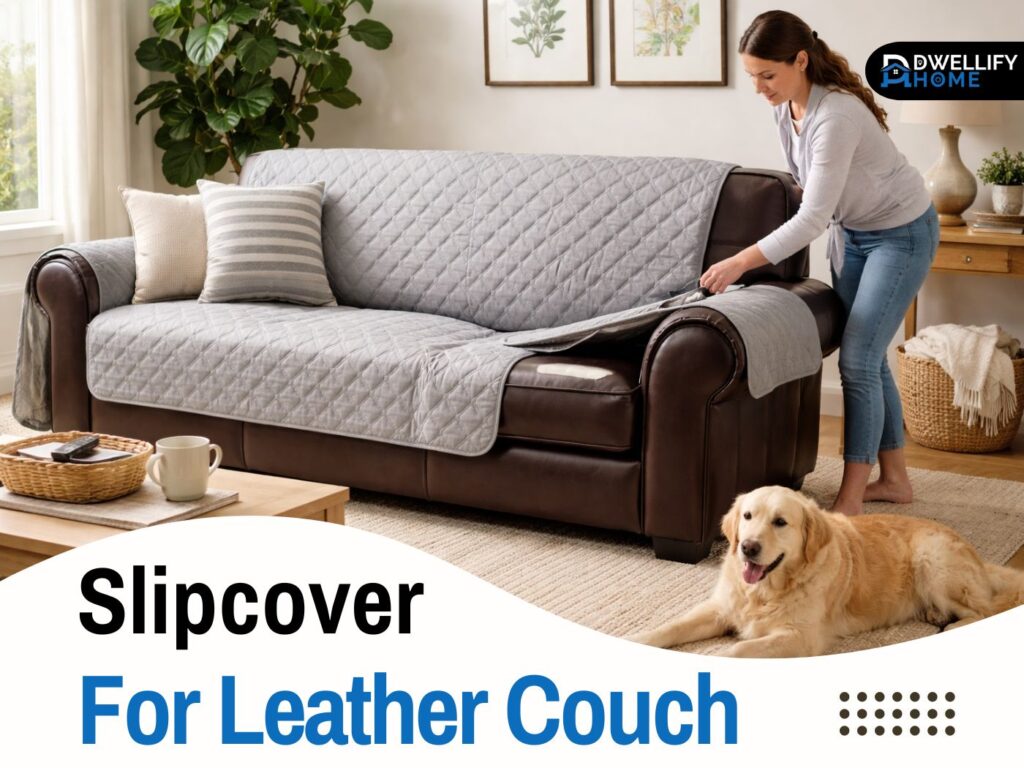
Leather sofas look sharp, feel great, and usually last a long time. The downside is simple: leather is slick. Even a well-made cover can shift, bunch up, or creep forward every time someone sits down.
I’ve been fitting covers on leather for years, and the best results come from two things: choosing the right style for leather and installing it with the right grip and tension. In this guide, I’ll walk you through what works in real homes, including recliners, pets, and busy family rooms.
Snippet-ready definition:
A slipcover for leather couch is a protective fabric cover made to fit over slick leather seating. People use it to reduce wear, hide scuffs, handle pets and spills, and refresh the look without replacing the sofa.
Mission Statement:
At Dwellify Home, our mission is to help you create a home that feels comfortable and lived-in, with practical guidance that makes everyday choices like protecting a sofa simple and stress-free.
Do Slipcovers Work on Leather Couches?
Yes, they can work well, but leather needs a different approach than fabric upholstery. On a cloth sofa, the cover “grabs” the surface. On leather, it tends to skate across it unless the cover has a secure fit and some kind of anchoring system.
When a cover fails on leather, it’s usually not because the product is terrible. It’s because the fit is off by a few inches, the backing is too smooth, or the cover was installed like it’s going on a fabric couch. Leather demands grip underneath and tension around the edges.
If you choose the right cover style and install it properly, you can get a neat look that stays put day to day. You’ll also protect the leather from oils, small scratches, and sun wear without turning the sofa into a sweaty, sealed-up surface.
Quick Guide Table (Comparison)
| Your Need | Best Cover Type | Why it works on leather | Watch for |
| Stops sliding most | Non-slip cover with backing + straps | Adds grip and tension | Backing should be leather-safe |
| Clean, fitted look | Stretch cover + foam sticks | Hugs the shape when tucked | Needs correct sizing |
| Easy washing | Separate cushion covers | Less shifting, easy to remove | Color transfer on light leather |
| Recliners | Multi-piece recliner set | Moves with the mechanism | Avoid fabric getting caught |
| Pets and kids | Tighter weave, washable, secure fit | Resists snags and mess | Choose breathable materials |
Quick Step-by-Step: How to Cover a Leather Sofa So It Stays Put
- Wipe the leather with a dry microfiber cloth (dust makes slipping worse).
- Add a non-slip underlay on the seat and back areas if the cover tends to slide.
- Center the cover using seams as your guides, then pull evenly.
- Tuck deeply into the seat-back gap and arm gaps.
- Insert foam sticks to lock the tuck in place.
- Tighten straps or elastic under the cushions, then smooth wrinkles.
- Test-sit and adjust once, then you’re usually set for daily use.
Why Covers Slide on Leather (and What Actually Prevents It)
Leather has a sealed finish, which is part of why it wipes clean. That same finish also reduces friction. Add movement from sitting, getting up, kids climbing, or a dog jumping on and off, and the cover shifts little by little.
There are three proven ways to stop sliding:
- A grippy layer between leather and fabric, like an anti-slip underlay
- A cover design that creates tension, like elastic hems and strap systems
- Physical anchoring into the seat-back gaps using foam sticks or tuck tools
The best setups use two of these at once. For example, a non slip cover for leather sofa with straps usually behaves nicely. A smooth throw-style cover with no anchors almost never does, no matter how pretty it looks out of the box.
Measure Your Leather Couch the Right Way (So It Fits the First Time)
Measuring is the difference between a cover that looks tailored and one that looks like a blanket. I’ve seen people buy three covers before they finally measure, and the funny part is the right size often costs the same as the wrong one.
Here’s the basic set of measurements I use on client visits:
- Arm to arm width across the front
- Seat depth from the front edge to where the back cushion starts
- Back height from seat to the top of the backrest
- Cushion width and thickness if the cover includes separate cushion pieces
If you have a leather sofa cover 3 seater, don’t assume all three-seaters are equal. Some have wide arms, some have deep seats, and some have tall backs. Those details decide whether the cover sits tight or swims.
Measuring for Recliners and Sectionals
Recliners and sectionals need a little extra attention because parts move or the shape isn’t a simple rectangle.
For recliners, measure each seat area and note where the footrest opens. Covers that are too long tend to snag when the mechanism moves. You want clearance and separate pieces when possible.
For sectionals, measure the main sofa section and the chaise or corner piece separately. A single “one-size-fits-all” option may fit the overall length, but it often fails at the inside corner where most shifting happens.
Best Types of Slipcover for Leather Couch (Choose by Your Need)
Not every cover type behaves well on leather. The good news is you don’t need a complicated solution. You just need the right match for your lifestyle, your sofa shape, and how much movement happens on it.
Best Non Slip Cover for Leather Sofa (Most Practical Choice)
If I had to pick one style for most homes, it would be a best non slip cover for leather sofa with a grippy backing and anchor straps. These are designed to resist sliding instead of relying on the leather surface for friction.
Look for features like silicone dot backing, a textured underside, or a built-in strap system that runs under the cushions. In practice, this style is the easiest to live with because you aren’t re-tucking it every day.
This is also a smart option for homes with kids, since covers shift most when people slide on and off the seat. With a good non-slip setup, you can keep the look tidy with minimal fuss.
Stretch Slipcover for Leather Couch (Best for a Fitted Look)
A stretch slipcover for leather couch can look very clean if it’s sized correctly and installed with patience. Stretch fabric hugs the shape, and the elastic hem helps keep tension along the base.
The key is what happens in the seat-back gap. On leather, you need a deep tuck and something to hold that tuck. Foam sticks or tuck tools make a bigger difference than most people expect. Without them, stretch covers still drift over time.
This type works well when you want a more “upholstered” look without paying for custom. Just be honest about your sofa’s shape. If it has extra-wide arms or loose back cushions, you may need a different style.
Leather Sofa Covers Ready Made (Fast + Budget-Friendly)
Leather sofa covers ready made are helpful when you want a quick refresh, especially for common sofa sizes. They can work well if you choose the correct size range and pair them with anti-slip helpers.
The reality is that ready-made covers are built around averages. If your sofa is on the small or large end of the range, you’ll likely see sagging or shifting. That doesn’t mean you shouldn’t use them, it just means you should plan to add foam sticks and straps.
For many families, this is still the best value. You can wash the cover regularly and keep the leather underneath in good condition.
Cushion-by-Cushion Seat Covers vs Full Slipcovers
On leather, separate cushion covers can be easier to manage than a full-body cover. I often recommend them when the main complaint is sliding on the seat, not the back or arms.
A cushion-by-cushion setup usually stays put better because each piece is smaller and can be anchored more easily. It’s also convenient for washing because you can clean the seat covers more often than the rest.
This option is great for pets, too. If your dog has a favorite spot, you can replace or wash that one piece without stripping the whole sofa.
Custom Slipcovers (When It’s Worth It)
Custom is worth considering when the sofa is oversized, an unusual shape, or a high-end piece you want to protect without a sloppy look. A properly made custom cover accounts for arm width, back height, cushion style, and skirt or base shape.
In my experience, custom also solves the “constant adjusting” problem because the pattern is made for your exact dimensions. Less extra fabric means less movement.
If you’re covering a leather sectional or an expensive recliner set, custom can save frustration long term.
Best Couch Covers for Leather Couches With Recliners (No Bunching, No Fighting the Footrest)
Recliners are tricky because the sofa is not one static shape. The back moves, the footrest opens, and the seat shifts. A single-piece cover can look fine when the recliner is closed, then bunch badly when it opens.
For couch covers for leather couches with recliners, I usually prefer multi-piece sets. They cover the backrest, seat, and arms separately, which allows the mechanism to move without dragging fabric.
Also check for straps that run around the back or underneath the seat. On leather, straps are not optional. They’re what prevents the cover from creeping forward every time someone reclines.
How to Install a Recliner Sofa Cover (Simple Step-by-Step)
Here’s the method I use so the cover stays aligned:
- Start with the backrest piece and center it using the seams as guides
- Fit the arm pieces and smooth them down toward the base
- Add the seat piece and tuck fabric into the seat-back gap
- Secure any straps under the seat or around the back
- Open and close the recliner once, then re-tuck and smooth
If the cover shifts after the test recline, it’s usually because the seat piece is too large or the straps aren’t tight enough. Small adjustments here save daily annoyance later.
How to Put On a Slipcover for Leather Couch for a Clean Look
A good installation is half the result, especially on leather. Before you start, wipe the leather with a dry microfiber cloth. Dust and crumbs underneath make covers slide faster and feel lumpy.
Then lay the cover over the sofa and align it before you tuck anything. People often start tucking right away, then realize the cover is off-center and have to redo the whole thing.
A reliable flow is:
- Center the cover and match seams to the sofa shape
- Pull evenly toward the arms and base
- Tuck at the seat-back gap
- Add foam sticks or tuck tools to lock the tuck
- Tighten straps or elastic, then smooth wrinkles
The “Tuck + Tension” Method (The Pro Finish)
This is the approach I teach homeowners who want that clean, fitted look:
- Tuck fabric deep into the seat-back gap, not just the surface
- Insert foam sticks to hold the fabric in place
- Pull the front edge down and secure the elastic hem
- Tighten straps last, once everything is aligned
When it’s done right, the cover doesn’t look “draped.” It looks intentional.
How to Keep a Slipcover From Slipping on Leather (Pro Fixes That Really Work)
If your cover slides, don’t immediately blame the product. Most of the time, a couple of small add-ons fix it.
Here are the solutions I use most often:
- Non-slip underlay placed on the seat and back areas before the cover goes on
- Foam sticks or a tuck tool in the seat-back and arm gaps
- Anchor straps that run under the seat cushions
- Cover clips designed to grip fabric in hidden areas, not on the leather surface
- Better tension by re-centering and tightening the elastic hem
Avoid sharp pins or anything that pierces leather. It can leave marks or damage the finish. Also be careful with aggressive adhesives. Some can react with leather coatings and cause discoloration.
Quick Troubleshooting
- Slipping forward: add underlay on the seat, tighten straps, and deepen the tuck
- Bunching on arms: re-center the cover and smooth fabric toward the base
- Wrinkles everywhere: size may be too large, or the fabric has too much slip
Best Fabrics and Backings for Leather (Comfort + Grip + Durability)
Fabric choice matters on leather for two reasons: grip and breathability. Leather needs airflow to stay comfortable and avoid trapping moisture, especially in warm climates or rooms with strong sun exposure.
In general, textured weaves and quilted fabrics behave better than smooth, shiny materials. Some covers include silicone dot backing or a grippy layer that helps them stay in place.
Also think about how the cover feels to sit on. Very thick, plastic-backed covers can reduce breathability. In hot weather, that can feel sticky. A balanced option is a breathable top fabric with grip features in the right places.
If you care about preserving the leather, choose covers that don’t trap heat and don’t rub aggressively. Constant friction from a rough backing can dull a leather finish over time, especially on high-contact areas like seat fronts.
Best Picks for Pets, Kids, and High-Traffic Homes
In real homes, the cover isn’t just for looks. It’s for protection from nails, spills, snacks, and daily wear.
For pets, I look for:
- Tighter weaves that resist snagging
- Washable materials that don’t hold odor
- A secure fit that doesn’t shift when a dog jumps up
For kids, stain resistance and easy washing matter most. A cover that can be removed and washed regularly will protect the leather from oils and food marks. If you’re dealing with frequent spills, a water-resistant layer can help, but you still want airflow.
In my experience, the best couch covers for leather couches in busy homes combine grip features with easy cleaning. A cover that stays put is safer, too. It reduces slipping when someone sits down quickly.
Care, Washing, and Leather-Safe Use (Avoid Damage)
A cover should protect the leather, not create new problems. One common mistake is leaving a cover on for months without lifting it. Leather benefits from occasional airing, especially in humid rooms.
A simple routine that works well:
- Vacuum or shake out crumbs weekly
- Wash the cover on the recommended cycle, usually every 2 to 6 weeks depending on use
- Lift the cover occasionally and wipe the leather with a dry microfiber cloth
If your cover is dark and your leather is light, test for dye transfer. I’ve seen this happen on new covers with strong dyes, especially when humidity is high. Washing the cover once before regular use can reduce risk.
Also avoid blocking recliner seams and moving parts. When fabric gets caught in the mechanism, it can tear the cover and strain the recliner.
Buying Guide (Amazon & Beyond): What to Check Before You Click “Buy”
When you’re comparing options, don’t get distracted by staged photos. Focus on the practical details that matter on leather.
Here’s what I’d check on any listing:
- Exact measurement range and whether it matches your sofa dimensions
- Backing type: non-slip features are important on leather
- Straps or elastic: look for anchor straps, not just a loose drape
- Separate cushion pieces: helpful for better fit and easier washing
- Return policy: sizing is the most common issue
If you’re considering a slipcover for leather couch on Amazon, read the reviews that mention leather specifically. A cover that works on fabric may still slide on leather, and buyers usually say so clearly.
Quick FAQ
1) Can I put a slipcover on a leather couch?
Yes. It works best when the cover has non-slip backing, straps, or a grippy underlay, plus a snug fit. Leather is smooth, so anchoring matters more than on fabric sofas.
2) What are the best covers for leather sofas?
The most reliable are non-slip covers with straps or stretch covers installed with foam sticks. For busy homes, washable covers with a tighter weave tend to hold up better.
3) How much does it cost to have a leather sofa reupholstered?
It varies by size, leather quality, and labor, but many jobs land in the high hundreds to a few thousand dollars. If the frame is solid and the leather is mostly cosmetic wear, a quality cover can be a practical alternative.
4) How to cover up a leather sofa?
Start by measuring, then choose either a non-slip strapped cover or a stretch cover with tuck tools. Add a non-slip underlay if it shifts, and avoid anything sharp or sticky that could mark the leather.
5) How do I stop a couch cover from sliding on leather?
Use a non-slip pad, foam sticks, and anchor straps together. Most sliding issues come from loose sizing and no grip layer, not from the cover itself.
Conclusion
A slipcover for leather couch can work beautifully, but leather isn’t forgiving about fit and grip. Measure carefully, pick a cover style that matches your sofa shape, and plan on using at least one stabilizing method like straps, underlay, or foam sticks.
If you want the most dependable setup, start with a non slip cover for leather sofa that includes straps, then install it with the tuck + tension method. For a cleaner, tailored look, a stretch cover can look great as long as it’s sized correctly and anchored properly.
Once it’s fitted well, you’ll notice the real benefit: the leather stays protected, the room looks pulled together, and you aren’t fixing the cover every time someone stands up. That’s the point, and it’s absolutely achievable with the right approach.
Disclaimer:
This article shares general upholstery and leather-care guidance. Always check your sofa’s care tag and test any accessory (pads, backings, cleaners) on a hidden spot first. For valuable or delicate leather, consider advice from a local professional.

I’m Bilal, the founder of Dwellify Home. With 6 years of practical experience in home remodeling, interior design, and décor consulting, I help people transform their spaces with simple, effective, and affordable ideas. I specialize in offering real-world tips, step-by-step guides, and product recommendations that make home improvement easier and more enjoyable. My mission is to empower homeowners and renters to create functional, beautiful spaces—one thoughtful update at a time.