When you’re furnishing a small living room, it’s rarely just about style. It’s about walking through the space without bumping into corners, having somewhere to put a drink, and still making the room feel calm at the end of the day. I’ve planned a lot of compact living rooms in apartments and condos, and the biggest difference always comes down to picking furniture that matches the room’s scale, not your wish list.
This guide walks you through practical small living room furniture ideas with the same approach I use when I’m standing in a client’s space. We’ll keep it comfortable, functional, and easy to live with, without crowding the room.
Snippet-ready definition:
Small living room furniture ideas are smart ways to choose right-size seating, flexible tables, and hidden storage so a compact living room feels open, comfortable, and easy to move through.
Mission Statement:
At Dwellify Home, our mission is to help you create rooms that feel comfortable and functional, using practical design advice you can trust, especially when space is limited.
Quick Guide Table: What to Buy, Why It Works, and How to Use It
| Need | Best Furniture Choice | Why it works in small rooms | Quick placement tip |
| Main seating | Apartment-size sofa or loveseat (thin arms, on legs) | Feels lighter, saves width | Don’t force it flush to the wall; leave a small gap if it improves flow |
| Extra seating | Two small chairs or swivel chairs | Flexible and balanced | Angle chairs toward sofa and TV without blocking paths |
| Table surface | Nesting tables or C-table | Moves when you need it, tucks away when you don’t | Keep the smallest one closest to seating |
| Storage + table | Storage ottoman (with tray) | Replaces coffee table and hides clutter | Center it, keep about 14–18 inches from sofa |
| TV zone | Wall-mounted TV + slim console | Frees floor space, looks cleaner | Use closed storage to hide cables, remotes, devices |
| Vertical storage | Tall narrow bookcase or floating shelves | Adds storage without using floor area | Mix open display with closed baskets/cabinets |
| Entry drop zone | Narrow console or wall-mounted shelf | Stops clutter from spreading | Keep it slim so it doesn’t pinch the walkway |
Quick step-by-step setup (simple and practical)
- Tape your layout on the floor before buying anything.
- Choose one anchor seat (sofa or loveseat) that fits your wall length.
- Add one flexible table (nesting table or storage ottoman).
- Build vertical storage (tall and narrow, not wide and bulky).
- Finish the TV wall with one clean console and hidden cable management.
Before You Buy Anything: The Small-Living-Room Furniture Rulebook
A small room doesn’t forgive guesswork. Before you order anything, do two quick steps that save money and regret.
First, measure the room and mark the “no-go” zones. That means door swings, radiator space, vents, and any area you need to keep clear for daily movement. Then, use painter’s tape on the floor to outline your sofa, chair, and table sizes. This simple trick shows you immediately if a piece will choke the walkway or block a doorway.
Now, let’s talk spacing, because this is where most small rooms go wrong.
- Aim for about 30 to 36 inches of clearance for main walkways when you can
- Keep about 14 to 18 inches between the sofa and your coffee table or ottoman
- If you’re tighter than that, switch to nesting tables or a slim side table instead
The 3 traits that make furniture feel lighter
In small spaces, visual weight matters as much as physical size. Three features consistently make a room feel more open.
Furniture on legs is a big one. When you can see more floor, the room feels larger, even if the footprint is similar. Low-profile shapes help too, like a sofa with a lower back and thinner arms. And finally, open materials and slim frames, such as light wood, glass, or a narrow metal base, keep the room from feeling heavy.
If you remember just one rule, make it this: pick fewer pieces, but make each one earn its place.
Seating Ideas That Don’t Overwhelm: Comfy First, Bulky Never
The sofa decision sets the tone for everything. In most small rooms, an apartment-size sofa or a loveseat is the safest choice. Look for one with thin arms, a tighter back, and raised legs. Those details sound small, but they often make the difference between a room that feels airy and one that feels packed.
If you love sectionals, you’re not alone. A compact sectional or small chaise can work, but only when the room has a clear “home” for it. The best fit is usually when the chaise tucks neatly into a corner and doesn’t cut across the walking path. If the chaise forces you to squeeze past it, it will start to feel annoying fast.
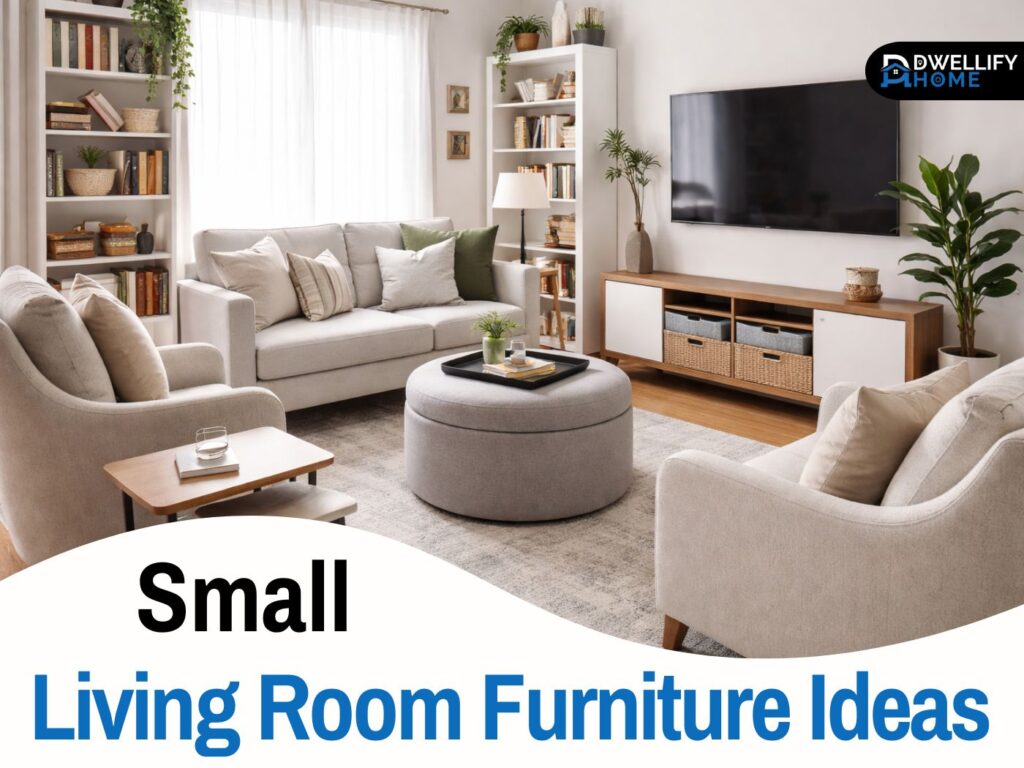
One of my favorite real-life setups for a small living room is a sofa paired with two smaller chairs. It keeps the room balanced and gives you more flexibility than a big sectional. Swivel chairs are especially useful in tight spaces because they turn easily without needing extra clearance. They’re great for small living room ideas with TV too, since you can angle seating toward the screen without rearranging the room.
If you want a simple “comfort check,” sit down and ask: can you put your feet up, set a drink down, and still walk through the room smoothly. If not, the layout needs a tweak.
Coffee Table Alternatives That Save Space and Add Storage
A large coffee table is often the first thing that makes a small living room feel cramped. I’m not against coffee tables, but in tight rooms, you usually do better with flexible pieces.
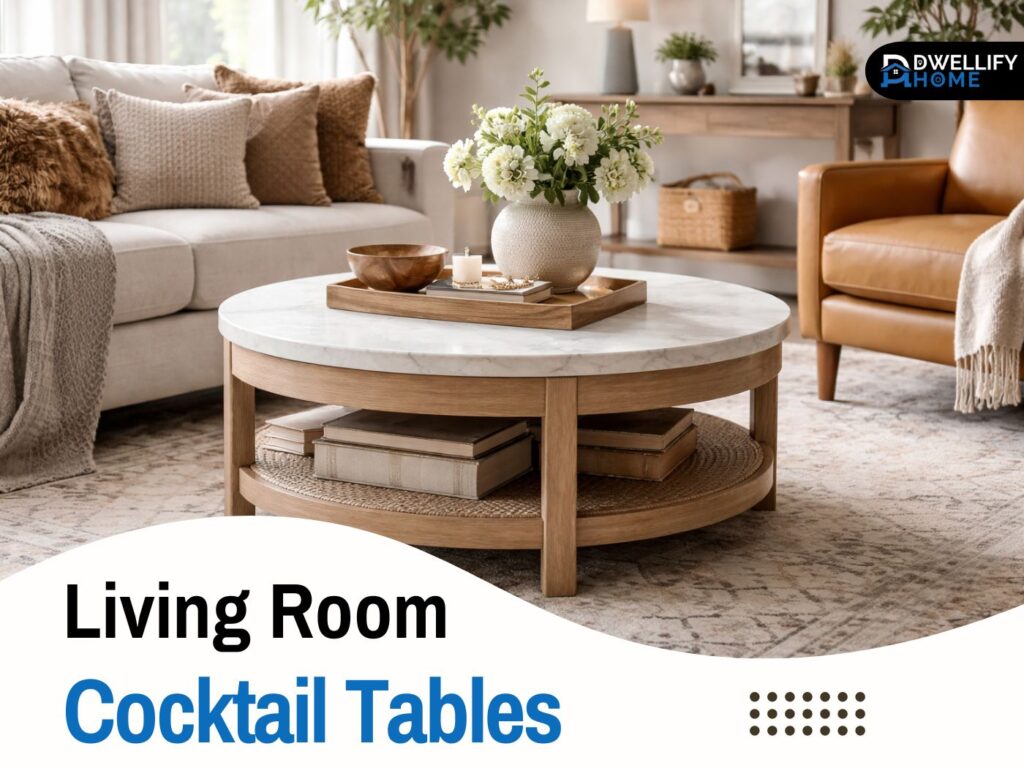
A storage ottoman is one of the most practical swaps. It can hold blankets, games, or kids’ items, and it doubles as extra seating. Add a tray on top and it functions like a table without sharp corners. In family homes and small apartments, this is often the piece that makes the room feel more livable.
Nesting tables are another strong choice, especially for small living room ideas on a budget. You can pull them out when guests are over, then tuck them back in. I also like C-shaped tables that slide under a sofa or chair. They’re perfect for laptops or coffee mugs, and they don’t steal floor space the way a standard table does.
If you need a drop zone near an entry wall, go with a narrow console table. In very tight rooms, a wall-mounted console works well because it gives you function without adding bulk at floor level.
Small Living Room Ideas With TV: Clean Layouts That Don’t Feel Crowded
In many homes, the TV wall decides the whole furniture plan. The goal is to keep the screen visible and the room feeling calm, not dominated by a big black rectangle and a pile of equipment.
Wall-mounting the TV helps more than people expect. It frees floor space and lets you use a slimmer media console. If wall-mounting isn’t possible, choose the lowest, cleanest console you can, ideally with closed storage to hide clutter.
One of the most reliable approaches is building a single media and storage wall. This doesn’t have to be expensive built-ins. Even a coordinated set of storage pieces, done in one finish, feels less messy than several mismatched shelves and cabinets scattered around the room.
A few design tricks also help the TV blend in:
- Run cables neatly and keep surfaces mostly clear
- Balance the TV with a tall plant, a floor lamp, or a few framed pieces nearby
- Consider a darker wall color behind the TV if the screen feels too bold
This is where modern small living room ideas often shine. Clean lines, fewer objects, and thoughtful storage make the room feel bigger instantly.
Vertical Space Wins: Storage That Keeps the Room Calm
In a small living room, the floor area is limited, so vertical storage is your best friend. The mistake I see most is going wide instead of tall. Wide furniture eats up precious wall length and makes the room feel boxed in. Tall and narrow pieces use height without stealing the room’s breathing space.
Floating shelves can work beautifully, but only if you keep them curated. If shelves become a catch-all, they add visual clutter and make the room feel busy. I usually recommend mixing open and closed storage. Keep a few intentional items on open shelves, and hide the rest in cabinets or baskets.
Tall, narrow bookcases are great for renters because they add storage without construction. Built-in alcove storage is a dream if your room has niches, since it keeps everything flush and tidy. For a practical upgrade, consider bench seating with under-seat storage near a window. It gives you seating, storage, and often a better view line than a bulky chair.
This “vertical first” approach is also very compatible with small living room ideas IKEA-style, because modular wall storage systems can be adapted to awkward spaces.
Multipurpose Furniture Ideas: Budget-Friendly Pieces That Do More
If you’re working with a tight budget, multipurpose furniture is where you get the most value. I always suggest starting with the pieces that replace two items at once.
A lift-top table can act as a casual workspace, then fold down for everyday use. A sofa table behind a floating sofa can serve as a console, a charging station, and even a desk surface when needed. In one condo I worked on, we used a slim sofa table and two stools underneath, and it became an instant dining and work spot without adding a full desk.
Extra seating is another area where small rooms benefit from smart choices. Stackable stools, folding chairs, or a storage bench can handle guests without living in the middle of the room every day.
If your room has to do triple duty, like relaxing, working, and hosting, these flexible pieces matter more than decorative extras.
Plug-and-Play Layout Formulas That Work in Most Small Living Rooms
Most people don’t need a complicated layout, they need one that works with real life. Here are the layouts I lean on again and again because they keep the room open and functional.
Floating sofa plus a slim console behind it is a classic. People assume pushing the sofa to the wall makes the room larger, but floating it slightly can actually improve flow and make the room feel more intentional. The console gives you a place for lamps and storage without a bulky side table.
Corner seating with a wall-mounted TV is another common win. It’s efficient and helps define the viewing zone. If you don’t want a sectional, the sofa plus two chairs layout is a great conversation setup and often feels more balanced.
In the smallest rooms, minimal chairs and vertical shelving is the cleanest option. Keep the furniture count low, and let storage go up, not out.
One rule I use constantly is the one anchor piece rule. Choose one main seating piece, then add smaller supporting pieces. Too many small items scattered around makes the room feel chaotic.
Modern vs Elegant Small Living Room Ideas: Make It Feel Intentional
You can keep the room simple and still make it feel designed. The secret is choosing a direction and repeating it consistently.
For modern small living room ideas, think clean lines, fewer visible items, and furniture that hides storage. A simple palette and streamlined shapes help the room feel calm.
For elegant small living room ideas, soften the space with curves and texture. Rounded nesting tables, a slightly curved chair back, and warm lighting create a cozy feel without taking up more space. One trick I use often is choosing one larger piece of art instead of many small frames. It reduces visual noise and makes the room feel bigger.
Mirrors can also help, especially if placed to reflect a window or light source. The goal is not to cover every wall in mirrors, but to add depth where the room feels flat.
Pinterest-Style Ideas Without Making It Impractical
A lot of small living room furniture ideas Pinterest boards show look great in photos, but they don’t always translate well to daily life. The fix is simple: focus on scale and editing.
Pick one or two statement elements, like a compact sofa in a textured fabric and a clean media wall. Then keep the rest quiet and functional. When everything is a feature, the room starts to feel busy.
A helpful approach is repeating materials. If you have light wood on your table, echo it on a shelf or frame. If your metals are black, keep them consistent across lamps and hardware. This creates cohesion, which makes small rooms feel more spacious.
Small Living Room Ideas IKEA-Style: Simple, Modular, and Realistic
IKEA-inspired small space rooms work because they’re modular and practical. The key is choosing pieces that solve a real need, not buying extra storage just because it’s available.
Modular seating or a sofa bed can be a smart move for apartments where guests stay over. Wall storage systems can keep books, media, and décor off the floor. Slim media storage units are especially useful when you want the TV zone to feel tidy.
If you’re going this route, keep the look calm by mixing open shelves with closed cabinets. Too many open shelves can look cluttered, especially in a small living room.
Quick Shopping Checklist: What to Prioritize First
When you’re making decisions in-store or online, this quick checklist keeps you focused.
Start with the biggest impact items in this order:
- Seating that fits the room and feels comfortable
- Storage that reduces visible clutter
- Flexible tables, like nesting tables or a storage ottoman
- A clean TV setup with slim storage
- Finishing touches, like lighting and art
Common mistakes I see in small rooms include oversized arms on sofas, too many tiny pieces, and no hidden storage. If you fix those three issues, most small living rooms start feeling better quickly.
FAQs
1) How to furnish a very small living room?
Start with one right-size sofa or loveseat, then add a storage ottoman or nesting tables. Use wall-mounted TV or a slim console, and push storage upward with tall narrow shelves. Keep a clear walkway so the room feels livable.
2) What is the 2/3 rule for living rooms?
It’s a sizing guideline: your main furniture should visually relate to the room and to each other. A common example is that a coffee table often looks best around two-thirds the length of the sofa, so it feels balanced, not too big or too tiny.
3) What is the 3-5-7 rule in decorating?
It’s a styling rule for groups of objects. Decorating in odd numbers (like 3, 5, or 7) usually looks more natural than even numbers. In small rooms, keep these groupings tight and simple so surfaces don’t feel cluttered.
4) What is the 3 4 5 rule in interior design?
Many designers use “3-4-5” as a quick way to build variety without chaos:
- 3 main colors (dominant, secondary, accent)
- 4 key textures (like fabric, wood, metal, woven)
- 5 repeating elements (shapes or materials you echo around the room)
It helps a small space feel cohesive.
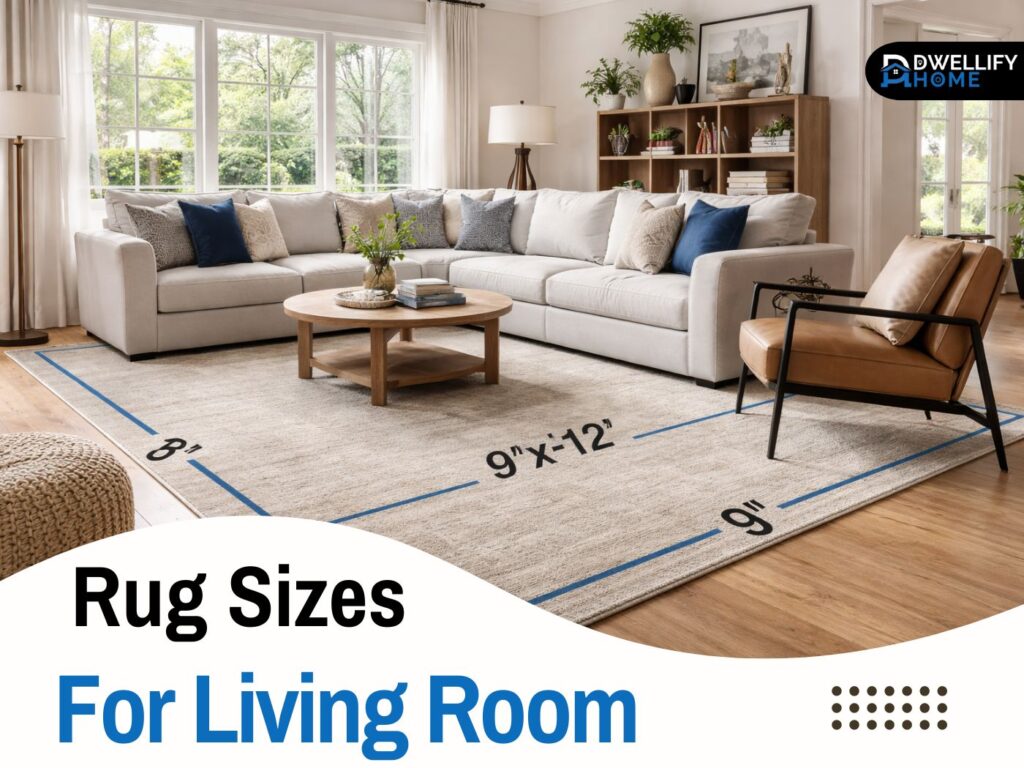
5) What size rug works best in a small living room?
Usually, a rug looks best when at least the front legs of the sofa and chairs sit on it. Going slightly bigger often makes the room feel larger, because it visually “connects” the seating area.
Conclusion
Small living rooms can feel comfortable and pulled together when the furniture is chosen with scale, spacing, and daily life in mind. Keep your main walkway clear, choose seating that doesn’t dominate the room, and lean on multipurpose pieces like a storage ottoman or nesting tables. Use vertical storage to keep the floor open, and let one anchor piece lead the layout.
If you’re not sure where to start, begin with the sofa and one storage solution. Once those are right, the rest becomes much easier, and your small living room furniture ideas will feel like a real plan, not a collection of random pieces.
Disclaimer:
This article shares general interior design guidance based on real-world small-space planning. Room layouts, building rules, and wall-mounting options vary, so measure carefully and consult a qualified professional when needed.

I’m Bilal Hassan, the founder of Dwellify Home. With 6 years of practical experience in home remodeling, interior design, and décor consulting, I help people transform their spaces with simple, effective, and affordable ideas. I specialize in offering real-world tips, step-by-step guides, and product recommendations that make home improvement easier and more enjoyable. My mission is to empower homeowners and renters to create functional, beautiful spaces—one thoughtful update at a time.