
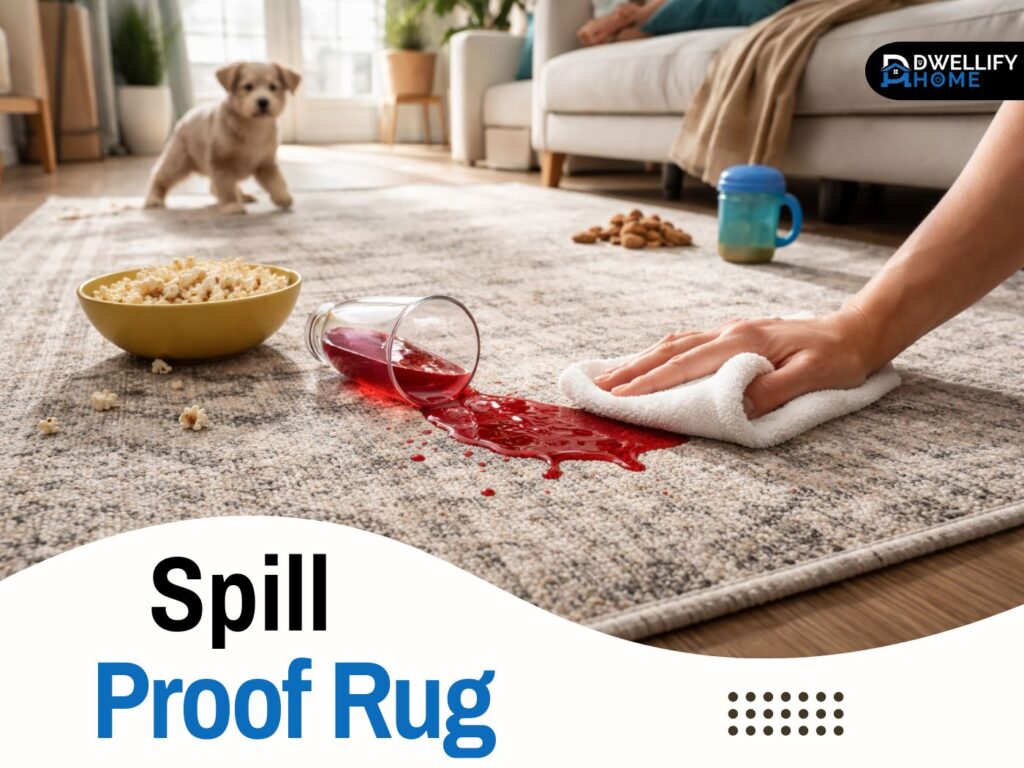
If you’ve got kids, pets, or a busy house where snacks happen on the sofa, rugs take a beating. I’ve tested washable and spill-resistant rugs in real homes for years, and I’ll tell you the truth up front. No rug is magic. But the right one can make everyday mess feel manageable, instead of stressful.
In this guide, I’ll walk you through what “spill-proof” really means, how to choose the right option for your space, and what to expect after months of use and washes.
Snippet-ready definition:
A spill proof rug is designed to resist liquid absorption so spills bead up or wipe off more easily. It’s not truly waterproof, but it gives you time to clean before stains set in.
Mission Statement:
At Dwellify Home, our mission is to help families choose practical, good-looking home products that hold up to real life, with honest advice based on comfort, safety, and everyday performance.
What a Spill Proof Rug Actually Means (and what it doesn’t)
A spill proof rug is usually a rug that gives you time. Liquids tend to sit on the surface longer, so you can blot or wipe before the spill sinks in and becomes a stain. In practical terms, it means fewer panic moments when juice tips over or a pet tracks muddy water inside.
What it does not mean is waterproof forever. If a spill sits long enough, or if the rug is heavily textured, liquid can still work its way into fibers or seams. And if the backing isn’t protected, moisture can reach the floor.
Spill-proof vs stain-resistant vs waterproof (simple definitions)
Spill-proof is about short-term spill behavior, like beading and slower absorption. Stain-resistant is about how the fibers handle pigments and oils that want to cling. Waterproof means liquid cannot pass through at all, which is rare in normal living room rugs unless there’s a dedicated waterproof barrier layer.
In most homes, you want a mix of spill resistance plus easy cleaning, not a hard “waterproof” claim.
The “beading” effect: coatings + performance fibers (why spills wipe up fast)
The beading effect usually comes from two things. First, synthetic fibers like polypropylene and polyester naturally resist moisture more than cotton. Second, some rugs have a treatment that helps liquids sit on top longer.
In my testing, beading is most noticeable on low-pile or flatweave styles. On thick plush rugs, spills can disappear into the pile quickly even if the rug is labeled as spill resistant.
Quick Guide Table: Choosing the Right Rug Fast
| Your situation | What to choose | Why it works | Watch-outs |
| Living room with kids/snacks | Low-pile, stain-resistant, washable area rug | Easier wipe-up, fewer trapped crumbs | Plush piles hide spills |
| Pets (accidents, hair) | Tighter weave, pet-friendly rug + rug pad | Easier vacuuming, less snagging | Looped weaves can catch nails |
| Dining/kitchen mess | Flatweave or low pile, non-slip backing | Wipes clean fast, chairs glide | Avoid thick shag |
| Need big sizes (8×10 or 9×12) | Two-piece washable system when possible | Easier washing than heavy one-piece | Check washer capacity |
| Entryway mud/wet shoes | Indoor-outdoor polypropylene style | Handles moisture and grit better | Don’t trap moisture under it |
Step-by-step: How to Protect a Rug From Spills (simple routine)
- Use a rug pad (helps grip and reduces wear and shifting).
- Blot fast, don’t rub (rubbing pushes spills deeper).
- Stick to mild soap + cool water for most food and drink spills.
- Rinse lightly (leftover soap attracts dirt).
- Dry the spot fully (especially on wood floors).
- Wash only if the rug is truly machine-washable and fits your machine comfortably. Cold and gentle is usually safest.
Who a Spill Proof Rug Is Best For (Lifestyle plus room intent)
This type of rug shines in rooms where spills are normal and you want cleanup to be simple. It’s also useful if you’re trying to protect flooring, especially laminate, engineered wood, or older hardwood that doesn’t love moisture.
For a spill proof rug for living room, think about the “snack zone.” That’s usually the area under a coffee table and the front legs of the sofa. A rug that wipes easily here can save you a lot of effort over time.
Dining spaces and kitchens are another obvious fit. Crumbs, sauces, coffee drips, and cooking splatter happen. The rug doesn’t need to be fancy, it needs to be easy to live with.
Entryways and hallways benefit too, mainly because wet shoes and outside grime are constant. A rug that releases dirt easily when vacuumed and doesn’t soak up moisture quickly will look better longer.
The 7-Point Buying Checklist (This is the expert core)
This is the section I’d use if we were standing in a showroom together. If you get these points right, you avoid most “I regret this rug” moments.
Material matters: what repels spills best (polypropylene, polyester, blends)
If spill performance is your priority, polypropylene is a strong option. It’s naturally moisture resistant and handles high traffic well. Polyester can also perform nicely, especially for softer feel, but quality varies more.
Cotton rugs can be washable, but they absorb fast. If you have kids and frequent spills, cotton often turns into a constant laundry project.
Pile and weave: low-pile or flatweave for easier wipe plus vacuum
Low-pile and flatweave are your best friends for quick cleanup. They don’t trap liquids or crumbs as easily, and they vacuum clean without a fight.
Shag and high-pile rugs can feel cozy, but they hide spills in a way that makes stains and odors more likely. If you love plush, choose one that is genuinely washable and be realistic about maintenance.
Backing and safety: non-slip backing vs rug pad (when each is needed)
Non-slip backing helps, but it’s not always enough. In busy homes, I still prefer a rug pad under most rugs, especially in living rooms where kids run and pets launch into zoomies.
A good pad does three things. It improves grip, adds a bit of cushioning, and reduces wear by limiting movement. If you have hardwood, make sure the pad is safe for your finish.
Washability reality check: machine size limits, weight, drying space
This is where people get surprised. A small washable rug is easy. A large spill proof rug is a different story, because weight matters.
If you’re considering spill proof rugs 8×10, check whether your washer can handle it. In many homes, 8×10 is borderline unless the rug is designed as a lighter washable system. For a spill proof rug 9×12, it often won’t fit in a standard machine unless it’s built as a removable cover type.
Comfort and thickness: how it feels underfoot every day
Some washable rugs feel thin. That’s not always bad, but in a living room you may want a bit of comfort. A cushioned pad can make a big difference without sacrificing easy cleaning.
Floor protection: moisture, color transfer, and trapped grit
If spills are common, protecting the floor matters. Moisture that reaches wood can cause dull spots or swelling. Also, darker backings can sometimes transfer dye if they get wet.
Grit is another issue. Dirt that gets trapped under a rug can act like sandpaper. A pad helps reduce that movement and protects the finish.
Realistic lifespan: what holds up after months of use
Look for strong edge binding, consistent stitching, and a surface that doesn’t snag easily. If you have pets, avoid looped weaves that can catch claws. In homes with lots of foot traffic, durability beats softness every time.
Spill Proof Washable Rugs: Two Main Types (so readers don’t get tricked)
There are two main approaches that work well.
Type A is a two-piece system, usually a washable cover paired with a pad. This is where many premium washable options land. The big advantage is that you can wash the cover without wrestling a heavy rug.
Type B is a single-piece washable rug. These are simpler, often more affordable, and easy in smaller sizes. The tradeoff is laundry logistics once you go large.
If your home deals with frequent mess, I tend to lean toward systems that make washing realistic. If washing feels like a chore, it won’t happen often, and that’s when rugs start to look tired.
Size and Layout Guide (Fast, practical, no fluff)
For living rooms, an 8×10 usually works when you can place the front legs of the sofa and chairs on the rug. This keeps the space grounded and protects the high-use area near the coffee table.
A 9×12 makes sense for larger seating arrangements, open layouts, or sectional setups. It helps the room feel finished, and it reduces the “floating furniture” look.
With a large spill proof rug, plan for doors and furniture movement. Make sure it won’t catch under a swinging door, and consider how often you’ll need to pull it up for a deeper clean.
The Spill Cleanup Playbook (the part people bookmark)
The first minute matters. Blot, don’t rub. Rubbing pushes liquid deeper and spreads pigment. I keep a simple routine: paper towel blot first, then a clean damp cloth, then dry blot again.
For sticky spills like juice or soda, a little mild dish soap in cool water works well. Wipe gently, then rinse with a clean damp cloth so soap doesn’t attract dirt later.
For oily spills like butter, salad dressing, or greasy takeout, water alone may not lift it. Use a tiny amount of gentle degreasing soap, then rinse. If the stain remains, treat it again rather than scrubbing hard.
For pet accidents, use cool water, not hot. Heat can set odor and stain. Blot thoroughly, then use an enzyme cleaner that’s safe for your rug material. Let it sit as directed, then blot again until it’s mostly dry.
How to Wash a Spill Proof Rug Without Ruining It
Wash instructions are not fluff, they’re the difference between a rug that stays nice and one that warps or pills. In most cases, cold water and a gentle cycle are safer. Use mild detergent and skip harsh additives unless the brand specifically allows them.
Drying is where damage happens. High heat can shrink, curl edges, or degrade backing. If you can air dry, that’s usually safest. If you use a dryer, low heat is the safer bet, and stopping while it’s slightly damp helps reduce wrinkles.
For odors, a small amount of white vinegar in the rinse can help, but don’t overdo it and don’t mix it with bleach. If the rug has a rubbery backing, avoid products that can break it down over time.
A few things I avoid in almost every home test:
- Bleach unless the care label explicitly approves it
- Stiff-bristle scrubbing that frays fibers
- Strong suction vacuum settings on loose, thin weaves that can stretch
What Makes the Best Spill Proof Rugs Actually Last (Durability plus comfort)
Durability comes down to three things: surface fiber strength, edge construction, and how stable the rug stays on the floor. A rug that slides around wears faster, and it’s more annoying to live with.
In high-traffic homes, low-pile performance rugs tend to hold up best. They don’t trap as much dirt, and they’re less likely to show crushing. If you want softness, use a cushioned pad to add comfort without choosing a delicate surface.
Color and pattern matter more than people admit. Mid-tone patterns hide normal life without looking dirty. Very light rugs show every mark. Very dark rugs show lint, dust, and pet hair. A balanced pattern can look clean longer with the same effort.
Brand and Feature Comparisons People Search For (Neutral, helpful)
The biggest issue I see is labeling. “Spill-proof” can mean a surface treatment, a synthetic fiber, or simply marketing language. That’s why I focus on construction and care reality more than promises.
Two-piece washable systems often win for households that truly need easy cleanup, because washing is realistic. Single-piece washable rugs can be great too, especially in smaller sizes, or if you have a large-capacity washer.
You mentioned a tumble rug style option, which usually points to the category of spill-repelling, washable designs paired with a cushioned pad. Whether it’s that brand or a similar one, check for a stable pad, a cover that actually fits your washer, and edges that won’t curl after repeated cleaning.
Budget rugs can still work, but corners often get cut in backing quality, stitching, and how long the spill resistance lasts. If you’ve ever had a rug that looked good for two months and then started shedding or sliding, you’ve seen this firsthand.
Where to Use Spill Proof Rugs (Room-by-room tips)
In the living room, place the rug so the main seating area sits partly on it. This protects the coffee-table area and keeps the rug from shifting too much. If you have kids, consider a pattern that hides snack crumbs between vacuum days.
In dining spaces, choose a low pile and make sure chairs can slide without catching. Flatweave styles are often easier here. They handle crumbs and wipe-ups better than fluffy textures.
In entryways, pick a rug that doesn’t hold moisture and dirt. A tight weave helps, and a pad underneath can stop bunching. If your entry gets soaked during rainy seasons, rotate and dry rugs so the floor underneath stays healthy.
For kids and pets, I like surfaces that don’t snag. If your pet has long nails, looped weaves can pull. A cut-pile or tight flatweave is usually safer.
Quick FAQs
Is there such a thing as a waterproof rug?
Yes, but it’s usually a specialty product with a waterproof membrane or backing. Most “spill-proof” rugs are spill resistant, meaning they slow absorption so you can clean quickly, not block liquid forever.
Are tumble rugs really spill proof?
Tumble describes its rugs as spill-resistant with liquids that bead up for easier wiping, plus they market them as washable and kid/pet friendly. Real-life results still depend on how fast you clean and how thick the rug surface is.
What to put on a rug so a dog won’t pee on it?
Instead of coating the rug, focus on prevention and cleanup: use a washable rug, a rug pad, and keep an enzyme cleaner on hand for accidents. If marking is recurring, address the behavior and consider limiting access until it improves. (Most sprays that promise prevention can leave residue that attracts dirt.)
How to protect a rug from spills?
Use a low-pile rug that’s easy to wipe, add a non-slip pad, clean spills immediately by blotting, and follow safe wash instructions. For washable systems, cold delicate washing and low heat or air-dry helps maintain performance.
Do spill proof washable rugs work for a living room?
Yes, especially for high-use areas near the coffee table. Choose a low-pile option, a stable pad, and a pattern that hides daily life. For larger rooms, confirm the washing logistics for sizes like 8×10 and 9×12.
Conclusion
A spill proof rug isn’t about perfection. It’s about making everyday life easier, especially in homes with kids, pets, and regular foot traffic. If you focus on low-pile construction, durable synthetic fibers, safe grip, and realistic washability, you’ll end up with something that stays good-looking with normal effort.
My simple rule is this. Choose the rug you will actually maintain. If it’s easy to wipe, easy to vacuum, and easy to wash when needed, it will work better in real life than a delicate rug that feels stressful from day one.
Disclaimer:
This guide shares general rug performance and care advice based on real-home testing. Always follow your rug brand’s care label and test any cleaner on a hidden spot first. For valuable or delicate rugs, consider professional cleaning guidance.

I’m Bilal Hassan, the founder of Dwellify Home. With 6 years of practical experience in home remodeling, interior design, and décor consulting, I help people transform their spaces with simple, effective, and affordable ideas. I specialize in offering real-world tips, step-by-step guides, and product recommendations that make home improvement easier and more enjoyable. My mission is to empower homeowners and renters to create functional, beautiful spaces—one thoughtful update at a time.