Home decor has changed a lot over the past few years, and one shift stands out more than most: people want homes that feel good to live in, not just good to look at. That usually means fewer throwaway pieces, better materials, calmer rooms, and choices that hold up over time. Style is still important, but now it sits alongside comfort, health, and long-term value.
That’s exactly why sustainable home decor trends have moved into the center of modern design conversations. The strongest ideas aren’t about making a room look overly earthy or obviously “green.” They’re about building spaces with more thought behind them, using materials and pieces that age well, feel honest, and make everyday living easier.
Snippet-Ready Definition:
Sustainable home decor trends focus on decorating with eco-friendly materials, durable furniture, and natural textures that reduce environmental impact while creating healthier, longer-lasting living spaces.Mission Statement:
Dwellify Home helps homeowners create thoughtful, stylish living spaces with practical decor ideas, trusted guidance, and design inspiration that supports comfortable everyday living.
What Makes Home Decor Truly Sustainable
A lot of decor gets labeled eco-friendly, but the label alone doesn’t tell you much. In real homes, sustainability usually comes down to a few practical questions: Will this last? Is it made from better materials? Can it be reused, repaired, or repurposed? Does it make the room healthier to live in?
That last point gets overlooked more than it should. Paints, finishes, adhesives, and synthetic fabrics can affect how a space feels over time, especially in bedrooms, living rooms, and smaller homes with less airflow. Good sustainable design isn’t just about waste reduction. It’s also about choosing materials that support a healthier indoor environment.
1. Biophilic Design That Brings Nature Indoors
Biophilic design has moved well beyond placing a plant in the corner. It now shows up in the way rooms are planned, lit, and layered. Natural light, curved shapes, warm wood, stone textures, and greenery all work together to create a space that feels calmer and less manufactured.
The reason this trend has staying power is simple: it makes rooms feel more settled. In practice, that might mean linen curtains that let daylight filter through, a wooden coffee table with visible grain, or a living room arranged around the window instead of the television. The effect is subtle, but it changes how a home feels day to day.
2. Reclaimed Wood and Vintage Furniture With Character
Reclaimed wood and vintage furniture continue to stand out because they bring something new furniture often struggles to match: depth. Older wood has texture, variation, and a lived-in quality that makes a room feel grounded. Vintage furniture also helps reduce waste without making a home feel overly styled.
The key is balance. One reclaimed console, an older dining table, or a vintage chest can do more for a room than filling it with matching pieces. In client-style spaces, this is often where the room starts to feel personal rather than staged. It also tends to save money in the long run because solid older pieces are often built better than newer mass-market options.
3. Fast-Renewable Natural Materials in Modern Decor
Bamboo, cork, rattan, jute, cane, and hemp have become much more common in modern interiors, and for good reason. They’re lighter in feel than many heavier materials, and they fit naturally into the softer, more relaxed direction seen across interior design trends 2026.
These materials work best when they’re used with restraint. A rattan chair, cork side table, jute rug, or cane-front cabinet can warm up a room quickly. Too many similar textures at once can make a space feel themed, so it helps to mix them with smoother finishes like plaster walls, painted wood, or simple upholstery.
4. Low-VOC Paints and Natural Wall Finishes
Walls set the tone for the whole room, and more homeowners are paying attention to what goes on them. Low-VOC paints, limewash, clay finishes, and mineral-based coatings are growing in popularity because they offer a softer look and a better materials story than many conventional finishes.
There’s also a practical reason this trend matters. Fresh paint shouldn’t leave a home feeling harsh for days. In bedrooms and family spaces especially, low-VOC and natural finishes can make a noticeable difference. Limewash and clay finishes also add movement and texture, which helps a room feel layered without needing lots of extra decor.
5. Organic and Natural Textiles for Softer Interiors
Textiles do a lot of quiet work in a home. They soften hard surfaces, help with comfort, and shape how finished a room feels. That’s why linen, organic cotton, wool, and hemp are becoming go-to materials for curtains, bedding, rugs, and upholstery.
Natural fabrics also tend to age more gracefully. A washed linen curtain looks better slightly relaxed. A wool rug can hide wear better than many synthetic options. In real homes, that matters. Pieces that still look good after everyday use are almost always a better choice than trend-driven items that start to feel tired within a season.
6. Circular Design and Long-Lasting Furniture
Circular design sounds technical, but in practice it means buying with a longer view. Furniture that can be repaired, reupholstered, moved to another room, or adapted over time is far more useful than furniture built for short-term convenience.
This is where good decision-making matters more than trend-following. A well-made sofa with a durable frame, a modular shelving unit, or a dining table that can last for years does more for a home than constantly replacing smaller pieces. Sustainable interior design works best when the room is built slowly, with intention.
7. Upcycled and Repurposed Decor With a Modern Look
Upcycled decor has become more refined. It’s no longer limited to obviously DIY pieces or overly rustic looks. Now it often shows up as repurposed wood shelving, vintage doors turned into headboards, old pottery used as sculptural storage, or salvaged materials reworked into lighting and accent pieces.
The difference between thoughtful upcycling and clutter usually comes down to editing. A repurposed piece should still serve a purpose or add clear visual value. One well-placed item can bring warmth and individuality. Too many unrelated reused objects can make the room feel scattered.
8. Recycled Glass and Recycled Metal Accents
Recycled materials are showing up in more polished ways than before. Recycled glass is being used in vases, lighting, surfaces, and decorative accents. Recycled metal appears in frames, table bases, cabinet hardware, and lighting fixtures with cleaner finishes than the industrial styles that dominated earlier years.
These materials work best as support players. A recycled glass pendant, a metal-framed mirror, or a few well-chosen accents can introduce contrast without making the room feel cold. They’re especially useful in spaces that already have lots of soft texture and natural tones.
9. Emerging Biomaterials Like Mycelium and Algae-Based Textiles
This is one of the newer parts of the conversation, but it’s worth watching. Mycelium-based products and other biomaterials are starting to appear in furniture, decorative panels, lampshades, and textiles. They’re not yet standard in most homes, but they point to where eco friendly home decor is likely heading.
The smart way to include this trend in a home article is with realism. Most people are not redesigning their house around mushroom-based materials tomorrow. Still, knowing these products exist helps readers understand how sustainable materials are evolving beyond wood, cotton, and recycled content.
10. Artisan-Made and Locally Crafted Decor
Handmade decor carries a different kind of value. A woven basket, hand-thrown ceramic lamp, carved stool, or locally made wall piece often feels more grounded than mass-produced accessories. These pieces also tend to age better because they don’t follow the same fast design cycle.
They’re useful visually too. In rooms that feel too polished or flat, artisan-made objects add irregularity and warmth. That small bit of variation often makes a space feel more lived in. It’s one of the easiest ways to make a room feel collected instead of copied.
11. Energy-Efficient Lighting and Smart Home Integration
Lighting has become part of the sustainability discussion in a more practical way. LED fixtures, layered lighting plans, dimmers, and smart controls all help reduce energy use while improving how a room functions. This matters because good decor is not only about appearance. It’s also about how the room works from morning to night.
Smart home features can support that without becoming the focus of the design. A thermostat that manages temperature better, lighting that adjusts by time of day, or efficient bulbs in well-placed lamps can improve comfort while lowering waste. In modern homes, function and atmosphere are increasingly connected.
12. Calm, Nature-Inspired Color Palettes and Earthy Interiors
Color trends are shifting toward quieter shades: warm whites, clay tones, muted greens, sandy beige, brown, and softened wood finishes. This move makes sense because it supports the larger mood seen in spring 2026 home decor trends and interior design trends 2026 living room spaces.
These palettes are easier to live with than sharp trend colors that fade quickly. They also pair well with sustainable materials like linen, cork, oak, wool, and stone. The result is a room that feels calm and settled rather than constantly updated.
Key Benefits of Sustainable Home Decor
- Creates healthier indoor spaces with safer materials
- Reduces waste by prioritizing long-lasting furniture
- Supports natural, calming interior design styles
- Encourages thoughtful buying instead of frequent replacements
- Adds character through vintage, reclaimed, and handmade pieces
Sustainable Living Room Ideas Inspired by 2026 Interior Design Trends
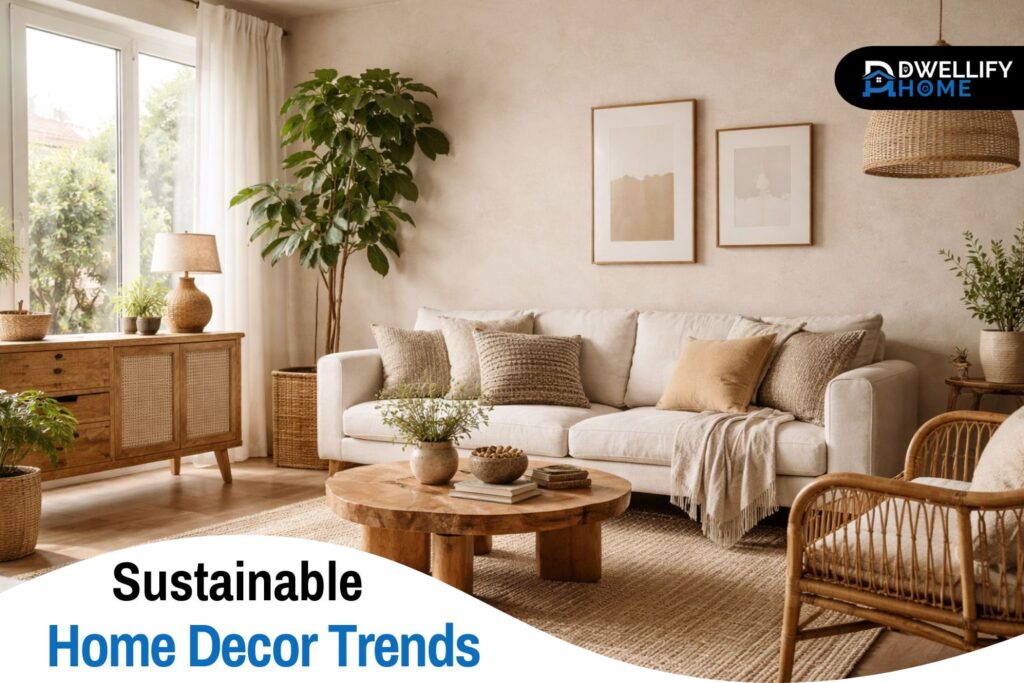
The living room is often the best place to apply these ideas because it gets used every day. Start with the pieces that do the most work: a durable sofa, a rug made from natural fibers, layered lighting, and one or two solid furniture pieces with lasting structure. Then bring in texture through cushions, curtains, and a few natural accents.
This is also where slow decorating makes the most sense. A living room usually looks better when it develops over time. One vintage side table, one reclaimed wood shelf, and one handmade ceramic lamp can create more depth than a room filled in one weekend.
How to Adopt Sustainable Home Decor Trends Without Greenwashing
The easiest way to avoid greenwashing is to look past the styling and check the basics. What is the item made from? Will it last? Is the wood responsibly sourced? Is the fabric natural or mostly synthetic? Does the brand explain how the piece is made, or only use broad feel-good language?
A good rule is to buy less, but buy with more care. You do not need every trend at once. One durable rug, one better paint choice, or one vintage furniture piece is often more meaningful than a full decor refresh built around disposable items.
Common Mistakes to Avoid When Decorating Sustainably
One mistake I see often is confusing natural-looking decor with sustainable decor. Something can look earthy and still be poorly made. Another common issue is overloading a room with too many woven textures, raw woods, and beige tones until the space loses contrast and structure.
It also helps to avoid rushing. Sustainable decorating rarely looks its best when it’s done all at once. The strongest spaces are usually edited over time, with each piece earning its place. That approach leads to better rooms and fewer regrets.
Why Sustainable Home Decor Trends Are Shaping the Future of Interior Design
The best sustainable home decor trends are not built around guilt or rigid rules. They’re built around common sense: choose better materials, keep what lasts, bring in natural texture, and make your home healthier and easier to live in. That approach creates rooms with more depth and less waste.
A well-designed home does not need constant replacing to feel current. It needs honest materials, useful pieces, and a steady eye for what truly belongs. That is why sustainable home decor trends continue to shape modern interiors in a way that feels practical, lasting, and worth carrying forward.
Disclaimer
Content on Dwellify Home is provided for informational and design inspiration purposes only. Product choices and home improvements should be evaluated based on individual needs and circumstances.

I’m Bilal, the founder of Dwellify Home. With 6 years of practical experience in home remodeling, interior design, and décor consulting, I help people transform their spaces with simple, effective, and affordable ideas. I specialize in offering real-world tips, step-by-step guides, and product recommendations that make home improvement easier and more enjoyable. My mission is to empower homeowners and renters to create functional, beautiful spaces—one thoughtful update at a time.