I’ve helped plenty of homeowners mount a TV above a fireplace, and the happiest ones all did the same thing: they planned for comfort and heat first, then worried about the “look” second. When that order flips, the result is usually a screen that’s too high, wires that won’t disappear, or a setup that feels fine in photos but annoying to live with.
The good news is this isn’t complicated once you know what to check. A few measurements, a clear mount choice, and a realistic plan for power and cables will tell you whether this layout will feel natural in your room or become a daily irritation.
This guide walks you through the pros and cons, the comfort rules that matter, how heat really behaves with different fireplaces, and the small details that separate a clean install from a regrettable one.
Snippet-Ready Definition:
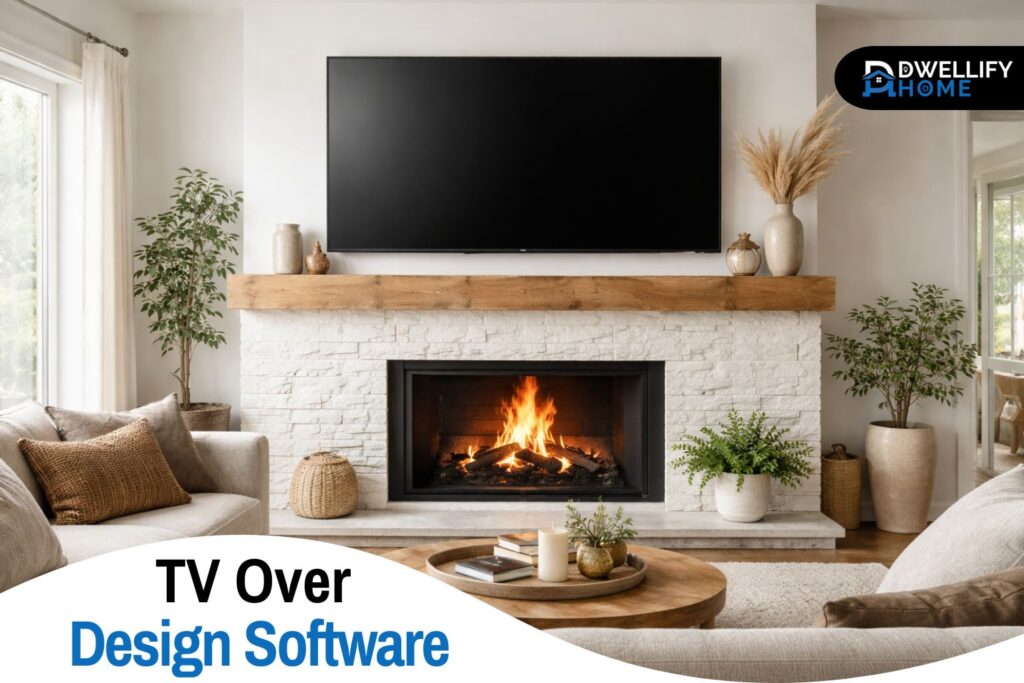
A tv over fireplace setup places a television above the fireplace mantel to save space and create a single focal point in a room. It requires careful planning to avoid heat damage and uncomfortable viewing height.
Mission Statement:
At Dwellify Home, our goal is to help homeowners make practical, stylish, and informed décor decisions that improve comfort, function, and everyday living spaces.
Quick Decision Snapshot: When a TV Over the Fireplace Actually Works
This setup tends to work best when the mantel isn’t towering over the room and your seating isn’t right on top of the fireplace wall. You want enough viewing distance to soften the angle, and you want a mounting solution that lets you fine-tune the tilt, not a fixed bracket that locks you into one position.
It also works better when the fireplace itself is predictable and controlled, or you’re willing to verify heat at the exact TV location. People assume “heat goes up the chimney,” but real rooms don’t behave like diagrams. Inserts, direct-vent gas units, and tight alcoves can push warm air up the face of the wall more than you’d expect.
Red flags are pretty consistent:
- A tall mantel combined with a couch that’s close
- A high-output fireplace that’s used often
- No good plan for power, cables, and device placement
- A fixed mount chosen just because it’s cheaper
If you hit two or more of those, consider a drop-down mantel mount or an alternative wall before you drill anything.
Quick Decision Guide: When a TV Over Fireplace Works
| Situation | Is It a Good Fit? | Why |
| Low or medium mantel height | Yes | Keeps viewing angle comfortable |
| Seating distance is 9–12 ft or more | Usually | Reduces neck strain from higher placement |
| Fireplace produces moderate heat | Yes with testing | Lower risk of heat affecting electronics |
| High mantel + fixed mount | Often no | Screen ends up too high for comfortable viewing |
| Gas insert or strong heat output | Maybe | Requires heat check and proper clearance |
Key Benefits of This Setup
- Saves wall space in smaller living rooms
- Combines the fireplace and TV into one focal point
- Keeps electronics away from pets or small children
- Works well in traditional and modern fireplace designs
- Can create a cleaner furniture layout
Pros and Cons of a TV Over Fireplace
Pros (why homeowners choose it)
The obvious win is space. In many living rooms, the fireplace wall is the only logical focal point, and putting the TV there can simplify furniture placement. You don’t end up hunting for a “TV wall” that doesn’t exist.
It can also keep the room feeling cleaner. With one focal zone, you can design around a single feature instead of splitting attention between a fireplace and a separate media wall. That’s a big reason people look up tv over fireplace ideas in the first place.
Cons (the real tradeoffs)
The biggest complaint I hear in follow-up visits is comfort, not aesthetics. A TV above a fireplace is often higher than your neck and eyes want, so longer viewing sessions feel tiring. People don’t always notice in the first five minutes, then wonder why movie nights feel oddly uncomfortable.
Heat is the other big concern. Even when the TV survives, long-term exposure to warmth cycling up and down can shorten lifespan or cause annoying issues like random shutdowns. Add messy cords or a rushed DIY plan, and the whole thing starts to feel like a compromise.
Comfort First: Height and Viewing Angle Rules (Without the Fluff)
Comfort comes down to one simple idea: the center of the screen should be close to where your eyes naturally rest when you’re seated. Fireplaces fight that rule, because the mantel line is often already above eye level.
That’s why “tv above fireplace too high” is such a common frustration. The TV ends up mounted where it looks balanced with the fireplace, not where it feels good to watch. The room can look great and still be a pain to live with.
The most realistic fixes are:
- Use a tilting mount so the screen aims toward seating, not straight out.
- Choose a mount with more adjustability when the mantel is tall.
- Increase viewing distance if the room allows it, even by a small furniture shift.
- Consider a drop-down mantel mount when the TV must sit high, but viewing comfort matters.
That last option solves more problems than people expect. It’s not about fancy features. It’s about bringing the screen down to a natural sightline when you’re watching, then tucking it back up when you’re not.
Heat Risk: Is Your Fireplace Type Safe for a TV Above It?
Not all fireplaces are equal, and this is where internet advice gets confusing. Wood-burning fireplaces often vent a lot of heat upward and out, but they also bring soot, smoke, and higher peak temperatures. Gas fireplaces vary a lot, and inserts can push heat into the wall area in ways that surprise people. Electric fireplaces are usually the easiest match for a TV above, simply because heat output is typically lower and more controllable.
The smartest approach is to stop guessing and test. An inexpensive infrared thermometer is enough for a practical check. Run the fireplace the way you normally would, then measure the wall area where the TV would sit. Do this more than once, because heat patterns can change as the unit warms up.
If you see high readings at that spot, don’t try to “hope it’ll be fine.” That’s when you change the plan: add deflection, reconsider the TV location, or adjust how the fireplace is used during long viewing sessions. It’s a simple step that prevents expensive regret.
Heat Protection That Helps (Mantel, Deflection, and Venting)
A solid mantel isn’t just decorative. A deeper mantel can act like a small heat ledge, encouraging rising warm air to roll forward rather than wash directly up the wall. That’s why tv over fireplace mantel setups often perform better when the mantel has real depth and isn’t just a thin trim board.
When a mantel isn’t enough, a heat deflector or shield can help. The key is using protection as part of a plan, not as a bandage. You still want to confirm temperatures at the TV location after any changes. Some homeowners install protection and assume the problem is solved without checking, and that’s where issues sneak back in.
Ventilation matters too. TVs don’t like being boxed into a hot pocket. If you’re building around the TV with trim or cabinetry, leave breathing room and avoid sealing the back into a tight cavity. A clean built-in look is great, but it has to let heat escape.
Choosing the Right Mount (This Is the Make-or-Break Section)
A fixed mount is rarely the best choice above a fireplace. It can be fine only when the mantel is low and viewing distance is generous. Most rooms don’t meet both conditions.
A tilt mount is the practical baseline. It lets you aim the screen down toward seating, which helps reduce neck strain and improves picture quality from below. A full-motion mount can work too, especially if you need slight side-to-side adjustment, but it must be solid and properly anchored.
For high mantels, a drop-down mantel mount is often the difference between “we love it” and “we avoid watching TV in here.” It’s also one of the few answers that genuinely solves the comfort issue instead of just “making it acceptable.”
Before buying any mount, check the non-negotiables:
- The mount’s weight rating comfortably exceeds your TV’s weight.
- The mount supports your TV’s size and VESA pattern.
- You have a plan for where the TV sits when lowered so it doesn’t block the firebox opening or mantel controls.
- The wall structure can handle the load safely.
This is also where “rules for hanging tv over fireplace” really mean something. The rules aren’t about design taste. They’re about physics, structure, and comfort.
Installation Guide: Drywall vs Brick vs Stone (Practical, Not Risky)
On a stud wall, the goal is simple: solid attachment into framing, level placement, and enough support for the mount type you chose. Fireplace walls can be tricky because framing isn’t always standard above the opening, and surfaces may be finished differently. Take time to verify stud location and spacing rather than trusting a single scan.
Brick and stone are a different world. The wall might look sturdy, but attachment points vary depending on the surface and condition. The practical rule is to anchor into the strongest part of the structure, using appropriate fasteners and a mounting plan that matches the material. When the wall is uneven or the fireplace face is fragile, that’s a good moment to bring in a professional installer.
Power planning is where a lot of tv over fireplace diy projects fall apart visually. Decide early where power will come from and where devices will live. A clean setup usually needs either in-wall cable routing with proper components or a neat surface solution like a paintable raceway that blends with the wall. What you want to avoid is a “temporary” cord setup that becomes permanent.
Cable Management and Device Placement (Streaming Boxes, Consoles, Sound)
Even a perfect mount job looks unfinished if cables are an afterthought. The easiest way to keep things tidy is to choose a device location first, then route cables to that point. Sometimes that’s a cabinet to the side, sometimes it’s built-ins, and sometimes it’s a console below if the fireplace design allows it.
Heat matters for devices too. Streaming boxes, game consoles, and even soundbars can suffer if they’re placed right in the warm airflow path. People focus on the TV and forget the gear, then wonder why a small box keeps overheating.
Sound is another common snag. When the TV is high, the soundbar can end up too high or awkwardly placed. A simple approach is to mount the soundbar in a position that aims sound toward seating, not at the ceiling. In many rooms, a slight downward angle or a dedicated mount makes a noticeable difference.
Design That Looks Intentional (Not Like a Compromise)
The most successful tv over fireplace ideas follow one visual rule: the TV and fireplace should look like they belong to the same “family” in size and placement. A tiny TV over a wide fireplace feels lost. An oversized TV hanging far beyond the fireplace edges can feel top-heavy unless the rest of the wall design supports it.
Built-ins or symmetrical shelving can help a lot because they frame the screen and give the wall a finished purpose. This is especially helpful when you’re working with a traditional fireplace with TV above it. Traditional rooms often need balance and structure so the TV doesn’t feel like a modern sticker slapped on a classic feature.
If the “black rectangle” bothers you, think about what the wall looks like when the TV is off. Some homeowners choose an art-display style screen. Others use cabinetry, darker wall paint behind the TV, or tasteful framing elements to help it blend in. The goal isn’t to hide the TV completely, it’s to make the wall look good in everyday life.
Smart Alternatives If the TV Over Fireplace Doesn’t Work in Your Room
Sometimes the best decision is skipping the fireplace wall. An adjacent wall often gives you a better viewing height and simpler wiring, while still letting the fireplace be a focal point. With a swivel chair or a slight furniture angle, the room can feel natural without forcing the TV into the highest spot.
Corner placement can work too, but it needs intention. A corner TV that’s jammed in looks like a last resort. A corner TV that’s properly centered and paired with seating at a comfortable angle can feel surprisingly good.
Another option is keeping the TV on a console while the fireplace remains the main visual feature. This often improves comfort immediately, and it’s one of the easiest ways to avoid the “too high” problem without special mounts.
Common Mistakes and Fast Fixes
The same mistakes show up over and over, and most have straightforward fixes.
- Mounting too high: switch to a tilt mount, use a drop-down mount, or adjust seating distance if the room allows.
- Ignoring heat: measure temperatures, add mantel depth or deflection, and rethink long burns during extended viewing.
- Choosing the wrong mount: match the mount to your actual room constraints, not what looks easiest on installation day.
- Wires and devices placed randomly: plan a home for the equipment and route cables to that point, not the other way around.
These are the details that separate a setup you tolerate from one you genuinely enjoy.
TV Over Fireplace Reality Check: What People Complain About Most
The loudest complaint is comfort. The internet jokes about neck strain because it’s real. When the TV sits too high and the mount can’t tilt enough, the room becomes a “short watch” space instead of a place to relax for an evening.
The second complaint is heat anxiety. Some of it is overblown, but enough of it is valid that it’s worth taking seriously. Measuring the wall temperature during a normal burn is a calm, practical way to settle the debate in your own home.
The last complaint is aesthetics: the TV looks like it doesn’t belong. That’s usually fixable with proportion choices, framing, built-ins, and a plan for what the wall looks like when the screen is off.
FAQ: Quick Answers Homeowners Search Most
Is a TV above a fireplace a good idea?
It can be a good idea if the viewing height is comfortable and heat from the fireplace stays within safe limits. The right mount and proper spacing make a big difference.
Is a 65 inch TV too big above a fireplace?
Not necessarily. A 65-inch TV often works well when the fireplace wall is wide enough and seating distance is appropriate. The key is keeping proportions balanced with the fireplace width.
What is the best TV to put above a fireplace?
Slim LED or OLED TVs are common choices because they handle wall mounting well. Models with art or ambient display modes can also help the screen blend into the room when turned off.
Are there alternatives to putting a TV over a fireplace?
Yes. Many homeowners place the TV on an adjacent wall, in a corner setup, or on a media console while keeping the fireplace as the main visual feature.
How much space should be between the fireplace and TV?
Clearance varies by fireplace type, but many installations keep the TV at least several inches above the mantel while confirming safe temperatures during normal fireplace use.
Conclusion: TV Over Fireplace — Pros, Cons, and Your Final Checklist
A TV over fireplace setup can look clean and work beautifully, but it only earns that spot when comfort and heat are handled honestly. The pros are real: it saves space, simplifies layout, and creates a single focal point. The cons are real too: height discomfort, heat risk, and messy wiring if the plan is rushed.
Before you commit, run a simple checklist:
- Does the viewing angle feel comfortable from your main seat?
- Can you verify heat at the TV location during normal fireplace use?
- Are you choosing a mount that solves your room’s height problem, not just the easiest one?
- Do you have a clean power and cable plan, plus a sensible place for devices?
- Will the wall look good when the TV is off?
When those answers are solid, the result feels intentional and easy to live with. When they aren’t, choosing a different wall or a better mount usually costs less than living with regret every night.
Disclaimer:
Information provided is for general home design guidance. Always follow your fireplace manufacturer’s specifications and consult a professional installer when safety or structural concerns are involved

I’m Bilal, the founder of Dwellify Home. With 6 years of practical experience in home remodeling, interior design, and décor consulting, I help people transform their spaces with simple, effective, and affordable ideas. I specialize in offering real-world tips, step-by-step guides, and product recommendations that make home improvement easier and more enjoyable. My mission is to empower homeowners and renters to create functional, beautiful spaces—one thoughtful update at a time.