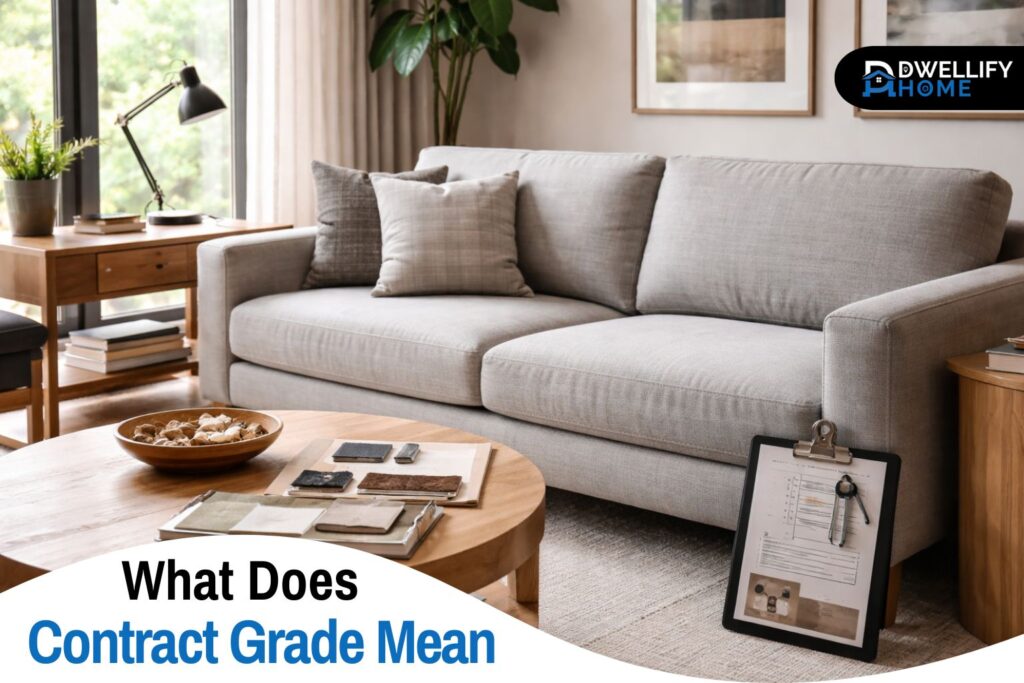
Contract grade is one of those labels that sounds official, but it often gets used loosely. I’ve seen it on sofa listings, dining chairs, rugs, hotel-style beds, even finishes and fabrics. Sometimes it’s a real, spec-backed product standard. Other times, it’s basically marketing shorthand for built tougher.
This guide clears up what contract grade usually means, how to spot the difference between a true contract-grade product and a nice residential piece, and how to decide whether it’s worth paying extra for your home.
Snippet-Ready Definition:
Contract grade refers to furniture or materials designed to withstand heavy, repeated use in commercial settings like hotels or offices. They are typically built stronger and tested for durability, safety, and long-term performance.
Dwellify Home Mission:
Dwellify Home helps homeowners make practical, stylish, and informed decisions about furniture, décor, and interior spaces so their homes work beautifully in everyday life
Key Characteristics of Contract Grade Furniture
- Built for high-traffic environments
- Stronger frames and reinforced construction
- Durable fabrics or finishes that resist wear
- Often tested to commercial performance standards
- Designed to last longer with frequent use
What “Contract Grade” Means (Plain English)
Contract grade generally means a product is designed to hold up under heavy, continuous use—think hotels, restaurants, offices, waiting rooms, and other high-traffic spaces. In those settings, furniture gets used by lots of people, every day, and it gets cleaned hard and often. A chair might see hundreds of sits per week. A lobby sofa might be wiped down multiple times a day.
One important detail most shoppers don’t hear upfront: “contract grade” isn’t a single universal legal standard. There’s no one global rulebook that every brand must follow to use the term. What makes it meaningful is the proof behind it—testing, certifications, spec sheets, and commercial-use allowances.
You’ll also see “commercial grade.” In real life, those terms overlap a lot. Some brands use them interchangeably. The better approach is to treat both as a starting point, then check what the product is actually built and tested to do.
Where Contract-Grade Products Are Used (and Why That Matters)
Contract-grade items are built for spaces where furniture is basically “on the clock” all day: hotels, restaurants, cafes, offices, coworking spaces, healthcare waiting rooms, student housing, senior living, and event venues. Even if you never buy for a commercial property, these environments explain why contract products are built the way they are.
High traffic changes everything. People sit differently. They drag chairs. Kids bounce. Bags land on arms. Cleaning crews use stronger cleaners and do it more often. Fabrics deal with friction and oils constantly. Table surfaces get wiped repeatedly, which can dull cheaper finishes fast.
That’s also why contract-grade materials often feel a little more “practical” than “precious.” They’re meant to stay presentable after lots of use, not just look great on delivery day.
What Makes Something Contract Grade (The Real Checklist)
Contract-grade construction isn’t one magic feature. It’s usually a bundle of choices that make the piece more resistant to wobble, sag, staining, and early wear.
Stronger structure and construction
In furniture, strength starts with the frame and how it’s put together. Contract-grade pieces commonly use sturdier frame materials, reinforced corners, and joinery that’s less likely to loosen over time. Hardware matters too—hinges, brackets, and fasteners that don’t back out after months of use.
Here’s a real-world example: I’ve seen dining chairs that looked identical in photos, but one set started wobbling within a year because the joints relied heavily on lightweight fasteners. The contract version used better joinery and heavier hardware, so it stayed tight even after constant movement and floor dragging.
Upholstery and surface performance
For upholstered pieces, contract grade often signals better fabric performance and better “survivability” with cleaning. That includes resistance to abrasion (rubbing), pilling, and snagging, plus stain resistance or easy-clean finishes.
For wood and laminate surfaces, it can mean tougher topcoats or materials that handle repeated wiping without getting cloudy or sticky. In commercial spaces, cleaning happens fast and often, and surfaces need to tolerate that without breaking down.
Comfort and long-term support (sofas and seating)
This is where people get surprised. Contract seating often prioritizes shape retention. That can mean firmer cushions, higher-density foam, and suspension systems designed to avoid sagging. The goal isn’t “plush for a showroom sit.” It’s “still supportive after thousands of sits.”
On a sofa or couch, the parts that matter most are:
- Frame quality (strong, stable, doesn’t flex)
- Suspension (springs or webbing that won’t stretch out quickly)
- Cushion build (foam density and resilience)
- Fabric performance (abrasion and cleanability)
A common mistake is shopping only by softness. You can absolutely get comfortable contract-grade seating, but the comfort tends to be supportive rather than sink-in.
Safety and compliance signals (especially for upholstered items)
Commercial spaces often have extra safety requirements. Upholstered furniture may need to meet certain flammability standards. Some projects also call for materials that are easier to clean or more resistant to certain chemicals.
For a home buyer, this doesn’t mean “safer by default,” but it does mean contract products are more likely to have documented compliance options, especially if they’re used in hospitality or healthcare.
Testing and Standards You May See in Spec Sheets (and What They Mean)
This section matters because it’s how you separate a real contract-grade item from a product that just sounds durable.
ANSI/BIFMA performance testing (common in commercial furniture)
BIFMA (through ANSI/BIFMA standards) is one of the most recognized testing frameworks for commercial furniture in North America. It covers things like strength, stability, and durability testing for chairs, tables, seating, and related products.
You don’t need to memorize the standards. The key is this: if a listing references ANSI/BIFMA testing or provides documentation, that’s a stronger signal than vague phrases like “heavy-duty” or “commercial-inspired.”
Fire and flammability standards (the ones shoppers run into)
You’ll sometimes see terms like CAL 117, CAL 133, or “Crib 5,” especially on upholstered seating. These relate to flammability testing requirements used in certain commercial environments.
At a high level:
- CAL 117 is commonly referenced for components and materials in upholstered furniture.
- CAL 133 is associated with more demanding, full-item testing used in some institutional settings.
- “Crib 5” is a commercial upholstery flammability requirement that shows up in certain project specs.
The practical takeaway: if fire compliance is important to you (or required for a rental or business use), don’t guess. Ask for the exact standard and documentation, and confirm it matches your intended use.
Indoor air quality and low-emissions certifications (when relevant)
You might see certifications like GREENGUARD on some contract products. That generally points to low chemical emissions, which can matter for sensitive households, kids’ rooms, or anyone who’s bothered by strong off-gassing.
It’s a helpful signal, but it’s not a blanket guarantee of “non-toxic.” Treat it as one data point alongside materials, finishes, and ventilation habits.
Contract Grade vs Residential Grade (Simple, Practical Differences)
Residential furniture can be excellent. The difference is usually the target use case. Contract grade is built and tested for heavy use and frequent cleaning. Residential grade is often built for normal household use, where furniture isn’t being used by dozens of people a day.
Here’s how it tends to shake out:
- Durability and lifespan: Contract-grade products are meant to resist wobble, sagging, and early wear in high-use settings. Residential pieces can last a long time too, but they’re not always engineered for constant abuse.
- Maintenance: Contract fabrics and finishes are often chosen to tolerate repeated cleaning and abrasion. That’s why they’re popular in rentals and busy homes.
- Safety/compliance: Contract items are more likely to come with spec sheets and compliance options, especially for upholstery.
- Cost and lead times: Contract grade can cost more because of materials and testing. It can also take longer if it’s produced in specific configurations or fabrics.
If you’re buying for a quiet guest room, residential grade can be a smart choice. If you’re buying the “main sofa where everyone actually lives,” contract grade can be money well spent.
Is Contract Grade Furniture Better for a Home?
Sometimes yes. Sometimes it’s overkill. The best answer depends on how your home is used, not what looks most impressive on a product page.
When contract grade is worth it
It’s usually worth considering in homes where furniture gets real daily wear:
- Kids and pets
- Frequent entertaining
- A family room sofa that’s used for hours every day
- Dining chairs that get dragged and leaned back on
- Short-term rentals or high-turnover households
I’ve seen contract-grade dining chairs pay for themselves simply because they don’t loosen up and wobble after constant movement. Same story with performance upholstery in a household with pets—less snagging, easier cleanup, fewer regrets.
When you can skip it
Contract grade isn’t always the best use of budget. You can often skip it for:
- Formal living rooms that rarely get used
- Decorative accent chairs
- Guest bedrooms
- Pieces chosen mainly for style where heavy wear isn’t expected
A good residential piece can be a better value in those rooms, especially if you’re prioritizing a specific look or softness.
The tradeoffs to know before you buy
Contract-grade furniture can come with tradeoffs:
- It may feel firmer (especially sofas)
- Fabric choices can be more limited in contract programs
- Lead times and return policies may be stricter
- You might pay more for durability you don’t actually need
The trick is matching the grade to the room’s reality, not the room’s “Pinterest version.”
Brand-Specific “Contract Grade” (What Shoppers Mean by This)
A lot of real-world questions come down to big retailers that label certain pieces as contract grade. That’s where you’ll see searches like “what does contract grade mean on Pottery Barn” or “what does contract grade mean West Elm.”
What does contract grade mean on Pottery Barn?
Pottery Barn has a contract program, and when you see contract-grade labeling there, it usually points to items intended to meet stronger performance expectations and, in many cases, commercial project requirements.
When you’re reading the listing, don’t stop at the badge. Look for:
- A spec sheet or clear testing references
- Materials and construction details (frame, joinery, cushion type)
- Whether the warranty or product description allows commercial use
If it’s truly contract-focused, the supporting details are usually easier to find.
What does contract grade mean at West Elm?
West Elm also offers contract-grade collections, and the idea is similar: products intended to stand up to heavier use, often with performance fabrics and commercial-friendly construction.
Two things I always check on West Elm–style listings:
- Whether the contract version uses different materials or construction than the residential version
- Whether there are documented performance details (fabric ratings, compliance notes, care instructions)
Sometimes the design is identical, but the build and fabric options are the difference.
What does contract grade mean on a sofa or couch?
For sofas, “contract grade” should make you think: structure, suspension, cushions, and fabric performance.
A quick sofa checklist that catches most issues:
- Frame: does it feel rigid, not twisty?
- Suspension: does it feel supportive, not bouncy and loose?
- Cushions: are they described in a way that suggests resilience (not just softness)?
- Fabric: is there a real performance story (abrasion rating, cleaning code, stain resistance)?
- Parts: can you replace cushions or covers if one gets damaged?
This is also where people ask, “is contract grade furniture better?” For a couch that gets daily use, it often is—because sagging and fabric wear are the two most common long-term complaints.
Contract Grade vs Builder Grade (Don’t Confuse These)
“Builder grade” usually refers to entry-level materials or fixtures chosen to meet a budget on new builds—flooring, cabinets, lighting, hardware. It often means functional, basic, and cost-controlled.
Contract grade, on the other hand, is about heavy-use performance in commercial environments. They’re not direct opposites, but people compare them because both phrases show up when you’re trying to judge quality.
A simple way to think about it:
- Builder grade: baseline quality aimed at keeping costs down
- Contract grade: durability-focused quality aimed at holding up under constant use
If you’re deciding between the two in your home project, anchor it to use. A rental property or busy household often benefits from durability choices, even if you mix “builder-grade” items in less important areas.
How to Verify Contract Grade Before You Buy (The Practical Playbook)
This is the part that saves money and frustration. I’ve watched people pay a premium for “contract grade” and later realize there was no proof behind the label.
Look for proof—not marketing
The strongest signals are:
- A spec sheet with measurable performance details
- Testing references (like ANSI/BIFMA)
- Clear compliance options (when relevant)
- A warranty that doesn’t quietly exclude the way you’ll use it
If a product is truly positioned for commercial use, the seller usually expects buyers to ask for documentation.
7 quick questions to ask a retailer or brand
You can copy these into an email or chat:
- What testing standards does this item meet (for example, ANSI/BIFMA)?
- Is there a spec sheet you can share?
- What’s the weight rating or load testing info (if applicable)?
- What does the warranty cover, and does it exclude commercial or rental use?
- What’s the cleaning code, and what cleaners are safe?
- Do you have fabric abrasion ratings (Wyzenbeek or Martindale) and stain performance info?
- Are replacement parts available (cushions, glides, legs, hardware), and what’s the lead time?
The answers tell you fast whether you’re dealing with a true contract-grade product or a nice residential piece with a strong description.
Red flags that “contract grade” is just a label
A few red flags I don’t ignore:
- No spec sheet and no testing references
- Only vague claims like “built tough” or “commercial-inspired”
- Warranty language that’s short, unclear, or full of exclusions
- No meaningful details about the frame, suspension, or fabric performance
If the listing is heavy on adjectives and light on facts, slow down.
Cost, Longevity, and Value (What to Expect)
Contract-grade products often cost more because the materials and engineering tend to be heavier, and testing or compliance can add cost. There can also be fewer shortcuts: thicker frames, better hardware, higher-performance fabrics, and finishes that tolerate repeat cleaning.
The value question is simple: will you use it hard enough to benefit? In a busy home, the answer is often yes. Spending more once can beat replacing cushions, reupholstering early, or living with a wobbly chair set that drives you nuts.
That said, you don’t need contract grade everywhere. A smart approach is to spend on contract-grade durability in the rooms that take the hits, and go residential in the low-use spaces where style and comfort matter more than endurance.
Quick FAQ (Answer-First, No Fluff)
Is contract grade furniture good or bad?
Contract grade furniture is generally considered durable and reliable because it’s built for heavy use. However, it may cost more and sometimes feels firmer than residential furniture.
What does contract grade from Pottery Barn mean?
At Pottery Barn, contract grade usually indicates products designed to meet higher performance standards and durability expectations. Many are tested to commercial furniture standards.
What does it mean contract grade?
Contract grade means a product is made for commercial environments where furniture experiences constant use. It’s built with stronger materials and construction to handle frequent wear.
What is contract grade wood?
Contract grade wood refers to wood used in furniture designed for heavy use. It typically involves stronger joinery, thicker components, or engineered construction to improve durability.
Is contract grade furniture better for homes?
It can be, especially in busy households with kids, pets, or frequent guests. The extra durability often means the furniture holds up longer under daily use.
Conclusion
So, what does contract grade mean in the real world? It’s a signal that a piece is intended to handle heavier use, tougher cleaning, and longer wear—especially in commercial-style environments. The label only truly matters when it’s backed by specs, testing, and clear product details.
Use contract-grade furniture where your home actually works hard—family room seating, dining chairs, rental setups, pet-and-kid zones. Then verify the claim with spec sheets and a few smart questions. That’s how you end up with pieces that still feel solid years later, not just items that sounded durable on a product page.
Disclaimer
Information provided on Dwellify Home is for educational and general guidance purposes. Product specifications and standards can vary by brand, so always confirm details with the manufacturer or retailer.

I’m Bilal, the founder of Dwellify Home. With 6 years of practical experience in home remodeling, interior design, and décor consulting, I help people transform their spaces with simple, effective, and affordable ideas. I specialize in offering real-world tips, step-by-step guides, and product recommendations that make home improvement easier and more enjoyable. My mission is to empower homeowners and renters to create functional, beautiful spaces—one thoughtful update at a time.