
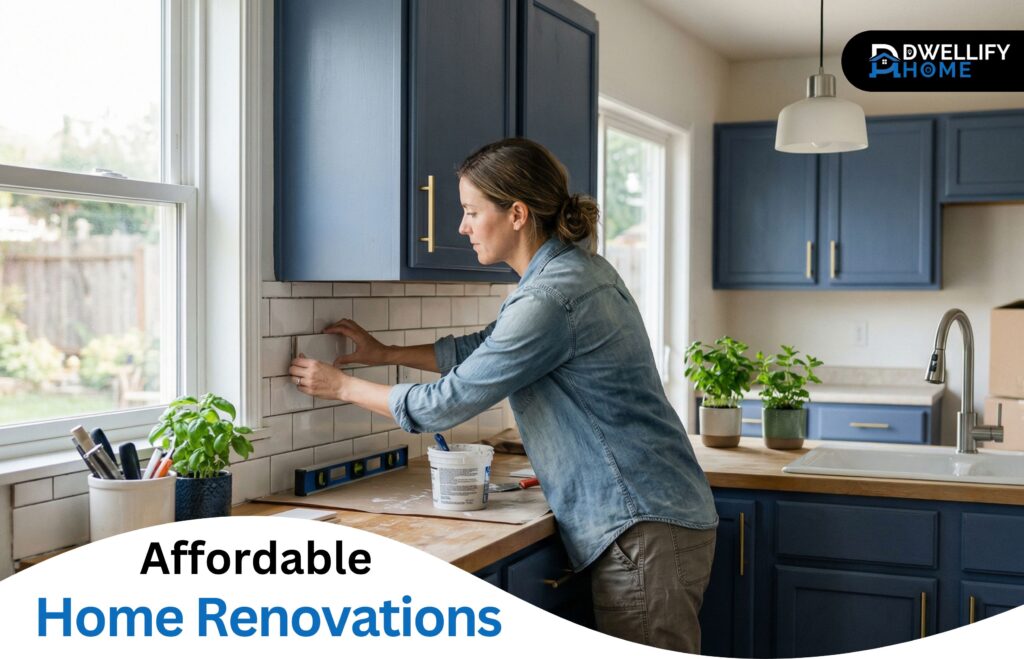
Most homeowners eventually hit the same wall. The house feels tired, but a full remodel isn’t in the budget — and frankly, it doesn’t need to be. After years of working on residential renovation projects, one thing becomes clear early on: it’s rarely the biggest spend that makes the biggest difference. The right small upgrades, done in the right order, can genuinely shift how a home feels, functions, and performs on the market.
This guide walks through ten home renovation projects that are worth your time and money — not because they look good on paper, but because they hold up in real life.
Snippet-Ready Definition
Affordable home renovations are targeted, budget-conscious improvements that increase a home’s comfort, function, or resale value without requiring a full remodel or significant structural changes.
Mission Statement
At Dwellify Home, we help homeowners make practical, informed decisions about their living spaces — from small updates to full renovations. Our goal is straightforward: give you honest, experience-backed guidance so every improvement you make is one you feel confident about.
Not All Renovations Are Worth Your Money — Here’s How to Think About It
Value means more than resale — comfort, function, and daily life count too
A lot of homeowners get tunnel vision about resale value. That matters, but it’s not the whole picture. A bathroom that functions better every single morning has real value — even if you’re not selling for another decade. When you’re deciding what to renovate, think in three layers: what improves daily life, what buyers and appraisers respond to, and what holds up over time without constant maintenance.
The 30% rule: how to avoid over-improving for your neighborhood
There’s a ceiling on what a home can be worth in a given area, and it’s determined mostly by the houses around it. A general benchmark — and one worth keeping in mind — is to avoid spending more than 30% of your home’s current market value on total renovations. A $300,000 home with $120,000 in upgrades rarely appraises at $420,000. Neighborhoods have a natural price band, and over-improving pushes you past what you can realistically recover.
Start with what buyers, appraisers, and your own eyes notice first
The front door. The kitchen. The flooring. These are the things people see immediately, and first impressions carry weight whether you’re hosting guests or selling. Prioritize what’s visually obvious before touching anything structural or cosmetic in secondary spaces.
Quick Comparison: Which Renovation Type Is Right for You?
| Goal | Best Renovation Type | Avg. Cost Range |
| Sell within 12 months | Exterior upgrades, fresh paint, hardware | $500 – $5,000 |
| Improve daily comfort | Lighting, storage, flooring | $1,000 – $8,000 |
| Increase long-term value | Kitchen/bath updates, smart features | $2,000 – $15,000 |
| Boost curb appeal fast | Front door, landscaping, garage door | $800 – $4,500 |
| Tightest possible budget | Paint, fixtures, feature wall, hardware | $200 – $1,500 |
Key Benefits of Prioritizing Affordable Renovations
- Returns value without overextending your renovation budget
- Improves how the home functions day to day, not just how it looks
- Targets areas buyers and appraisers notice first
- Avoids the common trap of expensive upgrades with poor ROI
- Keeps flexibility in your budget for unexpected repair costs
10 Affordable Home Renovations That Actually Add Value
1. Fresh Paint — The Highest-Return Change Any Homeowner Can Make
A full interior repaint is one of the most reliable investments in home improvement. Real estate professionals consistently rank it as the top project for marketability. Cost typically runs between $1,500 and $4,000 for a whole home professionally done — or significantly less if you do it yourself. Stick with neutral but warm tones. Trendy colors look dated within a few years, and that works against you.
2. Upgrade Your Kitchen Without Touching the Layout
Kitchen remodels get expensive fast, mostly because of layout changes. Moving a sink or adding an island means plumbing, permits, and labor that adds up quickly. The smarter approach: reface or repaint existing cabinets, swap out hardware, and install a new countertop overlay. A two-tone cabinet look — white uppers, a deeper tone on the lowers — is popular right now and achievable on a modest budget. Minor kitchen updates consistently return around 96% of their cost at resale.
3. Refresh Your Bathroom on a Tight Budget
You don’t need to gut a bathroom to make it feel current. Replace the faucet, update the vanity lighting, re-caulk the tub and shower, swap out the mirror for something with a frame, and add a fresh set of hardware. These changes together can cost under $500 if you’re doing the labor yourself — and the visual difference is significant. The key is to avoid moving plumbing. The moment pipes shift, costs multiply.
4. Replace or Refinish Your Flooring
Old, worn flooring drags down every room it’s in. Luxury vinyl plank is currently one of the strongest value options — it’s durable, water-resistant, affordable (around $2 to $5 per square foot for materials), and looks genuinely good. If you have hardwood underneath old carpet, get it assessed before buying anything new. Refinishing existing hardwood almost always costs less than new flooring and produces a better result.
5. Improve Lighting Room by Room
Lighting is one of those things that homeowners often overlook — until they see what a well-lit room actually looks like. Layered lighting makes a real difference: overhead fixtures combined with lamps, sconces, or under-cabinet lighting creates depth that flat ceiling lights can’t achieve alone. LED fixtures are the right call now — they use less energy and last longer. Adding dimmer switches to living areas is inexpensive and immediately changes how a room feels in the evening.
6. Strengthen Curb Appeal With Targeted Exterior Updates
According to the 2025 Cost vs. Value Report, eight of the ten highest-ROI renovation projects are exterior upgrades. A new front door can return over 100% of its cost. A garage door replacement — typically around $1,500 to $4,000 — has one of the strongest ROI figures of any single home improvement. Even basic landscaping work, like fresh mulch and trimmed hedges, raises perceived value noticeably. This is where buyers form their first impressions, and first impressions stick.
7. Replace Hardware and Fixtures Throughout the Home
Cabinet pulls, door handles, light switch plates, towel bars — these are the details that reveal whether a home has been cared for. Dated brass hardware in a kitchen or bathroom signals neglect even when nothing is structurally wrong. Replacing these items across an entire home costs a few hundred dollars and a weekend afternoon. The result looks like a renovation even though it barely qualifies as one.
8. Build Smart Storage Into Underused Spaces
Storage sells. Buyers notice it immediately, and its absence is one of the most common complaints in older homes. Adding built-in shelving to a mudroom, installing a proper closet system, or reorganizing a pantry with a few shelving units can be done affordably. Closet renovations return roughly 83% of their cost at resale, and the day-to-day improvement in how the home functions is immediate.
9. Add a Feature Wall Without Structural Work
An accent or feature wall adds visual weight and interest to a room without requiring a contractor. Shiplap, peel-and-stick wood panels, and painted focal walls are all options that a confident DIYer can complete over a weekend. The goal is to give a room a focal point — something that draws the eye in a way that plain, flat walls can’t. It’s a low-cost change that photographs well and makes spaces feel intentional.
10. Add Entry-Level Smart Home Features
A smart thermostat, a video doorbell, and smart lighting switches are genuinely affordable now — and they’re features buyers actively look for. A smart thermostat typically costs $150 to $250 installed. These upgrades signal that a home is current and efficient without requiring a major investment. They also reduce utility costs in the meantime, which matters during ownership.
How to Save Money Without Cutting Corners
Know where DIY makes sense — and where it costs you more in the long run
Painting, hardware replacement, light fixture swaps, and feature walls are reasonable DIY territory for most homeowners. Electrical panel work, load-bearing walls, and anything involving gas lines are not. The savings on labor disappear fast when a mistake requires a licensed professional to come in and fix the work.
Refinish instead of replace wherever the bones are still good
Cabinets with solid construction but dated finishes don’t need to be replaced — they need paint and new hardware. Hardwood floors with surface scratches need refinishing, not replacement. Bathtubs with surface chips can be reglazed for a fraction of the cost of a new unit. Replacing is almost always more expensive than restoring, and the results are often comparable.
Keep your existing layout — moving plumbing or electrical adds cost fast
This comes up constantly in renovation planning. A kitchen or bathroom layout that works functionally doesn’t need to change just because it feels dated. Changing where a sink sits or adding an outlet in a new location involves permits, licensed tradespeople, and time. Design around what’s already there whenever you can.
Shop smarter — surplus stores, seasonal sales, and second-hand materials
Habitat for Humanity ReStores sell surplus and donated building materials at a fraction of retail cost. Tile, fixtures, lighting, and even cabinets show up regularly at significant discounts. Buying materials during end-of-season sales or when a supplier is clearing old inventory can cut costs meaningfully on larger projects.
Which Rooms and Projects Deliver the Best ROI?
Kitchen vs. bathroom — which to prioritize when budget is limited
Both matter, but kitchens tend to produce higher overall ROI because they’re the room buyers scrutinize most. That said, bathroom updates are often less expensive to complete, which makes the percentage return stronger relative to spend. If both rooms are outdated, start with whichever one feels more visually dated or least functional — that’s usually the one buyers will fixate on during a showing.
Why exterior upgrades consistently outperform interior ones at resale
It seems counterintuitive, but the data backs it up consistently. Curb appeal creates emotional engagement before a buyer ever steps inside. A home that looks cared for from the street starts the conversation positively. Interior work matters, but exterior work opens the door — sometimes literally.
Small updates that compound — the case for doing several minor renovations instead of one major one
Spending $10,000 on a full bathroom gut-job might return $7,500. Spending the same $10,000 across paint, hardware, lighting, flooring, and a front door replacement might return more — and improve multiple areas of the home at once. Spreading the budget across targeted small improvements often outperforms a single large project, especially for homeowners not planning to sell immediately.
Mistakes That Turn Affordable Renovations Into Expensive Ones
Choosing trendy finishes over timeless ones
Renovation decisions made to follow a trend look dated in four to six years. Shaker-style cabinets, neutral flooring, and clean-lined fixtures have staying power. Highly specific color palettes and statement materials tend not to. When in doubt, lean toward what’s been working for twenty years rather than what’s popular right now.
Skipping permits on work that legally requires them
Unpermitted work is a liability that surfaces during home sales. Buyers and their inspectors find it, it creates negotiation problems, and correcting it after the fact often costs more than doing it right the first time. If a project involves electrical, structural, or plumbing changes, check with your local building department before starting.
Under-budgeting — always set aside 10–15% for surprises
Behind walls and under floors, older homes especially tend to hold surprises. Old wiring, subfloor damage, inadequate insulation — these things show up mid-project and cost money. Budget a buffer from the beginning so that an unexpected find doesn’t derail the whole project.
How to Find a Contractor You Can Actually Trust
What to look for in local renovation help — reviews, licensing, and communication style
A contractor’s license and insurance are non-negotiable starting points. Beyond that, look for consistent communication. A contractor who responds quickly during the quote phase usually maintains that responsiveness during the project. Read reviews carefully — pay attention to comments about timeline accuracy and how problems were handled, not just whether the final result looked good.
Questions to ask before any work begins
Ask for a written scope of work, a clear payment schedule tied to project milestones, and references from completed projects similar in scope to yours. Ask what happens if costs go over budget. Get clarity on who is doing the actual labor — whether it’s the contractor’s crew or subcontractors. These questions separate reliable professionals from the ones who create headaches.
Frequently Asked Questions
What is the most affordable home renovation with the best return?
Fresh interior paint consistently delivers the strongest return relative to cost. A full repaint improves every room simultaneously, photographs well, and is one of the most commonly recommended projects by real estate agents preparing a home for sale.
What renovations should I skip if I’m working with a tight budget?
Major layout changes, full room additions, and luxury material upgrades rarely pay off proportionally on a tight budget. Swimming pools, high-end landscaping features, and full kitchen teardowns are better suited to higher-end homes where the cost can be absorbed into overall property value.
Can I do these renovations myself without prior experience?
Several of them — yes. Painting, hardware swaps, light fixture replacements, and basic shelving installation are within reach for most people willing to take the time to learn. Flooring installation is manageable with patience and proper prep. Anything involving plumbing, structural elements, or electrical panels should involve a licensed professional.
What are the best affordable home renovations to focus on in 2026?
Based on current market data, exterior upgrades continue to offer the strongest returns — especially entry door and garage door replacements. Inside, kitchen and bathroom updates that avoid layout changes remain the most cost-effective improvements. Smart home basics are gaining ground as buyer expectations shift.
What is the 30% rule for home renovation?
The 30% rule suggests keeping your total renovation spend below 30% of your home’s current market value. It exists to prevent over-improving — putting more into a home than the neighborhood’s price ceiling allows you to recover at resale.
What adds $100,000 to your house?
No single affordable renovation reliably adds $100,000 in value. That kind of increase typically comes from adding livable square footage, a full kitchen and bathroom overhaul in a higher-end market, or converting an unfinished basement into functional living space. Location plays a significant role — the same renovation adds different value in different markets.
What is the cheapest way to renovate a house?
Prioritize paint, hardware replacement, lighting upgrades, and cosmetic fixes before anything structural. DIY where the skill gap is manageable. Refinish instead of replace. Shop surplus stores and sales for materials. Avoid changing layouts that require moving plumbing or electrical work.
Is $10,000 enough for a kitchen remodel?
Yes — if the layout stays the same. A $10,000 budget can cover cabinet repainting or refacing, new hardware, a countertop overlay, updated lighting, and a new faucet. It won’t cover a full gut renovation or new appliances across the board, but a well-planned minor kitchen remodel at that budget can return close to its full cost.
Conclusion
Affordable home renovations work best when the choices behind them are deliberate. The ten projects covered here aren’t flashy — they’re practical, proven, and within reach for most homeowners. Whether you’re improving daily life in a home you plan to stay in or preparing for a future sale, these upgrades move the needle without requiring you to spend more than the return justifies. Start with what’s most visible, spend where it compounds, and resist the pull toward trendy choices that age quickly. That’s the straightforward approach — and it works.
Disclaimer
The content on Dwellify Home is intended for general informational purposes only. Renovation costs, ROI figures, and project outcomes vary based on location, materials, labor rates, and individual home conditions. Always consult a licensed contractor or local professional before beginning any renovation project.

I’m Bilal Hassan, the founder of Dwellify Home. With 6 years of practical experience in home remodeling, interior design, and décor consulting, I help people transform their spaces with simple, effective, and affordable ideas. I specialize in offering real-world tips, step-by-step guides, and product recommendations that make home improvement easier and more enjoyable. My mission is to empower homeowners and renters to create functional, beautiful spaces—one thoughtful update at a time.