I’ve worked on basement slabs that looked hopeless at first glance. Hairline cracks, old carpet glue, damp corners, uneven patches from past repairs. Some turned into beautiful finished spaces. Others needed hard conversations before anyone touched a grinder.
A polished concrete basement floor can be a smart, long-lasting choice. It can also become a regret if the slab or moisture conditions aren’t understood first. The difference usually comes down to preparation and expectations.
Let’s walk through what actually matters.
Snippet-Ready Definition:
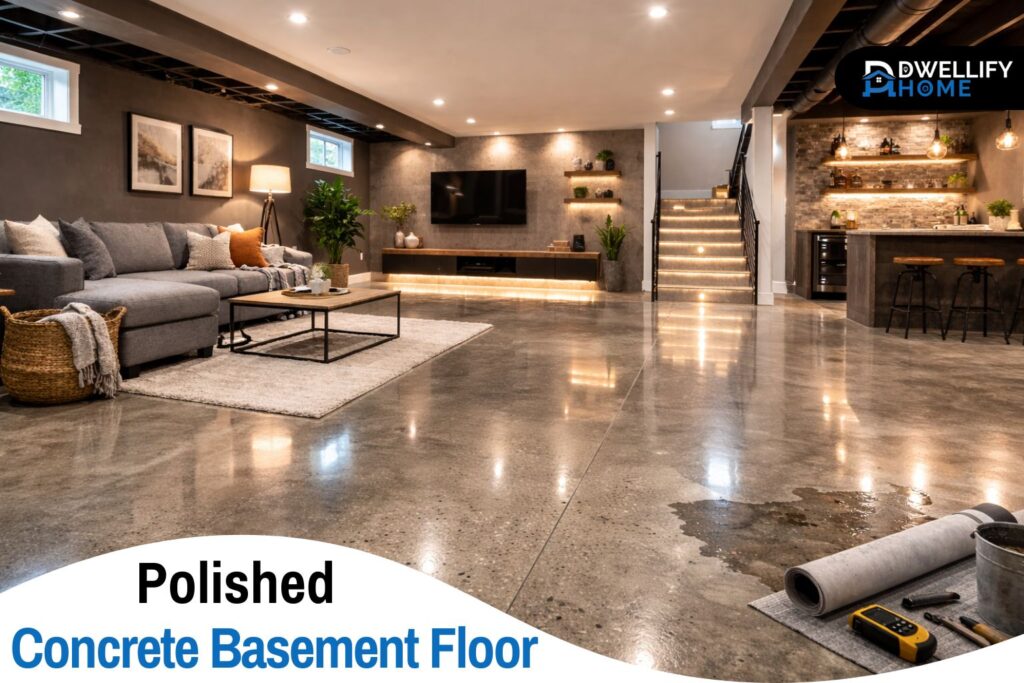
A polished concrete basement floor is a mechanically ground and densified concrete slab finished to a smooth sheen. Homeowners choose it for durability, moisture tolerance, and low maintenance in below-grade spaces.
Our Mission:
At Dwellify Home, our mission is to help homeowners make practical, stylish, and informed décor decisions based on real-world performance, not trends alone.
What a Polished Concrete Basement Floor Actually Is
Polished concrete isn’t a coating you roll on. It’s the slab itself, mechanically ground down with heavy diamond grinders. We move through progressively finer grits, apply a densifier that hardens the surface, then refine it to the sheen you choose. Matte, satin, semi-gloss, or high gloss.
That’s different from a “grind and seal” floor, where the surface is lightly ground and then coated with a topical sealer. Grind and seal is cheaper upfront but behaves more like a coating system. It can scratch, peel, or require reapplication. True polishing becomes part of the concrete.
Basements add another layer to this. You’re below grade. Moisture moves differently. Slabs are often older and poured without modern vapor barriers. That changes how we evaluate the floor before committing.
Quick Decision Snapshot
| Factor | What to Expect |
| Cost | Typically $3.50–$5+ per sq ft depending on slab condition |
| Durability | Very high, resists wear and heavy use |
| Moisture Handling | Breathable but not waterproof |
| Comfort | Hard underfoot, can feel cool |
| Maintenance | Simple sweeping and damp mopping |
Key Benefits
- Long-lasting surface with minimal upkeep
- Doesn’t trap dust, mold, or allergens
- Works well with radiant heating
- Modern, clean look that reflects light
- No seams or grout lines to maintain
Is It Right for Your Basement?
I start every basement conversation the same way: let’s talk about moisture and slab condition before we talk about color.
Polished concrete works best in basements that are structurally sound and relatively dry. Minor hairline cracks are fine. Even visible control joints are normal. What concerns me more are signs of chronic water intrusion, flaking surface concrete, or active damp spots after heavy rain.
Ceiling height also matters. Grinding removes a small amount of material. It’s not dramatic, but in low-ceiling basements every inch feels important. If the slab is severely uneven, heavy grinding may not be the best fix.
There are situations where I steer homeowners toward alternatives like LVP or an epoxy system with moisture mitigation. Not because polished concrete is bad, but because the slab needs a different solution.
Basement Moisture: The Make-or-Break Factor
Concrete is porous. It breathes. That’s not a flaw, it’s just how it behaves.
A polished surface can handle vapor better than carpet or wood because there’s nothing organic to trap moisture. It won’t grow mold the way underlayment and padding can. That’s one reason people appreciate it in damp environments.
But it’s not waterproof. If water is actively pushing up through the slab due to hydrostatic pressure, polishing won’t solve that. I’ve seen beautiful floors ruined because no one tested moisture vapor emission before starting.
Here’s what I look for:
- Musty odors that never fully go away
- White powdery residue called efflorescence
- Dark patches after rain
- Old adhesives that never fully cured
Basic plastic sheet tests can give clues. Professional calcium chloride or RH testing gives better answers. On older homes without vapor barriers, we sometimes discuss topical moisture mitigation systems before polishing.
Radon is another basement consideration. Flooring changes can affect how air moves. It’s worth coordinating with any existing mitigation system.
Pros and Cons
After two decades of seeing these floors live in real homes, here’s the honest breakdown.
What works well
Durability is real. Heavy furniture, gym equipment, kids’ play areas, no problem. Maintenance is simple: dust mop and occasional damp mop with a neutral cleaner.
For allergy-sensitive households, concrete doesn’t trap dust or pet dander. And it pairs well with radiant heating, which transforms how a basement feels in winter.
Where people get surprised
Concrete feels hard because it is hard. Dropped glass usually breaks. Standing long hours can be tiring without area rugs.
High-gloss finishes can feel slippery when wet, especially near laundry areas or basement bathrooms. A satin finish is often a better balance.
Cracks don’t disappear. We can fill and minimize them, but it’s still concrete. Anyone expecting a perfectly uniform surface needs to adjust expectations.
Cost Breakdown
The typical polished concrete basement floor cost runs around $3.50 to $5 or more per square foot, depending on the slab condition and finish level.
What drives the price?
- Extensive crack repairs
- Heavy aggregate exposure
- High-gloss finish
- Tight corners or stairs
- Moisture mitigation
Cheaper bids often skip steps like proper densifier application or moisture testing. That’s where long-term problems show up.
Compared to tile or high-end LVP, polished concrete can be cost-competitive. Long-term maintenance costs are usually lower since there’s no replacement cycle every decade.
Design Options: Colors and Finish
Natural gray is common, but dyes and stains open up more possibilities. Polished concrete basement floor colors range from subtle earth tones to deeper charcoals and browns.
Aggregate exposure changes the look dramatically. A light grind shows minimal stone. A deeper grind exposes more aggregate for a speckled effect. Not every slab allows heavy exposure, especially older pours with inconsistent mix.
Sheen affects both look and performance. High gloss reflects light beautifully but shows dust more easily. Satin is often my recommendation for basements because it feels softer and less slippery.
Warmth comes from design choices around the floor. Area rugs, wood accents, layered lighting, and painted walls prevent the space from feeling industrial.
Installation: What Really Happens
Preparation is everything. Old carpet glue, paint, or tile adhesive must be removed completely. We repair cracks and patch weak spots before grinding.
Grinding moves through multiple passes with increasingly fine diamonds. Then we apply a concrete densifier to chemically harden the surface. After that, polishing stages refine the finish.
The process can take several days depending on size. Dust control is critical. Professional equipment uses HEPA vacuums to keep airborne dust low.
DIY kits exist, but true mechanical polishing requires heavy machinery and experience. I’ve fixed many DIY attempts where uneven grinding or skipped steps left swirl marks and inconsistent sheen.
Comfort and Safety Planning
Basements tend to be cooler. Without radiant heat, area rugs help significantly. Some homeowners add insulated subfloor sections in select areas before polishing, but that changes the system entirely.
To reduce slipperiness, choosing a satin finish helps. Entry mats near stairs or exterior doors are practical.
Concrete reflects sound. Soft furnishings, curtains, and fabric furniture reduce echo and improve comfort.
Maintenance and Long-Term Care
Daily care is simple. Dry dust mop to remove grit. Damp mop occasionally with a neutral cleaner. Avoid acidic products or harsh degreasers.
Over time, high-traffic areas may benefit from burnishing to refresh sheen. Unlike coatings, polished concrete doesn’t peel, but it can lose luster if neglected.
Properly maintained, these floors age well. I’ve revisited jobs 10 years later that still looked strong with basic care.
Common Problems and How to Prevent Them
Most problems trace back to shortcuts.
Uneven sheen usually means rushed polishing stages. Cloudy patches can come from inconsistent densifier application. Spalling or flaking often points to poor surface preparation.
Cracks are normal, but widening cracks may indicate structural movement. Slipperiness complaints often follow high-gloss installations in damp areas.
Prevention starts with realistic planning, moisture evaluation, and hiring someone who understands basement-specific challenges.
Reviews and Real-World Feedback
Online discussions, including polished concrete basement floor reddit threads, often highlight durability and easy cleaning. Complaints usually revolve around unexpected cracks or coldness.
Polished concrete basement floor reviews tend to be positive when expectations were set properly. Dissatisfaction appears when homeowners expected something softer or completely uniform.
Listening to reviews is helpful, but understanding your own slab and use case matters more.
Choosing a Contractor Near You
Searching for polished concrete basement floor near me will bring up both polishing specialists and general flooring contractors.
Ask about moisture testing. Ask what densifier they use. Request to see past basement projects, not just garage floors.
Clear written estimates should outline prep work, repair scope, finish level, and protection methods. Vague pricing is a warning sign.
Alternatives Worth Considering
Epoxy floors offer a different look and can include moisture mitigation layers. Luxury vinyl plank adds warmth and cushion but introduces seams and potential moisture trapping.
Grind and seal systems cost less initially but require periodic resealing.
Each option has trade-offs. The right choice depends on your slab and how you plan to use the space.
Frequently Asked Questions
Is polished concrete good for basement floors?
Yes, when the slab is structurally sound and moisture is under control. It performs well in damp environments but won’t fix active water intrusion.
What are the downsides of polished concrete floors?
They’re hard, can feel cold, and high-gloss finishes may be slippery when wet. Cracks in the slab may remain visible.
Is a polished concrete floor expensive?
Costs are moderate compared to tile or hardwood. Pricing depends heavily on slab prep, repairs, and finish level.
Can you mop a polished concrete floor?
Yes. Regular dust mopping and occasional damp mopping with a neutral cleaner keep it in good condition.
Will cracks show in a polished concrete basement floor?
Small cracks are common in concrete slabs and may still be visible after polishing, though they can often be filled and blended.
Conclusion
A polished concrete basement floor works best when the slab is healthy, moisture is understood, and expectations are realistic. It’s durable, low maintenance, and long-lasting. It’s also hard, honest concrete that shows its character.
Before moving forward, check moisture, evaluate cracks, choose the right sheen, and hire someone who understands basement conditions. Done right, it’s a floor you won’t have to think about again for a very long time.
Disclaimer
This content is for informational purposes only and does not replace professional inspection, structural evaluation, or contractor advice specific to your home.

I’m Bilal, the founder of Dwellify Home. With 6 years of practical experience in home remodeling, interior design, and décor consulting, I help people transform their spaces with simple, effective, and affordable ideas. I specialize in offering real-world tips, step-by-step guides, and product recommendations that make home improvement easier and more enjoyable. My mission is to empower homeowners and renters to create functional, beautiful spaces—one thoughtful update at a time.