
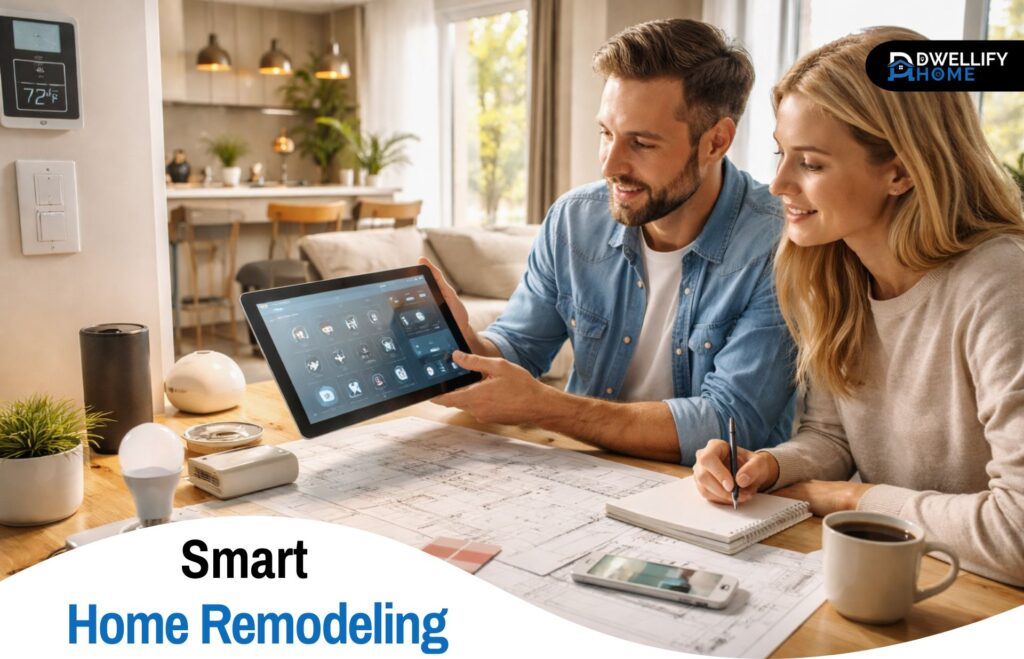
A well-planned remodel gives you one chance to do things the easy way before the walls are closed, the wiring is covered, and the budget starts getting tight. That’s why smart features make the most sense during renovation, not months later when you’re cutting drywall to fix something that could’ve been handled from the start.
The best results usually come from treating home automation like part of the house itself. Good lighting control, solid Wi-Fi coverage, reliable wiring, and a system that fits how you actually live will matter a lot more than a long list of trendy devices. Done right, the home feels easier to run, more efficient, and better prepared for the next few years.
Snippet-Ready Definition
Smart home remodeling means adding connected lighting, climate, security, and control systems during a renovation to improve comfort, efficiency, safety, and long-term usability.Mission Statement
Dwellify Home helps homeowners make practical, stylish, and informed home improvement and décor decisions with clear, trustworthy guidance.
What Is Smart Home Remodeling?
Smart home remodeling means building connected technology into a renovation plan instead of adding random devices after the work is finished. It can include lighting, climate control, security, leak detection, motorized shades, audio, and network upgrades that all work together.
That’s different from buying a few smart plugs and calling it a day. Those small upgrades can be useful, but they don’t solve the bigger issues homeowners run into later, like weak Wi-Fi, missing outlets, poor camera placement, or systems that don’t work well together.
A remodel is the best time to think ahead. Open walls make it easier to run Ethernet, add power where you need it, and set up the house for future upgrades without tearing things apart again.
Key Benefits
- Better comfort through lighting, temperature, and routine control
- Improved energy efficiency with smarter HVAC and lighting choices
- Stronger security with locks, cameras, and doorbells
- Easier future upgrades when wiring and infrastructure are planned early
- More day-to-day convenience without relying on disconnected devices
Why More Homeowners Are Choosing Smart Home Remodeling
Most people don’t start with gadgets in mind. They start with everyday frustrations. A hallway that’s always dark. A second floor that never stays the right temperature. A front door that’s hard to monitor when nobody’s home. A kitchen where lighting needs to change from cooking to dining to late-night cleanup.
Connected systems can fix those problems in a practical way. Smart lighting helps with comfort and energy use. Smart thermostats and zoning improve temperature control. Smart locks, cameras, and alarms add peace of mind. Leak sensors under sinks or behind appliances can catch a problem early, which is the kind of upgrade people appreciate only after they’ve had water damage once.
There’s also resale value to think about. Buyers may not care about every feature, but they do notice a house that feels updated, secure, efficient, and easy to manage.
Start With a Smart Remodeling Plan Before the Work Begins
The biggest mistake I see is adding technology too late in the project. By then, layout decisions are already locked in, and every small change costs more.
Start with your real priorities. Do you want better security, lower energy bills, easier daily routines, or more comfort in certain rooms? That answer should shape the whole plan.
It also helps to separate “need now” from “nice later.” For example, you may want hardwired security cameras, better Wi-Fi, and smart lighting during the remodel, but hold off on whole-home audio until later. That approach keeps the budget under control while still protecting the parts that are expensive to redo.
A good plan also matches the tech schedule to the renovation schedule. Electricians, low-voltage installers, and contractors need to know what’s going in before the walls close.
The Infrastructure Behind a Successful Smart Home Remodel
Most smart home problems aren’t device problems. They’re infrastructure problems.
Wi-Fi needs to reach every area where smart devices will live, including garages, patios, and entryways. In larger homes or homes with thick walls, a mesh system often works better than relying on one router.
During renovation, Ethernet is worth serious thought. Wireless devices are fine in many places, but cameras, access points, streaming areas, and home offices usually perform better with wired support. It’s one of those small details beginners often overlook until the network starts lagging.
Electrical capacity matters too. Remodeling is the right time to add outlets, upgrade switches, and make sure the panel can handle new loads. If you’re thinking about motorized shades, heated bathroom floors, EV charging, or a smart appliance package, this matters even more.
Pre-wiring is also worth the cost in the right places. Cameras, speakers, access points, and future smart upgrades are all easier to handle when the pathways are already there.
Choose the Right Smart Home Ecosystem Before You Buy Anything
One of the fastest ways to waste money is mixing products that barely work together. Before you buy anything, decide which ecosystem you want to build around.
For most homes, that means choosing between Amazon Alexa, Google Home, or Apple Home as the main control layer. The right choice depends less on marketing and more on what devices you already use and how simple you want day-to-day control to be.
Compatibility matters more than flashy features. A smaller group of reliable devices that work together is better than a house full of apps that all need separate setup, logins, and troubleshooting. A connected home should reduce friction, not create more of it.
The Best Smart Home Upgrades to Include During a Remodel
Some upgrades give you more daily value than others.
Smart lighting is usually near the top of the list because it changes how a home feels right away. Dimmers, motion sensors, occupancy settings, and scene control can make kitchens, hallways, bathrooms, and outdoor areas much easier to live with.
Smart thermostats and climate zoning are another strong investment, especially in homes with uneven temperatures. They help manage comfort room by room instead of forcing one setting across the entire house.
Security upgrades also make sense during a remodel. Smart locks, video doorbells, cameras, and alarm integration work best when placement and power are planned early.
Then there are the quiet upgrades that save people trouble later: leak detectors, smoke and carbon monoxide monitors, smart shutoff systems, and energy monitoring. They don’t get as much attention, but they solve real problems.
Motorized shades, connected appliances, whole-home audio, and voice routines can also be worthwhile. The key is to choose features you’ll actually use every week, not just something that looks impressive during installation.
Room-by-Room Smart Home Remodeling Ideas
The kitchen is a natural place for smart lighting, connected appliances, under-cabinet controls, and leak detection near sinks and dishwashers.
In bathrooms, motion-based lighting, humidity-sensing fans, heated floors, and smart mirrors can improve comfort without making the room feel overbuilt.
Living rooms benefit from layered lighting, media integration, motorized shades, and simple scene settings for evening use.
Bedrooms are often better with quiet, practical upgrades such as smart shades, bedside lighting scenes, temperature scheduling, and better blackout control.
A home office needs reliable networking more than novelty. Strong Wi-Fi, wired connections, good lighting, and power management matter more here than voice gimmicks.
At the entry and exterior, focus on locks, doorbells, cameras, pathway lighting, garage access, and visibility from inside the home.
What Should Be Hardwired and What Can Stay Wireless?
Hardwire the things that need stability. Cameras, access points, permanent speakers, motorized shades, and anything tied closely to security or performance are usually better with wired support.
Wireless devices work well for plenty of smaller upgrades, especially sensors, plugs, lamps, and some switches where rewiring would be excessive.
The right balance depends on the house, the budget, and how long you plan to stay. In most cases, it makes sense to hardwire the backbone and keep the flexible accessories wireless.
How Much Does Smart Home Remodeling Cost?
Costs vary a lot because some projects are simple and some involve full integration.
At the low end, you might be adding a smart thermostat, a few switches, a video doorbell, and better Wi-Fi coverage. Mid-range projects often include lighting control, security, leak detection, and a few wired upgrades. Whole-home systems with integrated audio, shades, structured wiring, and professional programming cost much more.
What drives price up fastest is hidden work: opening finished walls, upgrading electrical service, fixing weak network coverage, or replacing incompatible products that were bought too early.
Which Smart Upgrades Deliver the Most Real Value?
The best value usually comes from the upgrades you notice every day and the ones that prevent expensive problems.
For energy savings, smart thermostats, lighting controls, and energy monitoring tend to perform well. For safety, smart locks, cameras, alarms, smoke detection, and leak protection matter most. For convenience, lighting scenes, voice control, and automated routines are often the features people stick with long term.
For resale, buyers respond well to systems that feel useful and easy to understand. Simple, reliable upgrades age better than overly complex ones.
Common Smart Home Remodeling Mistakes to Avoid
Planning too late is the biggest one. After that, the common mistakes are predictable: poor Wi-Fi coverage, no wiring plan, too many disconnected apps, and overspending on features that sound interesting but don’t improve daily life.
Another mistake is ignoring support and updates. A product isn’t a good long-term choice just because it’s popular today. You want devices that are likely to stay supported and still fit your ecosystem later.
Smart Home Privacy, Cybersecurity, and Safety Basics
Every connected device creates one more point that needs protection. That doesn’t mean you should avoid smart upgrades. It means setup matters.
Use strong passwords, keep firmware updated, secure your Wi-Fi, and review app permissions carefully. Think about where cameras are placed and what data certain devices collect. For anything tied to electrical work, security systems, or code-sensitive installation, licensed help is often the safer choice.
DIY vs Professional Installation: When to Handle It Yourself and When to Hire Help
A lot of smaller upgrades are reasonable DIY projects. Smart plugs, some sensors, video doorbells, and a few app-based devices are often straightforward.
Once a remodel involves rewiring, electrical changes, low-voltage planning, wall openings, or system integration across multiple rooms, professional help usually saves money in the long run. Coordination matters. A smart home contractor or experienced electrician can spot conflicts before they become expensive corrections.
How to Choose the Right Smart Home Remodeling Contractor
Ask direct questions. Have they handled connected lighting, security, structured wiring, or automation before? Do they coordinate with electricians and network installers? What happens after installation if something stops working?
This is also where it makes sense to check reviews, BBB history, and complaint patterns. For homeowners comparing local providers, terms like smart home remodeling reviews, smart home remodeling Houston, or smart home remodeling BBB often come up during that vetting stage. The real goal is simple: find a contractor who understands both the renovation side and the technology side.
How to Future-Proof Your Smart Home Without Overspending
Future-proofing doesn’t mean buying everything now. It means preparing the house so later upgrades are easier.
Run wiring while walls are open. Leave room in the panel where possible. Choose scalable systems that support common standards. Avoid locking the house into one fragile setup that’s hard to expand.
That approach gives you flexibility. You can start with the upgrades that matter most and add more over time without rebuilding work you’ve already paid for.
A Simple Smart Home Remodeling Checklist Before Work Starts
Before construction begins, make sure you’ve covered the basics:
- Set your main goals
- Choose your smart home ecosystem
- Plan Wi-Fi, Ethernet, and outlet locations
- Decide what should be hardwired
- Prioritize the upgrades that matter most
- Confirm electrical and code requirements
- Vet your contractor and support plan
- Review privacy and security settings
That short checklist prevents a lot of avoidable mistakes.
FAQs
What is the 30% rule in remodeling?
The 30% rule is a budgeting guideline people use to avoid over-improving a home relative to its value. It is not a formal industry rule, but many homeowners use it as a caution point when planning major renovations.
Is $50,000 enough to renovate a house?
It can be enough for a partial remodel, such as a kitchen refresh, bathroom update, flooring, paint, lighting, and selected smart upgrades. It usually is not enough for a full-house renovation in most markets.
Is $100,000 enough to renovate a house?
Often yes for a substantial renovation, depending on home size, labor costs, structural work, and finish level. It can cover a major remodel, but full-house projects with layout changes can go beyond that quickly.
What is the most expensive part of a house to remodel?
Kitchens are often the most expensive because they combine cabinetry, appliances, plumbing, electrical work, finishes, and labor. Bathrooms can also be costly, especially when plumbing or layout changes are involved.
Should smart home features be added before or after remodeling?
Before or during the remodel is usually better. Planning smart features early makes wiring, power placement, networking, and device integration easier and helps avoid expensive rework later.
Conclusion: Smart Home Remodeling Works Best With the Right Plan
The most successful smart home remodeling projects aren’t built around gadgets. They’re built around how the home needs to function every day.
Start with the layout, the wiring, the network, and the routines you want to improve. Choose reliable upgrades, keep the system simple, and make room for future changes without forcing them all into one project. That’s what turns a renovation into a home that feels easier to live in, not harder to manage.
Disclaimer
Information is for general educational purposes only and does not replace professional advice from licensed contractors, electricians, or design specialists.

I’m Bilal Hassan, the founder of Dwellify Home. With 6 years of practical experience in home remodeling, interior design, and décor consulting, I help people transform their spaces with simple, effective, and affordable ideas. I specialize in offering real-world tips, step-by-step guides, and product recommendations that make home improvement easier and more enjoyable. My mission is to empower homeowners and renters to create functional, beautiful spaces—one thoughtful update at a time.